ANC vs Audiophile Headphones: Different Tools, Not Competitors

Affiliate disclosure: Some links on this page are affiliate links. If you buy through them we earn a small commission at no extra cost to you. Recommendations are research-driven; we don't claim personal use of every product reviewed. Product prices and availability are accurate as of the date published and are subject to change. Always check Amazon for current pricing before purchasing. Learn more.

There’s a version of this question that resolves cleanly: one headphone for blocking the world out on a plane, one headphone for actually listening. The Sony WH-1000XM5 and the Audio-Technica ATH-M50x are both in my collection, and they serve genuinely different purposes , which is the honest framing for this comparison.
The mistake is treating them as competitors. Browse the full Headphones guide for context on how these two categories fit into the broader landscape.

What to Look For in ANC vs. Audiophile Headphones
Why Noise Cancellation and Sound Quality Are Separate Engineering Problems
Active noise cancellation works by sampling ambient sound through external microphones and generating an inverse signal. The electronics required , microphones, digital signal processors, feedback loops , add latency, power draw, and components that interact with the acoustic path. Every ANC implementation makes trade-offs. The better the ANC, the more engineering resources went toward it, often at some cost to raw acoustic fidelity.
Audiophile headphones optimized for flat, accurate reproduction prioritize a different set of variables: driver linearity, baffle geometry, ear cup volume, and cable signal integrity. The M50x runs entirely passive. There is no battery to die, no firmware to update, no multipoint pairing to manage. What you hear is what the driver produces.
Neither approach is objectively superior. They solve different problems.
Closed-Back vs. Wireless , What Isolation Actually Means
The M50x achieves passive isolation through physical seal , dense ear pads, a closed housing that blocks sound mechanically. The XM5 achieves isolation electronically, analyzing and canceling frequencies in real time. Passive isolation is most effective in the mid and high frequencies where sound is directional. ANC is most effective in the low-frequency drone range , aircraft cabin hum, bus rumble, HVAC , where physical mass alone is insufficient.
For commuting or flying, the XM5’s ANC handles the frequency range that matters most. For a recording session or focused home listening, the M50x’s passive seal is adequate and adds no signal processing to the chain.
What “Studio Monitor” Actually Means on Consumer Packaging
The M50x carries “Professional Studio Monitor” branding. That phrase has real meaning in professional contexts , a monitor headphone is supposed to reproduce the mix accurately so engineers can make correct decisions. The M50x does not fully deliver on that framing: it has an elevated bass shelf and a mid-bass emphasis that colors the sound. Verified buyers frequently note the bass as a selling point, not a flaw.
The important takeaway is that “studio monitor” on consumer packaging is not a guarantee of flat frequency response. The AKG K371 measures flatter and is the more accurate monitor in this price tier. The M50x is best understood as the gateway closed-back with broad community support , not the flattest option available.
The Battery and Connectivity Dimension
Wireless audiophile headphones exist, but the XM5 is not designed for that audience. It is designed for the commuter who needs 30 hours of playback, multipoint Bluetooth to switch between a laptop and a phone, and reliable call quality. These are genuinely useful features that have no equivalent in a wired closed-back.
For anyone making a first purchase decision, exploring the range of wired and wireless headphones clarifies which of these feature sets actually maps to their use case.
Top Picks
Sony WH-1000XM5
The XM5 earns its market position through ANC performance that is, by any honest measure, class-leading. Owner reports and community consensus on Head-Fi consistently place it at or near the top for ambient noise reduction , particularly effective on the low-frequency drone that characterizes long-haul flights and public transit. The 30-hour battery life is practical rather than aspirational. Multipoint Bluetooth connectivity, which allows the headphone to maintain active pairings with two devices simultaneously, is a feature that sounds minor until the moment it becomes essential.
The tuning is consumer-oriented. Bass is elevated, treble is smooth, and the overall presentation flatters most streaming content rather than revealing the recording accurately. That is not a flaw for its intended use , it is a design choice that serves commuters and casual listeners well. For sessions where accurate reproduction matters, the XM5 is not the right tool.
One practical caveat that matters for buyers comparing this to its predecessor: the XM5 does not fold flat. The XM4 folded into a more compact travel configuration. The XM5’s case is larger and less pocketable. Owner feedback on this point is consistent enough that it’s worth flagging explicitly before purchase.
Check current price on Amazon.
Audio-Technica ATH-M50x
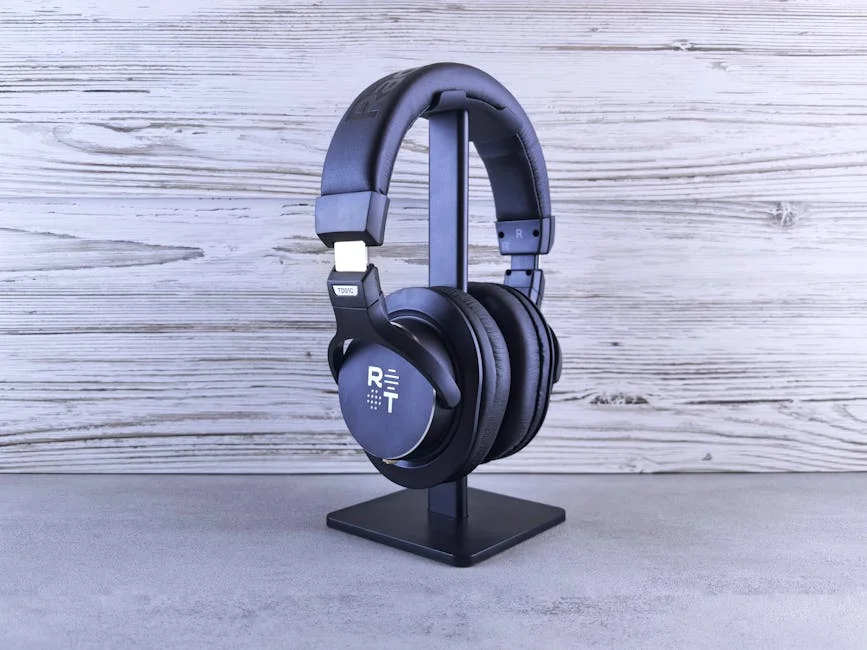
The M50x is the headphone I started with before the HD600 reoriented my sense of what accuracy sounds like. It remains in my collection for portable closed-back use and as a reference point for beginner recommendations. Three detachable cables are included in the box , a straight cable, a coiled cable, and a shorter straight cable , which is a practical advantage over competitors that ship with a single fixed cable.
The mid-bass hump is audible and present. Bass-heavy genres , hip-hop, electronic, pop production , tend to sound full and engaging. Acoustic recordings and classical material reveal the coloration more clearly. Buyers coming from consumer earbuds or Beats-style headphones will likely find the M50x a significant step up. Buyers coming in specifically for accurate monitoring should look at the AKG K371 first.
Clamping force is real and worth noting. Head-Fi consensus and verified buyer reports align here: long sessions, particularly over three or four hours, can cause fatigue. The clamping pressure does loosen somewhat with use, and the ear pad material is comfortable for most buyers. But this is a headphone that benefits from breaks rather than marathon sessions.
Check current price on Amazon.
Buying Guide
Defining Your Primary Use Case First
The single most useful question before choosing between these two headphones is: where will you use them most? The XM5 is purpose-built for environments where ambient noise competes with your audio , planes, trains, open offices, commutes. The M50x is built for quiet environments where you want accurate-enough closed-back monitoring without the weight and complexity of a wireless system.
If the answer is “both,” the honest answer is that these are different tools. Buying both is more useful than trying to find one headphone that serves both contexts equally.
Understanding What You’re Paying for in the ANC Tier
Wireless ANC headphones at the XM5’s price band carry cost components that have nothing to do with acoustic fidelity: Bluetooth chipsets, multipoint pairing firmware, microphone arrays, DSP hardware, rechargeable batteries, and the engineering required to make noise cancellation work reliably across varied environments. Buyers in this tier are paying for a system, not just a transducer.
That is a reasonable trade-off for the right buyer. The XM5’s ANC performance is the primary reason to buy it. The sound quality is competent and consumer-tuned; it is not the reason to choose the XM5 over a mid-range wired closed-back.
The Wired Closed-Back Tier , What the M50x Represents
The M50x occupies a specific position in the wired closed-back market: the highest-profile entry-level option with the largest community support base. That community support is genuinely valuable for first buyers , there are years of EQ profiles, pad swap recommendations, and comparative impressions available across Head-Fi and r/headphones.
The M50x is not the most accurate closed-back at its price tier. The AKG K371 measures flatter and is the stronger choice for buyers who prioritize accurate reproduction. But the M50x’s community ecosystem, detachable cables, and broad availability make it a defensible starting point for the audiophile-curious buyer who wants guidance on where to look next. The full range of closed-back and open-back options gives useful context for where the M50x sits relative to the next tier up.
Source Requirements , Does Your Current Setup Matter?
The M50x is easy to drive. It works directly from a laptop, a phone, or a basic headphone amplifier without audible degradation. No dedicated stack is required, and adding one produces modest gains. The XM5 is self-contained , the onboard amplification and DSP handle everything, and the source signal is Bluetooth audio processed on the headphone itself.
Neither headphone exposes meaningful source chain differences at this tier. Buyers asking whether they need a DAC or amplifier to get the most from either of these headphones can answer no confidently. Save the stack budget for planar magnetics.
Longevity and Repairability
The M50x has a clear advantage here. Detachable cables mean the most common failure point is user-replaceable. Ear pad replacements are widely available and inexpensive. The headphone has been in production long enough that aftermarket support is robust.
The XM5’s battery will degrade over time. Lithium battery lifespan is typically two to four years of regular use before capacity drops meaningfully. Sony does not offer straightforward consumer battery replacement for the XM5. Buyers planning on a five-year ownership horizon should factor this in.
Frequently Asked Questions
Is the Sony WH-1000XM5 good enough for serious music listening, or is it only for ANC use?
The XM5 is a competent wireless headphone with a consumer-tuned sound signature , elevated bass, smooth treble, and a presentation that flatters streaming audio. For casual listening and commuting it performs well. For critical listening or accurate monitoring, it is not the right tool; the tuning is too colored and the Bluetooth signal path introduces compromises. Owner consensus across Head-Fi aligns on this point.
Should a first-time audiophile buyer start with the ATH-M50x or skip to something better?
The M50x is a reasonable starting point for buyers entering the hobby from consumer headphones. It is not the most accurate closed-back at its price tier , the AKG K371 measures flatter , but the M50x’s community support, detachable cables, and wide availability make it a practical first step. Most buyers who start here eventually move on, and that is expected.
Can the ATH-M50x replace the Sony WH-1000XM5 for travel?
No, not practically. The M50x provides passive isolation that handles mid and high frequencies adequately, but it cannot match the XM5’s active cancellation of low-frequency drone , the dominant noise source on aircraft and public transit. The M50x is also wired, which requires an active audio source throughout the flight. For travel specifically, the Sony WH-1000XM5 is the more capable tool.
Does the ATH-M50x require a DAC or amplifier to sound its best?
No. The M50x is easy to drive and performs well directly from a phone or laptop without a dedicated stack. Adding a DAC and amplifier produces audible but modest gains at this sensitivity and impedance level. The stack budget is better spent on the next headphone tier than on source equipment for the M50x.
Why can’t the Sony WH-1000XM5 fold flat like the XM4?
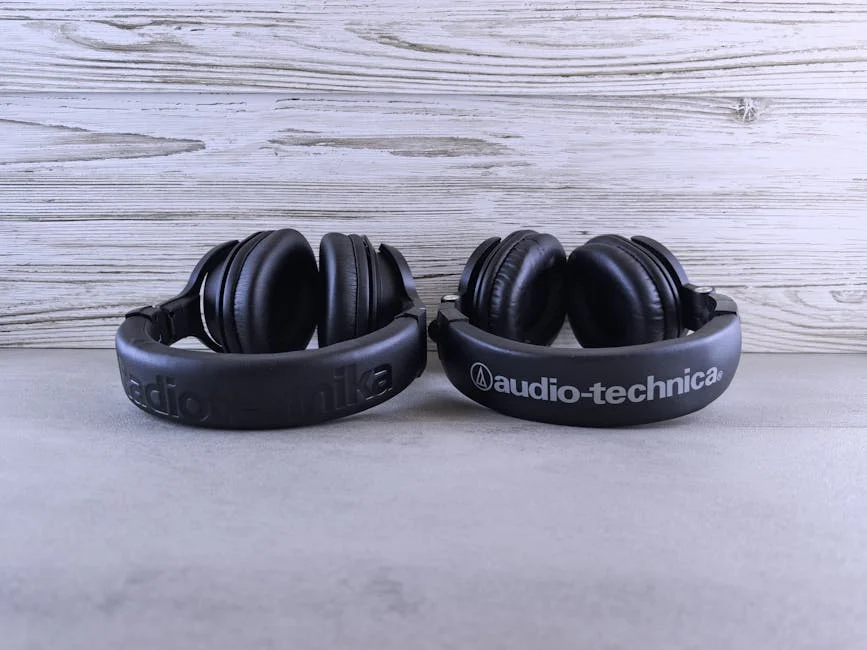
The XM5 redesigned the headband and pivot mechanism for improved durability and comfort, which eliminated the folding capability of the XM4. The result is a larger carrying case. Buyers for whom packing size is a priority should factor this in , the Audio-Technica ATH-M50x folds and stores more compactly, though it is wired.
Where to Buy
Sony WH-1000XM5 Wireless Industry Leading Noise Canceling HeadphonesSee Sony WH-1000XM5 Wireless Industry Lea… on Amazon