Headphone Amplifiers

Best Headphone Amps Under $500: Reviewed and Tested

Affiliate disclosure: Some links on this page are affiliate links. If you buy through them we earn a small commission at no extra cost to you. Recommendations are research-driven; we don't claim personal use of every product reviewed. Product prices and availability are accurate as of the date published and are subject to change. Always check Amazon for current pricing before purchasing. Learn more.

Best Headphone Amps Under $500: Reviewed and Tested

Quick Picks

Also Consider

Topping A90 Discrete Fully Balanced Headphone Amplifier

Fully discrete topology without op-amp ICs , ASR-measured superlative performance

Buy on Amazon
Also Consider

JDS Labs Element III Monolith DAC/Amp

JDS Labs USA manufacturing in an all-in-one form factor

Also Consider

Schiit Audio Schiit Asgard 3 Headphone Amplifier/Preamp

Class A operation with zero-feedback topology , Schiit's preferred design

Product Price RangeTop StrengthKey Weakness Buy
Topping A90 Discrete Fully Balanced Headphone Amplifier also consider $$$ Fully discrete topology without op-amp ICs , ASR-measured superlative performance Runs hot , needs ventilation clearance in stack configurations Buy on Amazon
JDS Labs Element III Monolith DAC/Amp also consider $$ JDS Labs USA manufacturing in an all-in-one form factor Must purchase direct from jdslabs.com
Schiit Audio Schiit Asgard 3 Headphone Amplifier/Preamp also consider $$ Class A operation with zero-feedback topology , Schiit's preferred design Schiit direct-only , no Amazon convenience

Finding a headphone amp that genuinely improves your listening without requiring a second mortgage is more achievable than the hobby’s loudest voices suggest. The headphone amplifiers category has matured to the point where mid-range and premium-tier separates now measure at or near the limits of audibility , the question is less “how good can it get” and more “what trade-offs matter for your specific setup.”

Dedicated amplification is worth understanding before you commit. Class A topology, discrete component paths, all-in-one integration , these distinctions shape how an amp behaves in real use, not just on a measurement graph. The three picks here cover meaningfully different engineering approaches at different price bands, each with a clear case for a specific buyer.

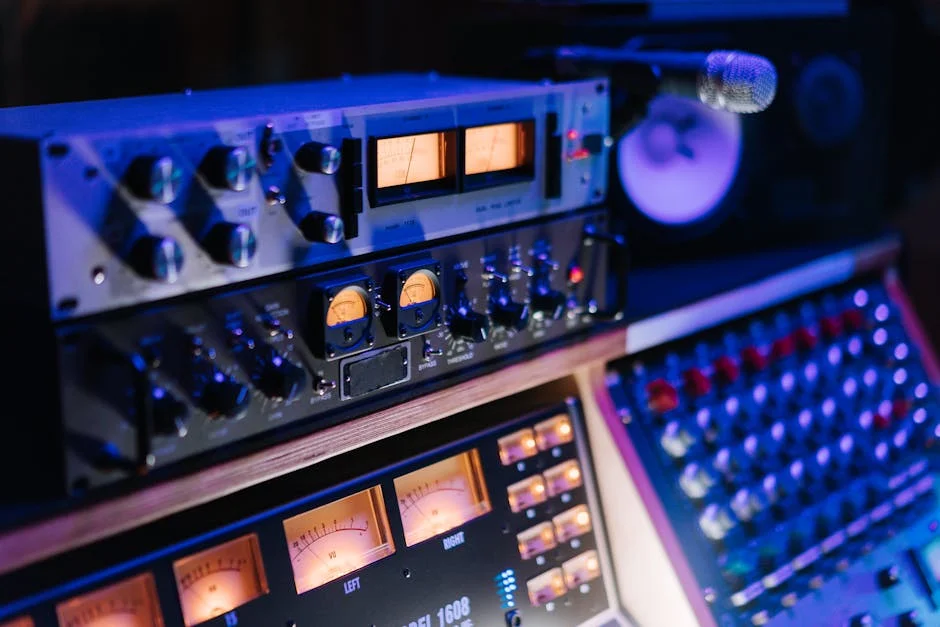
amplifiers product image

What to Look For in a Headphone Amplifier

Output Power and Headphone Matching

Not all headphones make equal demands of an amplifier. Dynamic driver headphones like the Sennheiser HD600 are relatively forgiving , a modestly powered amp drives them well, and the gap between a laptop output and a dedicated stack is real but not transformative. Planar magnetic headphones are a different story. Owner reports across Head-Fi and r/headphones consistently flag that planars scale with source quality in ways dynamic drivers don’t, and the “scales with source” advice that sounds like audiophile mythology has real content for this headphone category specifically.

The practical implication: check your headphone’s impedance and sensitivity before choosing an amp. High-impedance dynamics (300 ohm, 600 ohm) need voltage swing. Low-impedance planars need current. An amp rated at adequate power for one category may run out of headroom or control on the other. Manufacturer output power specs are useful; cross-referencing against community reports for your specific headphone is better.

Single-Ended vs. Balanced Topology

Balanced output , typically 4-pin XLR or 4.4mm Pentaconn , doubles the voltage swing available to the headphone and theoretically reduces common-mode noise. In practice, the audible benefit depends on your cable quality, headphone design, and whether your source is balanced to begin with. An amp with both balanced and single-ended outputs gives you flexibility as your chain evolves. If you’re starting with a single-ended DAC, a balanced amp output is a future option, not an immediate advantage.

The more meaningful distinction for most buyers is whether the amplifier circuit is fully balanced (differential throughout) or merely has a balanced output stage tacked onto a single-ended design. ASR measurements can surface this , some “balanced” amps measure identically on balanced and SE outputs, suggesting the balanced path isn’t doing additional work.

Discrete vs. Op-Amp Circuit Design

Op-amp, based amplifier designs are not inherently inferior , many measure superbly and cost less to manufacture. Fully discrete designs, which replace integrated op-amp ICs with individual transistors, give designers more control over the signal path and thermal behavior, though the audible difference from a well-implemented op-amp design is contested. Where discrete designs show measurable advantage is at the extremes: high-output scenarios, demanding loads, and sustained high-volume use where thermal management becomes relevant.

For most buyers entering the dedicated-amp tier for the first time, the discrete-vs.-op-amp distinction matters less than output power, output impedance, and gain stage design. Understanding where your headphones sit on the sensitivity spectrum will narrow the field faster than debating circuit topology.

Pre-Amp Output and System Integration

An amplifier with pre-amp outputs can serve double duty , driving headphones at the desk and sending a variable signal to powered speakers or a power amplifier. This is a genuinely useful feature for desktop setups where a separate speaker volume control is inconvenient. Not every amp includes it. If your current or anticipated setup includes powered monitors, verifying pre-amp output capability before purchase saves a future equipment shuffle.

Exploring the full range of headphone amplifiers before committing to a topology is worth the time , the category spans everything from budget single-ended stages to flagship balanced designs, and the right fit depends on your headphone library as much as your budget.

Top Picks

Topping A90 Discrete

The strongest measured case in this price band belongs to the Topping A90 Discrete. Audio Science Review’s measurements place it among the top-performing headphone amplifiers available at any price , noise floor, distortion, and channel separation all land at or near the limits of what measurement equipment can resolve. For a measurement-focused buyer, the A90 Discrete is the answer this category produces.

The fully discrete topology , no op-amp ICs in the signal path , is the engineering distinction Topping emphasizes, and ASR’s data supports the case that it matters at least on the bench. What the measurements don’t capture is the practical consideration: the A90 Discrete runs warm under sustained use. Stack configurations need deliberate airflow planning. Placing it directly beneath a DAC in a tight shelf will stress the thermal design faster than the specs suggest.

Output flexibility is a genuine strength here. The 4.4mm balanced, XLR balanced, and 6.35mm single-ended outputs cover effectively every headphone cable configuration in current use. Pre-amp outputs extend the unit’s utility into speaker-integrated desktop setups. For a buyer building a serious desktop chain that needs to serve planars, high-impedance dynamics, and a pair of powered monitors off a single amp, the A90 Discrete covers all of it.

Owner consensus points to this as the correct choice for someone whose headphone collection skews demanding , planars, high-impedance dynamics , and who wants measured confidence rather than topology guesswork. The premium over op-amp alternatives at this price band is real; whether that premium is audible in your chain is the honest uncertainty.

Check current price on Amazon.

JDS Labs Element III Monolith

The JDS Labs Element III Monolith takes a different approach: DAC and amp in a single chassis, designed and manufactured in the United States, sold direct through JDS Labs. For a buyer who wants to collapse the stack into one box without sacrificing the measurement quality that separates a proper dedicated unit from a USB dongle, the Element III Monolith makes a strong case.

Measured performance is genuinely competitive at this price band , JDS Labs has a track record of publishing their own measurements alongside third-party verification, and the Element III Monolith lives up to that standard. The integrated DAC section means you’re not sourcing a separate DAC, and the all-in-one form factor is a real desk-space and cable-management benefit for anyone who finds the separates stack unnecessarily complicated for their use case.

The honest trade-off is that any all-in-one design locks you into both halves of the equation simultaneously. A separates buyer can upgrade the DAC independently, or the amp independently, as budget allows or as priorities shift. The Element III Monolith buyer upgrades everything at once when the time comes. Field reports from JDS Labs buyers consistently note that the direct-sale model , no Amazon fulfillment, no third-party resellers , requires a bit more purchase planning, but JDS Labs’ customer service reputation in the community is strong enough that this rarely surfaces as a practical problem.

Check current price on Amazon.

Schiit Asgard 3

Class A amplification operates differently from the AB topology that dominates mid-range solid-state design. The Schiit Asgard 3 runs Class A throughout, which means the output stage is always conducting , no crossover distortion, and a consistent thermal and electrical operating point across the full volume range. Schiit pairs this with a zero-feedback topology, a design philosophy the company applies consistently across their lineup on the grounds that feedback introduces its own measured artifacts even as it corrects others.

The practical result is an amp that owners describe as smooth-sounding on dynamic drivers , the HD600 and HD650 community in particular treats the Asgard 3 as a natural pairing. Whether that character is the Class A topology, the zero-feedback design, or simply output impedance interaction with high-impedance headphones is genuinely debated on Head-Fi. What isn’t debated is that the Asgard 3 runs warm. Class A operation dissipates power as heat regardless of signal , ventilation clearance is not optional, it’s a design requirement.

The optional DAC module, purchased at time of order, converts the Asgard 3 into a capable all-in-one. Pre-amp outputs are standard. For a buyer entering the dedicated-amp tier who wants a single unit that handles headphones and integrates with powered speakers, at a mid-range price point, the Asgard 3 with DAC module is a practical and well-regarded starting point. It is only available through schiit.com , the direct-sale model is a consistent feature of Schiit’s distribution, not a limitation specific to this model.

Check current price on Amazon.

Buying Guide

amplifiers product image

Matching Amp to Headphone First

The most useful framing for this purchase is to start with your headphone, not the amplifier. Owner reports and field data both support the same conclusion: the amplification requirement for a planar magnetic is fundamentally different from that of a high-impedance dynamic driver, and different again from a sensitive low-impedance IEM. Picking an amp first, then discovering it has marginal output for your actual headphone, is a common and avoidable mistake. Verify output power against your headphone’s impedance and sensitivity before the rest of the evaluation.

Separates vs. All-in-One

The separates path , dedicated DAC plus dedicated amp , gives you independent upgrade flexibility and is often the better choice if your headphone library is likely to grow toward demanding planars. The all-in-one path, represented here by the Element III Monolith, simplifies the desk and the cable run without a meaningful performance penalty at this price band.

The decision often hinges on upgrade trajectory. If you expect to stay at one headphone for two or three years and want the simplest possible chain, an all-in-one is the rational choice. If you expect to add headphones, experiment with different DAC pairings, or grow toward higher-tier sources, separates give you more flexibility.

Class A vs. Class AB Topology

Class A amplifiers, like the Asgard 3, run the output stage at a constant bias point. This eliminates crossover distortion and produces a consistent operating point regardless of signal level. The cost is efficiency , Class A designs dissipate substantial heat at idle, which means ventilation planning is not optional. Class AB designs are more efficient, run cooler, and in well-implemented forms measure comparably or better than many Class A designs.

For most buyers at this price band, the measurable difference between a well-designed Class A and a well-designed Class AB amp is small. The Schiit Asgard 3’s Class A topology is worth understanding rather than treating as a blanket quality signal , context matters. Browsing the full headphone amplifiers category will surface both approaches with real owner data behind each.

Balanced vs. Single-Ended Output

Balanced output is worth having for future flexibility, particularly if you anticipate adding balanced-capable headphones or upgrading to a balanced DAC. It is not worth paying a large premium for if your current headphone is single-ended only. The A90 Discrete offers both, which is part of its value case , the balanced path is genuinely differential, not just a wiring adapter.

For a buyer whose current chain is single-ended and whose headphone collection is stable, the balanced output is a useful option, not an immediate driver of decision. Prioritize output power, output impedance, and gain structure first , balanced vs. SE is a secondary consideration.

Gain Settings and Noise Floor

An amplifier with adjustable gain , high and low settings , handles more of the headphone sensitivity range cleanly. High-gain settings give low-sensitivity planars adequate volume without having to push the volume pot far. Low-gain settings allow sensitive IEMs to operate in the usable range of the volume control without hitting distortion or noise.

Background hiss on sensitive IEMs is a genuine quality-of-life issue with amplifiers designed primarily for full-size headphones. If your collection includes both full-size and IEMs, gain flexibility is worth prioritizing. ASR’s noise floor measurements are useful here , they surface which amps are quiet enough at low gain for sensitive loads.

amplifiers product image

Frequently Asked Questions

Is the Topping A90 Discrete worth the premium over the Schiit Asgard 3?

For a measurement-focused buyer with demanding planars, yes , ASR’s data places the Topping A90 Discrete at a different performance tier on the bench, and the fully discrete balanced topology covers headphone configurations the Asgard 3 doesn’t. For a buyer primarily running high-impedance dynamic drivers and less focused on measured performance, the Schiit Asgard 3 covers the practical requirement at a meaningfully lower price. The gap between them is real on measurements; whether it’s audible in a typical desktop chain is the honest question.

Does the Schiit Asgard 3 need a separate DAC?

Without the optional DAC module, the Asgard 3 accepts analog input only , you’ll need a separate DAC or a source with a line-level output. Ordering the DAC module at time of purchase adds USB input and converts it to an all-in-one. The module cannot be added after the fact through a third party, so the purchase decision is made at checkout on schiit.com. For most buyers building a desktop stack from scratch, adding the module at order time is the practical choice.

Can these amplifiers drive planar magnetic headphones?

The Topping A90 Discrete is the strongest choice for planars in this group , its output power and fully balanced topology handle low-impedance, current-hungry loads effectively, and owner reports from planar users are consistently positive. The Schiit Asgard 3 can drive many planars adequately but has less headroom for demanding models. Planar magnetic headphones scale with source quality more than dynamic drivers do , the amplification choice genuinely matters here in ways that aren’t mythology.

What is the difference between the JDS Labs Element III Monolith and buying separates?

The Element III Monolith integrates DAC and amp in one chassis , one power cable, one desk footprint, and a single purchase decision. Separates give you independent upgrade paths: swap the DAC when a better option appears, keep the amp, or vice versa. The Element III Monolith’s integrated design means upgrading either section means replacing the whole unit. For a buyer who wants the simplest capable chain and isn’t planning to experiment with multiple DAC pairings, the all-in-one is the rational choice.

Do I need a balanced headphone cable to use the balanced output on these amps?

Yes , to use a balanced output (4.4mm or XLR), your headphone cable must be terminated for that connector. Standard factory headphone cables are single-ended. Aftermarket balanced cables are widely available for popular headphones and the cost is moderate. If your headphone doesn’t currently have a balanced cable, single-ended output performs identically until you add one.

amplifiers product image

Where to Buy

Topping A90 Discrete Fully Balanced Headphone AmplifierSee Topping A90 Discrete Fully Balanced H… on Amazon
Marcus Tran

About the author

Marcus Tran

UX researcher, mid-size SaaS company (Austin, TX). Self-described "three years in" hobbyist audiophile. Started March 2022 (Sennheiser HD600 on Drop deal). Headphones owned: HiFiMan Sundara (2022 revision, purchased new October 2023, daily driver), Sennheiser HD600 (original; still used for reference), Audio-Technica ATH-M50x (kept for closed-back utility), Sony WH-1000XM5 (travel/ANC). IEMs owned: Moondrop Blessing 3 (daily driver IEM), Moondrop HEXA (backup/commute). Gear sold: Kiwi Ears Quartet, 7Hz Timeless (both replaced by Blessing 3 upgrade). Primary desktop chain: Schiit Modi+ DAC + Schiit Magni+ amp. Backup: FiiO DX3 Pro+ (also used as standalone DAC/headphone amp). Portable: FiiO BTR7 (primary Bluetooth DAC/amp), Qudelix 5K (used for EQ work and IEM chain). Source: Mac mini M1, Qobuz Studio subscription. Saving for Focal Clear MG — first planned flagship-tier purchase. Lives with partner Hannah (clinical psychologist) in East Austin (two-bedroom apartment; spare room is listening space and home office). B.A. Cognitive Science, UT Austin (2014). Does not attend audio meetups. Reads ASR, Head-Fi, Crinacle, Resolve Reviews, Currawong daily. Does not accept loaner gear. Not a professional reviewer. Does not claim expertise outside entry-to-mid-tier. · Austin, Texas

Three years into the hobby. UX researcher in Austin, TX. Sundara daily driver, Schiit Modi+/Magni+ stack, Blessing 3 for IEMs. Writes the guides I wish I'd had when I started.

Read full bio →