Best Headphones for Imaging: Top Picks Reviewed

Affiliate disclosure: Some links on this page are affiliate links. If you buy through them we earn a small commission at no extra cost to you. Recommendations are research-driven; we don't claim personal use of every product reviewed. Product prices and availability are accurate as of the date published and are subject to change. Always check Amazon for current pricing before purchasing. Learn more.
| Product | Price Range | Top Strength | Key Weakness | Buy |
|---|---|---|---|---|
| Sennheiser HD 800 S Over-the-Ear Audiophile Reference Headphones also consider | $$$ | Extraordinary soundstage width and imaging precision | Very bright treble can cause fatigue, source-dependent | Buy on Amazon |
| Sennheiser HD 600 Open-Back Audiophile Headphones also consider | $$ | Legendary neutral-warm tuning that rewards critical listening | Requires a decent amp to perform at its best | Buy on Amazon |
| AKG Pro Audio K712 PRO Over-Ear Reference Studio Headphones also consider | $$ | More bass extension than K702 while retaining reference tuning | Premium over K702, value proposition depends on use case | Buy on Amazon |
Imaging is the quality that lets a headphone place a violin section precisely left of center, a kick drum exactly at the front of the stage, and a vocalist locked dead center with nothing bleeding into the wrong channel. It separates headphones that sound wide from headphones that sound accurate, and for critical listening, the difference matters considerably. If you’re building a headphones setup around this quality, the options below represent three strong entry points across the mid and premium range.
Getting imaging right depends on more than driver size or price. Open-back design, transient response, and how a headphone handles crosstalk between channels all contribute, and the amplification chain matters more than most buyers expect at first.

What to Look For in Headphones for Imaging
Open-Back vs. Closed-Back Design
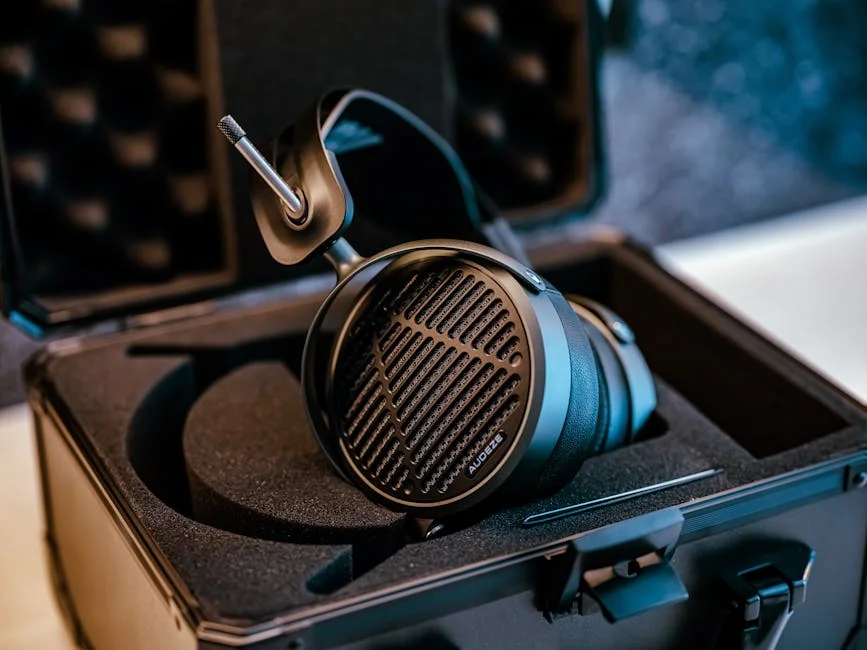
Open-back headphones dominate imaging discussions for a reason. The vented earcup allows air and sound to move more freely, reducing the standing wave buildup that closed designs trap against the ear. The result is a soundstage that extends outward rather than collapsing inward, instruments localize more naturally because there’s a more realistic sense of acoustic space surrounding each source.
Closed-back headphones can image well in narrow scenes, a drum kit, a tight vocal booth, but the sealed environment places a ceiling on width. For orchestral work, film score playback, or any recording engineered with a wide stereo field, open-back is the correct architecture.
Driver Technology and Transient Speed
Imaging precision requires fast transient response. A driver that smears the leading edge of a note, the attack before the sustain, blurs spatial cues. The ear uses those attack transients to locate sources; slow them down and the image softens.
Dynamic drivers with large, lightweight diaphragms handle transients well when the engineering is done right. Planar magnetic drivers, by contrast, move a large membrane uniformly and tend to resolve fine spatial detail in a different way, often with a more layered sense of depth rather than extreme width. Neither is universally superior for imaging; the implementation determines the outcome.
Frequency Response and Imaging Accuracy
A headphone with a strong peak in the upper midrange or lower treble can create a false sense of width, sounds appear further separated not because imaging is accurate, but because certain frequencies are being pushed forward. This is one reason neutral-measuring headphones are preferred for serious imaging work.
Excess bass can also smear the image. Heavy sub-bass energy bleeds into the spatial cues that live in the midrange and treble, making it harder to localize sources precisely. The most accurate imagers tend to be lean in the bass, which is a trade-off with listening enjoyment for many buyers.
Exploring the full range of open-back headphones before settling on a tuning profile is worth the time, especially if this is your first pair built around critical listening.
Amplification and Source Quality
Imaging headphones tend to be demanding. High impedance designs, and several of the most respected imagers sit above 150Ω, require enough voltage swing from the amplifier to control the driver properly. An underpowered headphone doesn’t just play quietly; the dynamic contrast compresses, and the sense of space collapses with it.
A proper DAC and amplifier stack isn’t optional for this category. Even headphones in the mid tier reveal the gap between laptop output and a dedicated source chain. The spatial information is present in the recording, the chain’s job is to pass it through without degradation.
Top Picks
Sennheiser HD 800 S
The Sennheiser HD 800 S is the reference point for imaging as the primary criterion. It is designed so that instruments occupy distinct, stable positions across a wide panorama that extends outside the physical boundary of the earcup.
That width isn’t a trick of frequency response emphasis. The HD 800 S achieves it through genuine spatial resolution, the ability to distinguish two instruments close together in the stereo field without blending them.
The trade-off is real and worth stating plainly. The treble presentation is bright, and some listeners find it fatiguing over extended sessions, particularly on poor source material or with amplifiers that add their own edge. It is usually paired with a warm tube amplifier, which rounds the upper frequencies without blunting the spatial resolution. On the wrong amplifier, the brightness becomes the defining characteristic.
This is aspirational coverage for most readers. The HD 800 S sits firmly in the premium tier, requires premium amplification to reach its potential, and represents a purchase that belongs at the end of a considered upgrade path, not the beginning of one.
Check current price on Amazon.
Sennheiser HD 600
The Sennheiser HD 600 is a common starting point for imaging, and for good reason. The soundstage isn’t as wide as the HD 800 S, and nothing at this price tier matches that, but the imaging within that stage is precise. The design aims for instruments in defined positions that hold stable as the music moves through complex passages.
What the HD 600 does well for its price is keep the presentation neutral. There’s no upper-midrange push creating artificial separation and no bass elevation muddying the spatial cues. Published measurements show a flat, slightly warm frequency response that doesn’t editorialize the recording, so the width you hear is the width in the recording rather than width the headphone is manufacturing.
The HD 600 is a useful benchmark for everything else on this list: a reference for midrange texture, spatial honesty, and what a neutral tuning sounds like. For anyone stepping up from consumer headphones, it is a sensible first move into critical listening territory.
Amplification matters. The gap between a laptop headphone jack and a proper stack, something like a Schiit Magni or JDS Atom, is real. It’s smaller than expected, but it’s there in the control of the low end and the stability of the image under dynamic peaks. The HD 600 rewards a decent source chain without demanding a premium one.
Check current price on Amazon.
AKG K712 Pro
The AKG K712 Pro occupies a specific and useful position in the imaging headphone conversation: it’s the studio-oriented open-back that adds meaningful bass extension to an otherwise analytical character. The K702, its predecessor, built a reputation in recording environments for its wide, airy soundstage and precise imaging. The K712 refines that formula with better low-end foundation and improved comfort through memory foam ear pads, making long sessions more sustainable without changing the fundamental character.
The imaging on the K712 Pro is strong by mid-tier standards. The soundstage width is generous for its price tier, and the relatively lean overall tuning keeps the bass from clouding the spatial cues in the midrange.
The trade-off: the K712 Pro is more analytical than warm, and listeners who prefer a fuller, more euphonic presentation will find it dry. Its bass improvement over the K702 is real, but it remains bass-light by consumer tuning standards. For mixing work and critical orchestral listening that is appropriate. For casual or long background sessions it can feel austere.
Check current price on Amazon.
Buying Guide
Matching Imaging Capability to Your Listening Purpose
The strongest imaging headphone for orchestral playback is not necessarily the strongest choice for gaming, mixing, or podcast critical listening. Each use case rewards different imaging characteristics. For film scoring and classical music, width and depth are both important, the ability to place the back of the orchestra distinctly behind the front section. For studio mixing, precise left-right localization matters more than depth illusion. Identifying which of these describes your primary use determines which headphone on this list makes the most sense.
Amplification Is Not Optional at This Level
All three headphones here perform below their ceiling on laptop or phone output. The HD 600 is more forgiving; a mid-tier stack handles it well. The K712 Pro at 62Ω is the most accessible, a portable DAC/amp handles it, but it still benefits from a clean source chain.
The practical guidance: if you’re not running a dedicated DAC and amp, prioritize the K712 Pro or HD 600 first. The HD 800 S is a destination purchase that assumes the rest of the chain is already resolved. Investing in amplification before the headphone is the correct sequencing for the premium tier.
Open-Back Is the Right Architecture for Imaging
Every headphone on this list is open-back, and that’s not a coincidence. The vented design allows the driver to breathe and creates the acoustic space that makes wide, accurate imaging possible. The trade-off is sound leakage, open-back headphones are unsuitable for shared spaces or quiet offices. If your listening environment is shared, a closed-back headphone with strong imaging exists, but it will not match the spatial performance of an open-back design at equivalent price points. Factor your environment into the decision before committing.
The Upgrade Path Matters
The headphones on this list represent distinct rungs on a hierarchy, and the jump between rungs is meaningful enough to plan for. The HD 600 is the correct entry point into reference-class imaging, it teaches you what accurate, neutral staging sounds like without demanding a premium amplification chain. The K712 Pro is a lateral move with a different character: wider out of the box in some ears’ perception, more analytical in tuning. The HD 800 S is a generational step, wider, more resolved, more source-dependent, and positioned as an endgame reference rather than a first serious purchase.
Browsing the full headphones catalog helps clarify where these three fit within the broader landscape, particularly if your needs include portability, isolation, or a different tuning signature. Knowing what you’re optimizing for before spending at the premium tier saves significant regret.
Treble Sensitivity Is a Real Variable
The HD 800 S’s brightness is its main caveat, but treble sensitivity as a personal factor applies across the list. Some listeners find the K712 Pro’s upper-midrange push fatiguing over multi-hour sessions; others do not. The HD 600’s smoother treble makes it the lower-risk choice for treble-sensitive listeners, and it does not sacrifice imaging honesty.
If treble fatigue has been a consistent problem with past headphones, the HD 600 is the lower-risk starting point. If possible, try the HD 800 S at a dealer demo or a friend’s setup before buying.
Frequently Asked Questions
Is the HD 800 S worth it if I already own the HD 600?
For most listeners, the HD 800 S and HD 600 represent different tiers of the same philosophy rather than direct substitutes. The HD 800 S offers a meaningfully wider soundstage and finer spatial resolution, these are real differences, not incremental ones. But the HD 800 S also demands premium amplification and rewards source quality in ways the HD 600 does not. If the rest of your chain isn't already resolved, the jump is premature.
What amplifier should I use with the HD 800 S?
The headphone's treble can become fatiguing on bright solid-state amplifiers, but a warm tube stage keeps the upper frequencies in check while preserving the spatial resolution the headphone is built around.
Can I use the AKG K712 Pro for gaming?
The AKG K712 Pro's wide soundstage and precise left-right imaging make it a strong choice for competitive gaming where positional audio matters. Its analytical tuning is actually an advantage here, the lean bass keeps low-frequency rumble from masking footstep transients and directional cues. It is not the most fun headphone for casual gaming with bass-heavy soundtracks, but for competitive play where imaging accuracy is the priority, it performs above its price tier.
Does the HD 600 need a dedicated amp for good imaging?
The Sennheiser HD 600 images well even from modest sources, but a dedicated amp, something like a Schiit Magni or JDS Atom, tightens bass control and stabilizes the image under dynamic peaks in a way portable outputs don't fully achieve. The gap is smaller than for many planar headphones, but it is present. For critical listening, a dedicated stack is worth adding, since the HD 600's neutral presentation is more fully realized with clean amplification.
How does the K712 Pro differ from the K702 for imaging?
The core imaging design of the K712 Pro and K702 is closely related: both are wide-staging, analytical open-backs tuned for reference monitoring. The K712 Pro adds bass extension that the K702 lacks, giving the low-frequency elements of a recording a more grounded foundation without narrowing the stage. The K712 Pro is the more versatile of the two for extended listening, while the K702 is the leaner option for clinical analysis work.
Where to Buy
- Sennheiser HD 800 S Over-the-Ear Audiophile Reference HeadphonesSee price on Amazon
- Sennheiser HD 600 Open-Back Audiophile HeadphonesSee price on Amazon
- AKG Pro Audio K712 PRO Over-Ear Reference Studio HeadphonesSee price on Amazon