FiiO Q7 Review: Portable DAC for Demanding Headphones

Affiliate disclosure: Some links on this page are affiliate links. If you buy through them we earn a small commission at no extra cost to you. Recommendations are research-driven; we don't claim personal use of every product reviewed. Product prices and availability are accurate as of the date published and are subject to change. Always check Amazon for current pricing before purchasing. Learn more.
THX AAA 788+ amplifier in a portable form factor
See FiiO Q7 Portable DAC/Amp THX AAA 788+… on AmazonThe FiiO Q7 occupies a specific and contested space in portable audio: it’s a DAC that doesn’t apologize for its size, built for listeners who want THX-grade amplification outside the home. Whether that trade-off makes sense depends heavily on what you’re driving and where you’re going with it.
Both things matter when deciding whether this belongs in a bag or stays on a desk.
What to Look For in a Portable DAC/Amp
Output Power and Headphone Matching
Portable DAC/amps exist on a wide spectrum of output capability. Most are designed for IEMs and efficient dynamic-driver headphones, the kind that run fine from a phone output with a little boost. The Q7 is not that category of product.
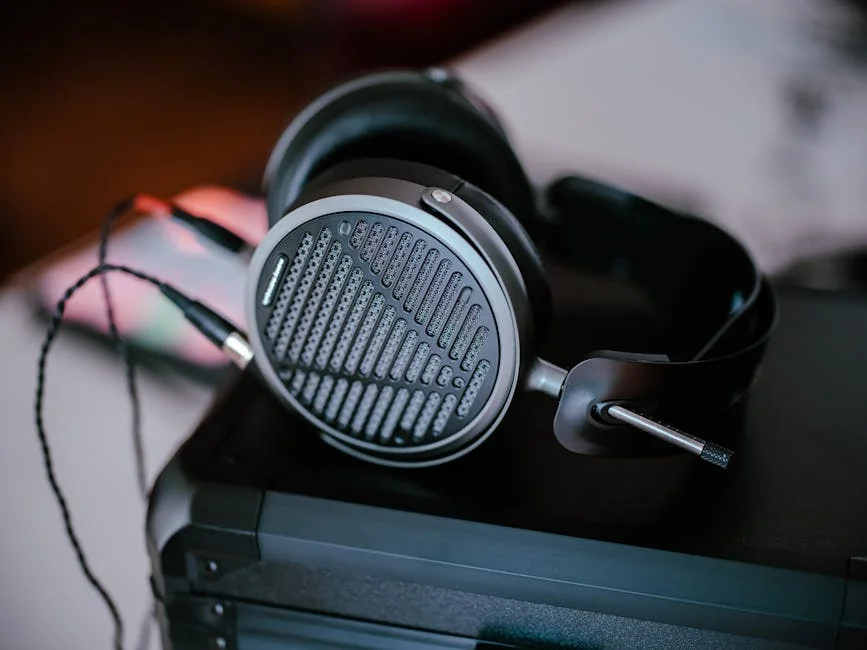
For demanding planar magnetic headphones, such as the HiFiMan Sundara or the Audeze LCD line, anything with a reputation for being “source-dependent”, the gap between adequate and capable amplification is real. Underpowered sources can leave these headphones sounding flat and dynamically compressed. Choosing a portable unit with sufficient headroom matters more than most buyers initially expect.
High output power in a portable form factor requires compromises: a larger battery, a larger chassis and more heat. Products that claim to handle planars at pocket size usually do so at reduced power modes that narrow the performance gap.
DAC Chipset and Amplifier Topology
DAC chipset choice drives a significant portion of how a unit measures. The ESS Sabre family, particularly the ES9038PRO, is a high-performance option with a very low noise floor and wide dynamic range. Published measurements of ES9038-based devices generally show strong technical performance.
Amplifier topology matters separately from the DAC stage. THX AAA (Achromatic Audio Amplifier) technology is designed to reduce intermodulation and crosstalk through a feed-forward error-correction architecture, and published measurements of THX AAA implementations generally show very low distortion. Whether you can hear the difference versus other competent implementations at moderate listening volumes is a reasonable debate; the measurements are not in dispute.
Input Options and Connectivity
A portable DAC/amp is only as useful as its connectivity. Wired USB-C input handles desktop-tethered use. Bluetooth with a high-quality codec, specifically LDAC, which operates at up to 990 kbps, extends usability to wireless sources. Not all portable units offer both, and the flexibility gap matters when your sources include a phone, a laptop and a DAP.
Balanced output adds another dimension. True balanced connections can double effective output voltage over single-ended in properly implemented designs, which directly extends the headphone-matching ceiling. If your headphones have a 4.4mm termination, a unit without a 4.4mm balanced output is a real capability gap.
Form Factor and Portability Realism
“Portable” is used loosely in audio marketing. Products range from pocketable dongles to units the size of a thick paperback. Before committing, consider how portability works in your use case: bag-portable and pocket-portable are different categories entirely.
Some buyers find that what they actually need is a desktop unit once they map their real listening habits, so the full range of portable and desktop DAC options is worth comparing before settling on a form factor.
Top Picks
FiiO Q7
The FiiO Q7 is a deliberate design choice: take THX AAA 788+ amplifier technology and an ESS ES9038PRO DAC, hardware you’d expect in a well-specified desktop unit, and put it in something that fits in a bag. The output power specification is aimed squarely at planar magnetic headphones, which portable competitors of similar size generally cannot drive as well.
Planar headphones like the HiFiMan Sundara respond to dynamic headroom, so a high-output unit like this is a more meaningful step up from a laptop output or a smaller portable than it would be for an efficient dynamic headphone.
The connectivity suite is comprehensive. LDAC Bluetooth, USB-C, coaxial and optical inputs cover most source scenarios. Balanced 4.4mm and single-ended 3.5mm outputs mean it pairs with most termination configurations. The single-ended gain modes (low, medium and high) add flexibility for pairing with sensitive IEMs without noise-floor issues.
Size is the honest counter-argument. This is a large portable unit: bag-portable rather than pocket-portable, and the distinction is meaningful. For commuters and gym use, it’s the wrong tool. For travel, desk-to-listening-room moves, or use with a DAP in a backpack, the size trade-off looks better.
Check current price on Amazon.
Buying Guide
Who Actually Needs a High-Power Portable DAC/Amp
Fewer people than the marketing suggests, and more than the skeptics claim. If your headphone library consists of efficient IEMs and a dynamic-driver headphone that runs fine from a phone, a premium portable DAC/amp with high output power is not the right tool, because the performance ceiling it offers isn’t the ceiling you’re hitting.
The calculus changes for planar magnetic headphones. Their thin diaphragms and relatively low sensitivity benefit from clean, high-current amplification, and portable use with planars is where a unit like the Q7 stops being a luxury and becomes the right tool for the job.
Desktop vs. Portable: Making the Honest Call
Before investing in a premium portable unit, map your actual listening habits. If most serious listening happens at a desk, a desktop DAC/amp stack at a similar or lower price delivers more performance per dollar on demanding headphones.
Portable makes sense when the use case is genuinely mobile: long-haul travel, working from multiple locations, or listening where a desktop setup isn’t practical. For desktop-first users who occasionally travel, the right answer may be a desktop primary unit and a modest portable secondary. The DAC options across both form factors vary enough that the comparison is worth making explicitly.
Bluetooth Codec Hierarchy
LDAC, aptX HD, aptX, AAC and SBC are not equivalent, and a unit’s Bluetooth implementation matters as much as its wired performance if wireless use is part of your workflow. LDAC at 990 kbps is currently the highest-bandwidth consumer Bluetooth audio codec in wide use.
Practically: LDAC matters if your main wireless source supports it, as most recent Android flagships do. iPhone users are limited to AAC, which narrows the Bluetooth quality ceiling regardless of the DAC/amp’s capability. Know your source chain before weighting Bluetooth quality as a purchase criterion.
Gain Modes and IEM Compatibility
High-output portable units create a secondary concern: noise floor and gain staging for sensitive in-ear monitors. A unit optimized for driving planar headphones at high gain may introduce audible hiss with sensitive IEMs at the bottom of the volume dial.
The Q7 addresses this with multiple gain modes. Low-gain operation reduces the noise floor for IEM use and increases fine volume-control resolution.
Battery Life and Real-World Portable Use
High output power draws battery. Units that advertise desktop-equivalent output in a portable chassis are, by design, drawing more current than lower-powered competitors, so battery life is shorter under high-gain, high-output conditions. Check FiiO’s stated battery life for the mode you’d use most.
For day trips and short travel, that is workable. For long-haul international travel, plan a charge cycle. Passthrough charging, where the unit charges from a power bank while powering headphones, is a common workaround. Verify that your use case fits the battery profile before committing.
FiiO Q7 Portable DAC/Amp THX AAA 788+ ESS9038PRO: Pros & Cons
- THX AAA 788+ amplifier in a portable form factor
- High output power handles planar headphones portably
- Large size compromises true portability
Frequently Asked Questions
Is the FiiO Q7 actually portable, or is it better described as a transportable unit?
Plainly: it's bag-portable, not pocket-portable. For commute or gym use, that distinction matters. For travel or moving between locations with a bag, it functions as intended.
How does the FiiO Q7 compare to a desktop DAC/amp stack for planar headphones?
For desk-only use, a dedicated desktop stack at a comparable price generally offers more output power headroom and more flexibility in pairing. The Q7's case is portability, it brings THX AAA 788+ performance into scenarios where a desktop stack isn't practical. If your planars never leave your desk, a desktop-first setup is the stronger argument. If you travel with demanding headphones, the Q7's mobile capability is the differentiator.
Does the LDAC Bluetooth on the Q7 meaningfully improve sound quality over a standard Bluetooth connection?
LDAC at 990 kbps represents the highest bandwidth available in consumer Bluetooth audio and delivers measurably higher quality than SBC or standard AAC. The audible difference depends on the quality of your source recording and your headphones' resolving capability.
Will the FiiO Q7 power HiFiMan Sundara headphones effectively from a phone?
The Sundara's planar driver benefits from the Q7's headroom in ways that smaller, lower-powered portable units don't provide. Via USB-C from a USB-OTG capable phone, a USB-C connection from an OTG-capable phone is the typical way to run it.
Is the FiiO Q7 worth considering for IEM use, or is it overkill?
For IEM-only use, the Q7's capabilities exceed what sensitive in-ear monitors require, and the size-to-benefit ratio favors a smaller, lower-cost solution. The Q7's multi-gain architecture does support IEM use in low-gain mode, so it can handle both IEMs and full-size planar headphones. If IEMs are your primary use case, the premium portable DAC/amp tier is likely more than you need.
Where to Buy
FiiO Q7 Portable DAC/Amp THX AAA 788+ ESS9038PROSee FiiO Q7 Portable DAC/Amp THX AAA 788+… on Amazon