Best IEMs for Gym Workouts: Top Picks for Every Budget

Affiliate disclosure: Some links on this page are affiliate links. If you buy through them we earn a small commission at no extra cost to you. Recommendations are research-driven; we don't claim personal use of every product reviewed. Product prices and availability are accurate as of the date published and are subject to change. Always check Amazon for current pricing before purchasing. Learn more.
| Product | Price Range | Top Strength | Key Weakness | Buy |
|---|---|---|---|---|
| Moondrop Aria 2 also consider | $ | LCP diaphragm dynamic driver with well-tuned Moondrop signature | Stock cable is functional but many choose to upgrade | Buy on Amazon |
| Moondrop CHU II also consider | $ | Exceptional performance-per-dollar at its ultra-budget price | Fixed (non-detachable) cable, cannot be replaced if damaged | Buy on Amazon |
| Tangzu Linsoul Tangzu Wan'er S.G. Dynamic Driver In-Ear Monitor also consider | $ | Budget-friendly single DD with smooth, pleasant tuning | Ultra-budget competition is fierce | Buy on Amazon |
| 7Hz Timeless AE Planar Magnetic IEM also consider | $$ | AE tuning revision addresses original Timeless treble peaks | Shell disc form factor uncomfortable for some ear geometries | — |
Finding IEMs that work at the gym means solving a problem most audio guides skip: the same qualities that make an IEM great for critical listening often make it miserable for a workout. Stability, sweat resistance, cord management, and tip seal under movement all matter before sound quality enters the conversation. These are the in-ear monitors that hold up when the environment doesn’t cooperate.
The four picks here range from ultra-budget to mid-fi planar. All four have detachable cables or fixed cables that have proven durable enough to warrant recommendation.
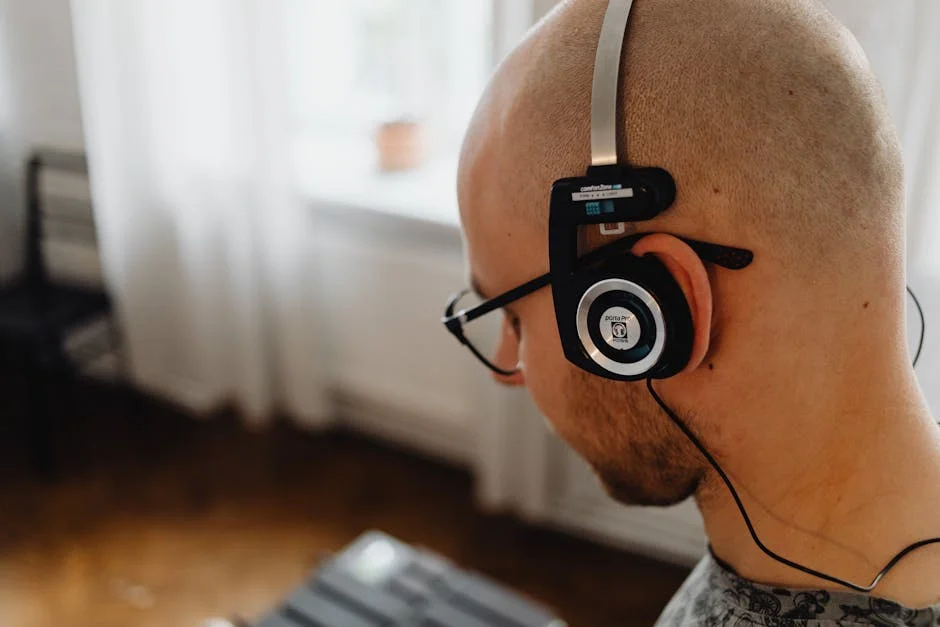
What to Look For in IEMs for the Gym
Fit and Stability
Stability is the foundational requirement. An IEM that sounds extraordinary while seated at a desk becomes useless if it migrates out of the ear canal during a set of deadlifts. Shell geometry, nozzle angle, and tip selection all contribute, and all three interact. A wider nozzle paired with the wrong tip diameter will lose seal on the first head movement. A narrow nozzle with a long bore length may sit too shallow to stay put under lateral force.
Over-ear cable routing is the single most reliable fix for stability issues regardless of shell design. When the cable loops over the ear and runs down the back of the neck, any tension from movement pulls down rather than outward, the IEM seats more firmly rather than unseating. Most cable-sport IEM guides say this; fewer explain why it works mechanically. For gym use, default to over-ear routing even on IEMs not explicitly designed for it.
Tip material matters more than most buyers realize early on. Silicone tips create a consistent seal but can slip in sweaty ear canals. Foam tips grip better after compression but may absorb moisture over time. Narrow bore tips affect treble presentation as well as seal. This is worth noting before writing off an IEM’s bass response after a single session: the seal gap, not the driver, is often the culprit. Trying two or three tip types before reaching a conclusion is time well spent.
Cable Durability and Sweat Resistance
Fixed cables and detachable cables present different risk profiles for gym use. A fixed cable that frays or shorts means replacing the entire IEM. A detachable cable that fails costs a fraction of the unit price and ships overnight from most IEM-focused retailers. For any IEM you expect to use in high-sweat conditions regularly, detachability is a meaningful durability advantage.
Most IEMs in the budget-to-mid tier are not IPX-rated. They survive incidental moisture, the sweat of a normal workout, rain, accidental splashes, but are not submersible or shower-proof. The practical threshold is whether the IEM can handle a hard session without shell ingress or driver damage.
Sound Isolation and Ambient Awareness
Passive isolation varies significantly across shell designs and tip combinations. More isolation means less ambient noise, which can be valuable in a loud gym, but complete isolation creates safety issues if you’re running outdoors or need to hear equipment warnings. Settling on an isolation level is a personal decision that depends on environment. Universal IEMs with deep-insertion tips tend to isolate more than shallow-fit designs; foam tips isolate more than silicone at equivalent insertion depth.
For most gym environments, moderate isolation is the practical target. Enough to reduce background noise and let the music sit clearly in the mix, without the complete ambient shutdown that makes you feel cut off from the floor. Exploring the full range of IEM options before committing to a shell style is worth the time if isolation is a primary concern, shell geometry differences across product lines are substantial.
Driver Type Trade-offs
Dynamic drivers and planar magnetic drivers behave differently at the gym. Dynamic drivers are generally more forgiving of fit variation, slight seal loss affects bass response but rarely produces the metallic, brittle quality that planars can exhibit when the driver isn’t properly loaded against the ear canal. Planar IEMs require a more consistent seal to perform as intended.
Planar drivers do offer genuine technical advantages: faster transient response, lower distortion at high SPLs, and a particular kind of resolution that dynamic drivers at similar prices rarely match. Those advantages are real and audible. They come with a fit requirement that’s worth understanding before committing to a planar shell for active use.
Top Picks
Moondrop Aria 2
The Moondrop Aria 2 earns its place in a gym bag through tuning as well as price. Its LCP diaphragm dynamic driver follows Moondrop’s house tuning: a slightly warm low end, natural midrange, and controlled treble. The Aria 2 refines the original Aria’s signature rather than reinventing it.
For gym use, the detachable 0.78mm 2-pin cable is the practical advantage that matters most. Cables wear out. Gym cables wear out faster. Having a cable replacement path that costs a few dollars rather than the full IEM price is the difference between an IEM lasting one year and one lasting three. The stock cable is functional, workmanlike, not exceptional, and most buyers route it over-ear with a light bend behind the pinna, which solves any stability issue the default configuration might present.
Tip selection is worth attention here. The Aria 2’s bass response is more affected by tip seal than most IEMs at this tier: shallow insertion or a mismatched tip bore diameter produces a leaner low end. The solution is not to conclude the IEM is bass-light but to try a tip with better compliance for your ear canal shape. Foam tips and wide-bore silicone are both worth trying, and the difference between a poor seal and a good one is audible.
The Aria 2 is the answer for buyers who want a genuinely well-tuned IEM they can use everywhere, commuting, gym, and at-home listening, without managing separate pairs for each context.
Check current price on Amazon.
Moondrop CHU II
The Moondrop CHU II is the entry point that makes the chi-fi IEM market hard to dismiss. At its ultra-budget price it uses a single dynamic driver with a controlled, Moondrop-style tuning, a cost-reduced version of the brand’s approach.
The fixed cable is the trade-off that defines the Chu II’s gym calculus. For buyers who treat IEMs as semi-disposable, replacing every year or two as something better emerges, the fixed cable is not a meaningful concern. For buyers who expect to route the same pair through years of daily gym sessions, the inability to replace a worn cable without replacing the entire IEM is a real limitation. The cable has held up better than expected for a unit at this price, but “better than expected” still has a ceiling.
Sound character is smooth and non-fatiguing, a tuning that favors long sessions over critical dissection. For gym use, that’s a reasonable priority. The Chu II is the strongest recommendation for absolute beginners who want to understand what a properly-tuned IEM sounds like before committing more money, and for any buyer whose primary concern is cost-of-ownership over a replacement cycle.
Check current price on Amazon.
Tangzu Wan’er S.G.
The Tangzu Wan’er S.G. occupies the same ultra-budget tier as the CHU II on different grounds. Where the CHU II follows Moondrop’s established tuning approach, the Wan’er S.G. is a single dynamic driver with a relaxed, smooth presentation: no harsh peaks and no aggressive upper midrange.
The detachable 0.78mm 2-pin cable distinguishes it practically from the Chu II at a similar price point. For gym use, that distinction matters for the same reason it matters on the Aria 2: cable lifespan is the most common failure point, and replaceability extends the effective ownership horizon. Community reception has been strong since release, with consistent notes on the natural midrange and the forgiving treble.
Technicalities are appropriately limited for the price tier, the Wan’er S.G. Does not resolve micro-detail the way step-up options do, and it doesn’t pretend to. The case for it is straightforward: buyers who want a pleasant-sounding, durable-enough, inexpensive IEM with a replacement cable path and a tuning that won’t cause ear fatigue over a long session will find it earns the recommendation.
Check current price on Amazon.
7Hz Timeless AE
The 7Hz Timeless AE is the most technically capable IEM on this list and the one that needs the most careful framing for gym use. The Anniversary Edition tuning revision was aimed at the treble peaks of the original Timeless, and the planar driver’s speed and resolution are the main argument for planars at mid-fi pricing. It currently has no working Amazon listing, so it is covered here for context.
The disc-form shell is the gym-specific complication. The flat, circular housing sits differently in the concha than a conventional IEM shell, and ear geometry interacts with this shape unpredictably, so fit varies by person. That is a fit-geometry question, not a tuning preference. Before choosing the Timeless AE as a gym IEM, consider whether the shell will seal consistently in your ear. If it doesn’t, the planar driver’s technical advantages won’t be audible.
For buyers whose ears work with the disc shell, the AE delivers resolution and transient speed that dynamic drivers at this price tier don’t match. The bass extension is linear and controlled, the midrange is fast and clean, and the revised treble sits clearly without the glare that made some listeners put the original Timeless down. The AE tuning is a meaningful improvement. At this price band in the mid-fi category, the planar technical argument is strong, if the fit works.
Check current price on Amazon.
Buying Guide

Budget Tier: What You Actually Get
The budget IEM market has changed. The chi-fi IEM segment at this price band is genuinely impressive. Buyers entering the category for the first time should not assume the floor is low, the floor has risen significantly.
What budget IEMs at this tier trade away is build refinement, cable quality, and technical performance under pressure. Soundstage is narrower, micro-detail retrieval is limited, and the physical construction tolerances are looser. For a gym IEM, none of those trade-offs are disqualifying. The audio environment in a gym is not a reference listening space.
Mid-Fi vs. Budget for Active Use
The Aria 2 sits in the lower-mid tier and represents a meaningful step up from ultra-budget options, more refined tuning, better build quality, and a detachable cable that supports long-term ownership. The 7Hz Timeless AE represents the upper end of mid-fi planar IEM value, with a technical performance jump that is audible under the right conditions.
For gym use: the gap between ultra-budget and the Aria 2 is noticeable and worth the step up for buyers who will also use the IEM outside the gym. The gap between the Aria 2 and the Timeless AE matters most during focused listening sessions and is harder to hear on a loud gym floor. The Timeless AE only makes sense for gym use if you value its technical performance in other contexts.
Detachable vs. Fixed Cable
This decision is simpler than most buyers make it. For any IEM you expect to use heavily in high-moisture conditions, detachable cable construction extends useful lifespan at a fraction of replacement cost. The Chu II’s fixed cable is the only option on this list that doesn’t offer replaceability. That’s acceptable at its price point, where the full-unit replacement cost is itself modest.
The 0.78mm 2-pin connector used by both the Aria 2 and the Wan’er S.G. Is the most common aftermarket cable standard in this segment. Replacement cables are available at every price level from functional to elaborate, functional is sufficient for gym use. Browse the broader IEM category if you want to compare connector standards before committing to an ecosystem.
Tip Selection: The Variable Most Buyers Skip
Tip selection is not an aftermarket luxury, it is an active variable that affects both fit and sound. Bore diameter, tip material, and insertion depth all interact with driver output and ear canal geometry in ways that can dramatically shift the perceived bass response of an IEM. The single most common complaint about IEM bass, “thin,” “not enough punch,” “sounds hollow”, is often a seal problem, not a tuning problem.
For gym use specifically, compliance matters. Soft silicone tips and memory foam tips maintain seal better under movement than stiffer silicone. If the Aria 2’s low end seems underwhelming, switching tips is the first thing to try. Trying at least two tip configurations before evaluating an IEM’s bass tuning is a reasonable practice. Most IEM packages include multiple sizes but not multiple materials, so a small aftermarket foam tip set is a worthwhile early purchase.
Fit Geometry and IEM Shell Design
Universal IEM shells divide broadly into ergonomic-custom-style designs and more idiosyncratic shapes like the Timeless AE’s disc form. Conventional ergonomic shells, the shape used by the Aria 2, Chu II, and Wan’er S.G., fit the majority of ear geometries predictably. The nozzle insertion angle and tip size dominate the fit outcome. The disc-form planar shell of the Timeless AE introduces a second fit variable: concha depth and helix geometry.
There is no substitute for having the IEM in your ear. For the Timeless AE specifically, treat the disc-form shell as a known fit variable rather than an edge case. If possible, try one in person or buy from a seller with an easy return policy before committing to the disc-form shell for active use.
Frequently Asked Questions
Are IEMs safe to use at the gym, given sweat exposure?
Fixed-cable designs carry more long-term risk because cable damage means full replacement. Detachable cable designs like the Aria 2 and Wan'er S.G. mitigate this by making the most failure-prone component inexpensive to swap.
Should I choose the Moondrop CHU II or the Tangzu Wan'er S.G. as my first gym IEM?
Both are strong ultra-budget picks with different practical profiles. The Wan'er S.G. has a detachable cable, which gives it a durability advantage for gym use if you expect to replace the cable after heavy sweating. For most first-time buyers, the detachable cable on the Wan'er S.G. is the deciding factor in an active-use context.
Is the 7Hz Timeless AE worth the price step-up over the Moondrop Aria 2 for gym use specifically?
The Timeless AE's planar driver advantage is most audible in controlled listening environments where you can focus on resolution and transient speed. On a loud gym floor, that gap narrows significantly. The stronger case for the Timeless AE is as a dual-purpose IEM, gym sessions and focused at-home listening, rather than a gym-only purchase. If portability and sound quality outside the gym are priorities, the step-up is defensible.
How important is over-ear cable routing for keeping IEMs stable during exercise?
Over-ear routing is the most reliable stability fix available without changing the IEM itself. Routing the cable over the ear pinna and down the back of the neck shifts the mechanical load so that cable tension seats the IEM more firmly rather than pulling it out.
Will different ear tips noticeably change how the Aria 2 sounds at the gym?
Yes, more than most buyers expect. Tip material, bore diameter, and insertion depth all affect seal, and seal affects bass response significantly on the Aria 2. If the stock bass seems underwhelming, switching to foam tips or a different silicone bore diameter can change it substantially. Evaluating an IEM's bass tuning without trying multiple tip configurations means you may not be hearing the IEM as tuned.
Where to Buy
- Moondrop Aria 2See price on Amazon
- Moondrop CHU IISee price on Amazon
- Tangzu Linsoul Tangzu Wan'er S.G. Dynamic Driver In-Ear MonitorSee price on Amazon