iFi Zen CAN Review: Budget Desktop Headphone Amp

Affiliate disclosure: Some links on this page are affiliate links. If you buy through them we earn a small commission at no extra cost to you. Recommendations are research-driven; we don't claim personal use of every product reviewed. Product prices and availability are accurate as of the date published and are subject to change. Always check Amazon for current pricing before purchasing. Learn more.
Balanced 4.4mm and 6.35mm outputs at budget pricing
Finding a desktop headphone amplifier that offers balanced output without stepping into mid-range pricing is a narrow target. The iFi Audio Zen CAN sits in that gap: a budget desktop amp from a British manufacturer with a clear point of view about how headphones should sound. Whether that point of view matches yours is the real question.
iFi builds the Zen CAN around two signature DSP features, XBass and XSpace, that position it differently from the measurement-optimized competition. For buyers browsing headphone amplifiers and weighing iFi’s approach against Schiit or the Topping and JDS options, the decision is less obvious than the spec sheet implies.
What to Look For in a Budget Desktop Headphone Amplifier
Output Power and Impedance Matching
Headphone sensitivity and impedance together determine how much an amplifier actually needs to do. A 300-ohm dynamic driver like the Sennheiser HD600 demands more voltage swing than a low-impedance, high-sensitivity IEM. Getting this wrong in either direction costs you: underpowered amps clip before reaching comfortable listening levels with demanding loads, and overpowered amps introduce audible noise with sensitive IEMs.
At the budget tier, output power specs deserve scrutiny. Manufacturers measure and report power at varying impedance loads, which makes direct comparison difficult. The useful question is whether the amp reaches your preferred listening level with meaningful headroom, without the volume knob pinned above nine o’clock.
Balanced vs. Single-Ended Topology
Balanced output, via 4.4mm Pentaconn or XLR-4, is increasingly available at budget pricing, and the Zen CAN is part of that shift. Balanced connections offer theoretical noise-rejection advantages, particularly in electrically noisy environments, and some headphones are terminated in balanced cables from the factory. The practical benefit on a quiet desktop stack is smaller than the marketing copy suggests.
Single-ended 6.35mm output remains the standard for most headphones. An amplifier offering both lets you use whichever cable you have, without forcing a recable for a theoretical gain. Before weighting balanced output heavily, confirm whether your specific headphone and use case would actually benefit. The broader landscape of headphone amplifiers at this tier is covered in the hub overview.
DSP Features: Useful Tool or Source of Coloration
Bass boost and soundstage-widening circuits have been common in consumer audio for decades. At the audiophile tier they arrived later, with more sophisticated implementation claims. The evaluation framework is simple: DSP adds to or subtracts from the signal. For headphones with a known frequency-response deficit, such as thin bass or narrow imaging, a well-implemented DSP circuit can correct a real problem. For headphones that measure well and are tuned to a deliberate target, DSP adds coloration you did not choose.
The relevant question for any DSP feature is whether you can disable it completely and return to a transparent signal path. An amp where DSP is always on is a different product from one where it is an optional tool.
Noise Floor and Measurement Baseline
At budget pricing, the noise floor spread between competing amplifiers is real. A sensitive IEM will reveal hiss that a 300-ohm dynamic driver masks entirely. If your primary headphone is a planar magnetic or a low-impedance IEM, check published measurements of noise floor and distortion before deciding whether the on-paper specs match your use case.
Measurement-optimized competitors from Topping and JDS Labs have reset expectations for distortion and noise at budget pricing, and that baseline is now the reference point against which everything else competes.
Top Picks
iFi Audio Zen CAN Balanced Headphone Amplifier
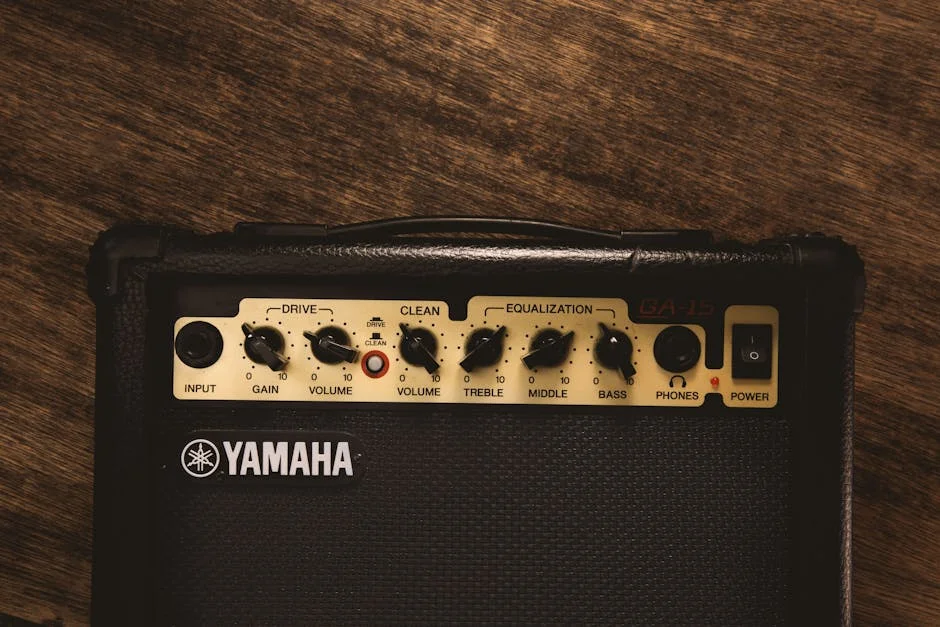
The iFi Audio Zen CAN leads with output flexibility. A 4.4mm balanced output and a 6.35mm single-ended output sit on the front panel, which covers most headphone cable configurations without an adapter. For a budget amp that is a real differentiator, as most alternatives at this tier offer only single-ended output.
A 300-ohm dynamic driver like the HD600 sits within the output range of an amp in this class, which makes the Zen CAN a reasonable match for high-impedance dynamics.
The XBass and XSpace controls are the most debated aspect of the Zen CAN. XBass is a shelf boost centered in the sub-bass region; XSpace is described by iFi as widening the perceived soundstage. Both are switchable. XBass is useful with headphones that roll off early in the low end. XSpace is more subjective, and whether it constitutes an improvement depends heavily on the headphone and the listener. The sensible approach is to treat both as optional tools and use them selectively.
Where the Zen CAN competes less convincingly is on measured performance. Published measurements place it below Topping’s competing offerings on distortion and noise metrics. The gap is unlikely to matter with most dynamic-driver headphones at normal listening levels, but buyers who weight measured transparency above other factors will find more optimized options at similar pricing. iFi’s design philosophy prioritizes a particular sonic character alongside technical performance, and the Zen CAN reflects that. For buyers who want that character, or who specifically want DSP flexibility, the measurement gap is an acceptable trade. For buyers whose priority is signal transparency above all else, the Topping or JDS alternatives are the stronger recommendation.
Check current price on Amazon.
Buying Guide
Matching the Amp to Your Headphone
The Zen CAN’s output suits high-impedance dynamic drivers such as the HD600, HD650 and Beyerdynamic DT 990. For planar magnetics the picture is more mixed: it should be adequate for many mid-tier HiFiMan and Audeze models, but without the grip that higher-current amps provide. If a planar magnetic is your primary headphone, verify that the Zen CAN’s output spec meets the manufacturer’s recommended power range before committing.
Sensitive IEMs are the most likely problem pairing. The Zen CAN’s noise floor is not exceptional in published measurement data, and sensitive IEMs are less forgiving of that than dynamic-driver headphones.
When DSP Features Justify the Choice
XBass and XSpace are the main reason to choose the Zen CAN over a more measurement-optimized competitor. If your headphone has a sub-bass roll-off that bothers you, XBass offers a hardware fix that doesn’t require EQ software, which is a meaningful quality-of-life feature if you prefer a hardware-only chain.
The case for XSpace is weaker. Widening the soundstage through phase manipulation is a more subjective effect than bass shelf correction. Treat it as a feature to audition, not a reason to buy.
Balanced Output: When It’s Actually Worth Weighing
Balanced 4.4mm output at budget pricing is the Zen CAN’s most concrete technical differentiator. If your headphone ships with a 4.4mm termination, or you’ve already had a cable recabled for balanced, the Zen CAN offers a clean entry point. If your headphone is terminated single-ended and you have no plans to change that, balanced output is a potential future benefit rather than an immediate one.
The argument for balanced in a quiet home environment is modest. The argument for having the option available without paying a premium is more practical. Headphone amplifiers at this budget tier rarely offer this combination, which is the real case for the Zen CAN’s value in this price band.
The Measurements Question
Topping’s competing budget amps outperform the Zen CAN on distortion and noise-floor metrics in published measurements. This is a real difference, not a marketing claim in either direction. Whether it is audible depends on your headphone, your listening level and your sensitivity to distortion artifacts.
For most HD600-class dynamic-driver listeners, the measured gap is unlikely to resolve into an audible one. For sensitive IEM users, or planar owners who plan to listen at higher volumes, it matters more. Prioritize measured performance if transparency is the primary goal; the Zen CAN’s advantages are elsewhere.
Considering the iFi Ecosystem
The Zen CAN belongs to iFi’s Zen line, which includes matching DACs. Pairing within a single manufacturer’s line can simplify a stack, but it is a bonus and not a requirement.
If you already own a DAC with RCA outputs, the Zen CAN connects via standard RCA inputs. Consider whether buying the full iFi stack is your likely path before using it as a deciding factor.
iFi Audio Zen CAN Balanced Headphone Amplifier: Pros & Cons
- Balanced 4.4mm and 6.35mm outputs at budget pricing
- XBass and XSpace DSP for tonal adjustment
- XBass/XSpace DSP features may color neutrally-tuned headphones
Frequently Asked Questions
Is the iFi Zen CAN good enough to drive the Sennheiser HD600?
The HD600 at 300 ohms needs a voltage-capable amp, and the Zen CAN is in the right class for that. The XBass shelf can gently compensate for the HD600's sub-bass roll-off if that's a preference.
How does the Zen CAN compare to the Schiit Magni at the same price band?
The Schiit Magni generally measures better on distortion metrics and delivers higher power output. The Zen CAN's advantage is balanced 4.4mm output and the switchable DSP features, two things the Magni does not offer. The choice reduces to whether balanced output or DSP utility matters to your setup, versus prioritizing raw measured performance and output power.
Can I use the Zen CAN with sensitive IEMs?
The Zen CAN can drive IEMs, but sensitive IEMs are its weakest pairing. Published noise floor measurements suggest background hiss may be audible with highly sensitive, low-impedance IEMs at close-to-silent listening conditions. Dynamic driver and higher-impedance headphones are the more natural fit. If IEMs are your primary use case, a purpose-designed IEM amplifier with a lower noise floor is worth considering.
Does the XBass or XSpace change the sound when switched off?
XBass off is the standard baseline for evaluation. iFi's design intent is that the amp functions as a transparent device when both features are disabled, with DSP available on demand. With both features disabled the signal path is intended to be unprocessed.
Should I buy the Zen CAN or wait and save for a mid-range amp?
For dynamic driver headphones in the HD600-class and below, the Zen CAN is a capable endpoint, not a placeholder. For planar magnetics, which respond more to amp quality and output current, a more powerful mid-range amp will extract more. If your current or planned headphone is a demanding planar, saving toward a higher-output amp is likely worth the wait. For everyone else, the Zen CAN is a legitimate long-term budget desktop solution.