Topping E50 Review: Transparent DAC for Serious Listeners

Affiliate disclosure: Some links on this page are affiliate links. If you buy through them we earn a small commission at no extra cost to you. Recommendations are research-driven; we don't claim personal use of every product reviewed. Product prices and availability are accurate as of the date published and are subject to change. Always check Amazon for current pricing before purchasing. Learn more.
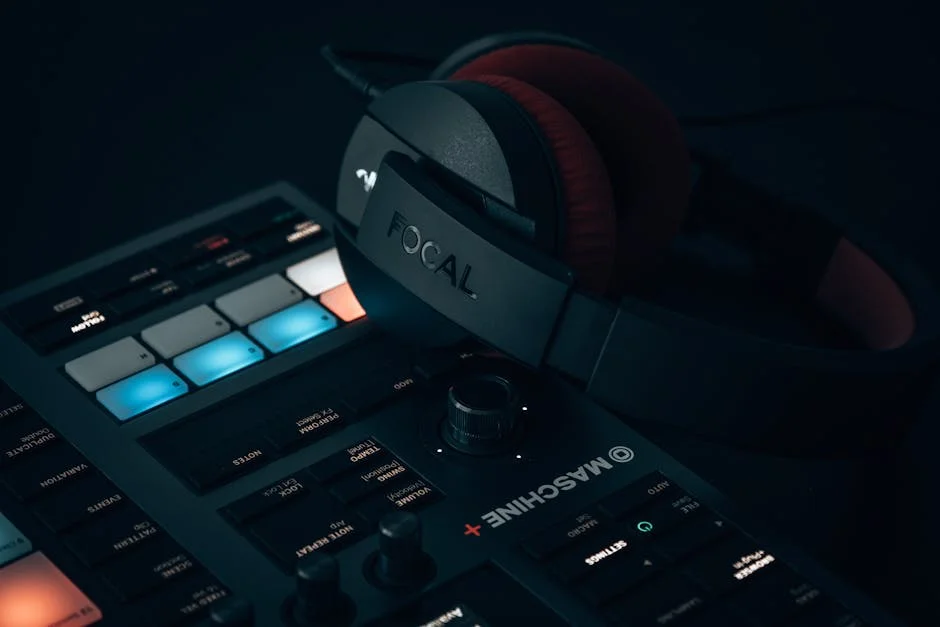
ES9068AS chip designed for low distortion and noise
See Topping E50 HiFi Balanced DAC ES9068A… on AmazonThe Topping E50 is a DAC built around the measurement-first argument at this price tier. For buyers building a serious DAC stack, it is a transparent, no-frills option.
The ES9068AS chip and balanced XLR output are what the spec sheet advertises. What the spec sheet doesn’t capture is how that transparency actually reads in daily use alongside planars and dynamic drivers alike.
Availability: the Topping E50 is no longer available new on Amazon. Its current successor is the Topping E50 II, which uses an AK4497S chip and adds app control and LDAC Bluetooth. This page remains a review of the original E50.

What to Look For in a Desktop DAC
Measurement Performance and Why It Actually Matters
Measurement performance is where many DAC conversations stall, because there is genuine disagreement about whether specs translate to audible differences. The short version: at the performance floor set by modern delta-sigma chips, differences between well-designed DACs are largely inaudible. The practical implication is that a DAC measuring well is a DAC you can stop thinking about, your headphones and amp are doing the audible work.
ASR’s methodology measures THD+N, dynamic range, and IMD under controlled conditions. Those numbers matter not because you’ll hear every decimal point, but because a DAC that measures poorly is introducing artifacts that can color the signal. A DAC that measures cleanly gets out of the way. For desktop system builders, that’s the goal.
Chip Architecture: ESS vs. AKM vs. R-2R
Three chip families dominate the current mid-range DAC market. ESS Sabre chips, including the ES9068AS in the E50, are associated with very low noise floors and strong measured performance. AKM chips tend toward a warmer presentation and recover well from Velvet Sound-era production gaps. R-2R ladder DACs use discrete resistor networks rather than delta-sigma processing and are favored by listeners who prefer what’s sometimes called a more “analog” character.
None of these is objectively superior. The meaningful question is whether you’re optimizing for measured performance, a specific tonal character, or a philosophical preference for implementation approach. For measurement-first buyers, ESS is the straightforward answer.
Output Configuration: Single-Ended vs. Balanced
A DAC with both RCA and balanced XLR outputs isn’t just offering connector flexibility, it’s offering a genuine performance difference on paper. Balanced connections carry signal on two conductors with opposite polarity and a ground, which theoretically doubles the signal voltage and improves common-mode noise rejection. In practice, whether that difference is audible depends heavily on your amplifier and listening environment.
If your amplifier accepts XLR inputs and your listening space has any interference sources, which a home office usually does, balanced connections offer a real-world benefit. If you’re running single-ended throughout, the RCA outputs will serve you fine.
Digital Inputs: USB, Optical, Coaxial
Most desktop system builders will use USB, and USB is where most mid-range DACs focus their implementation quality. But optical and coaxial inputs matter if you’re routing a TV, game console, or CD transport through the same DAC. Optical provides electrical isolation, useful if you’re dealing with ground loop noise from a shared power environment. Coaxial supports higher sample rates than optical in most implementations.
Matching your input selection to your actual source chain rather than theoretical maximum sample rate is the practical approach. A DAC with three inputs you’ll never use isn’t more capable than one with USB done well.
Volume Control and System Integration
Some DACs include analog volume control; others pass full-scale output to the amplifier and delegate volume entirely downstream. Neither approach is wrong, but they have different implications for system architecture. A DAC with variable output can run directly to a power amplifier, useful for simple speaker setups. A fixed-output DAC paired with an amplifier that has its own volume control keeps the gain stages clean.
For headphone systems with a dedicated amplifier, fixed output is generally preferable. For mixed-use setups where the DAC might occasionally feed powered monitors, variable output offers useful flexibility.
Top Picks
Topping E50
The ES9068AS chip is built for low distortion and a low noise floor, and the E50’s design goal is transparency: no added coloration.
The balanced XLR output is the configuration that makes the most of the E50’s spec, particularly paired with an amplifier that uses the balanced signal path. The front panel display shows sample rate and input selection. On the MQA question: the E50 supports MQA decoding for Tidal Masters playback. MQA is a contested format, and the ES9068AS chip would be the actual value driver here regardless. If you use Tidal and want native MQA unfold without software decoding, the feature is present and functional.
Where the E50 falls short is predictable: there’s no headphone output. It is a DAC, and it requires an amplifier downstream. For buyers building a dedicated desktop stack, that’s the intended use case. For buyers wanting an all-in-one solution, this isn’t it.
Check current price on Amazon.
Buying Guide
Matching a DAC to Your Amplifier
The most consequential pairing decision in a desktop headphone system isn’t DAC brand, it’s DAC-to-amplifier interface. A DAC’s output impedance should be well below the input impedance of the amplifier receiving it. Most modern DAC/amp combinations at the mid-range tier handle this correctly, but checking the spec sheets before buying matters.
If you’re buying a DAC to pair with a specific amplifier, verify whether that amplifier accepts balanced XLR inputs. A DAC with balanced outputs connected to an amplifier with only RCA inputs means you’re using an adapter and losing the theoretical benefit of the balanced connection. Match the output configuration to the amplifier you have.
Understanding the Measurement Case
Published measurements are a useful data source on consumer DAC performance. Measurement sites such as ASR publish SINAD (Signal-to-Noise and Distortion), dynamic range, and IMD under standardized conditions. For buyers who want to optimize for technical transparency, a published DAC ranking chart is a legitimate starting point, not the only criterion, but a reliable filter for units with obvious technical problems.
The practical ceiling matters too: human hearing has a noise floor. A DAC measuring 120 dB SINAD is not audibly distinguishable from one measuring 115 dB SINAD under normal listening conditions. The signal from measurement-optimized DACs is that you’re getting a clean implementation, not that you’ll hear every point of improvement on the chart.
Headphone Sensitivity and Source Matching
Planar magnetic headphones are more source-demanding than most dynamic drivers. Planars tend to be less efficient than dynamic drivers, so a source chain with enough power and a low noise floor matters more for them.
High-sensitivity IEMs present a different challenge: very low noise floors matter more because any hiss in the signal chain becomes audible. A DAC with excellent channel balance and low output noise is worth prioritizing if IEMs are part of your regular rotation.
MQA: Feature or Marketing?
MQA decoding is a feature listed on several mid-range DACs, including the E50. The format allows hardware-level “unfolding” of Tidal Masters files. MQA’s claimed benefits are disputed, and Tidal has since made full lossless streaming available without MQA.
If you use Tidal and prefer native hardware decoding, MQA support functions as advertised. If you’re using Qobuz or streaming FLAC locally, the feature is irrelevant to your use case. Don’t let it drive a purchase decision either direction.
When to Consider a DAC/Amp Combo Instead
Separate DAC and amplifier components make sense for buyers who want flexibility, to upgrade one piece independently, to run balanced connections, or to route to both headphones and speakers from the same source. The E50-and-separate-amp approach is the right answer for that use case.
For buyers who want simplicity and a smaller footprint, integrated DAC/amp units exist at every price tier. The trade-off is usually some measurement headroom and less flexibility on output configuration. For a single pair of easy-to-drive headphones on a desk with limited space, an integrated unit is a reasonable alternative to separates.
Topping E50 HiFi Balanced DAC ES9068AS MQA DSD512 PCM768kHz: Pros & Cons
- ES9068AS chip designed for low distortion and noise
- Balanced XLR and RCA outputs for flexibility
- MQA licensing is a marketing consideration, neutral tuning is the actual value
Frequently Asked Questions
Does the Topping E50 require a separate amplifier?
Yes, the E50 is a DAC only, with no headphone output. It requires a separate headphone amplifier or powered monitors downstream. Most buyers pair it with an amplifier like the Topping L50, which accepts the E50's balanced XLR output directly. If you want a single unit that handles both DAC and amplification, an integrated DAC/amp would be a better fit for your setup.
Is the ES9068AS chip meaningfully better than older ESS chips?
The ES9068AS is specified with a higher SINAD and lower noise floor than earlier ESS flagship chips. Whether that improvement is audible in a carefully matched system is a harder question, and the likely answer is no under normal listening conditions. The audible ceiling on well-implemented delta-sigma DACs is high enough that chip generation differences are mostly a spec-sheet story.
Does MQA support matter if I don't use Tidal?
No. MQA is a Tidal-specific format, if you stream from Qobuz, Apple Music, or local FLAC files, the E50's MQA decoding capability is simply unused. The ES9068AS chip and its measurement performance are what drive the E50's actual value, and those are fully available regardless of whether MQA is in the signal chain.
How does the Topping E50 perform with planar magnetic headphones versus dynamic drivers?
The E50's low noise floor and clean output help planars specifically, detail retrieval and dynamic headroom both benefit from a measurement-optimized source. For the HD600, the improvement over a decent laptop output is real but more modest than with planars.
Should I use the balanced XLR or RCA output from the E50?
Use balanced XLR if your amplifier accepts XLR inputs, the theoretical signal advantage and noise rejection are both present, and in a home office environment with USB cables and switching power supplies nearby, balanced connections provide a practical benefit. If your amplifier has only RCA inputs, the E50's RCA outputs are fully competent; running an XLR-to-RCA adapter to force a "balanced" connection doesn't recover the advantage. Match the connection to your amplifier's actual input stage.
Where to Buy
Topping E50 HiFi Balanced DAC ES9068AS MQA DSD512 PCM768kHzSee Topping E50 HiFi Balanced DAC ES9068A… on Amazon