Accessories

4.4mm Balanced Connector Guide: What It Is and Why It Matters

Affiliate disclosure: Some links on this page are affiliate links. If you buy through them we earn a small commission at no extra cost to you. Recommendations are research-driven; we don't claim personal use of every product reviewed. Product prices and availability are accurate as of the date published and are subject to change. Always check Amazon for current pricing before purchasing. Learn more.
4.4mm Balanced Connector Guide: What It Is and Why It Matters

Quick Picks

Also Consider

ZMF Headphones Universe Earpads for Headphones

Premium materials and ZMF craftsmanship for long-term comfort

Also Consider

ZMF Verite Earpads Premium Headphone Earpads

ZMF premium material options in a larger, deeper cup design

Also Consider

ZMF Auteur Classic Earpads

Designed for ZMF Auteur , premium quality assured

Product Price RangeTop StrengthKey Weakness Buy
ZMF Headphones Universe Earpads for Headphones also consider $$ Premium materials and ZMF craftsmanship for long-term comfort Premium pricing for earpads , significant upgrade cost
ZMF Verite Earpads Premium Headphone Earpads also consider $$ ZMF premium material options in a larger, deeper cup design Available primarily direct from ZMF , not reliably Amazon stock
ZMF Auteur Classic Earpads also consider $$ Designed for ZMF Auteur , premium quality assured Only available direct from ZMF Headphones website
Dekoni Audio Elite Hybrid Earpads for Sennheiser HD600 HD650 HD660S HD6XX also consider $$ Widely available on Amazon Prime , no wait for direct orders Changes sound signature , HD 600 owners should test carefully Buy on Amazon
Dekoni Audio Elite Hybrid Earpads for HiFiMan Sundara HE-400i also consider $$ HiFiMan Sundara-specific fit with Elite Hybrid materials Pad swap changes Sundara frequency response , measure before committing Buy on Amazon
Dekoni Audio Elite Sheepskin Earpads for Beyerdynamic DT Series also consider $$ Premium sheepskin leather for comfort and isolation improvement Sheepskin changes sound signature , treble and bass affected Buy on Amazon
Dekoni Audio Elite Earpads for Audeze LCD Series Headphones Elite Velour also consider $$ Premium velour material for comfort in long listening sessions Velour can change the sound seal and bass response vs. leather Buy on Amazon
Brainwavz Hybrid Memory Foam Earpad Black PU/Velour Large Over-Ear also consider $ Budget-friendly premium hybrid earpad material Universal fit may require adaptation on some headphones Buy on Amazon

If you’ve spent any time in headphone communities, you’ve probably seen earpad swap threads sitting right next to debates about balanced output connectors. The 4.4mm balanced connector has become the dominant standard for portable balanced audio, but earpad upgrades are the quieter, often more impactful hardware change that owners of mid-tier headphones tend to overlook. This article covers both threads: what the 4.4mm connector actually is and why it matters, and which earpads are worth considering once your balanced cable situation is sorted.

Three years into this hobby, I’ve learned that accessories shape the listening experience more than the marketing cycle suggests. Earpads wear out, change seal, and alter frequency response in measurable ways. For everything else in the Accessories category, the same principle holds: the boring stuff matters.

accessories product image

What Is the 4.4mm Balanced Connector?

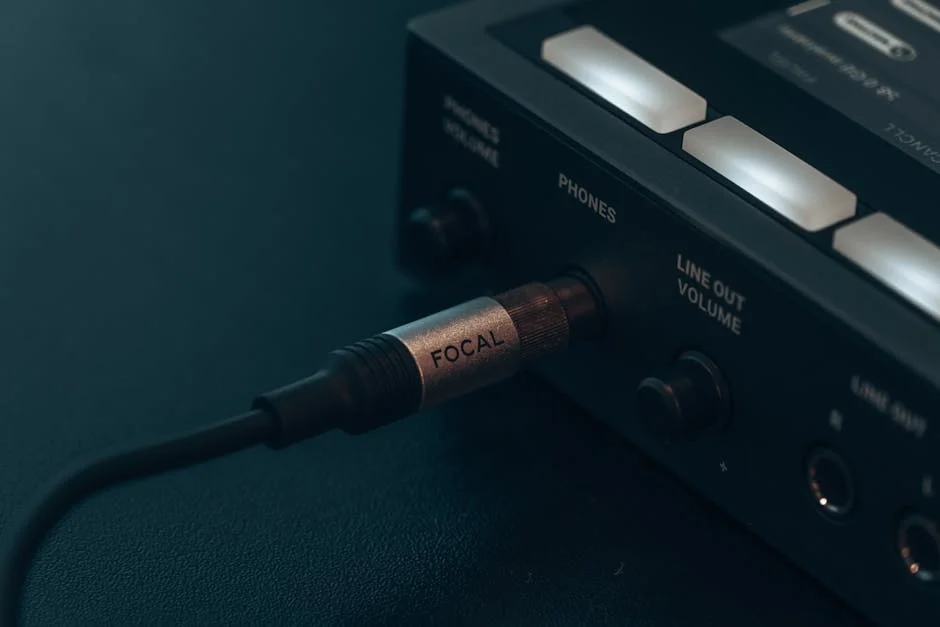
The 4.4mm balanced connector, formally known as the JEITA RC-8141B standard (sometimes called the Pentaconn connector after the company that popularized it), is a five-pole audio connector designed specifically for balanced headphone output. It arrived in the consumer audio market around 2016 and has since become the closest thing the portable and desktop headphone world has to a unified balanced standard.

Why Balanced Output Matters

Balanced audio runs two signal paths per channel, one inverted relative to the other, and recombines them at the headphone driver. The main technical advantage is common-mode noise rejection: interference that couples into both signal legs equally gets canceled at the point of recombination. On a well-designed balanced output stage, you also get doubled voltage swing compared to single-ended output from the same supply rails, which means more headroom before clipping.

On my Topping stack, the L50 offers both 4.4mm balanced and standard single-ended output. The measured output power specs are meaningfully different between the two. For the HD600 and Sundara, both of which are sensitive enough to run easily from single-ended, the balanced output gives the amplifier more voltage headroom to work with, which matters most at lower impedance loads or when you’re pushing dynamics on something like orchestral music or dense electronic production.

I want to be careful here. The audible difference between a clean single-ended output and a clean balanced output, on well-measuring gear at moderate listening levels, is small enough that I’d call it situational rather than universally significant. What I can say confidently is that the 4.4mm connector is the right infrastructure choice for balanced-capable gear because of what it standardizes rather than what it magically improves.

The Connector Landscape Before 4.4mm

Before the 4.4mm connector gained traction, balanced headphone output was handled by a fragmented mess of connector types. The XLR4 four-pin connector (a large, studio-style locking connector) was the original desktop standard and remains common on full-size balanced amplifiers. Dual three-pin XLR (one per channel) appears on some reference-grade equipment. Sony briefly pushed 4.4mm in its Walkman line, which gave the format significant momentum in the portable market.

The 2.5mm TRRS balanced connector had a moment as the de facto portable balanced standard, used on the Astell&Kern players and many aftermarket cables. The problem was mechanical fragility. At 2.5mm diameter, the connector is genuinely delicate, and broken pins at the socket became a common complaint in portable player communities.

The 4.4mm five-pole connector solves the fragility problem with a larger, more robust physical format while carrying the same signal topology: left positive, left negative, right positive, right negative, and ground. The five-pole design also allows mono-balanced operation or shared ground configurations depending on implementation.

Current Adoption and Practical Considerations

Today, the 4.4mm connector is supported natively by Sony, Astell&Kern, FiiO, iBasso, and most mid-tier to premium portable players. On the desktop side, Topping, SMSL, and most balanced DAC/amp stacks include it alongside XLR4. HiFiMan, ZMF, Meze, and many headphone manufacturers now offer 4.4mm cable options or include them in the box.

For source chain decisions: if you’re buying a balanced portable player or a balanced desktop amp stack in the current market, 4.4mm is the safe standardization choice. XLR4 remains appropriate for desktop-only setups. The 2.5mm connector is fading, and while adapters exist, building a cable ecosystem around a fragile connector in 2025 is a decision worth reconsidering.

One important note: a 4.4mm to single-ended adapter (passive) will work electrically, but a balanced source into a single-ended headphone does not deliver the common-mode noise rejection benefit. The signal recombination happens at the headphone driver, and a standard single-ended headphone wired from both signal legs just ties them together. You’re not gaining balanced performance through an adapter, though you’re not damaging anything either.

Earpad Upgrades: Why They Matter More Than You’d Expect

Earpads are a consumable. The stock pads on most mid-tier headphones are designed to a cost target, and after 18 months of regular use, the foam compresses, the outer material cracks or pills, and the seal degrades. I noticed this specifically on my HD600: replacing the stock pads with fresh ones after about 18 months of daily use changed the perceived low-frequency extension noticeably. The old pads had flattened enough to alter the seal geometry, which rolled off bass extension. Fresh pads, same headphones, different presentation.

Beyond simple replacement, pad material and thickness affect frequency response in ways that measurements can confirm. Dekoni has published FR comparisons for some of their pads, and the community on Head-Fi has generated measurement data for earpad swaps on the Sundara and HD 600 families that shows non-trivial shifts in the 100Hz to 4kHz region. This isn’t audiophile mythology: it’s physics. The acoustic volume between the driver and your ear, the compliance of the material against your head, and the angle at which the driver sits relative to your ear canal all change with pad thickness and stiffness.

Polite skepticism on cables is warranted. Skepticism on earpads is not.

Top Picks

ZMF Universe Earpads for Headphones

The ZMF Headphones Universe Earpads for Headphones are the pads I use on both my HD600 and my Sundara (2020 revision). ZMF offers the Universe pad in multiple material options: suede, cowhide, and lambskin, each with slightly different acoustic properties and feel. These are handcrafted in the U.S., and the build quality is immediately apparent. The stitching is clean, the foam density is consistent, and the material feels substantially more premium than what ships on either headphone stock.

On the HD600, the Universe pads changed the comfort profile more than the sound signature. Fit is direct on the Sennheiser mounting system. The suede option runs softer against the skin over long sessions, which matters for a headphone I’m wearing for two-plus hour stretches. Sound changes are subtle, and I’d frame them as secondary to the comfort and material longevity story. The Sundara fit requires checking ZMF’s compatibility notes on material and ring sizing, but verified buyers report positive results across the HiFiMan family. At mid-range pricing for an earpad, this is the premium option for HD600 and Sundara owners who want the best available material and are willing to order direct or through the ZMF Amazon listing.

Check current price on Amazon.

ZMF Verite Earpads Premium Headphone Earpads

The ZMF Verite Earpads Premium Headphone Earpads are designed for ZMF’s Verite flagship headphone and feature a larger, deeper cup shape compared to the Universe pads. Verified buyers report that the additional depth creates more ear-to-driver distance, which shifts the sound presentation toward a slightly more spacious character. The pad is available in ZMF’s full material range and can be adapted to Sennheiser and HiFiMan headphones via ZMF’s adapter rings, though field reports from the Head-Fi ZMF thread indicate you should confirm ring sizing for your specific headphone model before purchasing.

The primary caveat here is availability. ZMF produces these in batches, and they frequently sell out on the ZMF website. Amazon stock is inconsistent. If you’re targeting Verite pads for a non-ZMF headphone, build in lead time and check zmfheadphones.com directly. Owner reviews consistently describe the material quality as matching ZMF’s reputation for premium construction.

Check current price on Amazon.

ZMF Auteur Classic Earpads

The ZMF Auteur Classic Earpads are designed for the ZMF Auteur Classic headphone and represent a distinct pad geometry from the Verite and Universe lines. Spec data from ZMF shows a shallower cup profile compared to the Verite pads, with a medium ear cavity depth suited to the Auteur’s driver placement. Like the Verite pads, these can be used on other headphones with the appropriate adapter rings, and the community on Head-Fi has documented use cases on Sennheiser 600-series and Beyerdynamic platforms.

Owner reviews note the same premium material quality consistent across ZMF’s pad lineup. These are available exclusively through ZMF Headphones directly, and batch availability applies here as it does for the Verite pads. For buyers who want ZMF material quality and are not specifically targeting Universe or Verite geometry, the Auteur pads offer a third option with a distinct acoustic profile that field reports describe as slightly warmer than the Universe option.

Check current price on Amazon.

Dekoni Audio Elite Hybrid Earpads for Sennheiser HD600 HD650 HD660S HD6XX

The Dekoni Audio Elite Hybrid Earpads for Sennheiser HD600 HD650 HD660S HD6XX are the most accessible premium earpad upgrade for the Sennheiser HD 6XX family. Available on Amazon Prime with consistent stock, these use a hybrid construction: a velour face on the interior ear contact surface, a sheepskin outer ring, and a memory foam core. Dekoni has published frequency response comparisons showing how these pads change the HD600’s response, and the community consensus on ASR and Head-Fi is that the changes are audible but measured rather than dramatic.

Verified buyers report improved comfort over stock pads, particularly during longer sessions where the memory foam adapts better than the stock foam. The velour interior is softer than stock, and the sheepskin outer ring improves durability. The sound signature note worth flagging: Dekoni’s own data shows a small bump in the mid-bass and a slight change in the upper midrange transition compared to stock. For HD600 owners tuning toward a warmer presentation, that’s neutral-to-positive. For owners who want to preserve the HD600’s famously linear midrange character, check the FR comparisons on Dekoni’s site before committing.

Check current price on Amazon.

Dekoni Audio Elite Hybrid Earpads for HiFiMan Sundara HE-400i

The Dekoni Audio Elite Hybrid Earpads for HiFiMan Sundara HE-400i bring the same Elite Hybrid material construction (velour face, sheepskin ring, memory foam) to the Sundara and HE-400i platform. Field reports from verified buyers are broadly positive for comfort, with the memory foam improving on the Sundara’s stock pad, which compresses noticeably after extended use. Amazon Prime availability makes these a practical option for Sundara owners who want an upgrade without the lead time of ordering direct from ZMF.

The frequency response caveat for the Sundara is worth stating clearly. Planar magnetic headphones in general, and the Sundara specifically, are sensitive to pad geometry changes. Crinacle’s measurement database and independent measurements posted on Head-Fi show that pad changes on the Sundara can shift bass extension and treble character by amounts that are clearly audible, not just measurable. Before committing to any pad swap on the Sundara, recommend looking at existing community measurements for whichever pad you’re considering. The Dekoni Elite Hybrid is a well-documented swap, and the community data suggests the changes are manageable.

Check current price on Amazon.

Dekoni Audio Elite Sheepskin Earpads for Beyerdynamic DT Series

The Dekoni Audio Elite Sheepskin Earpads for Beyerdynamic DT Series are designed for the DT 770, DT 880, and DT 990 family. The full sheepskin leather construction (compared to the hybrid approach of the HD600 and Sundara versions) offers a different acoustic seal characteristic from the stock velour pads that ship on the DT 990 Pro in particular. Verified buyers report improved isolation and a more closed, intimate presentation on the DT 770, and on the DT 990, field reports indicate the sheepskin affects both bass extension and treble character in ways that can tame the DT 990’s notorious treble emphasis.

That treble note cuts both ways. If you’re using DT 990 Pros specifically because you want that pronounced treble character for detail monitoring, sheepskin pads may not be the right call. The bass and treble shifts documented in community measurements are meaningful, not subtle. For DT 770 and DT 880 owners who want a comfort and durability upgrade with secondary sound changes, the material quality from Dekoni is a clear step up from stock.

Check current price on Amazon.

Dekoni Audio Elite Earpads for Audeze LCD Series Headphones Elite Velour

The Dekoni Audio Elite Earpads for Audeze LCD Series Headphones Elite Velour address a specific complaint from Audeze LCD owners: the stock leather pads, while accurate acoustically, can become uncomfortable during extended sessions due to heat buildup and the weight of the headphone pressing the leather against the skin. The Elite Velour option uses Dekoni’s premium velour material over a memory foam core, replacing the leather contact surface with a breathable fabric that verified buyers describe as significantly more comfortable in sessions over one hour.

The acoustic trade-off is real. I briefly heard an LCD-X at the Texas Audio Society meetup (about 20 minutes, not a serious evaluation). The stock leather pads on that unit had a sealed, focused character that contributes to the LCD line’s bass authority. Field reports from verified buyers of the Dekoni velour pads for LCD indicate that the reduced seal from velour versus leather softens bass extension and changes the soundstage character slightly. For measurements, I defer to ASR’s data and Audeze’s own pad comparisons. For buyers prioritizing listening comfort over maximum acoustic performance, the velour option is the documented trade-off.

Check current price on Amazon.

Brainwavz Hybrid Memory Foam Earpad Black PU/Velour Large Over-Ear

The Brainwavz Hybrid Memory Foam Earpad Black PU/Velour Large Over-Ear pads (the HM5-style hybrid) are the budget entry point in the aftermarket earpad category and have been a community favorite for large over-ear headphones for years. The construction pairs a PU leather outer face with a velour interior contact surface, over a memory foam core. At budget pricing, these pads are significantly more accessible than the Dekoni or ZMF options, and field reports from verified buyers show successful use on AKG K-series, Audio-Technica ATH-M series, and various HiFiMan models.

The universal fit design means compatibility varies. On the ATH-M50x, which uses a proprietary pad attachment system, buyers report needing light modification or a third-party adapter ring to get a clean fit. On AKG K701/K702 series, the fit is more straightforward. Sound changes from the HM5 pads depend heavily on what you’re replacing: the hybrid material and increased pad depth relative to stock on many headphones shifts the driver distance and can affect treble energy noticeably. For budget-tier earpad upgrades where you want a meaningful material improvement without a significant spend, the Brainwavz hybrid is the consensus starting point.

Check current price on Amazon.

Buying Guide: Choosing Earpads and Balanced Cables

accessories product image

There’s a reason earpad and cable upgrade discussions tend to happen in the same forums where balanced connector debates live. Both are downstream accessories decisions that follow headphone purchase. The framework below is how I’d approach both categories, drawing on community consensus for the tiers above my personal experience.

Matching Earpads to Your Headphone Platform

The most important variable in earpad selection is whether a pad is designed for your specific headphone or is adapting via a universal fit system. Direct-fit pads (ZMF Universe for the HD600 family, Dekoni Elite Hybrid for specific model families) are lower-risk because the acoustic geometry has been characterized for that headphone. Verified buyers and community measurements exist specifically for those combinations.

Universal fit pads like the Brainwavz HM5 require more research. Check Head-Fi’s earpad swap threads for your specific headphone model before purchasing. The fit consistency and acoustic outcome varies meaningfully by headphone.

For all things accessories and cables, the Accessories hub is a good starting reference for community-vetted options.

Earpad Material and Acoustic Trade-offs

Velour pads are breathable, comfortable in long sessions, and typically reduce bass extension due to a less complete seal. Leather and pleather pads seal better, extend bass, and increase warmth at the cost of heat buildup during extended use. Suede and lambskin (ZMF’s material options) fall between the two in seal character, and owner reviews describe them as more comfortable than either leather or standard velour against the skin.

Memory foam density matters as much as surface material. Denser foam maintains pad height over time and preserves the driver-to-ear distance geometry that shapes treble response. Cheaper foam compresses after months of use, which is the same degradation mechanism that made me notice the HD600 low-end change when I swapped in fresh stock pads.

For planar headphones specifically (Sundara, Audeze LCD series), earpad changes have outsized FR effects. Approach these swaps with measurement data from the community in hand, not just subjective impressions.

The 4.4mm Balanced Connector: Infrastructure or Performance Upgrade?

The question I hear at meetups is whether a balanced cable with a 4.4mm connector is a meaningful upgrade or just expensive infrastructure. The honest answer depends on your source chain. If your amplifier or DAP offers a balanced output stage with higher voltage headroom than the single-ended output, and your headphones are wired to support balanced operation (either dual-entry or a re-terminated cable), then the balanced output will deliver the electrical advantages it’s designed to provide.

If your amp’s balanced output measures identically to its single-ended output (some budget implementations wire the balanced jack passively from the single-ended stage), there is no technical benefit. Consult ASR’s measurements for your specific amp before purchasing a balanced cable primarily for performance reasons.

Community consensus across Head-Fi, ASR, and Resolve Reviews is that the 4.4mm connector is the correct infrastructure choice for new balanced cable builds in the current market, given its mechanical durability advantage over 2.5mm and its broader adoption compared to XLR4 in portable contexts.

Budget Allocation Across Accessories

Accessory spending has an opportunity cost. Earpads at the mid-range price band are a defensible upgrade if your stock pads are worn, if you have a specific comfort complaint (heat, pressure on ears), or if community measurements show the pad change moves your headphone’s response toward your preference target. They are harder to justify as a purely sonic upgrade on headphones where the stock pads are intact and fresh.

Balanced cables are a defensible spend if your source chain supports a genuinely balanced output stage and you’re doing a new cable build anyway. They are a questionable spend if you’re upgrading a cable primarily for the expectation of sonic improvement on a source chain that doesn’t implement balanced output meaningfully.

For more context on budgeting accessory purchases and building a sensible source chain, the full accessories and guides section covers cables, cases, and source gear.

accessories product image

Frequently Asked Questions

Does a 4.4mm balanced cable actually improve sound quality?

The answer depends on your source equipment. A properly implemented balanced output stage offers higher voltage swing and common-mode noise rejection compared to single-ended. If your amplifier or DAP delivers meaningfully higher output power or lower noise from its balanced output (check ASR’s measurements for your specific unit), the electrical advantages are real. If the balanced output is a passive wiring adaptation of the single-ended stage, there is no technical benefit to the balanced cable itself.

Will swapping earpads change the sound of my headphones?

Yes, and sometimes significantly. Pad material, thickness, and seal geometry all affect frequency response, particularly in the bass and treble regions. Planar magnetic headphones like the HiFiMan Sundara are especially sensitive to pad changes. Before committing to a pad swap for sonic reasons, search Head-Fi or Crinacle’s community for measurements specific to your headphone and the pad you’re considering.

Is the 4.4mm connector compatible with all balanced amplifiers?

No. While 4.4mm has become the dominant standard in portable and many desktop balanced applications, some desktop amplifiers use XLR4 (four-pin XLR) or dual three-pin XLR for balanced output. Passive adapters between 4.4mm and XLR4 exist and work correctly as long as the pin-out is confirmed to match. Always verify your amplifier’s balanced connector type before purchasing cables.

How often should I replace my headphone earpads?

Most earpad materials degrade meaningfully within 12 to 24 months of regular daily use, depending on material and conditions. Protein leather and pleather tend to crack and peel faster than suede or velour in high-humidity environments. The practical test is whether the foam has compressed enough to change the driver-to-ear distance noticeably, or whether the seal against your head feels inconsistent. If you notice a change in bass response or comfort that you can’t explain by source chain changes, worn pads are worth investigating first.

Can I use ZMF earpads on non-ZMF headphones?

In many cases, yes. ZMF designs some pads (like the Universe) with direct compatibility for specific headphones including the Sennheiser HD 600 family and HiFiMan Sundara. Other ZMF pad models (Verite, Auteur) are designed for ZMF headphones but can be adapted to other platforms using ZMF’s adapter rings. Check ZMF’s compatibility documentation and cross-reference with Head-Fi owner reports for your specific headphone before purchasing, since ring sizing and cup geometry vary by model.

accessories product image

Marcus Tran

About the author

Marcus Tran

UX researcher, mid-size SaaS company (Austin, TX). Self-described "three years in" hobbyist audiophile. Started March 2022 (Sennheiser HD600 on Drop deal). Headphones owned: HiFiMan Sundara (2022 revision, purchased new October 2023, daily driver), Sennheiser HD600 (original; still used for reference), Audio-Technica ATH-M50x (kept for closed-back utility), Sony WH-1000XM5 (travel/ANC). IEMs owned: Moondrop Blessing 3 (daily driver IEM), Moondrop HEXA (backup/commute). Gear sold: Kiwi Ears Quartet, 7Hz Timeless (both replaced by Blessing 3 upgrade). Primary desktop chain: Schiit Modi+ DAC + Schiit Magni+ amp. Backup: FiiO DX3 Pro+ (also used as standalone DAC/headphone amp). Portable: FiiO BTR7 (primary Bluetooth DAC/amp), Qudelix 5K (used for EQ work and IEM chain). Source: Mac mini M1, Qobuz Studio subscription. Saving for Focal Clear MG — first planned flagship-tier purchase. Lives with partner Hannah (clinical psychologist) in East Austin (two-bedroom apartment; spare room is listening space and home office). B.A. Cognitive Science, UT Austin (2014). Does not attend audio meetups. Reads ASR, Head-Fi, Crinacle, Resolve Reviews, Currawong daily. Does not accept loaner gear. Not a professional reviewer. Does not claim expertise outside entry-to-mid-tier. · Austin, Texas

Three years into the hobby. UX researcher in Austin, TX. Sundara daily driver, Schiit Modi+/Magni+ stack, Blessing 3 for IEMs. Writes the guides I wish I'd had when I started.

Read full bio →