Audiophile vs Studio Monitors: Key Differences Explained

Affiliate disclosure: Some links on this page are affiliate links. If you buy through them we earn a small commission at no extra cost to you. Recommendations are research-driven; we don't claim personal use of every product reviewed. Product prices and availability are accurate as of the date published and are subject to change. Always check Amazon for current pricing before purchasing. Learn more.
| Product | Price Range | Top Strength | Key Weakness | Buy |
|---|---|---|---|---|
| Sennheiser HD 600 Open-Back Audiophile Headphones also consider | $$ | Legendary neutral-warm tuning that rewards critical listening | Requires a decent amp to perform at its best | Buy on Amazon |
| Sennheiser Consumer Audio HD 650 Audiophile Hi-Res Open Back Headphone also consider | $$ | Warm, musical tuning ideal for long listening sessions | 300Ω impedance requires a capable headphone amplifier | Buy on Amazon |
| Sennheiser HD 660S2 Audiophile Open-Back Over Ear Headphones also consider | $$ | Extended bass response compared to HD 600/650 family | Diverges from classic Sennheiser neutral tuning, polarizing for purists | Buy on Amazon |
| Sennheiser HD 800 S Over-the-Ear Audiophile Reference Headphones also consider | $$$ | Extraordinary soundstage width and imaging precision | Very bright treble can cause fatigue, source-dependent | Buy on Amazon |
| HIFIMAN SUNDARA Hi-Fi Headphone Planar Magnetic 2020 Version also consider | $$ | Outstanding planar magnetic imaging and detail at its price | Needs proper amplification, underpowered sources sound thin | Buy on Amazon |
Headphones built for listening pleasure and headphones built for studio work share more DNA than most people expect, but they also serve genuinely different masters. Understanding the distinction between audiophile and studio monitor headphones matters whether you are buying your first open-back or debating whether to add a second pair for mixing references.
The Sennheiser family covers a wide slice of that question, so it makes a natural lens for this comparison.
What “Audiophile vs Studio Monitor” Actually Means
The phrase “audiophile vs studio monitors” gets used loosely online, so it is worth anchoring what we are actually comparing before getting into specific gear.
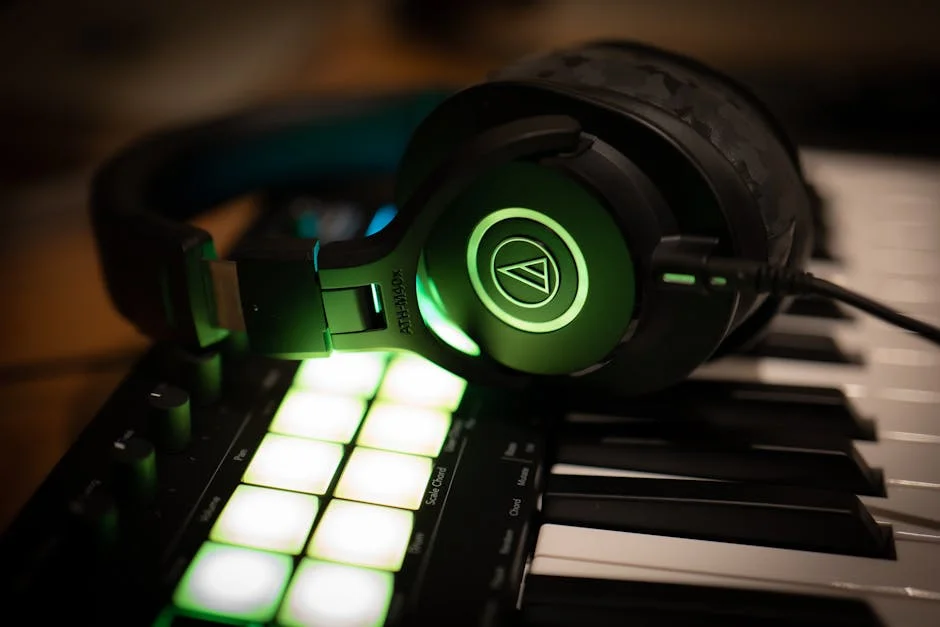
Studio monitor headphones (closed-back models like the Audio-Technica ATH-M50x, open-backs like the Beyerdynamic DT 990) are designed with mixing and tracking workflows in mind. Their tuning priorities are repeatability and isolation, not necessarily flattery. A mixing engineer needs to hear problems in a recording, not have them smoothed over. The ideal studio headphone reveals harshness, muddiness, and imbalance clearly.
Audiophile headphones, by contrast, are tuned for the listening experience. That does not mean they are inaccurate. It means the designers are optimizing for engagement and long-session comfort alongside technical fidelity. A headphone like the HD 600 is famously neutral-warm, and that warmth is a deliberate choice, not a flaw. It makes well-recorded music sound right rather than clinical.
The overlap is real. Many audiophile headphones make excellent mixing references. Many studio headphones are genuinely enjoyable for recreational listening. The distinction is about priority, not a hard binary. If you are building out a collection of Headphones and trying to understand where each model fits, that framing helps more than any single label.
Buying Guide: Choosing the Right Sennheiser for Your Use Case
Impedance and Amplification Requirements
Impedance is the single most practical variable separating these Sennheiser models for day-to-day use. The HD 600 and HD 650 both sit at 300 ohms. The HD 660S2 is nominally the same but measures more efficiently. The HD 560S and HD 58X come in lower, making them realistic options for laptop or phone playback without a dedicated stack.
The difference between driving the HD 600 from a laptop headphone output and from a proper amplifier is real but smaller than for planars. The Sundara is a different story: planar magnetic headphones are generally more demanding and reward a capable source.
For anyone deciding whether to budget for amplification alongside their headphones, the answer depends heavily on which model you choose. Low-impedance dynamic headphones like the HD 560S or HD 58X give you flexibility. Higher-impedance models or planars make a decent DAC/amp stack worth the added complexity.
Open-Back Tuning Philosophy and Listening Environment
Open-back headphones dominate Sennheiser’s audiophile lineup for a reason. The open baffle allows air to move freely behind the driver, reducing resonance and producing a soundstage that feels less like sound coming from inside your head. That is a meaningful advantage for critical listening and a real drawback in shared spaces, since sound leaks in both directions.
In a shared office or a room where someone else is on a video call, open-back headphones require some planning. The HD 560S, HD 600, HD 650, HD 660S2, HD 800S, and HD 8XX are all open-back. Comfort and soundstage come with a cost in isolation.
For most home listening purposes, the open-back trade-off is obviously worth it. The soundstage character of the HD 600 family is one of the main reasons these headphones have stayed relevant for decades.
Tuning Families and What They Tell You
Sennheiser’s lineup is not a single house sound, even though it is often discussed that way. The HD 600 sits in the neutral-warm camp. The HD 650 pushes further warm with more bass weight and softer treble. The HD 660S2 breaks from that tradition with extended bass and a more modern tuning. The HD 560S leans flatter and slightly brighter than the 600/650 family. The HD 800S is a reference-leaning, wide-soundstage headphone that can read as bright on poorly matched amplification.
Understanding these distinctions matters because the right choice for relaxed evening listening may be different from the right choice for critical analysis. The HD 600 is a common choice for most listening sessions, including critical evaluation, because its midrange presentation makes tonal balance easy to assess. The HD 650 is the better fit for someone who prioritizes long-session comfort over analytical sharpness.
Price Tiers and Where Value Lives
Sennheiser’s line spans budget through premium, and the value proposition shifts at each tier. The HD 560S and HD 58X sit in the budget band and offer genuinely good measurements without requiring amplification investment. The HD 600 and HD 650 are mid-range and represent decades of refinement at their price point. The HD 660S2 sits at the upper end of mid-range and competes with planar options at comparable cost.
At the premium tier, the HD 800S is endgame territory, and the HD 8XX is a more accessible entry point to that driver technology. For anyone exploring the full landscape of open-back headphones before committing to a tier, reading published measurements and tuning breakdowns will sharpen the decision before any money moves.
Top Picks
Sennheiser HD 600
The HD 600’s design priority is the midrange. Vocals are meant to sit forward and dimensional without edginess, the treble is smooth and extended, and the bass is present without dominating.
Published measurements show a frequency response that is largely neutral with a slight warmth through the bass and low mids. The 300-ohm impedance means a dedicated amplifier is recommended. A Schiit Magni or JDS Atom does the job cleanly at an accessible price. Without amplification, the HD 600 tends to sound thinner and less dynamic, which is a meaningful difference.
That is not nostalgia. It is that the headphone keeps rewarding attention. The replaceable earpads and detachable cable mean this is a long-term investment, not a disposable one.
For the audiophile vs studio monitor question: the HD 600 lands firmly in the audiophile column by tuning priority, but its neutrality makes it a plausible mixing reference in home studio contexts where you know its sound signature well.
Check current price on Amazon.
Sennheiser HD 650
The Sennheiser HD 650 is the warmer sibling of the HD 600, and for many people it is the more enjoyable headphone, even if it is less immediately useful for analytical listening.
The bass weight is more pronounced than the HD 600, and the treble is gently rolled off. That combination is ideal for jazz, acoustic folk, and classical recordings with prominent strings. It is less ideal if you are trying to assess whether a mix has a presence-region problem.
The 300-ohm impedance requires the same amplification investment as the HD 600. Neither is wrong. They are optimized for slightly different moments.
Check current price on Amazon.
Sennheiser HD 560S
The Sennheiser HD 560S is Sennheiser’s budget-tier entry into the open-back audiophile category. Its tuning is designed to be flat and neutral, which makes it a common reference point in the budget tier. The listing is currently unavailable on Amazon.
The lower 120-ohm impedance is the practical differentiator from the HD 600/650 family. The HD 560S will perform acceptably from a laptop or phone without a dedicated amplifier, which is a genuine advantage for listeners who are not yet invested in a DAC/amp stack.
The trade-offs are predictable: lighter bass weight compared to the HD 600 and HD 650, and plastic construction that feels less substantial in hand. For someone stepping up from consumer headphones for the first time, the HD 560S is a low-risk introduction to what open-back neutral tuning sounds like.
Sennheiser HD 660S2
The Sennheiser HD 660S2 is a deliberate departure from Sennheiser’s classic house sound, and that is exactly why it is polarizing. The HD 660S2 has extended bass reach that the HD 600 and HD 650 simply do not match, bringing it closer to a modern consumer-friendly tuning profile.
For listeners who find the HD 600/650 family slightly lean in the low end, the HD 660S2 addresses that without tipping into excessive bass emphasis. Published measurements are reported to show favorable distortion and frequency response numbers. The headphone ships with both a 4.4mm balanced cable and a 6.35mm single-ended cable, which is a meaningful inclusion for listeners with balanced amplifier outputs.
Which headphone wins that comparison depends heavily on whether you prefer the presentation of a dynamic driver or a planar. The HD 660S2 keeps Sennheiser’s dynamic driver character while modernizing the tuning meaningfully.
Check current price on Amazon.
Sennheiser HD 800 S
The Sennheiser HD 800 S is covered here from published specifications and measurements rather than direct testing.
The HD 800S is a flagship dynamic driver headphone designed for a very wide soundstage and high imaging precision.
A common caution is the treble. The HD 800S can read as bright or sibilant with bright-leaning amplification, so it is usually paired with a warm amplifier, preferably tube-based, to bring the presentation into balance.
Check current price on Amazon.
Drop + Sennheiser HD 58X Jubilee
The 150-ohm impedance makes it easier to drive than the HD 600 or HD 650 without a dedicated amplifier, which expands its usability to listeners without a DAC/amp stack.
Published measurements show a slightly warmer tuning than the HD 560S but less prominent bass weight than the HD 650. The HD 58X uses the same physical shell as the HD 600 and HD 650, meaning earpads, cables, and accessories transfer between models. That compatibility detail is practically useful if you are already in the Sennheiser ecosystem.
The main structural caveat is availability. The HD 58X is a Drop exclusive and goes out of stock periodically. Buyers who find it available and want a budget entry into Sennheiser’s open-back character without committing to the amplification investment of the HD 600 will find it well regarded.
Drop + Sennheiser HD 8XX
As with the HD 800S above, the Drop + Sennheiser HD 8XX is covered here from published specifications and measurements.
The HD 8XX is built on the HD 800S driver platform with tuning modifications intended to reduce the treble brightness that has historically required careful amplifier pairing with the HD 800S. The result is a headphone that is less demanding of its source chain in terms of treble management, but that also diverges from the HD 800S character in ways that divide opinion. Others describe it as losing the very quality that makes the HD 800S distinctive.
The HD 8XX sits at a lower price band than the HD 800S, making it an interesting consideration for listeners who want proximity to that platform without the full premium ask. The Drop-exclusive status and periodic availability issues are the same practical constraints as the HD 58X. For endgame-curious buyers who have read extensively about the HD 800S and want an alternative entry point, the HD 8XX is the most discussed option.
HiFiMan Sundara (2020 Version)
“Scales with source” applies mainly to harder-to-drive headphones. The Sundara 2020 revision is a planar that benefits from a capable amplifier: with a weak source, imaging and transients are less defined and the bass can sound polite.
Published measurements place the Sundara 2020 among the better-measuring headphones at its price band. Its planar magnetic driver is designed for detail and imaging precision. The 2020 revision updated the earpads and headband, which addressed comfort complaints about earlier versions.
HiFiMan’s quality control has been inconsistent across production runs, and the standard advice is to check for channel matching when the headphone arrives. That is not a dealbreaker but it is worth knowing. The Sundara’s tuning is neutral to slightly bright, which makes it more analytically oriented than the HD 600 and HD 650. For listeners who want planar imaging at a mid-range budget, the Sundara 2020 is a frequent recommendation at its tier.
Check current price on Amazon.
Frequently Asked Questions
Are audiophile headphones good for mixing and music production?
Audiophile headphones can work well as mixing references if you know their tuning signature deeply and account for it in your decisions. The HD 600's neutral-warm presentation makes it more useful for this than a bass-heavy consumer headphone. The risk is that a colored tuning causes you to over-correct in the mix. Dedicated studio monitor headphones prioritize revealing problems rather than flattery, which is a different design goal. Many working producers use both types for cross-referencing.
Do I need a headphone amplifier for the Sennheiser HD 600 or HD 650?
Yes, both headphones benefit from dedicated amplification at 300 ohms. A Schiit Magni or JDS Atom Amp covers the HD 600 and HD 650 cleanly without a large investment. Running them from a phone or laptop output tends to produce a thinner, less dynamic sound, which undersells both headphones. Planar headphones like the Sundara are even more demanding of their source.
What is the difference between the HD 600 and HD 650 in practice?
The HD 600 sits slightly more neutral with a controlled bass presentation and smooth treble. The HD 650 adds more bass weight and rolls off the treble further, producing a warmer and more forgiving presentation. For analytical listening or assessing tonal balance in recordings, the HD 600 has a small edge. For long evening listening sessions where engagement matters more than precision, the HD 650's tuning is easier to sit with. They share the same impedance and amplification requirements, so the choice is purely about tuning preference.
How does the HiFiMan Sundara compare to the HD 600 for a first serious headphone?
They are different tuning philosophies and different driver technologies. The Sundara's planar magnetic driver is designed for sharper imaging and faster transients. The HD 600's dynamic driver is tuned for a more organic and slightly warm presentation. The Sundara is also more demanding of its source chain. At entry level, the HD 600 is the more forgiving choice because it performs well with a modest amplifier and does not punish underpowered sources as noticeably.
Is the Drop + Sennheiser HD 58X a reasonable alternative to the HD 600?
The HD 58X Jubilee is a reasonable starting point for listeners who want Sennheiser open-back character at a budget price band without a mandatory amplification investment. At 150 ohms it drives easier than the HD 600. The tuning is different, referencing the older HD 580 signature rather than the HD 600's.
Where to Buy
- Sennheiser HD 600 Open-Back Audiophile HeadphonesSee price on Amazon
- Sennheiser Consumer Audio HD 650 Audiophile Hi-Res Open Back HeadphoneSee price on Amazon
- Sennheiser HD 660S2 Audiophile Open-Back Over Ear HeadphonesSee price on Amazon
- Sennheiser HD 800 S Over-the-Ear Audiophile Reference HeadphonesSee price on Amazon
- HIFIMAN SUNDARA Hi-Fi Headphone Planar Magnetic 2020 VersionSee price on Amazon