Best Headphones for Mixing: Top Picks Tested

Affiliate disclosure: Some links on this page are affiliate links. If you buy through them we earn a small commission at no extra cost to you. Recommendations are research-driven; we don't claim personal use of every product reviewed. Product prices and availability are accurate as of the date published and are subject to change. Always check Amazon for current pricing before purchasing. Learn more.
Quick Picks
Sennheiser HD 600 Open-Back Audiophile Headphones
Legendary neutral-warm tuning that rewards critical listening
Buy on Amazonbeyerdynamic DT 880 PRO 250 Ohm Semi-Open Over Ear Studio Headphones
Semi-open design balances isolation with soundstage
Buy on AmazonAudio-Technica ATH-M40x Professional Studio Monitor Headphones
Flatter frequency response than ATH-M50x for more accurate monitoring
Buy on Amazon| Product | Price Range | Top Strength | Key Weakness | Buy |
|---|---|---|---|---|
| Sennheiser HD 600 Open-Back Audiophile Headphones also consider | $$ | Legendary neutral-warm tuning that rewards critical listening | Requires a decent amp to perform at its best | Buy on Amazon |
| beyerdynamic DT 880 PRO 250 Ohm Semi-Open Over Ear Studio Headphones also consider | $ | Semi-open design balances isolation with soundstage | 250Ω impedance requires an amplifier , not plug-and-play | Buy on Amazon |
| Audio-Technica ATH-M40x Professional Studio Monitor Headphones also consider | $ | Flatter frequency response than ATH-M50x for more accurate monitoring | Less bass emphasis than M50x , may disappoint casual listeners | Buy on Amazon |
Mixing headphones reward honesty over flattery. The right pair reveals what’s actually happening in a track , the low-mid buildup, the harshness at 3 kHz, the reverb tail that’s a half-second too long , rather than making everything sound pleasing. That distinction matters more than most buyers expect when they first start browsing headphones. The three picks below represent the most consistently recommended options at their respective levels, based on ASR measurements, owner consensus across Head-Fi and r/headphones, and three years of returning to these same names in nearly every mixing-focused discussion.
Choosing a mixing headphone is not the same as choosing a listening headphone. The evaluation criteria diverge sharply once you understand what accuracy means in a studio context , and why some beloved consumer headphones actively mislead you when it matters most.
What to Look For in a Mixing Headphone
Frequency Response Accuracy
The single most important quality in a mixing headphone is a flat , or at minimum, predictable , frequency response. A headphone that exaggerates bass will cause you to cut too much low end in your mix; one that scoops the midrange will lead you to boost frequencies that don’t need boosting. You are not listening for enjoyment. You are listening for information.
ASR and Crinacle both publish frequency response measurements that make this comparison tractable. Look for a headphone whose curve deviates minimally from a neutral target , either a flat line or the Harman target, depending on your preference , and whose deviations are smooth rather than jagged. Sharp peaks above 5 kHz are particularly problematic, as they fatigue ears quickly and distort your perception of high-frequency content.
The practical upshot: a headphone measuring flat to within a few dB across the midrange, with a gentle high-frequency rolloff rather than a peaky treble shelf, will translate your mix more reliably to other playback systems.
Soundstage and Stereo Imaging
Open-back headphones generally produce a wider, more natural stereo image than closed-back designs. For mixing, that matters. A spacious soundstage makes it easier to place elements in the stereo field, to hear reverb as distinct from the dry signal, and to identify phase relationships between left and right channels.
Semi-open designs occupy a useful middle ground , they capture some of the airiness of open-back without bleeding as dramatically into shared spaces. The trade-off is that neither quality is fully realized: the soundstage is wider than closed-back but narrower than fully open, and isolation is better than open but worse than closed.
For home studios where isolation is not a constraint, fully open-back is the stronger choice. For project studios or bedroom producers sharing space with others, semi-open or closed may be more practical.
Impedance and Amplification Requirements
Impedance determines how much power a headphone needs to reach listening levels, but it also affects how a headphone sounds when driven from different sources. High-impedance headphones , those above 150Ω , are designed around the output impedance of professional studio equipment. Driven from a laptop headphone jack, they often sound thin and underpowered.
This is not a theoretical concern. Owner reports on Head-Fi consistently describe a meaningful difference in control and dynamics when higher-impedance headphones are paired with a proper amplifier , even a budget option like the JDS Atom or Schiit Magni. The investment is relatively modest and the improvement is audible.
If you are buying a 250Ω headphone and planning to run it from a phone or laptop, budget for an amplifier simultaneously. Buying them separately, weeks apart, often means spending weeks forming incorrect impressions of what the headphone actually sounds like.
Build Quality and Longevity
Mixing sessions are long. A headphone that becomes uncomfortable after two hours is a liability regardless of how accurately it measures. Look for replaceable earpads and cables , these are the components that fail first and determine whether a headphone lasts three years or a decade.
Exploring the full range of studio and audiophile headphone options before committing to a single pair is worth the time, particularly if you expect to use them daily. A headphone that fits your head shape, clamp pressure, and ear size will retain its value in a mixing context far longer than one chosen purely on measurement data.
Top Picks
Sennheiser HD 600
The Sennheiser HD 600 is the reference point for this category, and for good reason. ASR’s measurements show a frequency response that tracks closely to a neutral target , a slight warmth in the upper bass and lower mids, a smooth treble rolloff that avoids the piercing peaks of some competing designs. That upper-bass warmth does color the picture marginally, but the effect is consistent and learnable. Once you know it’s there, you can account for it.
The midrange is where this headphone earns its reputation. Vocals, guitars, piano , the frequency range where most mixing decisions are made , comes through with a resolution and naturalness that costs considerably more to replicate in other brands. Owner consensus across Head-Fi and r/headphones consistently identifies the midrange as the HD 600’s defining characteristic, and three years of returning to these headphones across dozens of listening sessions confirms that consensus is not misplaced.
The open-back design produces a soundstage that feels more like listening through speakers than most headphones manage. Stereo width is generous without becoming artificially exaggerated, and reverb tails are easy to distinguish from the dry signal , which is precisely what you need when making reverb decisions in a mix.
The one caveat that matters practically: the HD 600 benefits from amplification. The gap between a laptop output and a proper stack is real , cleaner control, slightly better dynamic contrast , though not as dramatic as some audiophile discourse suggests. A Schiit Magni or JDS Atom is sufficient and keeps the total investment reasonable.
Check current price on Amazon.
beyerdynamic DT 880 PRO 250 Ohm
For buyers who need some environmental isolation but don’t want to sacrifice the soundstage benefits of an open design, the beyerdynamic DT 880 PRO 250 Ohm occupies a genuinely useful position. Semi-open construction gives it more acoustic space than the closed DT 770 while controlling sound leakage better than the fully open DT 990. Among the three siblings in beyerdynamic’s DT series, the 880 measures the most neutrally , less V-shaped than either the bass-forward 770 or the treble-forward 990.
ASR’s measurements of the DT 880 show a relatively flat midrange with a characteristic beyerdynamic treble peak around 8, 10 kHz. That peak is worth knowing about before buying. It makes certain high-frequency content sound more prominent than it actually is, which can lead to over-cutting cymbals or high-hats in a mix. The peak is not disqualifying , many engineers work with the DT 880 for years and simply factor it into their process , but it is real, and buyers should understand it going in rather than discovering it through confused mix decisions.
Build quality is where beyerdynamic earns consistent praise. The DT 880 Pro is made in Germany, uses replaceable earpads, and is built to survive daily professional use. The coiled cable on the Pro version is not detachable, which is a genuine drawback if cable damage is a concern , the consumer version uses a straight detachable cable, though it sacrifices some of the Pro’s build robustness. Amplification is required at 250Ω; the same budget amp recommendations that apply to the HD 600 apply here.
Check current price on Amazon.
Audio-Technica ATH-M40x
The Audio-Technica ATH-M40x is the answer for buyers who want closed-back isolation , for apartment producers, for tracking sessions where bleed matters, or simply for working in shared spaces , without accepting the inflated bass of the M50x. The M40x measures considerably flatter than its more famous sibling, particularly in the low end, which makes it significantly more useful for mixing decisions. The M50x’s bass emphasis is enjoyable for casual listening; it is actively misleading when you are trying to judge how much low end a track actually needs.
Owner reports and community consensus on r/headphones consistently position the M40x as the more practical studio tool of the two, even though the M50x receives far more attention. The M40x lacks the M50x’s brand recognition and bass impact, which makes it a harder sell to buyers who haven’t yet thought carefully about what neutral monitoring actually requires. Once that distinction is clear, the choice tends to resolve quickly.
The detachable cable system and foldable design add practical value for portability. The ATH-M40x runs at 35Ω, which means it will reach adequate listening levels from a laptop or phone , a genuine advantage over the higher-impedance options above if you don’t yet have an amplifier. Sound quality does improve with cleaner amplification, but the M40x is functional without it in a way the 250Ω DT 880 is not.
Check current price on Amazon.
Buying Guide
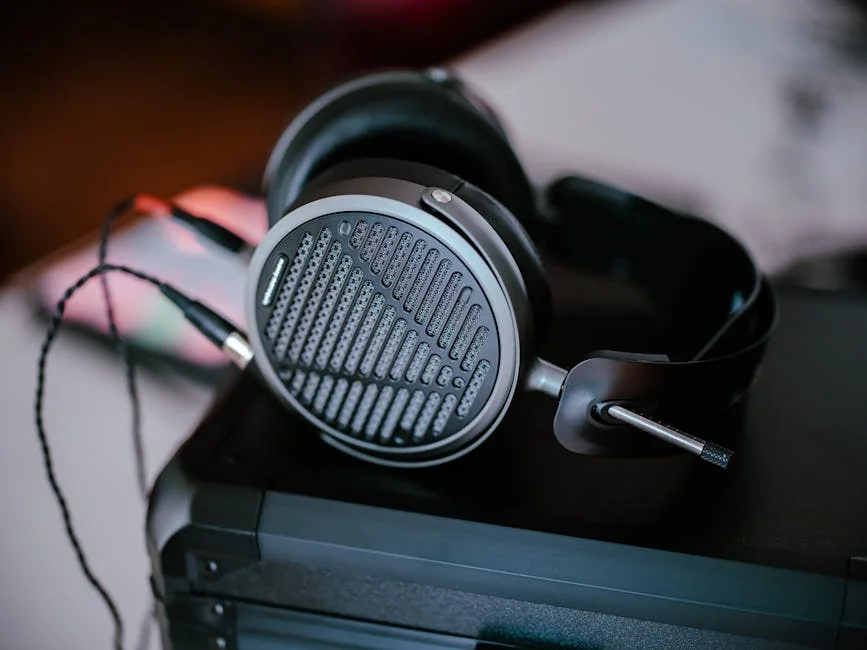
Open-Back vs. Closed-Back vs. Semi-Open
The most consequential decision in this category is design type , and the right answer depends on your recording and mixing environment before it depends on anything else. Open-back headphones offer the most accurate stereo imaging and the most natural soundstage for mixing decisions, but they leak sound in both directions. Anyone within a few meters of you will hear your mix; any ambient noise in the room will reach your ears. In a treated, quiet home studio, that trade-off costs nothing. In a shared apartment, it costs considerably.
Closed-back headphones solve the isolation problem but introduce their own coloration , most closed designs add bass resonance and compress the apparent soundstage. The M40x manages this better than most at its level, but the physics are real. Semi-open designs split the difference incompletely: better soundstage than closed, better leakage control than open, but fully resolving neither.
Impedance Matching and Source Quality
Impedance is the spec most often misunderstood by buyers stepping up from consumer headphones. A 250Ω headphone is not simply “harder to drive” , it is designed for a different output impedance environment than a 35Ω consumer headphone. Running a high-impedance headphone from a high-output-impedance source (many laptop jacks, some phone outputs) can alter the frequency response measurably, not just reduce volume.
Budget amplifiers address this effectively. The JDS Atom, Schiit Magni, and Topping L30 all present low output impedance and adequate power for 250Ω headphones. Buying a 250Ω headphone without budgeting for amplification means forming your initial impressions under suboptimal conditions , a meaningful risk given that first impressions often determine whether a headphone stays or goes. This applies equally to the HD 600 and the DT 880 Pro.
Single Headphone vs. Reference-Check System
Professionals who mix primarily on headphones often use multiple pairs as cross-references , checking a mix on the HD 600 and then on earbuds or a consumer Bluetooth speaker to verify translation. This practice compensates for the frequency-response idiosyncrasies of any single pair, including neutral-measuring ones. No headphone is perfectly flat; all of them have some learned behavior built into their measurement curve.
For buyers early in the process, a single neutral pair with a well-documented frequency response is the right starting point. The headphones category covers a wide range of options across price tiers , once you understand how your first pair translates your mixes to other systems, the decision about whether to add a second reference becomes much clearer based on your actual workflow.
Comfort for Long Sessions
Mixing headphones are worn for two, four, six hours at a stretch. Clamp force, earpad material, and headband padding matter in that context in ways they simply don’t for casual listening. The HD 600’s velour pads are widely praised for breathability and long-session comfort. The DT 880’s velour earpads are similarly comfortable. The M40x uses a protein leather pad that some users find warm over extended periods.
Earbud material affects more than comfort , it also affects the acoustic seal and therefore the frequency response. Replacing stock pads with aftermarket alternatives can subtly change how a headphone sounds, which is worth knowing before attributing any sonic character to the driver.
What “Mixing Translation” Actually Means
A mix that translates well sounds consistent across different playback systems , car stereos, laptop speakers, earbuds, club sound systems. The goal of mixing on neutral headphones is not to make your mix sound best on those headphones. It is to make decisions accurately enough that the mix holds up everywhere else. A headphone that flatters your low end will produce mixes that sound thin everywhere except that headphone. This is the core reason the M50x , despite being an excellent headphone for listening , is the wrong tool for mixing.
Frequently Asked Questions
Is the Sennheiser HD 600 or the beyerdynamic DT 880 Pro better for mixing?
Both are credible mixing tools, and the decision often comes down to environment rather than pure sound quality. The HD 600 measures slightly more neutrally in the midrange and has the stronger community consensus behind it for critical listening. The DT 880 Pro’s semi-open design suits buyers who need moderate isolation, though its 8, 10 kHz treble peak requires some learned compensation when judging high-frequency content.
Do I need an amplifier for the headphones on this list?
The HD 600 and DT 880 Pro both run at 300Ω and 250Ω respectively, and both benefit meaningfully from dedicated amplification. The ATH-M40x at 35Ω is functional from a laptop or phone. For the two higher-impedance options, a budget amplifier , the JDS Atom and Schiit Magni are the most commonly recommended , is a practical requirement rather than a luxury upgrade.
Why is the ATH-M50x not on this list?
The M50x’s bass emphasis, which makes it enjoyable for casual listening, actively misleads mixing decisions. Owner reports and frequency response measurements consistently show elevated low end relative to neutral. The M40x measures considerably flatter , specifically because Audio-Technica tuned it for monitoring rather than entertainment , which makes it the more appropriate tool for the use case this guide addresses.
Can I use open-back headphones for tracking as well as mixing?
Open-back headphones are generally not suitable for tracking , recording vocals or live instruments , because the sound leaking from the earcups will bleed into the microphone and appear in the recording. For tracking, closed-back is the appropriate design. Many producers keep one closed-back pair for tracking and one open-back pair for mixing, using each where the design’s properties are an asset rather than a liability.
How important is frequency response measurement data when choosing a mixing headphone?
Measurements are a reliable starting point but not the complete picture. ASR’s published measurements tell you what a headphone’s frequency response looks like at a standardized listening level , useful for identifying obvious colorations and comparing headphones objectively. What measurements can’t capture is the degree to which you can learn and compensate for a given headphone’s idiosyncrasies over time. Most experienced engineers develop a calibrated sense of how their tools color the picture, which is why consistency of use matters as much as raw measurement performance.
Where to Buy
Sennheiser HD 600 Open-Back Audiophile HeadphonesSee Sennheiser HD 600 Open-Back Audiophil… on Amazon