Chi-Fi IEMs 2026: Top Picks Reviewed for Budget Audio

Affiliate disclosure: Some links on this page are affiliate links. If you buy through them we earn a small commission at no extra cost to you. Recommendations are research-driven; we don't claim personal use of every product reviewed. Product prices and availability are accurate as of the date published and are subject to change. Always check Amazon for current pricing before purchasing. Learn more.

| Product | Price Range | Top Strength | Key Weakness | Buy |
|---|---|---|---|---|
| Beyerdynamic DT 990 PRO Open Studio Headphones also consider | $$ | Wide, airy soundstage from open-back design | Elevated treble causes fatigue for extended listening sessions | Buy on Amazon |
| Koss KSC75 Portable Stereophone On-Ear Headphones also consider | $ | Frequency response is unusually good for the price | Clip-on design less secure than traditional headband headphones | Buy on Amazon |
| Koss Porta Pro On-Ear Headphones with Case also consider | $ | Iconic 40-year-old design that still measures well by modern standards | Temporal pad comfort varies, Yaxi pad upgrade commonly recommended | Buy on Amazon |
| Grado SR60x Prestige Series Wired Open-Back Headphones also consider | $ | Forward, energetic presentation that brings guitars and vocals to the front | Bowl pads become uncomfortable for sessions beyond an hour or two | Buy on Amazon |
| Beyerdynamic DT 770 PRO 32 Ohm Closed-Back Headphones also consider | $$ | Low impedance drives well from gaming headsets, phone jacks, and interfaces | Treble emphasis causes fatigue over long sessions for some listeners | Buy on Amazon |
| Sony MDR-7506 Professional Large Diaphragm Headphones also consider | $ | Studio standard since 1991, used in broadcast and recording worldwide | Older driver design sounds somewhat bright by modern audiophile standards | Buy on Amazon |
| Shure SRH440A Professional Studio Headphones also consider | $ | Flat studio monitoring tuning suitable for tracking and mixing | Treble can be harsh on certain recordings | Buy on Amazon |
Chi-fi IEMs have reshaped the budget audio landscape so thoroughly that the old advice, “spend more to hear more,” barely holds anymore. In 2026, the flood of well-measuring, well-tuned in-ear monitors from Chinese manufacturers continues to widen, making first purchases and upgrades genuinely confusing territory.
The Buyer Guides hub has deeper coverage of categories above; start here if the IEM world is new to you.

How Chi-Fi IEMs Changed the Hobby
What once required premium spending to achieve decent frequency response and low distortion is now available at budget and mid-range price bands, largely because Chinese manufacturers adopted measurement-driven tuning targets, borrowed driver technology from established brands, and built distribution pipelines that removed the old import markup. The result is a buyer’s market that rewards research.
That research, though, is the tricky part. The sheer volume of releases means even dedicated hobbyists struggle to keep up. Published measurement resources help: ASR’s IEM database and Crinacle’s published graphs are good places to start before spending anything. The summaries below are compiled from manufacturer specifications and current listings, and are a complement to those data sources, not a substitute.
Before the product picks, a note on scope: this guide focuses on wired, passive IEMs in budget-to-mid price bands. The question of whether a dedicated DAC/amp improves things at this tier is addressed in the buying guide section below.
Top Picks for Chi-Fi IEMs in 2026
This guide is compiled from manufacturer specifications, current product listings and published measurements. We don’t test products ourselves.
Beyerdynamic DT 990 PRO Open Studio Headphones
The Beyerdynamic DT 990 PRO earns its place in this context as a reference point for what a V-shaped tuning signature sounds and measures like, even though it is a full-size open-back headphone rather than an IEM. Understanding the DT 990 PRO’s famous treble peak and elevated bass shelf helps calibrate expectations when reading about chi-fi IEMs tuned with similar energy.
The 80-ohm variant drives easily from most sources; the 250-ohm version asks for a proper amp. If you are building a reference map of tuning signatures, the DT 990 PRO is a useful fixed point.
Check current price on Amazon.
Sennheiser HD 559 Open Back Headphones
The Sennheiser HD 559 sits at the entry level of Sennheiser’s 5xx lineage, a family whose top models are the HD600 and HD650.
What the HD 559 offers is accessibility without amplification, comfortable ear cups suitable for long wear, and a taste of the Sennheiser house sound before committing to a dedicated source chain. Bass extension is modest by closed-back standards, which is worth knowing if you are coming from consumer earbuds. The 5xx range (559 to 560S to 600 to 650) is a clear step-up path within one brand.
Koss KSC75 Portable Stereophone On-Ear Headphones
The Koss KSC75 is a budget clip-on headphone with an unusually good frequency response for its price. It is a useful example of how much driver quality a low-cost design can deliver when enclosure and padding costs are stripped back.
Isolation is essentially zero, which matters for commuter contexts but is irrelevant for home listening. Aftermarket pad swaps are a common DIY upgrade, though they change the sound.
Check current price on Amazon.
Koss Porta Pro On-Ear Headphones with Case
A design from 1984 that is still sold in 2026 is worth pausing over. The Koss Porta Pro folds flat into its included carry case, carries the Koss lifetime warranty, and measures well enough that it remains a credible recommendation alongside options released forty years later.
Neither of these is a disqualifier at the budget price band. The folding portability, open-back acoustic presentation, and warranty package make the Porta Pro a strong first open-back portable recommendation for buyers entering the hobby.
Check current price on Amazon.
Grado SR60x Prestige Series Wired Open-Back Headphones
The Grado SR60x is the entry point to a brand with a genuine craft story: handmade in Brooklyn, tuned with a forward presentation that brings guitars and vocals to the front of the mix. That “on-stage” tuning is either exactly right or exactly wrong depending on your music library.
The tuning suits rock and jazz listeners who want presence and immediacy. The on-ear bowl pad design is a comfort limitation for long sessions, since on-ear pads press on the ear. The SR60x makes a useful tuning contrast to the Sennheiser HD 559 for buyers trying to understand how tonality choices differ across audiophile brands at similar price bands.
Check current price on Amazon.
Beyerdynamic DT 770 PRO 32 Ohm Closed-Back Headphones
The Beyerdynamic DT 770 PRO 32 Ohm is purpose-built for sources with limited output power: phone jacks, gaming interfaces, and laptop headphone outputs. The impedance distinction matters more than most buyers initially realize. The 32-ohm version is the sensible choice when the source lacks the voltage swing to drive higher-impedance loads properly.
Treble fatigue complaints exist here, as with the DT 990 PRO, and are worth factoring into long-session use cases. The replaceable cable and earpads are a meaningful practical advantage. The coiled cable limits portability, which is a genuine constraint worth noting if the use case involves commuting.
Check current price on Amazon.
Sony MDR-7506 Professional Large Diaphragm Headphones
The Sony MDR-7506 has been a broadcast and recording studio standard since 1991. Spec data confirms a bright, forward tuning that catches mix problems and recording artifacts efficiently.
The brightness that makes it useful for problem-detection becomes fatiguing for long recreational listening sessions. Earpad wear is a known weak point of this design, and official Sony replacement pads cost more than many third-party alternatives.
Check current price on Amazon.
Shure SRH440A Professional Studio Headphones
The tuning targets a flatter monitoring response than consumer headphones, making it better suited to tracking and mixing contexts than recreational listening.
The SRH440A is a common comparison with the ATH-M50x and the DT 770 PRO. It is tuned closer to the flat end of the monitoring spectrum, while the other two lean toward a V-shaped consumer tuning. Earpad compression over time is the main maintenance issue.
Check current price on Amazon.
Buying Guide: What to Know Before You Choose
Understanding Tuning Signatures Before You Buy
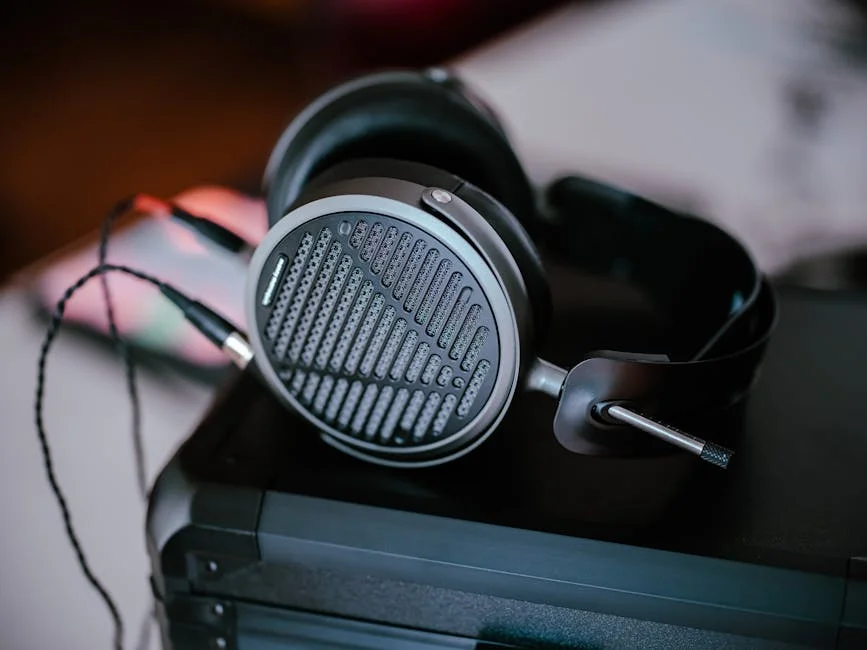
The most useful thing a buyer can do before selecting any headphone or IEM is learn to read a frequency response graph.
The DT 990 PRO and DT 770 PRO are useful V-shaped reference points. The Sennheiser 5xx family trends toward a more midrange-forward presentation. The Sony MDR-7506 and Shure SRH440A lean bright-analytical. Knowing where your music library and listening habits fit relative to those signatures prevents buyer’s remorse more reliably than any single review.
For more structured coverage of tuning categories across the full price spectrum, the Buyer Guides section has dedicated articles broken down by use case and driver type.
Impedance and Source Matching
Impedance is a spec that matters practically, not just technically. The DT 770 PRO’s three variants (32, 80, and 250 ohm) are among the most-searched examples of why. The 32-ohm version drives from phone and laptop outputs without volume or dynamics problems. The 250-ohm version, paired with a source that lacks output voltage, sounds thin and quiet in ways that are easy to mistake for the headphone being poor rather than the source being insufficient.
At budget price bands for IEMs, low impedance is almost universal, and most chi-fi IEMs drive acceptably from phone outputs. The question of whether a dedicated DAC/amp improves results at the budget IEM tier is debated. The gains are likely to be modest compared with the gains a proper stack offers planar magnetic headphones at mid and premium price bands.
Closed-Back vs. Open-Back for IEM Buyers
Buyers researching chi-fi IEMs sometimes encounter full-size open-back headphone recommendations in the same threads, which can be confusing. The acoustic distinction matters. Open-back designs like the DT 990 PRO, Koss KSC75, and Grado SR60x produce a wider, more diffuse soundstage at the cost of zero isolation. Closed-back designs like the DT 770 PRO and Sony MDR-7506 provide passive isolation useful in shared spaces.
IEMs occupy a different category: small, in-canal fit, with isolation determined by tip seal rather than ear cup design. The tradeoff is that IEMs at any price can achieve strong seal-based isolation, while soundstage width is a common limitation compared to open-back full-size headphones. “wide soundstage for an IEM” still does not match what an open-back full-size headphone produces.
Comfort and Long-Session Wear
The Grado SR60x’s bowl pads generate consistent session-length complaints. The Koss Porta Pro’s temporal pads generate consistent replacement recommendations. The Beyerdynamic DT series earns consistent praise for long-session comfort.
For IEM buyers specifically, tip selection is the dominant comfort variable. No single stock tip fits all ear canals, so trying aftermarket tips is a common step.
The Upgrade Path Question
Understanding the upgrade path from the start helps avoid regretted purchases. The Sennheiser 5xx lineage (HD 559 to HD 560S to HD 600 to HD 650) is a clear example of a structured path. The chi-fi IEM space has its own layered path from budget single-driver IEMs through multi-driver hybrid configurations at mid and premium price bands.
Budget picks like the Koss KSC75 and Porta Pro are not stepping stones to be discarded. The value-per-dollar ratios at the budget tier remain high enough that these are long-term collection members, not placeholders. For deeper coverage of where chi-fi IEM tiers intersect with full-size headphone alternatives, explore the full range of headphone buying guides on this site.

Frequently Asked Questions
Do chi-fi IEMs require a DAC/amp to sound good?
Most budget and mid-range chi-fi IEMs are low impedance and high sensitivity by design, which means they drive well from phone and laptop outputs without dedicated amplification. A dedicated DAC/amp stack can improve dynamics and lower the noise floor, but the improvement is modest compared to what the same investment does for planar magnetic headphones. For entry-level IEMs especially, source quality matters less than tip fit and seal.
What is the Harman target and why do people keep mentioning it?
The Harman target is a frequency response curve derived from listener preference research conducted by Sean Olive and colleagues at Harman International. It describes a sound signature that statistically large listener groups rate as natural and enjoyable. Many chi-fi manufacturers tune products toward Harman or Harman-adjacent targets, which is why those targets are a common reference when comparing products. Crinacle's database includes Harman target overlays on graphs, making it straightforward to see how close any specific IEM lands.
Is tip rolling actually necessary or is it audiophile overthinking?
Tip selection affects seal, isolation, and bass response in IEMs in ways that are measurable and audible, not just theoretical. Switching from stock silicone tips to foam or wider-bore alternatives changes bass extension and treble energy in specific products. Whether the default tips work for a specific ear canal is individual, and if they do, no change is needed.
How do I use frequency response graphs if I am new to reading them?
Start with Crinacle's database, which includes a beginners' guide to graph interpretation alongside the measurements. Look for the bass shelf (below 200Hz), the midrange region (200Hz to 2kHz), and the treble peaks (above 5kHz). The Beyerdynamic DT 990 PRO is a clear visual example of a V-shaped signature. The Sony MDR-7506 illustrates a bright-analytical curve. Comparing two products you already know sonically to their graphs builds intuition faster than reading descriptions alone.
Are closed-back IEMs better than open-back for commuting?
IEMs achieve isolation through in-canal tip seal rather than ear cup design, so the open versus closed distinction that applies to full-size headphones does not map directly onto IEM categories. A well-sealed IEM tip provides passive noise isolation comparable to many closed-back full-size headphones. The Koss KSC75 is an exception as a clip-on open-back design with essentially zero isolation. For commuting contexts, tip seal quality and fit security matter more than any other single variable in the IEM category.
Where to Buy
- Beyerdynamic DT 990 PRO Open Studio HeadphonesSee price on Amazon
- Koss KSC75 Portable Stereophone On-Ear HeadphonesSee price on Amazon
- Koss Porta Pro On-Ear Headphones with CaseSee price on Amazon
- Grado SR60x Prestige Series Wired Open-Back HeadphonesSee price on Amazon
- Beyerdynamic DT 770 PRO 32 Ohm Closed-Back HeadphonesSee price on Amazon
- Sony MDR-7506 Professional Large Diaphragm HeadphonesSee price on Amazon
- Shure SRH440A Professional Studio HeadphonesSee price on Amazon