DAC Amp Combo vs Separate: Which Setup Wins
Affiliate disclosure: Some links on this page are affiliate links. If you buy through them we earn a small commission at no extra cost to you. Recommendations are research-driven; we don't claim personal use of every product reviewed. Product prices and availability are accurate as of the date published and are subject to change. Always check Amazon for current pricing before purchasing. Learn more.
Quick Picks
Topping E50 HiFi Balanced DAC ES9068AS MQA DSD512 PCM768kHz
ES9068AS chip with exceptional measurement performance , ASR-verified
Buy on AmazonTopping E30 II Hi-Res Audio DAC AK4493S DSD512 PCM768kHz
AK4493S chip delivering excellent measurements at budget pricing
Buy on AmazonTOPPING E70 Velvet High-Performance DAC AK4499EX Bluetooth LDAC DSD512
AK4499EX flagship chip delivers reference-class measurements
Buy on Amazon| Product | Price Range | Top Strength | Key Weakness | Buy |
|---|---|---|---|---|
| Topping E50 HiFi Balanced DAC ES9068AS MQA DSD512 PCM768kHz also consider | $$ | ES9068AS chip with exceptional measurement performance , ASR-verified | MQA licensing is a marketing consideration , neutral tuning is the actual value | Buy on Amazon |
| Topping E30 II Hi-Res Audio DAC AK4493S DSD512 PCM768kHz also consider | $ | AK4493S chip delivering excellent measurements at budget pricing | No balanced output , RCA only at this price tier | Buy on Amazon |
| TOPPING E70 Velvet High-Performance DAC AK4499EX Bluetooth LDAC DSD512 also consider | $$ | AK4499EX flagship chip delivers reference-class measurements | Premium price , E50 is comparable for most use cases | Buy on Amazon |
| Topping DX3 Pro+ DAC/Headphone Amplifier ES9038Q2M LDAC Bluetooth also consider | $ | All-in-one DAC/amp combo simplifies desktop setup | Combo units compromise on both DAC and amp performance vs. separates | Buy on Amazon |
| Schiit Modi 3+ D/A Converter Delta-Sigma DAC Black also consider | $ | Made in the USA , Schiit's unique domestic manufacturing story | AKM chip shortage has affected some production runs , check current version | — |
| Schiit Modius E Balanced DAC Digital to Analog Converter also consider | $ | Balanced XLR outputs for fully balanced desktop systems | Some chip variants changed due to supply constraints | — |
| Schiit Bifrost 2 True Multibit DAC with Unison USB also consider | $$ | True Multibit architecture delivers distinctive analog character | Measurements not class-leading compared to ES9038PRO alternatives | — |
| JDS Labs Atom DAC+ Desktop DAC also consider | $ | JDS Labs USA manufacturing with excellent customer service | Not available on Amazon , must order from jdslabs.com directly | — |
If you’re building a desktop headphone system for the first time, one question comes up fast: do you buy a combined DAC/amp unit, or separate components? The answer shapes your entire desk setup, your upgrade path, and how much you’ll spend chasing better sound later.
Three years into this hobby, I’ve run my own separates stack daily. My Topping E50 and L50 sit on my desk right now, feeding everything from my HD600 to my HiFiMan Sundara. The question of combo versus separates is one I’ve thought about a lot, and the honest answer is more nuanced than most forum posts suggest.

The Core Difference: What Separates Actually Means
Before getting into specific hardware, it’s worth being precise about what “separates” means in this context. A DAC (digital-to-analog converter) takes the digital signal from your computer and converts it to analog voltage. An amplifier takes that analog signal and drives it to a level your headphones can use. A combo unit, sometimes called a DAC/amp or desktop all-in-one, packages both functions in a single chassis.
For a deeper look at how DACs work and why chip choice matters, the DACs hub here at Undisclosed Sounds covers the fundamentals. The short version: the DAC stage is about accuracy and noise floor. The amp stage is about power delivery, output impedance, and driving difficult loads.
Why This Decision Matters More for Some Headphones
On my Topping stack, driving the HD600, the gap between a laptop headphone jack and a proper separates setup was real but smaller than I expected. The HD600 is not a power-hungry headphone. The noise floor improved, the channel balance at low volumes improved, and the overall presentation felt more controlled. But it was not a dramatic night-and-day revelation.
The Sundara was a different story. Planar magnetics are more source-dependent than dynamic drivers, and I’d dismissed that claim as audiophile mythology for a while. Then I heard the Sundara off a cheap portable source and then off the L50, and the “scales with source” advice turned out to have real content for that headphone specifically. The bass control and dynamic headroom improved noticeably. If you own or plan to own planar magnetic headphones, the separates question carries more weight.
Combos vs. Separates: The Honest Trade-offs
Combo units offer a real, practical advantage: one power cable, one USB connection, one box on your desk. For someone in an apartment, at a work desk, or simply not interested in cable management as a hobby within a hobby, that simplicity is genuinely valuable. Budget combo units can also hit price points that separate pairs simply cannot match, especially if you’re buying new.
The trade-offs are real, though. Verified buyers across Head-Fi and ASR’s forums consistently note that combo units at budget pricing tend to compromise one or both stages. The DAC section may be competent while the amp section runs out of power for harder loads, or vice versa. You also lose the ability to upgrade one component without replacing the entire unit.
The consensus across Resolve Reviews, ASR, and Head-Fi is that for easy-to-drive IEMs and sensitive dynamic driver headphones, a good combo unit at budget pricing is more than sufficient. For planar magnetics or high-impedance dynamics above 250 ohms, separates are generally recommended.
Top Picks
Below is a breakdown of the units I’d point someone to, organized by format and price band. I own the E50 directly. All other impressions are drawn from verified buyer reports, ASR measurement data, and community consensus.
Topping DX3 Pro+
The Topping DX3 Pro+ is the entry point for desktop all-in-one systems. It uses an ES9038Q2M chip, includes Bluetooth with LDAC support, and has a 6.35mm headphone output on the front panel. For buyers who want a single box that handles DAC duties, amplification, and occasional wireless source use, this covers all three.
Verified buyers on Head-Fi note it drives sensitive IEMs and easy-to-drive dynamics well. Where field reports consistently flag a limitation is with high-impedance headphones. The HD600 at 300 ohms can be driven, but owner accounts suggest the DX3 Pro+ runs out of headroom at moderate to high listening levels compared to a dedicated amp pairing. For Sundara-class planars, the amp section is the limiting factor. ASR measurement data confirms the combo’s output power is lower than dedicated amplifiers at comparable pricing, which matters when your headphone library grows.
If you own IEMs, a portable headphone, or a single easy-to-drive dynamic and you want the simplest possible setup, the DX3 Pro+ is a clean, well-measured starting point. Compare it with the FiiO K7 and K11 before deciding, as those units offer more output power in the same budget combo category.
Check current price on Amazon.
Topping E30 II
The Topping E30 II is Topping’s budget standalone DAC, using an AK4493S chip with USB, coaxial, and optical inputs. It outputs via RCA only, no balanced, which is the expected trade-off at this price tier. ASR has measured the E30 II very favorably for its category, with low noise and distortion that easily exceeds what any headphone or speaker system can reveal.
The case for buying this over a combo unit is straightforward: pairing the E30 II with a dedicated amp like the JDS Labs Atom Amp+ or the Schiit Magni Heresy gives you a genuinely strong separates stack at a budget total price. Verified buyers who made this transition from combo units consistently describe better bass control and a cleaner noise floor on sensitive IEMs. The E30 II’s compact form factor means it stacks neatly without consuming significant desk space.
The limitation is that the E30 II has no headphone output and no balanced output. If balanced connectivity or a simpler one-box solution matters to you, look at the E50 or a combo unit instead.
Check current price on Amazon.
Topping E50 HiFi Balanced DAC
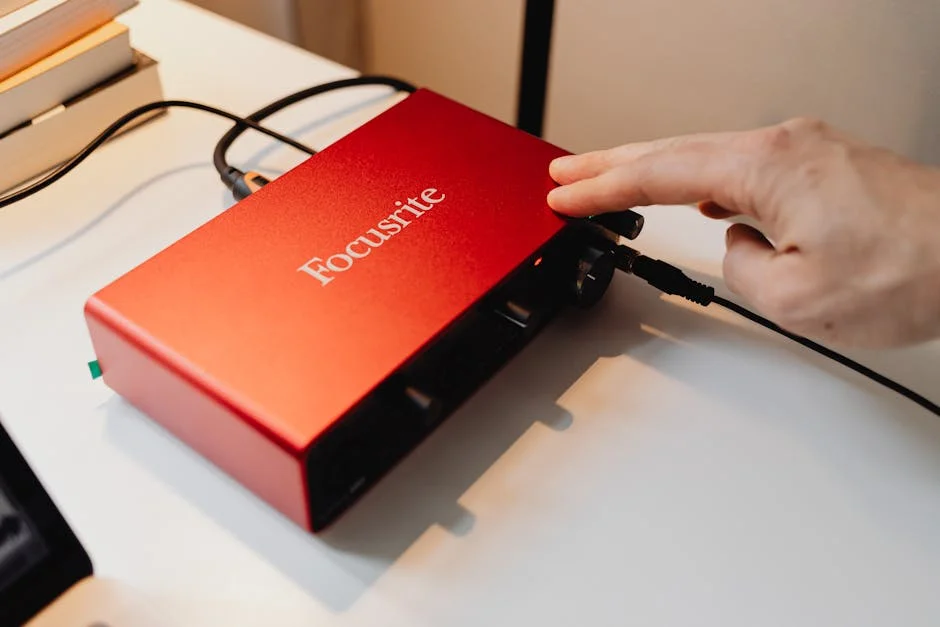
The Topping E50 HiFi Balanced DAC ES9068AS MQA DSD512 PCM768kHz is what I run daily on my desk into the L50 amp. It uses the ES9068AS chip and provides both balanced XLR and single-ended RCA outputs, giving you flexibility to run a balanced amp now or an unbalanced amp if that’s your current setup.
ASR reviewed the E50 at launch and it placed at or near the top of its price tier for measured performance. The SINAD scores are genuinely excellent. On my Topping stack, the E50 feeds the L50 via balanced XLR, and the combination handles everything from the HD600 to the Sundara without any audible noise floor at normal listening levels. The E50 also supports MQA decoding for Tidal Masters playback. I’ll be honest that I’m politely skeptical of MQA’s marketing claims and the audibility of its benefits, but the hardware support is there if that matters to your workflow.
The E50 has no headphone output. It is strictly a DAC, and that’s the right call for a unit at this tier. Pairing it with a dedicated amplifier is the intended use, and the balanced output makes it compatible with a wider range of mid and premium amp options as your system grows.
Check current price on Amazon.
Topping E70 Velvet
The TOPPING E70 Velvet High-Performance DAC AK4499EX Bluetooth LDAC DSD512 is Topping’s premium desktop DAC, using the AK4499EX flagship chip with both balanced XLR and RCA outputs plus Bluetooth LDAC support. ASR data confirms it measures at reference-class levels, and the AK4499EX is about as high-performance a DAC chip as you’ll find in a desktop unit at this price band.
Field reports from ASR and Head-Fi indicate the E70 Velvet is a genuine step up for buyers who want the highest-tier chip performance without moving into premium pricing territory. The preamp functionality also makes it useful in a speaker system context, not just headphone setups. The Bluetooth LDAC addition is convenient for wireless source use without wiring a phone directly.
The honest question is whether the E70 Velvet improves audibly on the E50 for most headphone use cases. Community consensus and measurement comparisons suggest the gap is narrow for headphone listening. Where the E70 Velvet makes more sense is for buyers building higher-tier systems, running balanced amps at the premium price tier, or wanting the best available chip on principle.
Check current price on Amazon.
Schiit Modi 3+
The Schiit Modi 3+ D/A Converter Delta-Sigma DAC Black is Schiit’s foundational budget DAC, manufactured in the United States, which is a meaningful differentiator in a category where most competitors ship from China. It includes USB, optical, and coaxial inputs and outputs via RCA. ASR data places it competitively within the budget DAC tier.
The Modi 3+ is almost always discussed alongside the Schiit Magni Heresy as a stack, and for good reason. Verified buyers who’ve run the Modi/Magni combination consistently describe it as punching above its combined price for HD600-class headphones. The build quality, including the machined aluminum chassis, is noticeably better than comparably priced units from brands that ship from overseas. Schiit’s customer service reputation on Head-Fi is strong.
One note from writer research: AKM chip supply constraints have affected some production runs. Verify the current chip variant before ordering. The Modi 3+ has no balanced output, which is the expected limitation at this price tier.
Check current price on Amazon.
Schiit Modius E
The Schiit Modius E Balanced DAC Digital to Analog Converter is Schiit’s balanced desktop DAC, providing XLR outputs at a mid-tier price alongside USB, optical, and coaxial inputs. It uses an AK5578 chip and is built in the USA, maintaining Schiit’s domestic manufacturing approach at a higher tier than the Modi 3+.
For buyers building a fully balanced desktop stack, the Modius E pairs with the Schiit Magnius amplifier to create a balanced Schiit stack that carries strong community endorsement on Head-Fi and ASR forums. Verified buyers note the balanced XLR pairing with the Magnius is a meaningful step up from the unbalanced Modi/Magni combination, particularly for planar magnetic headphones. The Modius E delivers clean, competitive measurements in line with its price tier.
The trade-off versus the Topping E50, which occupies a similar price band, is primarily one of ecosystem preference. The Topping offers marginally better measured performance on ASR. The Modius E offers domestic manufacturing and compatibility with the Schiit balanced stack.
Check current price on Amazon.
Schiit Bifrost 2
The Schiit Bifrost 2 True Multibit DAC with Unison USB occupies a different philosophical position than every other DAC on this list. Where the Topping and Schiit budget units are all delta-sigma designs optimized for measurement performance, the Bifrost 2 uses Schiit’s proprietary True Multibit architecture, derived from Theta Digital lineage, that prioritizes a distinctive analog character over class-leading SINAD scores.
ASR’s measurements of the Bifrost 2 are not class-leading for its price tier. That’s a known quantity, and the Bifrost 2 community is not buying it for measurements. Head-Fi owner threads describe the Bifrost 2 as having a musical weight and texture that pairs particularly well with tube amplifiers. Verified buyers coming from delta-sigma DACs frequently describe the Bifrost 2 as sounding less “digital.” Whether that constitutes an improvement is a genuinely subjective question.
The Bifrost 2 is also upgradeable via Schiit’s card system, which means future revisions can be installed without replacing the full unit. Build quality is exceptional. At premium pricing with no balanced output, it is a character purchase rather than a measurement-maximizing one, and it should be evaluated on those terms.
Check current price on Amazon.
JDS Labs Atom DAC+
The JDS Labs Atom DAC+ Desktop DAC is JDS Labs’ budget desktop DAC and the natural companion to their Atom Amp+. It is manufactured in the United States and sold directly through jdslabs.com rather than through Amazon or third-party retailers. That last point matters practically: if you’re ordering a full stack, you’re ordering from JDS Labs directly, which community reports consistently describe as a positive experience.
ASR has measured the Atom DAC+ favorably, with low noise and distortion consistent with the Atom line’s reputation for transparent, accurate performance. The pairing with the Atom Amp+ creates one of the most consistently recommended budget separates stacks in the hobby, cited across ASR, Head-Fi, and Resolve Reviews for solid performance without audiophile pricing. Verified buyers who’ve used the Atom DAC+/Amp+ stack with HD600-class headphones describe it as a reference-quality foundation for the price band.
The Atom DAC+ has no display, no remote, and no Bluetooth. It does one thing, does it well, and costs appropriately for that focus. If you want a USA-made, well-measured DAC as the foundation of a budget separates stack, this is where community consensus points.
Check current price on Amazon.
Buying Guide: How to Choose

Start with Your Headphones
The single most important variable in the combo versus separates decision is what headphones you’re driving. Sensitive IEMs, easy-to-drive dynamic driver headphones in the lower impedance range, and portable headphones generally do not demand the output power and control that separates provide. A budget combo unit serves these use cases well.
High-impedance dynamics above 200 ohms and planar magnetic headphones are a different situation. Field reports across ASR and Head-Fi consistently show that planars benefit from dedicated amplification in ways that easy-to-drive dynamics do not. If you own or plan to own a Sundara, an LCD-series headphone, or a high-impedance Sennheiser, the amp stage quality matters more, and that tends to favor separates. The DACs hub here goes deeper on pairing considerations by headphone type.
Budget Realities and Upgrade Path
Combo units can hit total system price points that a separates pair cannot match, especially if you’re buying new. At budget pricing, a combo unit gets you a complete, working desktop system for less than most entry separates pairs combined. That is a real advantage, and it should not be dismissed.
The upgrade path calculus changes over time. When you decide to move up to better amplification or a higher-tier DAC, a combo unit means replacing the entire unit. Separates let you upgrade one component while keeping the other. Three years in, having started with a single stack and kept the same DAC while considering amp upgrades, the modular approach has been useful for me personally.
The Desk Space Argument
Combo units are genuinely smaller and simpler. One power cable, one USB cable, one device on your desk. For a shared workspace or a minimal desk setup, that simplicity has real value. Separates require two power supplies, an interconnect cable between DAC and amp, and physical space for two chassis.
If desk space is a constraint or if you simply prefer a cleaner setup, the combo case is legitimate. This is not a concession to beginners only. Some experienced hobbyists deliberately run combo units for specific contexts, including office desks and secondary setups, precisely because simplicity is a feature.
Measurements vs. Character: The DAC Decision
For most desktop setups, any well-designed DAC from a reputable manufacturer will measure beyond the audibility threshold of your headphones, amplifier, and hearing. This is the central finding from ASR’s extensive DAC measurement library, and it’s worth internalizing early in the hobby.
The exception is the Bifrost 2, which is deliberately not optimized for measurements and is instead designed for a specific character that certain system builders prefer. This is a valid choice, but it’s a different kind of choice than buying the best-measuring DAC at a given price. Understanding that distinction, consulting a current DAC comparison resource, and knowing which category of purchase you’re making will save you considerable forum-reading time.
Balanced vs. Unbalanced at Budget Pricing
The balanced versus unbalanced question comes up quickly when you start researching desktop DACs. At budget pricing, balanced XLR outputs are less common, and most budget combo units are single-ended only. The E50 and Modius E both offer balanced XLR at mid-tier pricing, which makes them attractive anchors for fully balanced stacks.
The honest note is that balanced connectivity matters more in pro-audio and long cable runs than in a desktop headphone system where your DAC-to-amp cable is under two feet. Balanced headphone amplification can offer additional power and lower noise in certain implementations, but the gains are not universal. Community consensus from Head-Fi and ASR is to not pay a significant premium for balanced output unless you specifically plan to run a balanced amp with a headphone that benefits from the additional power.

Frequently Asked Questions
Is a DAC/amp combo good enough for the HD600?
The HD600 is a 300-ohm headphone with a sensitivity that requires a real amplifier, but it is not extraordinarily power-hungry. Owner reports across Head-Fi and ASR consistently show that a well-designed combo unit at budget-to-mid pricing, including the DX3 Pro+, drives the HD600 competently at moderate listening levels. A dedicated amplifier will likely offer better channel balance at low volumes and more headroom at high volumes. The gap is real but not dramatic for this specific headphone.
Do I need balanced outputs on my DAC?
For most desktop headphone setups, balanced XLR outputs are a nice-to-have rather than a necessity. Balanced connections matter most in professional recording environments with long cable runs where noise rejection is critical. In a typical desktop system where the DAC and amp are inches apart, verified buyers across ASR forums report no measurable noise benefit from balanced interconnects. Where balanced does matter is if you’re pairing with a balanced amplifier that delivers meaningfully higher power in balanced mode, which some designs do.
What is the upgrade path if I start with a combo unit?
Starting with a combo unit and upgrading later means replacing the entire device, since the DAC and amp share a chassis and cannot be separated. This is not a fatal flaw, especially at budget pricing where the initial investment is low. When you decide to upgrade, you sell the combo unit and apply the proceeds toward a separates pair. Many buyers follow exactly this path.
How important is the DAC chip to sound quality?
At budget-to-mid pricing, DAC chip choice matters less to audible sound quality than the implementation quality around the chip. ASR measurement data shows that well-implemented ES9038Q2M and AK4493S designs both measure well beyond audibility thresholds. The AK4499EX in the E70 Velvet measures at reference-class levels, but the practical audible difference versus a competent ES9038Q2M implementation is unlikely to be detectable in a blind listening test. Chip quality becomes more relevant as you approach the limits of your system’s noise floor.
Should I buy from JDS Labs directly or choose a brand available on Amazon?
JDS Labs sells the Atom DAC+ and Atom Amp+ exclusively through their own website, not through Amazon. Verified buyers on Head-Fi describe the JDS Labs direct ordering experience as reliable, with strong customer service and fast domestic shipping. The trade-off is that you cannot use Amazon Prime shipping or Amazon’s return process. If Amazon purchase convenience is important to your buying decision, the Topping E30 II and Schiit Modi 3+ cover the same budget separates use case with Amazon availability.

<script type="application/ld+json">
{
"@context": "https://schema.org",
"@type": "FAQPage",
"mainEntity": [
{
"@type": "Question",
"name": "Is a DAC/amp combo good enough for the HD600?",
"acceptedAnswer": {
"@type": "Answer",
"text": "The HD600 is a 300-ohm headphone with a sensitivity that requires a real amplifier, but it is not extraordinarily power-hungry. Owner reports across Head-Fi and ASR consistently show that a well-designed combo unit at budget-to-mid pricing, including the DX3 Pro+, drives the HD600 competently at moderate listening levels. A dedicated amplifier will likely offer better channel balance at low volumes and more headroom at high volumes. The gap is real but not dramatic for this specific headphone."
}
},
{
"@type": "Question",
"name": "Do I need balanced outputs on my DAC?",
"acceptedAnswer": {
"@type": "Answer",
"text": "For most desktop headphone setups, balanced XLR outputs are a nice-to-have rather than a necessity. Balanced connections matter most in professional recording environments with long cable runs where noise rejection is critical. In a typical desktop system where the DAC and amp are inches apart, verified buyers across ASR forums report no measurable noise benefit from balanced interconnects. Where balanced does matter is if you're pairing with a balanced amplifier that delivers meaningfully higher power in balanced mode, which some designs do."
}
},
{
"@type": "Question",
"name": "What is the upgrade path if I start with a combo unit?",
"acceptedAnswer": {
"@type": "Answer",
"text": "Starting with a combo unit and upgrading later means replacing the entire device, since the DAC and amp share a chassis and cannot be separated. This is not a fatal flaw, especially at budget pricing where the initial investment is low. When you decide to upgrade, you sell the combo unit and apply the proceeds toward a separates pair. Many buyers follow exactly this path. The trade-off is that you lose the separates' flexibility to upgrade one component at a time."
}
},
{
"@type": "Question",
"name": "How important is the DAC chip to sound quality?",
"acceptedAnswer": {
"@type": "Answer",
"text": "At budget-to-mid pricing, DAC chip choice matters less to audible sound quality than the implementation quality around the chip. ASR measurement data shows that well-implemented ES9038Q2M and AK4493S designs both measure well beyond audibility thresholds. The AK4499EX in the E70 Velvet measures at reference-class levels, but the practical audible difference versus a competent ES9038Q2M implementation is unlikely to be detectable in a blind listening test. Chip quality becomes more relevant as you approach the limits of your system's noise floor."
}
},
{
"@type": "Question",
"name": "Should I buy from JDS Labs directly or choose a brand available on Amazon?",
"acceptedAnswer": {
"@type": "Answer",
"text": "JDS Labs sells the Atom DAC+ and Atom Amp+ exclusively through their own website, not through Amazon. Verified buyers on Head-Fi describe the JDS Labs direct ordering experience as reliable, with strong customer service and fast domestic shipping. The trade-off is that you cannot use Amazon Prime shipping or Amazon's return process. If Amazon purchase convenience is important to your buying decision, the Topping E30 II and Schiit Modi 3+ cover the same budget separates use case with Amazon availability."
}
}
]
}
</script>Where to Buy
Topping E50 HiFi Balanced DAC ES9068AS MQA DSD512 PCM768kHzSee Topping E50 HiFi Balanced DAC ES9068A… on Amazon