Best Amps for HD 650 Headphones: Buyer's Guide

Affiliate disclosure: Some links on this page are affiliate links. If you buy through them we earn a small commission at no extra cost to you. Recommendations are research-driven; we don't claim personal use of every product reviewed. Product prices and availability are accurate as of the date published and are subject to change. Always check Amazon for current pricing before purchasing. Learn more.
| Product | Price Range | Top Strength | Key Weakness | Buy |
|---|---|---|---|---|
| Sennheiser Consumer Audio HD 650 Audiophile Hi-Res Open Back Headphone also consider | $$ | Warm, musical tuning ideal for long listening sessions | 300Ω impedance requires a capable headphone amplifier | Buy on Amazon |
| Topping E30 II Hi-Res Audio DAC AK4493S DSD512 PCM768kHz also consider | $ | AK4493S chip delivering excellent measurements at budget pricing | No balanced output, RCA only at this price tier | Buy on Amazon |
| TOPPING L50 NFCA Balanced Headphone Amplifier 3500mWx3500mW also consider | $$ | NFCA technology with very low published distortion and noise | No tube warmth, purely solid-state clinical performance | Buy on Amazon |
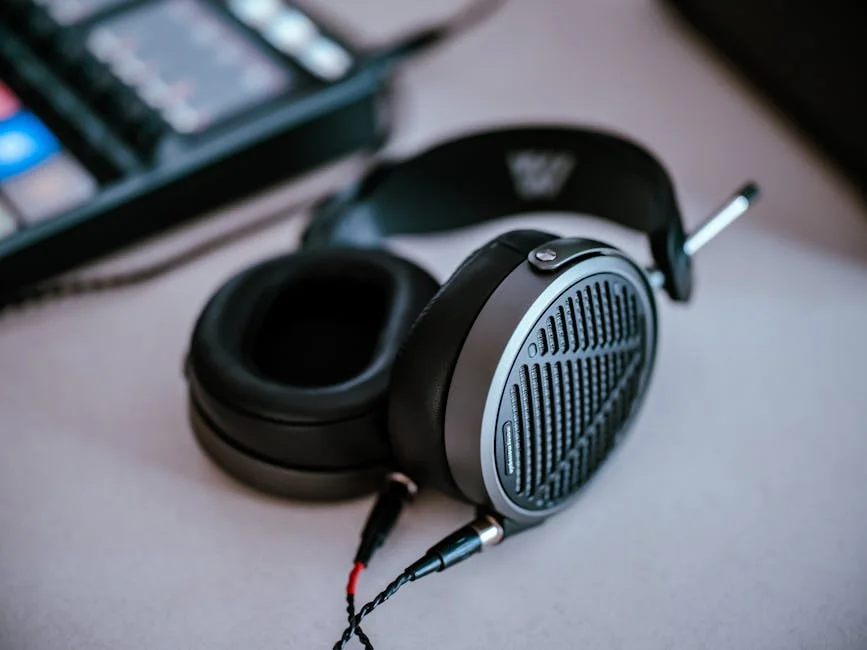
Finding the right amplifier for the HD 650 is one of the more nuanced questions in the entry-to-mid-tier hobby. The headphone’s 300Ω impedance and relatively low sensitivity mean that source output matters, but the degree to which it matters, and which amp characteristics actually serve the HD 650’s tuning, is where most guides get vague. These Buyer Guides exist to cut through that vagueness.
The HD 650’s character rewards careful pairing. Its warm, slightly rolled-off top end can turn clinical with the wrong source, or muddy with an underpowered one. The goal here is matching the right amplification to the headphone’s actual strengths.
What to Look For in an HD 650 Amplifier Stack
Output Power and Impedance Matching
The HD 650 presents a 300Ω load. Most integrated laptop outputs and phone headphone jacks are optimized for low-impedance IEMs, they can drive the HD 650 to listenable volume, but they leave dynamic headroom on the table and often introduce audible noise floors. A dedicated amplifier with sufficient output voltage swing is the baseline requirement.
How much power is enough? The HD 650 is not especially power-hungry by planar magnetic standards, but it rewards amplifiers that can reach comfortable listening levels at low gain with room to spare. An amplifier running at 80-90% of its output ceiling to reach your target volume is a poorly matched amplifier.
Damping factor matters less for dynamic drivers than for planars, but output impedance still shapes the frequency response slightly at 300Ω. Keep output impedance under 10Ω for clean results. Most purpose-built headphone amplifiers, including the options covered here, meet this without issue.
Tonal Synergy with the HD 650’s Signature
The HD 650 is a warm headphone. Its bass weight is elevated relative to the HD 600, and its treble is gently rolled. Pairing it with an amplifier that adds further warmth, some tube amp pairings, for instance, can push the balance into muddiness. The opposite failure mode is pairing it with something so clinically flat that the roll-off becomes emphasized as a missing presence.
Solid-state amplifiers with low-distortion output tend to let the HD 650’s midrange speak clearly without compounding its softness at the top. The HD 650 can also be paired with tubes, which add a different character, but the amplifier’s own character then needs to be accounted for rather than ignored.
From that baseline, tube rolling is a deliberate choice rather than a corrective measure.
DAC Quality and the Source Chain
The amplifier is not the only variable. A DAC that introduces noise or jitter upstream will degrade the result regardless of downstream amplifier quality. For desktop use, a purpose-built external DAC eliminates the noise floor issues common in motherboard audio and laptop headphone outputs.
That said, the law of diminishing returns flattens quickly in the DAC tier relevant to the HD 650. The measurable performance gap between a well-regarded budget DAC and a mid-tier DAC is small.
Balanced vs. Single-Ended Output
Balanced output (typically 4-pin XLR for headphones) doubles the voltage available from the amplifier and can lower the noise floor in environments with electrical interference. For the HD 650 with its aftermarket balanced cable options, this is a genuine consideration rather than a marketing distinction.
Single-ended output (6.35mm or 3.5mm) is sufficient for the HD 650 in most home listening environments. If your listening space is electrically quiet, no proximity to power strips, fluorescent lights, or consumer electronics producing interference, the practical difference is modest. The case for balanced becomes stronger in a busy desktop environment or when pairing the same amplifier with planar magnetics that benefit more from the additional headroom. Exploring the full range of amplifier and DAC options before committing to a balanced or single-ended configuration is worth the time.
Top Picks
Sennheiser HD 650
The Sennheiser HD 650 is the subject of the pairing conversation rather than one of the amplifiers, but it belongs here because the headphone itself shapes every recommendation that follows. Understanding what the HD 650 actually is, not the mythology, but the measurable and reported reality, is necessary before any amplifier choice makes sense.
Its warm tuning suits multi-hour listening sessions in a way that brighter headphones don’t. Published measurements show the treble roll-off and the elevated low end relative to the HD 600.
The 300Ω impedance is not a flaw, it’s a design characteristic that rewards proper amplification. The HD 650 is not a headphone for laptop outputs. That constraint is the premise of this entire guide.
Monitoring work and critical analysis favor the HD 600’s more neutral presentation. Relaxed long-session listening, late evenings, jazz, acoustic guitar, vocal-forward recordings, is where the HD 650’s character pays off. The argument for the HD 650 is not that it’s technically superior; it’s that its tuning is more immediately livable for a specific listening context.
Check current price on Amazon.
Topping E30 II
Budget desktop DAC options have improved significantly over the past few years, and the Topping E30 II is a benchmark at its price tier, with a low noise floor, low distortion and a neutral frequency response.
The AK4493S chip at the E30 II’s core is a capable implementation. USB, coaxial, and optical inputs give it flexibility beyond a dedicated desktop setup, it can serve as a converter for a television or console source feeding into a headphone system. For the HD 650 pairing context, the USB input from a computer is the likely primary use case, and it performs cleanly there.
The constraints are real. No balanced output means any downstream amplifier connection is via RCA. No remote control is a minor inconvenience at a desk where the unit is within arm’s reach, but worth noting for more elaborate setups. The value case is strong for desktop system builders who want measurement-reference DAC performance without mid-range spending.
The E30 II pairs naturally with the JDS Labs Atom Amp+ or the Schiit Magni, both capable solid-state amplifiers at a compatible budget tier that together produce a complete and well-measured desktop stack for the HD 650.
Check current price on Amazon.
Topping L50
The NFCA (Nested Feedback Composite Amplifier) topology is Topping’s implementation of a current-feedback architecture with very low published distortion. The practical result is an amplifier that adds nothing audible of its own: it amplifies the signal from the DAC without imposing a character.
For the HD 650 specifically, that transparency means the amplifier does not push against the headphone’s warm tuning. The bass doesn’t thicken further, the rolled treble doesn’t soften into absence, the HD 650’s own signature is what arrives at the ear. There’s no sense of the amplifier working hard.
The balanced XLR output is a performance differentiator over single-ended output for the L50 specifically. The 3500mW balanced output figure is far beyond what the HD 650 requires, but that headroom means the amplifier operates well below its ceiling during normal use, which is consistent with its low measured distortion. The 6.35mm single-ended output also performs well; the balanced advantage is measurable but modest in a quiet desktop environment. The L50 also drives planar magnetics, such as the HiFiMan Sundara, without the strain that budget amplifiers can show.
The primary constraint is that the L50 is an amplifier only. It requires a DAC. For buyers building a complete stack from scratch, the E50/L50 pairing is the reference combination, but a budget builder pairing the E30 II with the L50 as an intermediate step is a sensible approach.
Check current price on Amazon.
Buying Guide

Matching Amplifier Power to the HD 650’s Requirements
The HD 650’s 300Ω impedance is the practical starting point for any amplifier selection. The headphone needs enough output voltage from the amplifier to reach comfortable listening levels, typically 85, 90 dB SPL, with headroom remaining. Purpose-built desktop headphone amplifiers from reputable manufacturers meet this threshold without difficulty. The real question is not whether a given desktop amp can drive the HD 650, but whether it does so cleanly and with enough reserve that dynamics are not compressed.
The improvement is real. That said, the law of diminishing returns arrives early, the gap between a well-regarded budget amp and a mid-tier amp is smaller with the HD 650 than with more revealing headphones.
Tube vs. Solid-State for the HD 650
The HD 650 has a long association with tube amplifiers, specifically OTL (output transformerless) designs like the Bottlehead Crack, which pairs well due to impedance matching characteristics. Tube pairings can add perceived dimensionality and harmonic texture. The risk is compounding the HD 650’s warmth rather than complementing it.
Solid-state amplifiers with low output impedance and low distortion are the safer, more predictable pairing. They let the HD 650’s tuning stand on its own. Tube exploration, for buyers interested in it, is a deliberate second step after establishing a reference baseline with solid-state.
Building a Complete Stack: DAC Considerations
An amplifier-only purchase is incomplete. The HD 650 requires both a DAC and an amplifier in any dedicated desktop setup. Budget stack builders have a clear path: a high-measuring budget DAC paired with a capable solid-state amp. The E30 II and a matching amplifier represent the entry-level ceiling for this approach, maximum measured performance at the budget tier.
Mid-tier stack builders can step up to a DAC with balanced outputs, enabling the full balanced signal path through to the amplifier’s XLR inputs. The audible return on DAC investment diminishes faster than the audible return on amplifier investment for the HD 650. If resources are constrained, allocate toward amplifier quality first. The full range of stack-building guides covers DAC selection in detail for buyers who want to go deeper on source choices.
Single-Ended vs. Balanced Connections
The HD 650 ships with a single-ended 6.35mm connection. Balanced operation requires an aftermarket cable, a genuine additional cost and configuration step. For buyers in electrically quiet desktop environments, single-ended operation with a capable amplifier is sufficient for the HD 650’s performance envelope.
Balanced operation delivers measurable benefits: lower noise floor, higher output voltage from the amplifier’s balanced outputs, and better channel separation in electrically noisy environments. The practical audible difference depends heavily on environmental conditions. Buyers planning to use the same amplifier stack with planar magnetics, which benefit more from balanced headroom, have stronger motivation to invest in the balanced path from the start.
Long-Term Pairing Strategy
The HD 650 rewards a stable amplifier pairing rather than frequent swapping. Once a stack is dialed in, the character of the headphone becomes the reference, and changes to the amplifier chain become audibly attributable to the amplifier rather than noise in the comparison.
Building toward a reference stack, even incrementally, pays off more with the HD 650 than with headphones that plateau earlier. A buyer starting with a budget DAC and mid-tier amplifier has a clear upgrade path: the DAC can be swapped for a balanced output model when budget allows, and the headphone cable can follow. The HD 650 itself does not become the limiting factor early in this process.
Frequently Asked Questions
Does the HD 650 really need a dedicated amplifier, or is a phone or laptop output sufficient?
A phone or laptop output can drive the HD 650 to audible volume, but the dynamics are compressed and the background noise floor is often higher than a purpose-built amplifier delivers. The difference is most apparent in complex passages with wide dynamic range. The HD 650's character is not fully accessible from integrated outputs.
What is the practical difference between the HD 650 and HD 600 for amplifier pairing?
The HD 650 is warmer and more bass-weighted than the HD 600, with a slightly softer treble. Both share the 300Ω impedance and similar sensitivity, so amplifier requirements are nearly identical, the same stack works for both. The tuning difference affects which amplifier character serves the headphone best: the HD 600 tolerates brighter solid-state pairings more easily, while the HD 650 benefits from amplifiers that lean neutral rather than warm.
Is the Topping L50 a good match for the HD 650, or is it overkill?
The Topping L50 is not overkill, it is well-matched. Its transparent NFCA topology does not impose its own character on the HD 650's warm signature, and the output headroom means the amplifier operates well below its ceiling during normal HD 650 listening levels. The 3500mW balanced output figure is more relevant for planar magnetics, but the low distortion at all output levels benefits the HD 650 directly.
Do I need a balanced cable for the HD 650 to use the balanced output on an amplifier like the L50?
Yes. The HD 650's stock cable terminates in a single-ended 6.35mm connector. Using the balanced XLR output on an amplifier requires an aftermarket cable with dual 3-pin XLR connectors (or a 4-pin XLR to dual 3-pin breakout), which connects to the HD 650's dual-entry headband. Several well-regarded cable manufacturers offer this configuration. The investment is modest relative to the rest of the stack, and the audible return depends on environmental noise conditions.
Can the Topping E30 II DAC limit the performance of a mid-tier amplifier like the L50?
Based on published measurements of both units, the E30 II performs at a level unlikely to become the audible ceiling in an HD 650 system. Its noise floor and distortion figures are well below the threshold of audibility for the HD 650's sensitivity. Amplifier quality is the more audible variable in this pairing.
Where to Buy
- Sennheiser Consumer Audio HD 650 Audiophile Hi-Res Open Back HeadphoneSee price on Amazon
- Topping E30 II Hi-Res Audio DAC AK4493S DSD512 PCM768kHzSee price on Amazon
- TOPPING L50 NFCA Balanced Headphone Amplifier 3500mWx3500mWSee price on Amazon