Headphone Driver Types Explained: A Beginner's Guide

Affiliate disclosure: Some links on this page are affiliate links. If you buy through them we earn a small commission at no extra cost to you. Recommendations are research-driven; we don't claim personal use of every product reviewed. Product prices and availability are accurate as of the date published and are subject to change. Always check Amazon for current pricing before purchasing. Learn more.
Quick Picks
FiiO X5 Mark III Portable High-Resolution Audio Player
Dedicated audio hardware with dual AK4490 DAC chips
FiiO M11 Plus Portable Music Player ESS Version
Android 10 supports current streaming apps , Spotify, Tidal, Qobuz
iFi Audio iFi xDSD Gryphon Portable Bluetooth DAC/Amplifier
Bluetooth aptX Adaptive delivers near-lossless wireless audio
Buy on Amazon| Product | Price Range | Top Strength | Key Weakness | Buy |
|---|---|---|---|---|
| FiiO X5 Mark III Portable High-Resolution Audio Player also consider | $$ | Dedicated audio hardware with dual AK4490 DAC chips | Android version too old for current app support | — |
| FiiO M11 Plus Portable Music Player ESS Version also consider | $$$ | Android 10 supports current streaming apps , Spotify, Tidal, Qobuz | Premium price difficult to justify vs. phone plus good portable DAC | — |
| iFi Audio iFi xDSD Gryphon Portable Bluetooth DAC/Amplifier also consider | $$$ | Bluetooth aptX Adaptive delivers near-lossless wireless audio | Premium price in a portable device that can be lost or damaged | Buy on Amazon |
| Chord Electronics Chord Mojo 2 Portable DAC/Amp also consider | $$$ | Custom FPGA implementation with Chord's proprietary WTA filter | Ball-button interface is unintuitive and confusing for new users | Buy on Amazon |
| EarFun Free Pro 3 ANC True Wireless Earbuds also consider | $ | Qualcomm aptX Adaptive at ~$79 , exceptional codec value | ANC not class-leading , Sony and Bose significantly ahead | Buy on Amazon |
| Sony WF-1000XM5 True Wireless Noise Canceling Earbuds also consider | $$$ | Best-in-class ANC among true wireless earbuds | Premium price; XM4 or XM3 available second-hand at significant discount | Buy on Amazon |
| Apple AirPods Pro 2nd Generation with MagSafe Case also consider | $$$ | Best ANC integration in the Apple ecosystem with system-level compatibility | AAC codec ceiling limits audio quality on non-Apple devices | Buy on Amazon |
| HiBy R3 Pro Saber Portable Music Player also consider | $ | 4.4mm balanced output at ~$129 , exceptional value for balanced portable audio | Screen small and touch interface less responsive than flagship DAPs | Buy on Amazon |
If you’ve spent more than ten minutes reading about headphones online, you’ve run into the term “driver type” and probably kept scrolling. Three years in, I wish someone had stopped me earlier and explained what actually matters here, because the driver technology inside a headphone shapes practically everything about how it sounds and how it behaves on your source chain. This is the kind of foundational knowledge that makes every other buying decision cleaner.
This piece covers the main headphone driver types in plain terms, explains what measurements and community consensus say about each, and connects that knowledge to real gear decisions. For more foundational audio concepts like these, the Audiophile Basics hub is a good place to bookmark.

What Is a Headphone Driver, and Why Does It Matter?
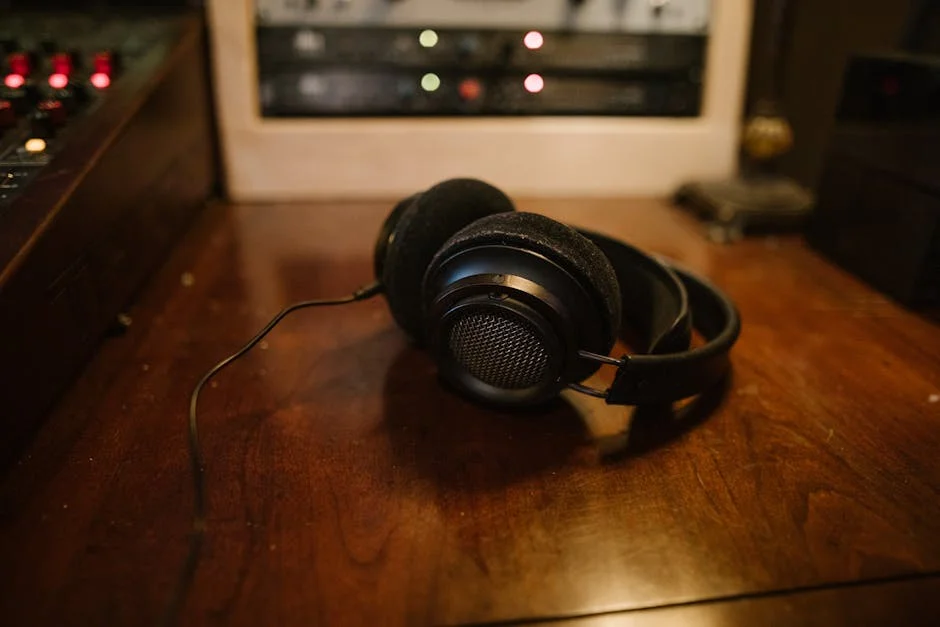
At its most basic, a headphone driver is the transducer inside each earcup: the component that converts an electrical signal into the physical air movement you hear as sound. Every other variable, tuning, impedance, sensitivity, soundstage, how demanding the headphone is of your amp, flows downstream from how that transducer works.
Getting comfortable with driver types does not require an engineering degree. It requires understanding a handful of principles and knowing which tradeoffs matter for your listening habits and your budget.
The Four Main Headphone Driver Types
Dynamic Drivers (Moving Coil)
Dynamic drivers are the oldest and most common transducer design in consumer headphones. A voice coil attached to a diaphragm sits inside a magnetic field. When signal current passes through the coil, the magnetic force moves the diaphragm, which pushes and pulls air. That moving air is the sound.
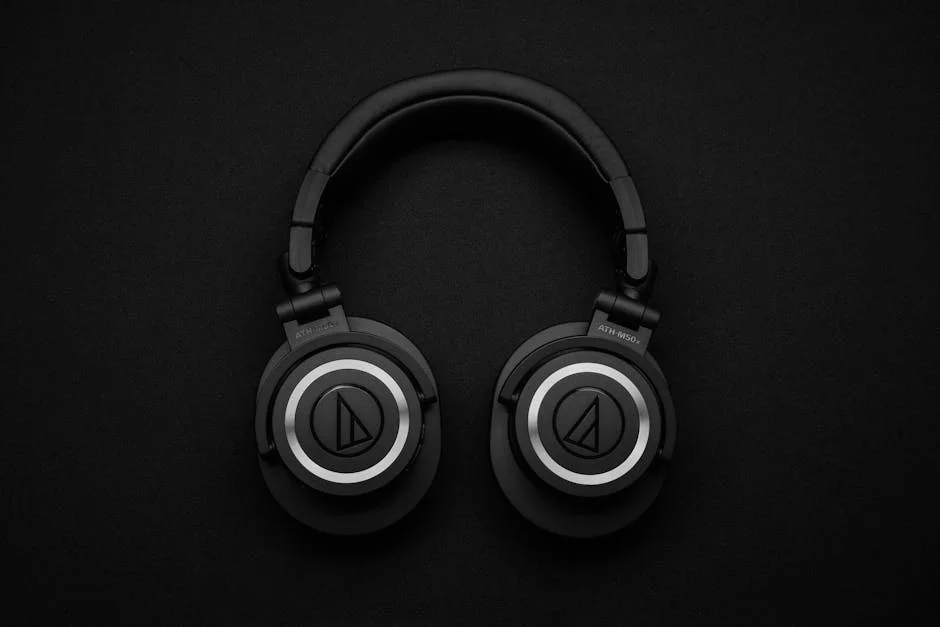
The Sennheiser HD600, which is the headphone I reach for most in my collection after three years in the hobby, uses a dynamic driver. The design is well understood, manufactureable at virtually every price point, and capable of excellent measured and subjective performance. Crinacle’s frequency response database and ASR’s measurement library both contain dozens of examples of dynamic driver headphones that measure well across the full budget-to-luxury range.
Three years in, I’ve noticed that dynamic drivers tend to be more forgiving of modest source chains than planar magnetics. The HD600 on my Topping L50 sounds meaningfully better than off a laptop headphone jack, but the gap is smaller than I expected when I first got into dedicated amplification. Community consensus across Head-Fi and Resolve Reviews supports this observation: most well-designed dynamic driver headphones are not dramatically source-sensitive compared to planars.
What to know: Dynamic drivers are available at every price band. They generally have moderate impedance and sensitivity spreads, but there is real variance. The HD600 sits at 300 ohms and benefits from a proper amp. Budget dynamic IEMs can often run fine off a phone. Check impedance and sensitivity specs before assuming.
Planar Magnetic Drivers
Planar magnetic drivers replace the voice coil and cone with an ultra-thin membrane that has a printed conductor trace running across its entire surface. Instead of a coil moving a cone, the whole membrane moves at once, driven by magnets mounted on either side of the panel.
The HiFiMan Sundara in my collection uses a planar magnetic driver, and the contrast with the HD600 is instructive. The Sundara has a larger, faster-feeling low end response and a particular kind of detail retrieval that sounds different from dynamic drivers, not inherently better, but different in a way that is audible and consistent with the measurements. Planars tend to measure with lower distortion at elevated listening levels.
The practical tradeoff I learned the hard way with the Sundara: planar magnetics are more source-dependent than dynamic drivers. The “scales with source” advice I had dismissed as audiophile mythology turned out to have real content for this specific headphone. Into the L50 at higher gain settings, the Sundara opened up noticeably compared to a dongle DAC. The consensus at ASR and Resolve Reviews reflects this: most planar magnetics benefit from dedicated amplification with adequate current delivery.
What to know: Planar magnetics are concentrated in the mid-to-luxury price bands. Budget options exist but quality control varies. For demanding planars like HiFiMan’s higher-tier lineup, dedicated DAC/amp separates are worth the complexity.
Electrostatic Drivers
Electrostatic drivers work on a different physical principle entirely. An extremely thin, electrically charged membrane is suspended between two perforated metal electrodes (stators). Voltage variations on those stators attract and repel the membrane, producing sound. Because the membrane is so light and the driving force is distributed across its full surface, electrostatic headphones are theoretically capable of extremely low distortion and very fast transient response.
The practical catch is significant: electrostatic headphones require a dedicated high-voltage energizer amplifier. Standard headphone amps will not drive them. The energizer-plus-headphone combinations that audiophiles discuss, combinations like Stax’s Lambda and SR series with their dedicated SRM amplifiers, sit firmly in the premium-to-luxury tier. This is not entry-level territory.
I briefly heard an electrostatic setup at a Texas Audio Society meetup (about 20 minutes, not a controlled evaluation). The impression was of an almost weightless, airier presentation compared to anything in my current collection. But I have not owned electrostatic gear, and I will not pretend 20 minutes at a meetup is a meaningful basis for specific product claims. For detailed electrostatic coverage, I defer to Currawong’s long-form reviews, where the ownership time and controlled comparisons are actually documented.
What to know: Electrostatics are a separate ecosystem. If you are entry-to-mid-tier like me, they are aspirational knowledge for now. The technical tradeoffs are real, and the system cost is high.
Balanced Armature Drivers (and Multi-Driver Hybrids)
Balanced armature drivers are almost exclusively found in in-ear monitors. A small metal armature pivots inside a coil inside a magnetic field. The motion is tiny and precise, which suits the demands of IEM design. Because a single balanced armature driver cannot easily reproduce the full audio frequency range, premium IEM manufacturers stack multiple drivers, one or more for bass, one or more for mids, one or more for treble, and crossover them together.
The Moondrop Aria 2 in my collection is a single dynamic driver IEM. The single-BA and multi-BA IEM designs from brands like Etymotic, Shure, and Westone are a separate design school with different tradeoffs. Multi-driver BA designs can produce exceptional detail and imaging in a small form factor, but getting a coherent crossover right is technically challenging. At my experience level, I rely heavily on Crinacle’s IEM database and measurement work here, because the IEM market is large and the quality variance between multi-driver implementations is enormous.
For IEM depth specifically, I trust Crinacle’s data and long-term listening notes. My impressions are a complement to those, not a replacement.
What to know: Hybrid IEMs (typically a dynamic driver for bass plus balanced armatures for mids and treble) attempt to combine the low-end body of dynamic designs with the BA detail advantages. Community consensus on hybrids is that execution quality matters more than the hybrid label itself.
Bone Conduction and Planar Magnetic IEMs (Emerging Types)
A brief note on two additional categories worth knowing. Bone conduction transducers, like those in Shokz products, bypass the eardrum and transmit vibration directly through skull bones to the cochlea. Sound quality ceiling is low by audiophile standards, but situational awareness use cases are legitimate. Audiophile relevance is limited.
Planar magnetic IEMs are an emerging category that has attracted attention in the community. Several brands, including 7Hz and Audeze, have released planar IEMs at various price points. Measured performance is interesting in some cases, but consistent user reports note that planar IEMs tend to require more power than typical IEMs and can be picky about source output impedance. The community consensus is still developing; I would not stake a buying decision on this category without reading current Crinacle and Head-Fi impressions from users with matching source chains.
How Driver Type Connects to Your Source Chain
Understanding driver types matters most when you are building or upgrading a source chain. This is where the practical decisions live, and it is worth connecting the technology to real products.
The conversation about portable audio sources intersects directly with driver type because certain headphones and IEMs are far more revealing of source quality than others. Planar magnetics and high-impedance dynamics will surface source quality differences that budget dynamic IEMs will not.
Top Picks
HiBy R3 Pro Saber Portable Music Player
The HiBy R3 Pro Saber is a compact budget DAP with an ES9219C chip and, notably, a 4.4mm balanced output. For someone pairing it with a multi-driver BA IEM or a moderately demanding dynamic driver IEM, the balanced output delivers measurably lower noise floor than many smartphone outputs. Spec data shows the ES9219C performs well at this price band.
Verified buyers note that the touch interface is less responsive than flagship DAPs and that the Android version limits app availability. Field reports from Head-Fi indicate the device works well as a pocketable local-file player but shows its age on streaming app compatibility.
For users pairing budget-to-mid IEMs with single dynamic or balanced armature drivers, this is a practical entry point into dedicated audio hardware without a large commitment.
Check current price on Amazon.
FiiO X5 Mark III Portable High-Resolution Audio Player
The FiiO X5 Mark III uses dual AK4490 DAC chips and offers a 2.5mm balanced output. Spec data on the AK4490 shows solid measured performance for its era. The dual-chip implementation is a legitimate differentiator in the mid price band.
The practical problem is the Android 5.1 operating system. Verified buyers and current owner reviews across Head-Fi consistently flag that modern streaming apps including Tidal and Qobuz no longer support Android 5.1, which limits the X5 III to local file playback in practice. For a traveler with a well-organized local library of hi-res files, the hardware is still capable. For anyone expecting to stream, it is not the right tool in the current streaming landscape.
Field reports from the DAP community suggest this is a better buy used at a reduced price than new at full mid-tier pricing, given the software limitation.
Check current price on Amazon.
FiiO M11 Plus Portable Music Player ESS Version
The FiiO M11 Plus ESS is a current-generation DAP running Android 10 with an ESS Sabre ES9068AS chip and a 4.4mm balanced output. The ES9068AS is a chip with strong ASR-documented measurements, and the Android 10 base means Spotify, Tidal, and Qobuz currently install and function correctly, which is a meaningful practical advantage over older Android DAPs.
Owner reviews from Head-Fi and dedicated DAP forums note that the 4.4mm balanced output delivers meaningful power for more demanding IEMs and light planar magnetic headphones. The form factor is large enough that pocket carry requires a jacket or bag, which verified buyers flag consistently as a size-versus-capability tradeoff.
For someone running demanding multi-driver BA IEMs or planar IEMs that benefit from lower output impedance and higher current, the measured performance advantage of the ESS chip is real and documented.
Check current price on Amazon.
iFi xDSD Gryphon Portable Bluetooth DAC/Amplifier
The iFi xDSD Gryphon is a premium portable DAC/amp with a physical analog volume dial and Bluetooth aptX Adaptive support. The aptX Adaptive codec is relevant to driver type discussions because it affects how cleanly the audio signal reaches the transducer in wireless configurations. Near-lossless wireless performance with aptX Adaptive is documented in codec measurement data.
The XBass and XSpace DSP filters are worth understanding for what they are: intentional coloration tools. Some owners prefer them off; verified buyers who run flat-tuned multi-driver IEMs tend to note the filters are useful for IEMs with less bass extension. Field reports from Head-Fi indicate the physical volume dial is consistently preferred over app-based controls for tactile in-pocket adjustments.
The premium price point is a real consideration for a portable device. Owner reviews acknowledge the value question directly.
Check current price on Amazon.
Chord Mojo 2 Portable DAC/Amp
The Chord Mojo 2 uses Chord’s custom FPGA implementation with their proprietary WTA (Watts Transient Aligned) filter rather than an off-the-shelf DAC chip. This makes it a genuinely interesting technical subject: Chord’s argument is that their FPGA-based oversampling and filtering outperform standard chip solutions. Measured performance at ASR is excellent by objective metrics, though the debate about whether the implementation advantage is audible over well-measuring chip DACs continues in the community.
The ball-button interface is a consistent friction point. Verified buyers note it requires a learning period, and some find it permanently unintuitive. For technically curious audiophiles interested in FPGA audio approaches and willing to accept the interface learning curve, the Mojo 2 is a legitimately interesting product. The Mojo 1 available second-hand represents better value for buyers who are not specifically interested in the FPGA architecture difference between generations.
The Poly wireless streaming module option (sold separately) expands the use case to wireless source.
Check current price on Amazon.
EarFun Free Pro 3 ANC True Wireless Earbuds
The EarFun Free Pro 3 is a budget true wireless IEM with Qualcomm aptX Adaptive and active noise cancellation. ASR and independent audio review sites have measured the tuning as accurate and well-behaved for the price band. Getting aptX Adaptive at this price point is documented as exceptional codec value in community coverage, because aptX Adaptive at this tier is genuinely unusual.
The TWS connection reliability note is worth flagging. Verified buyers report occasional dropout issues across multiple review sources, which is a practical concern for commute use. The ANC is functional but not class-leading. Field reports consistently note that Sony and Bose flag-tier ANC products are meaningfully ahead.
For someone wanting to understand how much codec quality costs in 2024, this is a useful benchmark purchase.
Check current price on Amazon.
Sony WF-1000XM5 True Wireless Noise Canceling Earbuds
The Sony WF-1000XM5 are Sony’s flagship TWS earbuds with LDAC codec support and class-leading ANC. I own the over-ear WH-1000XM5 and have a practical reference point for Sony’s ANC tuning. The WF-1000XM5 earbuds carry the same ANC philosophy into a TWS form factor, and community consensus across Head-Fi, Rtings, and Resolve Reviews consistently places the XM5 ANC among the best available in true wireless.
LDAC support is the key codec differentiator for audiophile-oriented listeners. LDAC at its highest bitrate delivers significantly more data than SBC or AAC, and on an Android device with a Qobuz or Tidal stream, the codec ceiling is meaningfully higher than competing products limited to AAC.
Owner reviews note the earpiece size is larger than some competitors, and fit varies by ear shape. Verified buyers consistently recommend trying the fit before committing.
Check current price on Amazon.
Apple AirPods Pro 2nd Generation with MagSafe Case
The Apple AirPods Pro 2 are relevant to audiophile discussions primarily as the mainstream reference point for TWS ANC. The system-level Apple ecosystem integration, Adaptive Transparency mode, and Personalized Spatial Audio are features with documented real-world utility for Apple device users.
The hard limitation for audiophile use is the AAC codec ceiling on non-Apple devices, and even on Apple devices, AAC does not approach LDAC data rates. Field reports from audiophile communities note that the AirPods Pro 2 tuning is consumer-optimized rather than flat-reference, which limits customization for listeners who prefer measurement-transparent tuning. The Sony Headphones Connect app on the XM5 offers considerably more EQ flexibility.
For Apple ecosystem users, the ANC integration and convenience case is strong. For cross-platform or Android users, the codec ceiling is a real limitation to weigh.
Check current price on Amazon.
Buying Guide: What Driver Knowledge Actually Changes

Matching Driver Type to Your Listening Habits
The most practical application of driver knowledge is pairing the right headphone technology with the way you actually listen. Dynamic driver headphones in the budget-to-mid range are broadly forgiving of modest source chains, which makes them better starting points for most people. If you are just building your first dedicated setup, the community consensus across Audiophile Basics resources like those at /learn/ consistently points toward well-measuring dynamic drivers as the lowest-friction entry.
Planar magnetics require more honest self-assessment. If you are not ready to invest in a proper amplifier with adequate current delivery, a planar magnetic headphone will not perform at its capability. The “scales with source” reality I learned with the Sundara is not marketing. It is measurable and audible.
Sensitivity, Impedance, and Source Compatibility
Driver type is not the only variable that determines source compatibility. Sensitivity and impedance specs matter independently. A dynamic driver headphone at 300 ohms (like the HD600) behaves differently from a dynamic driver IEM at 16 ohms, even though both use the same transducer technology. The HD600 benefits from a dedicated amp; most modern 16-ohm IEMs do not.
Balanced armature IEMs add another variable: output impedance sensitivity. BA drivers are more affected by amplifier output impedance than dynamic drivers. This is why some BA IEMs sound different across sources even when volume-matched. For BA-heavy multi-driver IEMs, look for source output impedance at or below 1 ohm. Portable DAPs like the M11 Plus and the HiBy R3 Pro Saber are designed with this in mind.
Understanding What Measurements Tell You (and What They Don’t)
Measurements document frequency response, distortion, and noise performance. They do not capture everything listeners care about. Three years in, I think the right posture is: use measurements to screen out poorly measuring gear, then use community listening impressions and your own ears to make final calls within the well-measuring tier.
For frequency response comparisons between driver types, Crinacle’s database and ASR’s headphone measurement library are the best free public resources. The graphs will show you real differences between dynamic and planar magnetic tuning implementations across price bands. At my experience level, I treat those graphs as necessary context, not sufficient evidence on their own.
Portable Sources and Driver Type Demands
Portable audio adds a layer of complexity because your source hardware travels with you. A demanding planar magnetic headphone may be poorly served by a budget dongle DAC, while a well-tuned dynamic driver IEM may sound excellent from the same source. Knowing your driver type helps you make smarter portable source decisions before you buy, rather than discovering the mismatch after. This practical connection between driver technology and source selection is one of the most useful things a foundational audio education can give you, and it is worth revisiting the Audiophile Basics section as your gear collection grows.
The Budget Entry Point Question
The most common question from readers new to the hobby is whether driver type matters at the budget tier. The honest answer is: less than you might think, but not zero. Budget dynamic drivers at reputable brands measure well and are perfectly enjoyable. Budget planar magnetics are more variable, and some require more power than budget sources deliver. Spend your first budget on a well-reviewed dynamic driver headphone or IEM with documented measurements, and treat driver type as a dimension to explore once you have a baseline reference to compare against.
Frequently Asked Questions
What headphone driver type sounds best?
There is no universally best driver type. Dynamic drivers are available at every price band and are capable of excellent measured and subjective performance. Planar magnetics offer lower distortion at high levels and a particular kind of detail retrieval. Electrostatics are a separate high-cost ecosystem.
Do planar magnetic headphones really need a better amp?
Yes, and this is not audiophile mythology. Planar magnetic headphones are generally more demanding of amplifier current than dynamic driver headphones at comparable sensitivity ratings. Field reports and measurements from the community show that underpowered planar magnetics lose dynamic range and bass authority. A dedicated amp with adequate current delivery is a genuine requirement for most planar magnetic headphones, especially at mid and premium price bands.
Are balanced armature IEMs better than dynamic driver IEMs?
Not inherently. Balanced armature designs excel at detail and imaging in compact form factors but require careful crossover implementation in multi-driver configurations. A poorly implemented multi-BA crossover can sound incoherent. Single dynamic driver IEMs tuned well, like the Moondrop Aria 2, measure and perform competitively against multi-BA designs at similar price bands.
Can Bluetooth codec quality compensate for driver technology limitations?
Codec quality affects the signal delivered to the driver, not the driver’s fundamental capability. A better codec (LDAC, aptX Adaptive) reduces wireless transmission losses and delivers more complete signal data to the transducer. But the driver’s frequency response, distortion profile, and sensitivity characteristics are fixed hardware properties. A budget driver with excellent codec support will still behave like a budget driver.
Is a dedicated DAP worth buying over a phone plus a DAC dongle?
For most listeners, a phone plus a well-measuring DAC dongle is the more practical portable setup in 2024. Dedicated DAPs offer dedicated audio hardware, physical controls, and in current-generation models like the FiiO M11 Plus, Android versions that support streaming apps. Older DAPs like the FiiO X5 III run Android versions that no longer support current streaming apps, which limits them to local file playback. The DAP value proposition is strongest for listeners with large local hi-res libraries or those who want a phone-free listening experience.
<script type="application/ld+json">
{
"@context": "https://schema.org",
"@type": "FAQPage",
"mainEntity": [
{
"@type": "Question",
"name": "What headphone driver type sounds best?",
"acceptedAnswer": {
"@type": "Answer",
"text": "There is no universally best driver type. Dynamic drivers are available at every price band and are capable of excellent measured and subjective performance. Planar magnetics offer lower distortion at high levels and a particular kind of detail retrieval. Electrostatics are a separate high-cost ecosystem. The best driver type is the one that suits your listening habits, source chain, and budget. Community consensus consistently places well-implemented examples of each type ahead of poorly implemented examples of any other."
}
},
{
"@type": "Question",
"name": "Do planar magnetic headphones really need a better amp?",
"acceptedAnswer": {
"@type": "Answer",
"text": "Yes, and this is not audiophile mythology. Planar magnetic headphones are generally more demanding of amplifier current than dynamic driver headphones at comparable sensitivity ratings. Field reports and measurements from the community show that underpowered planar magnetics lose dynamic range and bass authority. A dedicated amp with adequate current delivery is a genuine requirement for most planar magnetic headphones, especially at mid and premium price bands."
}
},
{
"@type": "Question",
"name": "Are balanced armature IEMs better than dynamic driver IEMs?",
"acceptedAnswer": {
"@type": "Answer",
"text": "Not inherently. Balanced armature designs excel at detail and imaging in compact form factors but require careful crossover implementation in multi-driver configurations. A poorly implemented multi-BA crossover can sound incoherent. Single dynamic driver IEMs tuned well, like the Moondrop Aria 2, measure and perform competitively against multi-BA designs at similar price bands. Execution quality and tuning matter more than driver topology at the IEM level."
}
},
{
"@type": "Question",
"name": "Can Bluetooth codec quality compensate for driver technology limitations?",
"acceptedAnswer": {
"@type": "Answer",
"text": "Codec quality affects the signal delivered to the driver, not the driver's fundamental capability. A better codec (LDAC, aptX Adaptive) reduces wireless transmission losses and delivers more complete signal data to the transducer. But the driver's frequency response, distortion profile, and sensitivity characteristics are fixed hardware properties. A budget driver with excellent codec support will still behave like a budget driver. Codec quality and driver quality are separate variables that both matter."
}
},
{
"@type": "Question",
"name": "Is a dedicated DAP worth buying over a phone plus a DAC dongle?",
"acceptedAnswer": {
"@type": "Answer",
"text": "For most listeners, a phone plus a well-measuring DAC dongle is the more practical portable setup in 2024. Dedicated DAPs offer dedicated audio hardware, physical controls, and in current-generation models like the FiiO M11 Plus, Android versions that support streaming apps. Older DAPs like the FiiO X5 III run Android versions that no longer support current streaming apps, which limits them to local file playback. The DAP value proposition is strongest for listeners with large local hi-res libraries or those who want a phone-free listening experience."
}
}
]
}
</script>