Headphone Sensitivity Explained: Why It Matters for Your Setup

Affiliate disclosure: Some links on this page are affiliate links. If you buy through them we earn a small commission at no extra cost to you. Recommendations are research-driven; we don't claim personal use of every product reviewed. Product prices and availability are accurate as of the date published and are subject to change. Always check Amazon for current pricing before purchasing. Learn more.
Quick Picks
FiiO X5 Mark III Portable High-Resolution Audio Player
Dedicated audio hardware with dual AK4490 DAC chips
FiiO M11 Plus Portable Music Player ESS Version
Android 10 supports current streaming apps , Spotify, Tidal, Qobuz
iFi Audio iFi xDSD Gryphon Portable Bluetooth DAC/Amplifier
Bluetooth aptX Adaptive delivers near-lossless wireless audio
Buy on Amazon| Product | Price Range | Top Strength | Key Weakness | Buy |
|---|---|---|---|---|
| FiiO X5 Mark III Portable High-Resolution Audio Player also consider | $$ | Dedicated audio hardware with dual AK4490 DAC chips | Android version too old for current app support | — |
| FiiO M11 Plus Portable Music Player ESS Version also consider | $$$ | Android 10 supports current streaming apps , Spotify, Tidal, Qobuz | Premium price difficult to justify vs. phone plus good portable DAC | — |
| iFi Audio iFi xDSD Gryphon Portable Bluetooth DAC/Amplifier also consider | $$$ | Bluetooth aptX Adaptive delivers near-lossless wireless audio | Premium price in a portable device that can be lost or damaged | Buy on Amazon |
| Chord Electronics Chord Mojo 2 Portable DAC/Amp also consider | $$$ | Custom FPGA implementation with Chord's proprietary WTA filter | Ball-button interface is unintuitive and confusing for new users | Buy on Amazon |
| EarFun Free Pro 3 ANC True Wireless Earbuds also consider | $ | Qualcomm aptX Adaptive at ~$79 , exceptional codec value | ANC not class-leading , Sony and Bose significantly ahead | Buy on Amazon |
| Sony WF-1000XM5 True Wireless Noise Canceling Earbuds also consider | $$$ | Best-in-class ANC among true wireless earbuds | Premium price; XM4 or XM3 available second-hand at significant discount | Buy on Amazon |
| Apple AirPods Pro 2nd Generation with MagSafe Case also consider | $$$ | Best ANC integration in the Apple ecosystem with system-level compatibility | AAC codec ceiling limits audio quality on non-Apple devices | Buy on Amazon |
| HiBy R3 Pro Saber Portable Music Player also consider | $ | 4.4mm balanced output at ~$129 , exceptional value for balanced portable audio | Screen small and touch interface less responsive than flagship DAPs | Buy on Amazon |
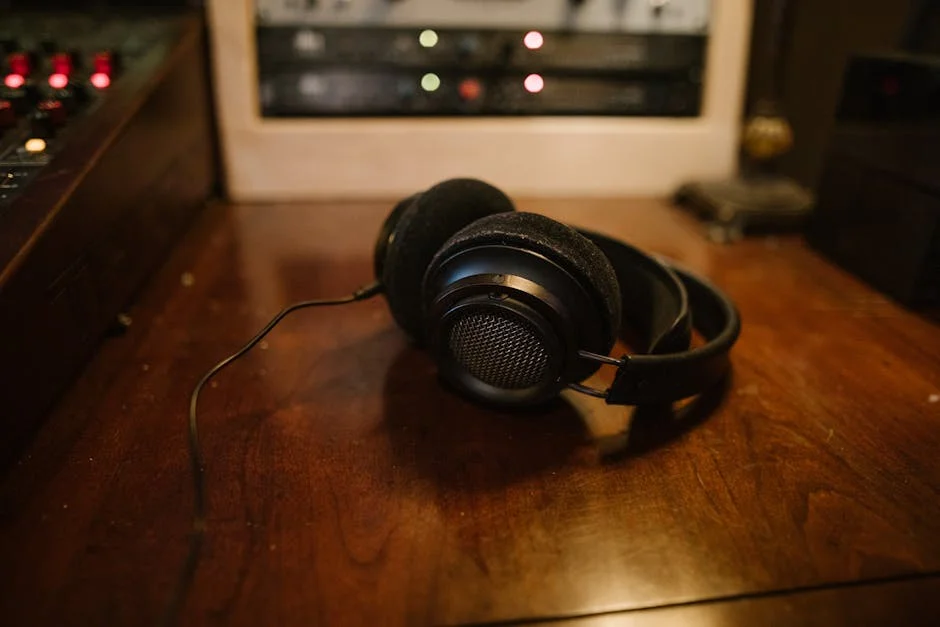
Headphone sensitivity is one of those specs that hides in plain sight on product pages, sitting quietly next to impedance and frequency response while most buyers scroll past it. Three years in, I wish someone had explained it to me before I started making source decisions. Understanding sensitivity changed how I think about pairing headphones with portable gear, dedicated amps, and even my Topping stack back home.
If you’re building your first setup or reconsidering your source chain, the Audiophile Basics hub at /learn/ covers the foundational concepts worth reading alongside this one. What follows is a practical breakdown of what headphone sensitivity actually means, how it interacts with impedance, and why it matters when choosing a portable source or DAP.
What Is Headphone Sensitivity?
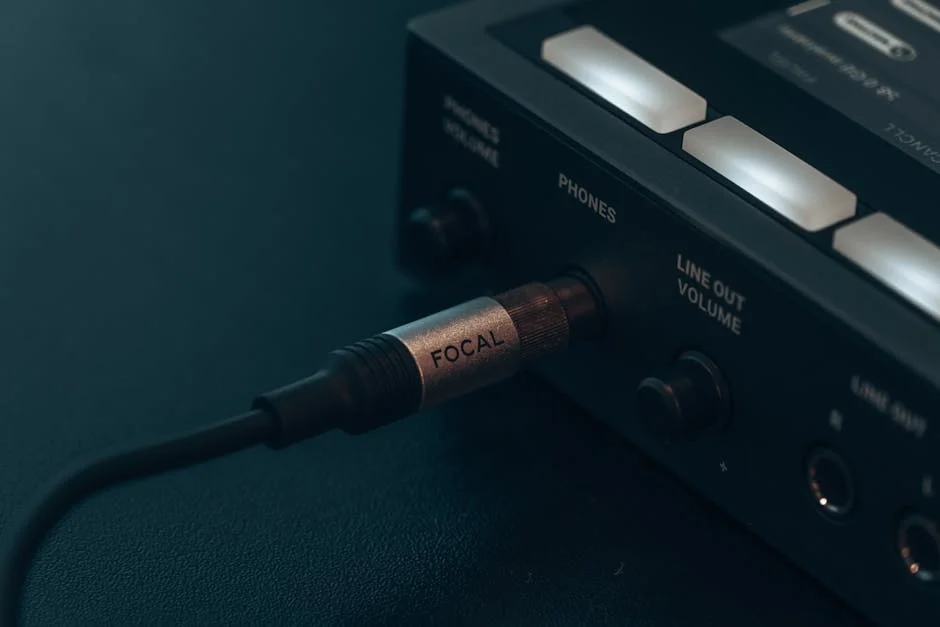
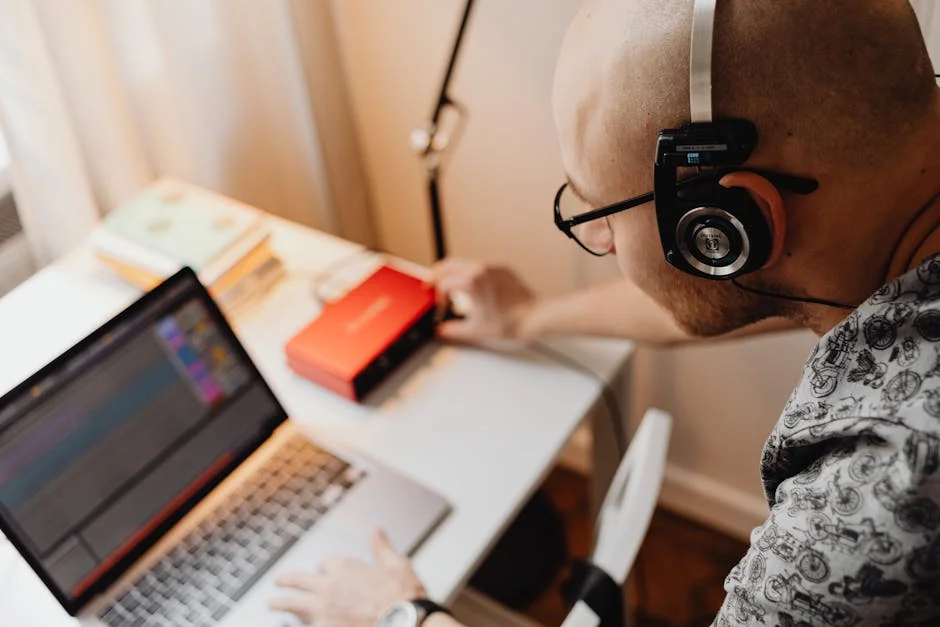
Sensitivity describes how loud a headphone gets per unit of power or voltage delivered to it. The most common spec you’ll see is expressed in decibels per milliwatt (dB/mW), though some manufacturers use dB/Vrms instead. Those two expressions are not interchangeable, and conflating them is a frequent source of confusion on Head-Fi threads.
A higher sensitivity rating means a headphone reaches a given volume level with less power from the source. A lower sensitivity rating means it needs more power to hit the same loudness. That relationship has direct, practical consequences for what source gear will drive a headphone well.
Sensitivity vs. Impedance: Two Different Problems
These two specs are often discussed together, but they describe different electrical relationships. Impedance (measured in ohms) describes how much the headphone resists current flow. Sensitivity (in dB/mW or dB/Vrms) describes how efficiently the headphone converts that power into sound pressure.
A headphone can be high-impedance and high-sensitivity, low-impedance and low-sensitivity, or any other combination. The Sennheiser HD600, for example, sits at 300 ohms with moderate sensitivity around 97 dB/mW. It needs voltage swing from a proper amplifier but not enormous wattage. By contrast, many planar magnetic headphones sit at lower impedance but have lower sensitivity, meaning they need current delivery, not just voltage. My HiFiMan Sundara (2020 revision) illustrated this clearly on my Topping L50. The nominal impedance isn’t high, but the sensitivity is low enough that source quality matters more than I initially expected.
The dB/mW vs. dB/Vrms Confusion
This is worth a dedicated moment. When a manufacturer rates sensitivity in dB/mW, the measurement is power-referenced and reflects real-world output relative to the electrical power entering the driver. When the rating uses dB/Vrms, it’s voltage-referenced, which means the number looks different even for the same physical headphone.
To convert between them, you need the impedance value. For a 32-ohm headphone rated at 100 dB/Vrms, the equivalent dB/mW figure would be different than for a 300-ohm headphone rated identically. Crinacle’s published data and ASR’s measurement methodology both flag this distinction. When comparing sensitivity specs across brands, always check which unit the manufacturer is using before drawing conclusions.
Why This Matters for Portable Sources
Low-sensitivity headphones and demanding planars will run out of clean headroom from a phone’s headphone jack, a laptop output, or any underpowered source before reaching comfortable listening volume. You won’t always notice this as outright silence. More often you’ll notice it as a collapsed soundstage, a thin midrange, or a slightly compressed dynamic range, especially at moderate-to-loud listening levels.
High-sensitivity IEMs flip the problem. A sensitive IEM like many chi-fi and premium in-ears can be fully driven by a phone output. Pairing that same IEM with a high-gain amplifier stage can introduce hiss, especially in the background quiets of Aphex Twin’s Selected Ambient Works Vol. II, which is how I first noticed noise floor differences on my own gear.
How Sensitivity Shapes Your Source Chain Decisions
Understanding sensitivity changes how you evaluate portable sources, DAPs, and portable DAC/amp units. It reframes the question from “is this source good?” to “is this source a good match for my specific headphones?”
The Audiophile Basics section at /learn/ has more on how DACs, amps, and source chain components interact. The sensitivity question is the starting point for that whole conversation.
Matching Sensitivity to Output Power
As a rough practical guide: high-sensitivity IEMs (110 dB/mW and above) are typically well-served by phone outputs and dongle DACs with lower output power. Mid-sensitivity full-size headphones (around 100 dB/mW, moderate impedance) benefit from a proper amp stage but aren’t demanding. Low-sensitivity headphones (below 95 dB/mW) or planar magnetics often want a dedicated amplifier with current delivery.
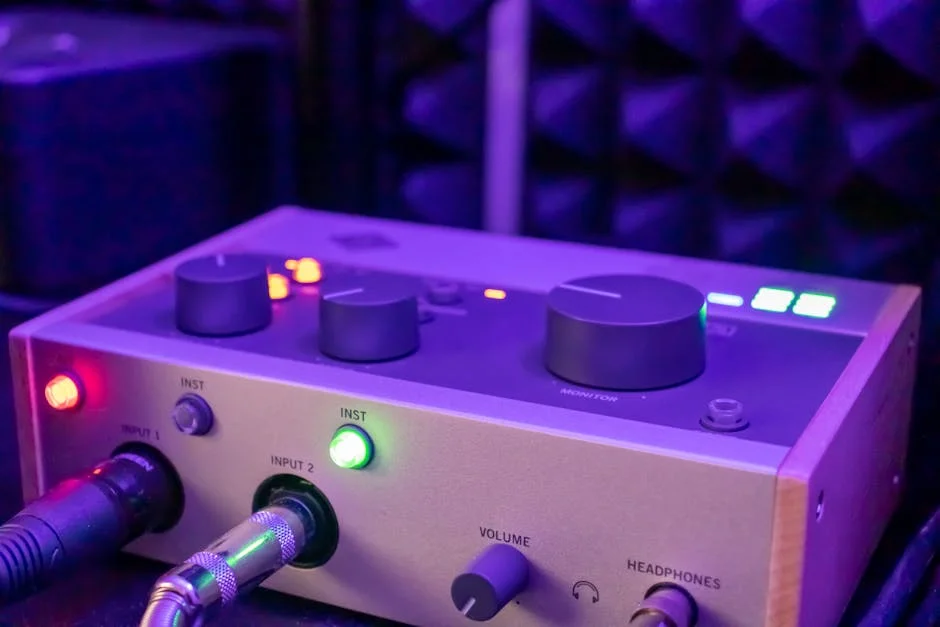
The consequence for portable listening is that “enough power” isn’t a fixed spec. It’s a relationship between your specific headphone’s sensitivity and your source’s output power into that headphone’s impedance. A source that drives a 32-ohm IEM well may leave a 300-ohm dynamic driver sounding underfed.
Output Impedance and the Damping Factor Side Effect
One often-overlooked companion to sensitivity is the output impedance of your source. High output impedance from a weak amplifier stage can interact badly with multi-driver IEMs whose impedance varies across the frequency range. This interaction changes the effective frequency response delivered to your ear, not just the volume level.
The general community guideline, which ASR and Crinacle both endorse, is that output impedance should be no more than one-eighth of the headphone’s minimum impedance. For a 16-ohm IEM, that means you want an output impedance of 2 ohms or less from your source. Most dedicated DAPs and portable DAC/amps meet this easily. Many phone headphone jacks are marginal. USB-C dongle quality varies widely.
When a Better Source Actually Helps
Three years in, I’ve updated my priors on this. For my HD600 on the Topping E50/L50 stack, the gap between the laptop headphone jack and the dedicated stack was real but smaller than I expected going in. For the Sundara, the gap was larger and more consistent, especially in low-frequency control and midrange texture. That matches the community consensus on planars scaling with source.
The takeaway for sensitivity-focused decisions: if your headphones are power-hungry, low-sensitivity planars, investing in source power delivery is defensible. If your headphones are efficient dynamics or IEMs, source-chain spending beyond a functional dongle DAC has diminishing returns faster than the gear forums suggest.
Noise Floor and High-Sensitivity IEMs
High-sensitivity IEMs expose source quality in a way most over-ear headphones don’t. A sensitive IEM will render the noise floor of your amplifier clearly audible in quiet passages, background hiss that you simply can’t hear through a less sensitive headphone. This makes high-gain settings actively counterproductive for sensitive IEMs.
Portable gear with switchable gain (low/high) is worth prioritizing for listeners who use both sensitive IEMs and demanding over-ears. Several of the products below address this directly. The physical output power spec on a device only tells half the story. Noise performance at low gain matters just as much for IEM pairings.
Top Picks: Portable Sources Matched to Sensitivity Needs
The products below represent different points in the portable audio source landscape. Sensitivity matching is one of the key differentiators across them. Field reports, spec data, and verified buyer impressions inform the descriptions below. For measurements, ASR and Crinacle’s published data are the primary references I trust.
FiiO X5 Mark III
The FiiO X5 Mark III is an older-generation digital audio player (DAP) built around dual AK4490 DAC chips, which were well-regarded hardware choices at the time of release. Spec data shows its balanced 2.5mm output provides meaningful headroom for mid-sensitivity headphones, and the dedicated audio hardware bypasses the noisy electrical environment inside a smartphone. Verified buyers note it handles local high-resolution files cleanly and quietly into sensitive IEMs when set to low gain.
The significant limitation, documented consistently across Head-Fi and DAP-focused review communities, is the Android 5.1 operating system. Current streaming apps including Spotify and Tidal will not install or run properly on this platform. Owner reviews from recent buyers reflect frustration with the app gap, and the consensus across the community is that this device is now best suited to listeners who maintain a local file library and don’t depend on streaming services. For a budget-tier DAP investment, the value proposition against a modern phone plus a dongle DAC is difficult to argue clearly in the X5 III’s favor unless local file playback is the primary use case.
Check current price on Amazon.
FiiO M11 Plus (ESS Version)
The FiiO M11 Plus ESS Version represents a current-generation DAP with Android 10, which supports Spotify, Tidal, Qobuz, and other streaming apps through the Google Play ecosystem. The ESS Sabre ES9068AS chip is a measurably strong performer. ASR-style measurement data published by audio review communities shows low distortion and good noise performance. The 4.4mm balanced output provides genuine power for demanding headphones, including lower-sensitivity planars that struggle on phone sources.
Field reports from owners with demanding headphones, including full-size planars and high-impedance dynamics, consistently note that the balanced output delivers clean, controlled results where phone sources leave the headphone sounding underfed. For sensitive IEMs, the low-gain setting is specifically flagged in verified buyer notes as quiet enough to avoid noticeable background hiss. The trade-off is form factor. Owner reviews note the device is large for a daily-carry item, and the premium price band is a real consideration against the phone-plus-portable-DAC alternative for commuters who don’t specifically want a phone-free source.
Check current price on Amazon.
iFi xDSD Gryphon
The iFi xDSD Gryphon is a portable DAC/amp that spans Bluetooth and wired connections, with aptX Adaptive codec support delivering near-lossless wireless audio from compatible source devices. The physical analog volume dial, noted consistently in owner reviews, is a practical advantage over app-based volume control for on-the-go use. iFi’s published output specs show meaningful headroom for mid-sensitivity headphones in both single-ended and balanced configurations.
The XBass and XSpace DSP filters are a known characteristic of iFi’s house approach. Field reports from audiophile communities are split on them: some owners use XBass for bass-light headphones with low-sensitivity IEMs, others report leaving both filters off entirely to preserve the baseline frequency response. The Gryphon’s sensitivity matching flexibility, with switchable gain and both 3.5mm and 4.4mm balanced outputs, makes it a reasonable option for listeners who alternate between efficient IEMs and more demanding headphones in the same daily kit.
Check current price on Amazon.
Chord Mojo 2
The Chord Mojo 2 uses a custom FPGA implementation for its digital-to-analog conversion rather than an off-the-shelf DAC chip. Chord’s proprietary WTA (Watts Transient Aligned) filter runs on this FPGA, and the measured performance data, despite the unconventional architecture, shows excellent results. For audiophile communities interested in FPGA DAC approaches as an alternative to chip-based implementations, the Mojo 2 is the primary reference product in the portable segment.
Verified buyer reviews and Head-Fi owner threads consistently flag the ball-button interface as the device’s most notable friction point. Volume adjustment and input switching require learning the button color-coding system, which is unintuitive until you’ve used it repeatedly. On sensitivity matching, the Mojo 2’s output stage handles both sensitive IEMs (with low enough noise floor to be usable) and more demanding headphones. The original Mojo 1 remains available second-hand at significantly lower cost, and the community consensus is that buyers prioritizing value should investigate the used Mojo 1 market before committing to the Mojo 2 at premium pricing.
Check current price on Amazon.
EarFun Free Pro 3
The EarFun Free Pro 3 represents what budget-tier true wireless earbuds can deliver in 2024 from a codec and tuning standpoint. The Qualcomm aptX Adaptive support at this price band is genuinely unusual. ASR and other measurement-focused review sources have noted accurate tuning and a clean frequency response. For audiophile readers considering a budget wireless option, the sensitivity of typical TWS IEM drivers is efficiently matched to the onboard amplification, which is expected for closed-loop TWS designs where the manufacturer controls both source and driver.
The ANC implementation is functional, and verified buyer reviews describe it as useful for mild office and commute noise. It is not competitive with Sony or Bose class-leading ANC, and field reports make that gap clear. Connection reliability is flagged as occasional in some user reviews, which is worth acknowledging. At budget pricing, the EarFun Free Pro 3 is a reasonable benchmark for understanding how much wireless codec quality costs before you climb to premium TWS options.
Check current price on Amazon.
Sony WF-1000XM5
The Sony WF-1000XM5 sits at the top of the true wireless ANC market from a noise cancellation performance standpoint. Field reports from frequent travelers and commuters consistently rate the ANC as class-leading among TWS earbuds. The LDAC codec support delivers near-lossless wireless audio when paired with an Android device and an LDAC-capable source, closing much of the gap between wired and wireless audio quality for sensitive IEM drivers. Sony Headphones Connect app provides detailed EQ options and sound personalization controls.
Fit is flagged in verified owner reviews as a variable factor. The earpiece size is larger than some TWS competitors, and fit comfort across different ear shapes is inconsistently reported. The XM4 generation and even XM3 are available second-hand at meaningfully lower prices, and the community recommendation for budget-conscious buyers is to assess the second-hand market before committing to the XM5 at premium pricing. For LDAC explainer content and TWS ANC reference purposes, the XM5 remains the consensus benchmark.
Check current price on Amazon.
Apple AirPods Pro 2nd Generation
The Apple AirPods Pro 2nd Generation are the mainstream entry point for premium TWS ANC within the Apple ecosystem. System-level integration with iOS and macOS provides ANC and Transparency mode performance that benefits from Apple’s hardware-software optimization in ways that third-party earbuds cannot fully replicate on the same platform. Personalized Spatial Audio, calibrated per user via the TrueDepth camera system, is a feature field reports from Apple users describe as genuinely useful for spatial content.
The codec ceiling is a documented limitation worth stating clearly for audiophile readers. On Android devices, the AirPods Pro 2 fall back to AAC, which imposes a meaningful quality ceiling below LDAC or aptX Adaptive. Within the Apple ecosystem, Apple’s AAC implementation is optimized but still not lossless. For listeners evaluating the AirPods Pro 2 specifically as an audiophile tool, the community consensus is that the value proposition is strongest within a full Apple device chain and weakest for cross-platform or Android use.
Check current price on Amazon.
HiBy R3 Pro Saber
The HiBy R3 Pro Saber is a compact budget DAP with an ES9219C chip and a 4.4mm balanced output, which is a notable feature at this price band. Spec data shows the balanced output provides more clean headroom than the single-ended 3.5mm output, which matters for listeners pairing the device with lower-sensitivity IEMs or compact planar drivers. The form factor is genuinely pocketable, and owner reviews note it sits comfortably alongside a phone without becoming a two-device burden.
The Android version limits app support, and field reports flag that some streaming apps run with reduced functionality or fail to update properly. For listeners who maintain local file libraries or accept the streaming limitations, verified buyer reviews describe the audio performance as punching clearly above its price band. The community consensus across budget DAP threads on Head-Fi positions the R3 Pro Saber as the answer to “how cheap can a balanced DAP get?” for IEM-focused listeners who want a phone-free source option.
Check current price on Amazon.
Buying Guide: Choosing a Portable Source Based on Headphone Sensitivity

Know Your Headphone’s Sensitivity Tier First
Before evaluating any portable source, establish where your headphone or IEM sits on the sensitivity spectrum. Specs are a starting point, not a verdict. Verified owner threads on Head-Fi and ASR frequently surface practical “does this pair well” data that raw specs don’t capture. The Audiophile Basics resource hub at /learn/ covers how to read headphone specs alongside listening impressions for a fuller picture.
Sensitive IEMs (above roughly 110 dB/mW) are driven cleanly by phone sources and dongle DACs. Noise floor performance from your source matters more than output power for these pairings. Mid-sensitivity full-size dynamics can work well from a capable dongle or entry-tier DAP. Low-sensitivity planars and high-impedance headphones need dedicated amplification with real current delivery.
DAP vs. Phone Plus Dongle DAC
The DAP value proposition is strongest for listeners who want a dedicated audio device without a phone attached, who carry significant local file libraries, or who use demanding headphones that a dongle DAC won’t drive cleanly. For casual listeners with sensitive IEMs, the phone-plus-dongle combination at budget or mid pricing often closes the practical gap.
Current-generation DAPs with Android 10 and above (such as the FiiO M11 Plus ESS) support streaming apps properly, which changes the math compared to older Android DAPs where app support is broken or incomplete. If streaming is your primary use case, confirm Android version and app compatibility before purchasing any DAP.
Balanced Output: Real Benefit or Spec Sheet Feature?
Balanced output (4.4mm or 2.5mm) provides two measurable advantages: doubled voltage swing in some implementations, and complete channel separation. For sensitive IEMs, the voltage advantage is often irrelevant since those headphones are already driven cleanly by single-ended output. For low-sensitivity headphones in need of more headroom, the balanced output can provide a real and audible difference.
Field reports from owners pairing balanced DAP outputs with demanding planars consistently note improved control and dynamic range compared to single-ended from the same device. For IEM listeners, the primary reason to prefer balanced is channel separation and noise rejection on the cable, which is meaningful in some environments but not universally necessary.
Portable DAC/Amp for Flexibility Across Headphones
If you alternate between sensitive IEMs and demanding full-size headphones in your daily listening, a portable DAC/amp with switchable gain settings is worth prioritizing over raw output power specs alone. Low-gain settings keep noise floor low for sensitive IEMs. High-gain settings give demanding headphones the voltage swing they need.
Devices like the iFi xDSD Gryphon with multiple output levels and physical volume control give you practical flexibility that app-based volume control on a DAP doesn’t always match for quick adjustments. Physical control remains a noted preference among owner reviews for on-the-go use.
When Source Spending Has Diminishing Returns
Three years in, the honest position I’ve settled on is that source upgrades have real but bounded returns, and sensitivity matching shortens that ceiling significantly. For high-sensitivity IEMs, a budget dongle DAC is functionally a resolved problem. For low-sensitivity planars, investing in a proper amplifier stage is defensible and audible. The community consensus, reflected consistently across ASR, Head-Fi, and Resolve Reviews, is that source quality matters most at the extremes: very sensitive IEMs exposing noise, and very demanding headphones needing current.
Spending premium pricing on a source for mid-sensitivity headphones that are already well-driven is the scenario where diminishing returns arrive fastest. Know your headphone’s tier, match accordingly, and resist the forum tendency to treat source upgrades as universally beneficial.

Frequently Asked Questions
What does headphone sensitivity actually measure?
Headphone sensitivity measures how much sound pressure level (SPL) a headphone produces per unit of power or voltage delivered to it. The spec is expressed in decibels per milliwatt (dB/mW) or decibels per volt (dB/Vrms), and the two units are not directly comparable without knowing the headphone’s impedance. A higher sensitivity number means louder output for the same input level. Sensitivity determines how much power your source needs to drive the headphone to comfortable listening volume.
Does higher sensitivity mean better sound quality?
Sensitivity describes efficiency, not quality. A high-sensitivity headphone reaches loud volume easily, but that says nothing about frequency response accuracy, distortion characteristics, or technical performance. Many highly regarded audiophile headphones are low-sensitivity and require significant amplification. Sensitivity is a matching spec for choosing appropriate source gear, not a quality ranking.
Will a low-sensitivity headphone sound better from a more powerful amp?
A low-sensitivity headphone paired with an underpowered source will sound constrained, compressed at loud volumes, and sometimes thin in the midrange. A proper amplifier restores clean headroom and dynamic range. Whether it sounds better beyond that threshold depends on the amplifier’s own distortion and noise characteristics, not its power output alone. Field reports from planar magnetic owners, in particular, consistently describe audible improvement in control and bass definition when moving from phone sources to dedicated amplification.
Do sensitive IEMs need a portable DAC/amp?
Most sensitive IEMs are driven well by a phone output or a budget dongle DAC. The primary concern with sensitive IEMs is not insufficient power but excessive noise floor from high-gain amplifier stages. If you’re hearing background hiss with your IEMs on a portable source, check whether your device has a low-gain setting before purchasing new source gear. A budget dongle DAC with low output impedance and a low-gain option resolves most sensitive IEM source pairing problems without premium spending.
How does Bluetooth codec choice relate to headphone sensitivity?
Bluetooth codec choice affects the audio data delivered wirelessly to the earbuds’ internal DAC and amplifier, which is a separate system from wired sensitivity matching. LDAC and aptX Adaptive deliver higher-resolution audio wirelessly than SBC or AAC, which benefits overall sound quality in TWS devices. The onboard amp in TWS earbuds is matched to the drivers by the manufacturer, so external sensitivity matching is not a user-controlled variable in true wireless products. Codec choice matters more for resolving fine detail than for basic loudness or driver-driving adequacy.
<script type="application/ld+json">
{
"@context": "https://schema.org",
"@type": "FAQPage",
"mainEntity": [
{
"@type": "Question",
"name": "What does headphone sensitivity actually measure?",
"acceptedAnswer": {
"@type": "Answer",
"text": "Headphone sensitivity measures how much sound pressure level (SPL) a headphone produces per unit of power or voltage delivered to it. The spec is expressed in decibels per milliwatt (dB/mW) or decibels per volt (dB/Vrms), and the two units are not directly comparable without knowing the headphone's impedance. A higher sensitivity number means louder output for the same input level. Sensitivity determines how much power your source needs to drive the headphone to comfortable listening volume."
}
},
{
"@type": "Question",
"name": "Does higher sensitivity mean better sound quality?",
"acceptedAnswer": {
"@type": "Answer",
"text": "Sensitivity describes efficiency, not quality. A high-sensitivity headphone reaches loud volume easily, but that says nothing about frequency response accuracy, distortion characteristics, or technical performance. Many highly regarded audiophile headphones are low-sensitivity and require significant amplification. Sensitivity is a matching spec for choosing appropriate source gear, not a quality ranking. Measurement data from sources like ASR covers distortion and frequency response separately from sensitivity for evaluating actual sound quality."
}
},
{
"@type": "Question",
"name": "Will a low-sensitivity headphone sound better from a more powerful amp?",
"acceptedAnswer": {
"@type": "Answer",
"text": "A low-sensitivity headphone paired with an underpowered source will sound constrained, compressed at loud volumes, and sometimes thin in the midrange. A proper amplifier restores clean headroom and dynamic range. Whether it sounds better beyond that threshold depends on the amplifier's own distortion and noise characteristics, not its power output alone. Field reports from planar magnetic owners, in particular, consistently describe audible improvement in control and bass definition when moving from phone sources to dedicated amplification."
}
},
{
"@type": "Question",
"name": "Do sensitive IEMs need a portable DAC/amp?",
"acceptedAnswer": {
"@type": "Answer",
"text": "Most sensitive IEMs are driven well by a phone output or a budget dongle DAC. The primary concern with sensitive IEMs is not insufficient power but excessive noise floor from high-gain amplifier stages. If you're hearing background hiss with your IEMs on a portable source, check whether your device has a low-gain setting before purchasing new source gear. A budget dongle DAC with low output impedance and a low-gain option resolves most sensitive IEM source pairing problems without premium spending."
}
},
{
"@type": "Question",
"name": "How does Bluetooth codec choice relate to headphone sensitivity?",
"acceptedAnswer": {
"@type": "Answer",
"text": "Bluetooth codec choice affects the audio data delivered wirelessly to the earbuds' internal DAC and amplifier, which is a separate system from wired sensitivity matching. LDAC and aptX Adaptive deliver higher-resolution audio wirelessly than SBC or AAC, which benefits overall sound quality in TWS devices. The onboard amp in TWS earbuds is matched to the drivers by the manufacturer, so external sensitivity matching is not a user-controlled variable in true wireless products. Codec choice matters more for resolving fine detail than for basic loudness or driver-driving adequacy."
}
}
]
}
</script>