IEM Driver Types Explained: DD, BA, Planar & EST

Affiliate disclosure: Some links on this page are affiliate links. If you buy through them we earn a small commission at no extra cost to you. Recommendations are research-driven; we don't claim personal use of every product reviewed. Product prices and availability are accurate as of the date published and are subject to change. Always check Amazon for current pricing before purchasing. Learn more.

| Product | Price Range | Top Strength | Key Weakness | Buy |
|---|---|---|---|---|
| iFi Audio iFi xDSD Gryphon Portable Bluetooth DAC/Amplifier also consider | $$$ | Bluetooth aptX Adaptive delivers near-lossless wireless audio | Premium price in a portable device that can be lost or damaged | Buy on Amazon |
| Chord Electronics Chord Mojo 2 Portable DAC/Amp also consider | $$$ | Custom FPGA implementation with Chord's proprietary WTA filter | Ball-button interface is unintuitive and confusing for new users | Buy on Amazon |
| Sony WF-1000XM5 True Wireless Noise Canceling Earbuds also consider | $$$ | Best-in-class ANC among true wireless earbuds | Premium price; XM4 or XM3 available second-hand at significant discount | Buy on Amazon |
| Apple AirPods Pro 2nd Generation with MagSafe Case also consider | $$$ | Best ANC integration in the Apple ecosystem with system-level compatibility | AAC codec ceiling limits audio quality on non-Apple devices | Buy on Amazon |
| HiBy R3 Pro Saber Portable Music Player also consider | $ | 4.4mm balanced output at ~$129, exceptional value for balanced portable audio | Screen small and touch interface less responsive than flagship DAPs | Buy on Amazon |
If you’ve spent more than fifteen minutes reading IEM reviews, you’ve already run into the alphabet soup: DD, BA, planar, EST, tribrid. IEM driver types are a foundational topic where understanding the basics changes how you shop, how you read reviews, and how you set expectations for a new purchase.
For the broader context on building a listening setup from scratch, the Audiophile Basics hub covers everything from DACs and amps to file formats. Here, the focus is tight: what each driver type actually does, why it matters, and how to use that knowledge when you’re choosing gear.
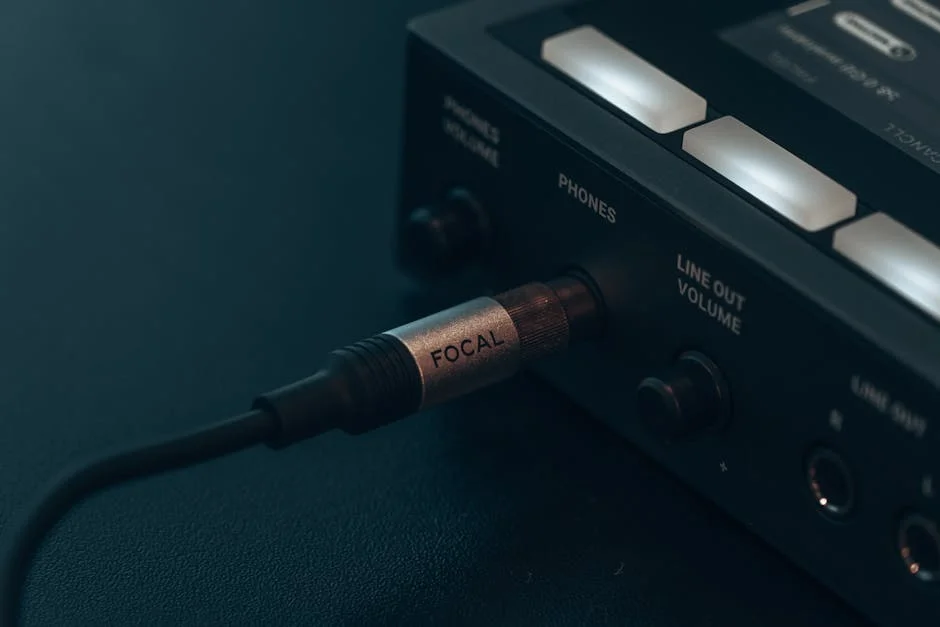
What Is an IEM Driver and Why Does It Matter
A driver is the transducer inside an IEM earpiece, the component that converts an electrical signal into physical sound waves. Every other variable, tuning, housing material, cable, source chain, is downstream of the driver’s mechanical behavior. Understanding driver types helps you predict, not guarantee, but meaningfully predict how an IEM will behave before you spend money on one.
Different driver technologies have genuinely different physical operating principles. Those differences create real measurable tendencies in frequency response shape, distortion character, and transient speed. None of this means “BA always sounds better than DD” or any such flat claim. It means each technology brings trade-offs, and those trade-offs interact with your music preferences and your source chain in ways worth understanding.
IEM Driver Types Explained
Dynamic Drivers (DD)
Dynamic drivers are the oldest and most common transducer technology in audio. A voice coil attached to a diaphragm sits inside a magnetic field. When current passes through the coil, the magnetic interaction moves the diaphragm, pushing and pulling air to create sound. This is the same basic mechanism in full-size headphones and loudspeakers.
Bass extension and sub-bass physicality are a known strength. The mechanical compliance of a dynamic driver diaphragm, especially in a sealed IEM cavity, creates a pressure differential that is often described as “slam” or “rumble.” Single-DD IEMs span budget to flagship price tiers, so dynamic drivers are not an entry-level-only choice.
Distortion in DDs tends to appear as second-order harmonic distortion, which most listeners find less objectionable than higher-order distortion. Measured THD numbers on well-implemented DDs are competitive with other technologies.
Balanced Armature Drivers (BA)
Balanced armatures were developed for hearing aids before audio manufacturers adapted them for IEMs. A tiny armature balanced between two magnets deflects in response to electromagnetic force, driving a diaphragm attached to a sound bore. The whole mechanism is sealed, which allows multiple BA units to be stacked inside a single earpiece and tuned to different frequency bands.
The practical result is that BA drivers can achieve very high detail retrieval, particularly in the midrange and treble, and excellent transient speed. What they typically trade away is sub-bass extension. A BA driver without a dynamic woofer rarely produces convincing deep bass. Low-frequency roll-off below 60 to 80 Hz is a common BA signature.
Multi-driver BA IEMs require crossover networks to split signal between drivers tuned for different ranges. Crossover implementation quality varies significantly between manufacturers and is a major factor in whether a multi-BA IEM sounds coherent or disjointed.
Planar Magnetic Drivers
Planar magnetic IEMs use an ultra-thin membrane with a conductive trace pattern suspended between two arrays of magnets. The entire membrane surface moves uniformly, unlike a dynamic driver where movement originates at the voice coil. This full-surface excitation is the mechanism behind the low distortion numbers planars are known for.
Transient response is fast. Imaging is often precise. The trade-offs: planar IEM bass can sound detailed but physically lightweight compared to a good dynamic driver, and planars are typically more demanding of a capable source.
This last point matters. Planar IEMs respond more to source quality changes than single-DD designs at similar price bands.
Electrostatic Drivers (EST)
Electrostatic drivers in IEMs operate on a fundamentally different principle than dynamic or planar designs. A thin conductive membrane is suspended between two charged stator plates. Varying voltage on the stators attracts and repels the membrane. Because no coil or magnet is involved and the diaphragm mass is extremely low, electrostatic drivers can move very fast.
In IEM implementations, EST drivers are almost exclusively used for treble reproduction in hybrid configurations. A standalone full-range EST IEM is technically impractical for portable use given the high bias voltage requirements. The role of the EST unit is typically to extend treble detail and air above 10 kHz in ways BA drivers struggle to match.
Whether this is audibly significant depends on your music and your hearing. The tuning of the other drivers matters more for overall tonality than the presence of an EST.
Hybrid Configurations
Hybrid IEMs combine two or more driver types in the same earpiece, typically a dynamic driver for bass, one or more BAs for midrange and treble, and sometimes an EST unit at the top. The goal is to capture the strengths of each technology while minimizing their individual trade-offs.
The challenge is integration. Different driver technologies have different impedance curves, phase behavior, and time-alignment characteristics. A hybrid that measures incoherently, or sounds disjointed despite impressive specs, is a known risk.
When hybrids are well-implemented, the results can be exceptional. More drivers is a marketing angle. Well-tuned crossovers and driver integration are the actual engineering challenge.
Bone Conduction and Emerging Technologies
Bone conduction drivers transmit vibrations through the skull rather than the ear canal, bypassing the eardrum entirely. This approach is most relevant for sports and situational awareness use cases rather than critical listening. Measured frequency response and detail retrieval are below what conventional IEM driver types achieve at comparable price bands, but that is not the appropriate comparison. The use case is awareness and safety, not audiophile reproduction.
Magnetodynamic and other emerging micro-transducer approaches appear occasionally in manufacturer announcements. Published documentation on these is thin compared to established categories.
Source Chain Considerations by Driver Type
Not all drivers are equally source-sensitive, and this matters when you’re deciding whether a DAP or portable DAC is worth adding to your setup. BA drivers and well-implemented single-DD IEMs tend to be relatively forgiving of source quality. They perform competently from a phone headphone output or a budget dongle DAC. Planar IEMs and complex multi-driver hybrids with demanding impedance curves are more likely to show audible improvement from a capable source.
Balanced outputs (2.5mm or 4.4mm) come up frequently in IEM source discussions. The measurable benefit of balanced output is lower crosstalk and, in some implementations, lower noise floor. For highly sensitive IEMs, a low noise floor matters because hiss becomes audible.
Top Picks for IEM Source Chains
The driver type you choose shapes the IEM. The source chain shapes what that IEM can do.
HiBy R3 Pro Saber
The HiBy R3 Pro Saber is a compact budget DAP built around the ES9219C chip. At the budget price band, the inclusion of a 4.4mm balanced output is the standout specification.
The small screen and touch interface are basic, and the Android version limits which streaming apps run optimally. For someone pairing a mid-tier hybrid IEM with local FLAC files, the R3 Pro Saber represents an accessible entry point into dedicated source hardware.
Check current price on Amazon.
FiiO X5 Mark III Portable High-Resolution Audio Player
The FiiO X5 Mark III uses dual AK4490 DAC chips and includes a 2.5mm balanced output. At the mid price band, it sits above budget DAP options in both hardware specification and measured output quality.
The significant limitation is the Android 5.1 operating system, which is too old for most current streaming apps to function properly. Anyone expecting full Spotify or Tidal functionality alongside local files will be disappointed. For a source-only role with a local library, the hardware remains competent. For streaming-centric use, it has been functionally superseded.
FiiO M11 Plus Portable Music Player ESS Version
The FiiO M11 Plus ESS runs Android 10 and uses an ESS Sabre ES9068AS chip, which is designed for low noise and distortion, a useful trait when pairing with sensitive IEMs.
Android 10 means current versions of Spotify, Tidal, and Qobuz install and run as expected, which addresses the core limitation of older DAPs like the X5 III. At the premium price band, the honest question is whether the improvement over a modern phone plus a good dongle DAC justifies the dedicated device cost. The hardware is genuinely strong; the value proposition is a personal calculation.
iFi xDSD Gryphon Portable Bluetooth DAC/Amplifier
The iFi xDSD Gryphon is a premium portable DAC/amp with Bluetooth aptX Adaptive capability alongside its wired USB input. A physical analog volume dial allows precise low-volume control, which is useful with sensitive IEMs.
The XBass and XSpace filters add tunable sound shaping that can be left on or switched off. At the premium price band, the portability risk (a high-value device in a bag) and the coloration question are the practical considerations worth weighing.
Check current price on Amazon.
Chord Mojo 2 Portable DAC/Amp
The Chord Mojo 2 takes a technically unusual approach: instead of an off-the-shelf DAC chip, it uses Chord’s custom FPGA implementation with their proprietary WTA filter. Published measurements show strong noise floor and distortion figures.
The ball-button interface is unconventional and has a learning curve. For the technically curious audiophile interested in FPGA-based digital filtering, the Mojo 2 is a legitimately interesting subject. For someone who wants a straightforward portable DAC, the interface friction is a real cost. The original Mojo available second-hand offers better value for buyers who don’t need the Mojo 2’s additional features.
Check current price on Amazon.
EarFun Free Pro 3 ANC True Wireless Earbuds
The EarFun Free Pro 3 is notable because it delivers Qualcomm aptX Adaptive at a budget price band. For buyers wanting to understand how far wireless audio quality has come without flagship pricing, these earbuds represent a meaningful data point.
ANC performance is functional for a budget product but sits below what Sony and Bose deliver at premium price bands, so buyers expecting class-leading noise rejection should look at those flagships. As a benchmark for codec quality at budget pricing, it is a useful reference point.
Sony WF-1000XM5 True Wireless Noise Canceling Earbuds
LDAC codec support, when paired with a compatible Android device and a high-quality streaming source, delivers near-lossless audio quality over Bluetooth by bandwidth specification.
The Sony Headphones Connect app provides detailed EQ control and sound customization that goes beyond what most TWS products offer. The earpieces are larger than some competitors, with fit varying by ear anatomy. The XM4 available second-hand represents better value for those who don’t need the incremental XM5 improvements.
Check current price on Amazon.
Apple AirPods Pro 2nd Generation with MagSafe Case
The Apple AirPods Pro 2 are worth covering in an IEM driver context because they represent the mainstream ANC TWS entry point and the reference product for Apple ecosystem audio. Personalized Spatial Audio, calibrated using the TrueDepth camera, is a genuinely useful feature for binaural content within the Apple ecosystem.
The important technical caveat for audiophile readers is the AAC codec ceiling. AAC is Apple’s primary Bluetooth codec, and while it performs well on Apple devices, it imposes a meaningful quality ceiling compared to LDAC or aptX Adaptive on Android. The AirPods Pro 2 are an excellent product for Apple users and a less compelling choice for Android users prioritizing audio quality.
Check current price on Amazon.
Buying Guide: Choosing an IEM by Driver Type

Match Driver Technology to Your Music
The relationship between driver type and music genre is not deterministic, but it is directionally useful. Spec data and measurement patterns show that dynamic driver IEMs tend to handle sub-bass extension and physical impact better than single-BA designs. If your listening is primarily electronic music, hip-hop, or anything where sub-bass energy is part of the intended experience, a single-DD or DD-based hybrid is worth prioritizing.
For acoustic music, classical, and jazz where midrange texture and timbre accuracy matter most, well-implemented BA midrange drivers are a common choice for midrange detail. The Audiophile Basics hub covers tonal balance and how to read frequency response graphs, which helps translate driver tendencies into prediction.
Understand the Noise Floor Question
Sensitive IEMs, particularly multi-BA designs, expose source noise in ways that less sensitive single-DD IEMs do not. If you’re planning to pair an IEM with a powerful amplifier or a source with a higher noise floor, this is a practical concern, not an audiophile abstraction.
Budget dongle DACs from reputable manufacturers typically measure with low enough noise floor for most IEMs. The upgrade to a dedicated DAP or portable DAC/amp matters more for demanding drivers, high-resolution local file playback, and users who want phone-free audio. For most single-DD IEMs at mid price bands, a quality dongle DAC from a phone is a defensible source chain.
Hybrid Driver Count Is Not a Proxy for Quality
Marketing materials for multi-driver IEMs emphasize driver count.
The relevant question is not “how many drivers” but “how well are the drivers integrated.” Crossover quality, tuning decisions, and housing acoustics matter more than the number of transducers. At the budget-to-mid price band, a well-tuned single-DD IEM routinely outperforms a six-driver hybrid with mediocre crossover engineering.
Balanced Output and Why It Matters (Or Doesn’t)
Balanced output (4.4mm or 2.5mm TRRS) is a feature on several DAPs and portable DAC/amps in this category. The measurable benefit is reduced crosstalk between channels and, in some implementations, lower noise floor. For sensitive multi-BA IEMs, a quieter output stage has practical consequences. For less sensitive single-DD IEMs, the real-world audibility of the difference is more debatable.
The resources available through the Audiophile Basics section at /learn/ include further reading on output impedance and its interaction with multi-BA IEM impedance curves, which is the technical detail most buyers skip but most directly explains why source matching matters.
Budget Allocation Across Driver Tiers
For budget and mid price band IEMs, a quality dongle DAC represents the efficient allocation. For premium and luxury IEMs, a dedicated portable source becomes more justifiable.
For most entry-to-mid-level buyers, the IEM itself matters more than source upgrades. Driver technology and tuning account for more of what you hear than the source chain below a meaningful quality threshold. Establish what you value in a sound signature first, match it to a driver type, then optimize the source chain once the IEM is set.

Frequently Asked Questions
Does driver type determine sound quality?
Driver type creates tendencies and trade-offs, not a quality hierarchy. Dynamic drivers tend toward natural timbre and physical bass impact. Balanced armatures tend toward fast transients and midrange detail. Planar magnetics tend toward low distortion and precise imaging. Tuning and implementation quality matter more than driver type alone in determining whether an IEM sounds good.
Are hybrid IEMs better than single-driver IEMs?
Not inherently. Hybrid IEMs combine multiple driver technologies to address individual weaknesses, but crossover implementation quality varies significantly. Poorly integrated hybrids can sound less coherent than a well-tuned single-DD IEM at a lower price band. More drivers is a hardware specification, not a sound quality guarantee.
Do planar IEM drivers need a better source than dynamic drivers?
Planar IEMs are generally more source-sensitive than single-DD designs. A quality dongle DAC from a phone is sufficient for most single-DD IEMs at mid price bands, while demanding planar IEMs more often benefit from dedicated source hardware.
What does balanced armature sound like compared to dynamic drivers?
Balanced armature drivers in IEMs tend toward fast, detailed, and extended treble with precise imaging. Sub-bass extension is typically limited compared to a good dynamic driver. Dynamic drivers tend toward fuller low-frequency impact, more natural instrumental timbre, and a slightly more relaxed transient character. Listeners who prioritize bass physicality and natural tonality generally prefer dynamic drivers. Those prioritizing upper-register detail and imaging often prefer BA or EST-enhanced designs.
Is an electrostatic driver IEM worth the premium price?
EST drivers in IEMs are used almost exclusively for high-frequency extension in hybrid configurations. Whether this is audibly meaningful depends on your music and hearing acuity. At the premium and luxury price bands where EST hybrids live, the total tuning and driver integration quality matters more than the presence of an EST unit. EST adds genuine value in well-implemented designs, but does not guarantee better overall sound.
Where to Buy
- iFi Audio iFi xDSD Gryphon Portable Bluetooth DAC/AmplifierSee price on Amazon
- Chord Electronics Chord Mojo 2 Portable DAC/AmpSee price on Amazon
- Sony WF-1000XM5 True Wireless Noise Canceling EarbudsSee price on Amazon
- Apple AirPods Pro 2nd Generation with MagSafe CaseSee price on Amazon
- HiBy R3 Pro Saber Portable Music PlayerSee price on Amazon