Does the M50x Need an Amp? Audio-Technica Headphones

Affiliate disclosure: Some links on this page are affiliate links. If you buy through them we earn a small commission at no extra cost to you. Recommendations are research-driven; we don't claim personal use of every product reviewed. Product prices and availability are accurate as of the date published and are subject to change. Always check Amazon for current pricing before purchasing. Learn more.
| Product | Price Range | Top Strength | Key Weakness | Buy |
|---|---|---|---|---|
| Audio-Technica ATH-M50X Professional Studio Monitor Headphones Black also consider | $ | Widely used beginner closed-back with wide accessory availability | Mid-bass hump, not as neutral as AKG K371 alternatives | Buy on Amazon |
| Apple USB-C to 3.5mm Headphone Jack Adapter also consider | $ | Inexpensive baseline dongle that actually measures well for its price | No volume control or balanced output | Buy on Amazon |
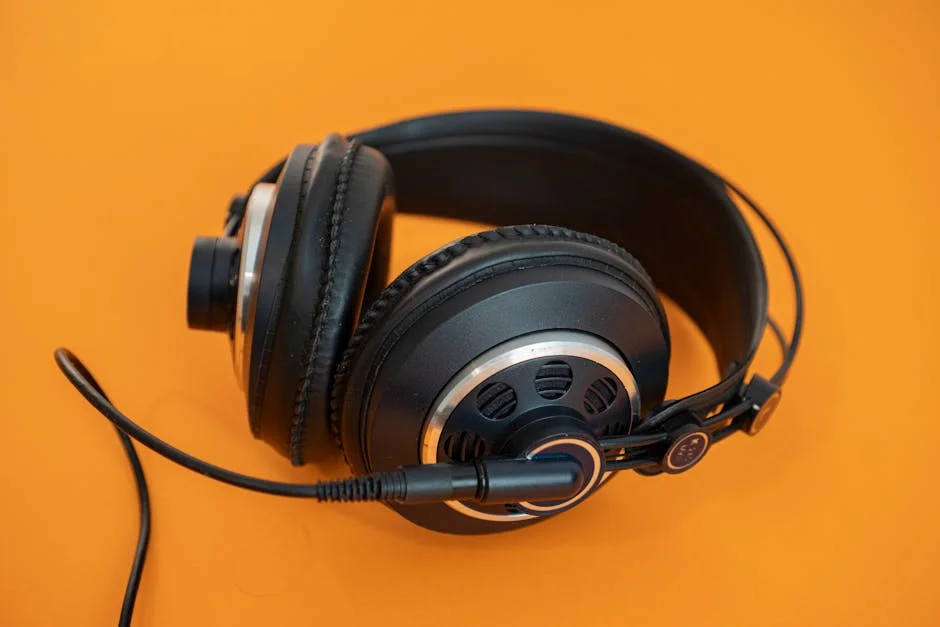
The Audio-Technica ATH-M50x is one of the most widely recommended closed-back headphones. It is the usual first step into the hobby for people who have not yet learned to read a frequency response curve.
The short answer to whether it needs an amp is no. The longer answer is more interesting, and that is what this piece covers.

What “Needs an Amp” Actually Means
Before getting into specifics, it helps to understand what people mean when they ask whether a headphone needs amplification. The phrase covers two separate concerns: output voltage (can your source get loud enough?) and output impedance (does your source’s impedance interact badly with the headphone’s driver?). A headphone that is hard to drive needs more voltage to reach listening volume. A headphone with a low impedance and a widely varying impedance curve can sound colored when paired with a source that has high output impedance.
The M50x sits at 38 ohms impedance and 99 dB/mW sensitivity. That is an easy load. A modern smartphone, a laptop headphone jack or a dongle can all drive it to loud volumes with room to spare, so strain on a phone output is not a concern.
For context, planar magnetic headphones such as the HiFiMan Sundara are a very different case, because they respond more to the quality of the amp. With the M50x, the gap between a clean dongle and a dedicated amp is considerably narrower, and in some scenarios it is not a gap worth chasing at all.
If you are newer to the hobby and want broader context on where the M50x fits in the closed-back landscape, the Buyer Guides section covers comparisons across budget and mid-range tiers.
The M50x’s Actual Power Requirements
Impedance, Sensitivity, and What the Numbers Mean
The M50x measures 38 ohms. Higher-impedance headphones generally need more voltage to reach the same listening level, which is why dedicated amplification matters more for them.
At 99 dB/mW, the M50x converts electrical signal to sound pressure very efficiently. Most sources can deliver more than enough power without approaching their limits.
Output impedance matters more for IEMs and multi-driver designs than for single-dynamic-driver closed-backs like the M50x. Published measurements of common dongles show output impedance low enough across budget models to avoid meaningful coloration on a 38-ohm load.
Where a Better Source Still Helps
What a better source can add is a cleaner noise floor (less hiss) and slightly better channel separation, particularly when moving away from older laptop jacks with poor analog sections.
The M50x was designed for studio environments where sources vary widely, and it is built to be driven easily. That makes it one of the least amp-dependent dynamic-driver headphones in the budget-to-mid tier.
When an Amp Actually Helps
There is a narrow case where an amp genuinely helps: if your source has a poor analog output section with audible noise floor or channel imbalance at low volumes. Older laptop jacks and some Android phones with noisy DAC implementations can show this. In those cases, even a budget DAC/amp dongle resolves the issue.
A dedicated DAC/amp stack is not a wrong choice if you own the M50x and plan to grow your headphone collection. When you add a planar magnetic or a high-impedance dynamic driver later, you will already have the infrastructure. Buying a stack for the M50x alone is unnecessary, but buying it for where you are headed next is reasonable planning.
Top Picks
Audio-Technica ATH-M50X Professional Studio Monitor Headphones Black
The Audio-Technica ATH-M50x has been a default first closed-back recommendation for over a decade. The foldable design is practical, the three included detachable cables (straight and two coiled lengths) cover most use cases out of the box, and the construction is sturdy enough for commuting and desk use.
Sonically, the M50x is not as neutral as its “studio monitor” branding suggests. Published measurements show a mid-bass hump that adds weight and punch, which many listeners like but which departs from a flat monitoring curve. If you want a flatter response in the same price band, the AKG K371 measures more linearly. The M50x’s tuning is forgiving on lossy streams and non-audiophile recordings, which is part of why it found such a wide audience.
Clamping force is worth noting for long sessions, especially with medium-to-large head sizes. Fit varies by head shape.
The M50x works well from any modern source. The sensitivity and impedance specs leave almost no power-headroom concerns on phone outputs, dongles or laptop jacks. If you already own a dedicated amp for other headphones, the M50x works fine in that chain. If you are buying the M50x as your only headphone and wondering whether to add an amp, the answer is almost always: not yet.
Check current price on Amazon.
Apple USB-C to 3.5mm Headphone Jack Adapter
The Apple USB-C to 3.5mm Headphone Jack Adapter is the baseline reference point for dongle discussions because published measurements of Apple’s dongles show low output impedance, a clean frequency response and adequate output power for easy-to-drive headphones. Given that the M50x is easy to drive, this dongle is a fully competent pairing.
For a Mac or iPad Pro without a headphone jack, it is the lowest-friction way to run the M50x without adding a dedicated DAC/amp to the chain. Its specifications are sufficient to reach comfortable listening volumes with the M50x. The absence of a volume control on the adapter itself is the main practical limitation, though OS-level volume works fine.
Where the Apple dongle falls short is output power for demanding headphones. The M50x does not expose that limit, but if you later add a high-impedance dynamic or a planar magnetic headphone to your collection, you will reach the ceiling. Think of it as the correct starting point for an easy-to-drive closed-back, and the benchmark against which pricier dongles are measured.
Check current price on Amazon.
Buying Guide: Choosing a Source for the M50x

Understanding the M50x’s Position in the Source Chain
The M50x does not require you to think carefully about amplification. It does reward a source with a clean analog output stage. You are not looking for more power. You are looking for cleaner power, a lower noise floor and acceptable channel balance at the volume levels you actually use.
Budget dongles and modern laptop outputs generally deliver this without effort. The Apple USB-C dongle is the easiest example. If you are coming from an older PC or an entry-level Android phone with a noisy headphone jack, a budget dongle often resolves audible hiss without any amp being required.
When a Dedicated DAC/Amp Makes Sense
If the M50x is your first headphone and you have no plans to expand your collection, a dedicated DAC/amp stack is not a priority purchase. The return on investment is marginal for this particular headphone.
The calculus changes if you plan to add headphones with different demands later. A mid-range DAC/amp bought now works immediately for the M50x at a minimal improvement, and works meaningfully for a high-impedance dynamic or a planar magnetic when you add one. The Buyer Guides section covers dedicated DAC/amp recommendations for anyone planning a multi-headphone collection.
The improvement from a dedicated stack on the M50x is real but not large enough to justify the cost if the M50x is your only headphone.
Portable Use and the Dongle Tier
For using the M50x on the go with a phone or tablet, a quality dongle is the right answer. The Apple USB-C adapter is the baseline, and published measurements show it is competent for easy-to-drive headphones. Budget-tier third-party dongles from established brands (Hidizs, Jcally and similar) offer slightly higher output power and occasionally a balanced output, neither of which the M50x particularly needs.
The practical guide for portable M50x use: start with the Apple dongle if you are on a USB-C device. Add a pricier dongle later if you add a harder-to-drive headphone to your rotation. Do not buy a dongle upgrade specifically for the M50x expecting an audible improvement on most recordings.
Cable Upgrades, Briefly
The M50x includes three detachable cables in the box, which is one of its underrated practical advantages. Cable upgrade claims for sound quality are not supported by published measurements or blind tests once shielding and connectors are adequate, and the included cables clear that bar. Functional shielding and correct connectors are what matter, so the budget is better spent elsewhere.
The AKG K371 Comparison Worth Knowing
Measurement-aware buyers often consider the AKG K371 as an alternative at a similar price point. Published measurements show the K371 tracking closer to a Harman-target response than the M50x, with less mid-bass emphasis. The M50x has wider accessory availability and a larger ecosystem of replacement parts.
Neither headphone requires an amp. The comparison is about tuning preference, not source requirements. If you want a more neutral monitor response, the K371 measures closer to it. If you prefer the more V-shaped-adjacent tuning and wider parts availability, the M50x delivers that.
Closing Thoughts
The M50x does not need an amp. It is one of the clearest cases in the budget closed-back tier where the answer is that simple. A modern phone, a clean dongle or a laptop output will drive it without effort. If you already own a dedicated DAC/amp for other headphones, it works fine in that chain. If you are buying an amp specifically for the M50x as your only headphone, that is the one scenario where the better move is to save the money for something else.
What the M50x does benefit from is a source with a clean output stage and a low noise floor. The Apple USB-C dongle covers that for most users at a budget price, and published measurements support it. For anyone who wants more context on where to go after the M50x, including DAC/amp recommendations for harder-to-drive headphones and comparisons across the closed-back tier, the headphone and accessories guides here are a good starting point.
Frequently Asked Questions
Does the M50x need an amp to reach adequate volume?
No. The M50x has a sensitivity of 99 dB/mW and an impedance of 38 ohms, which places it among the easiest-to-drive headphones in its category. A modern smartphone, laptop, or budget USB-C dongle reaches comfortable listening volumes with no strain. An amp is not required for adequate volume.
Will an amp improve the sound quality of the M50x?
Marginally, in specific circumstances. A clean dongle like the Apple USB-C adapter resolves most of those issues without a dedicated amp. Beyond that, the sonic gains from adding a full DAC/amp to an M50x chain are narrow and not reliably audible across most listeners.
Is the Apple USB-C dongle good enough for the M50x?
Yes, for most listeners. Published measurements of the Apple USB-C adapter show low output impedance and a clean frequency response appropriate for 38-ohm loads. Its specifications show adequate output voltage for the M50x's sensitivity rating. The dongle lacks a physical volume control and balanced output, neither of which the M50x requires. If you are using a USB-C Mac, iPad, or Android device, this dongle is a fully competent and well-measured pairing for the M50x.
Should I buy an amp now if I plan to upgrade headphones later?
If your next headphone is a planar magnetic or a high-impedance dynamic driver, buying a mid-range DAC/amp unit now is reasonable forward planning. It will work adequately for the M50x in the meantime and meaningfully for more demanding headphones when you add them. If you have no specific upgrade planned, hold the budget.
How does the M50x compare to the AKG K371 for users who care about neutrality?
Published frequency-response measurements show the AKG K371 tracks closer to the Harman target curve than the M50x, which has a notable mid-bass hump. Neither headphone requires an amp. The M50x has wider accessory availability, and more third-party repair resources. The K371 offers a flatter, more monitoring-accurate response that some listeners prefer for mixing reference work. The choice between them is a tuning preference decision, not a source or amplification decision.
Where to Buy
- Audio-Technica ATH-M50X Professional Studio Monitor Headphones BlackSee price on Amazon
- Apple USB-C to 3.5mm Headphone Jack AdapterSee price on Amazon