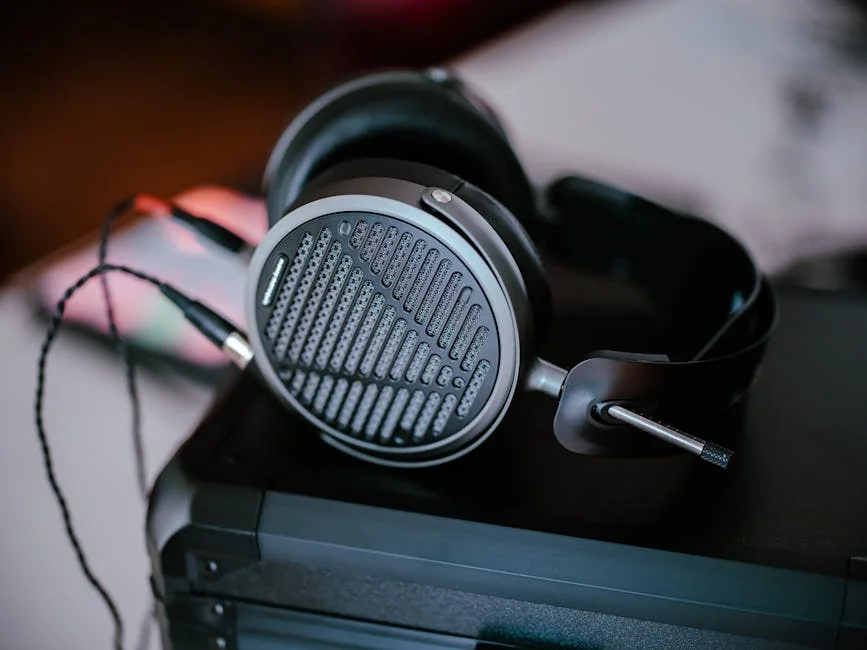
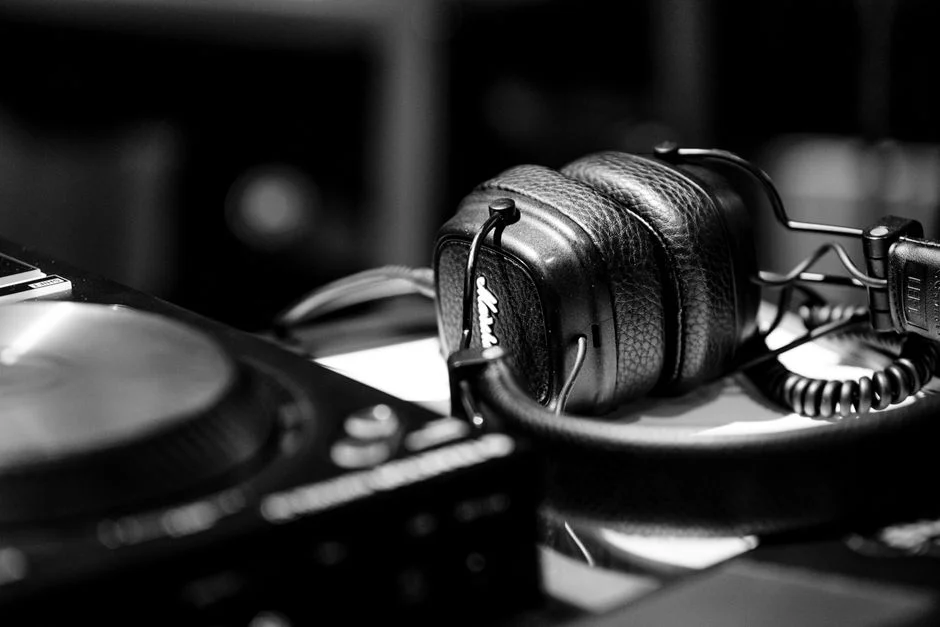
ATH-M50x Review: The Gateway Headphone for Audio Enthusiasts

Affiliate disclosure: Some links on this page are affiliate links. If you buy through them we earn a small commission at no extra cost to you. Recommendations are research-driven; we don't claim personal use of every product reviewed. Product prices and availability are accurate as of the date published and are subject to change. Always check Amazon for current pricing before purchasing. Learn more.

Industry-standard beginner closed-back with massive community support
See Audio-Technica ATH-M50X Professional … on AmazonThe ATH-M50x is where a lot of people’s relationship with audio changes. Not because it’s the most neutral headphone on the market , it isn’t , but because it sounds noticeably better than whatever most buyers were using before, ships in a tidy package with detachable cables, and has three years of community consensus behind it pointing new listeners toward it as a starting point. I own a pair. They were my second headphone, bought after the HD600 made me curious what a closed-back portable could do at the budget tier.
That context matters for this review. These are headphones I know well, with real hours on them , which means the impressions here carry more weight than spec-sheet speculation.

What to Look For in Studio Monitor Headphones
Frequency Response: What “Neutral” Actually Means
The term “studio monitor headphone” implies a flat, reference-grade frequency response. In practice, very few headphones in the budget tier measure anywhere close to a neutral target like the Harman curve. Understanding what you’re actually buying , a broad frequency response shape that may favor certain frequencies , is more useful than trusting marketing language at face value.
Flat bass extension without a mid-bass hump is one of the clearest dividing lines between genuinely neutral closed-backs and consumer-tuned ones wearing professional branding. A mid-bass hump around 150, 200 Hz warms the sound and adds punch, which many listeners prefer. But it also masks low-end detail and can make mixing decisions harder. If accurate monitoring is the actual goal, this matters.
Clamping Force and Long-Session Comfort
Clamping force is underrated in buying decisions and overweighted in spec sheets. A headphone that measures well but clamps hard enough to cause temple pressure after 90 minutes is genuinely difficult to use for extended listening or recording sessions. Ear cup depth matters too , shallow cups that press against the ear rather than surrounding it change both comfort and sound.
Budget closed-backs often over-clamp to maintain passive isolation. This is a deliberate trade-off, not an oversight. The question is whether that isolation level is worth the comfort cost for your specific use pattern.
Detachable vs. Fixed Cables
A fixed cable is a failure point. It can’t be replaced without a soldering iron, and the connector at the headphone cup is the most mechanically stressed point in the chain. Detachable cables , ideally with a threaded or locking connector , extend headphone life significantly and eliminate one of the most common failure modes.
Not all detachable cable implementations are equal, though. The 2.5mm single-entry connector used on the ATH-M50x is standard enough that aftermarket cables are widely available. The functional benefit of cable replacement is real. The audible benefit of expensive aftermarket cables is not something the evidence supports , more on that in the buying guide.
Isolation and Use Case Match
Closed-back headphones serve a different purpose than open-backs. The passive isolation that makes them useful on a commute or in a shared space comes at the cost of soundstage width and, often, a slightly more congested presentation. Expecting a closed-back to image like an HD600 or HD800S will produce disappointment. Expecting it to block ambient noise while tracking vocals or commuting is a reasonable use case match.
Exploring the full range of headphone options before committing to a form factor , closed, open, or semi-open , is worth doing early. The form factor decision shapes everything else.
Top Picks
Audio-Technica ATH-M50X
The Audio-Technica ATH-M50X has been the default recommendation for first-time audiophile closed-back buyers for years, and the community consensus behind it is not misplaced , but it deserves honest framing about what it is and isn’t.
Owner reviews and field consensus are clear on the tuning: there is a mid-bass hump that adds warmth and punch to the low end. This makes the M50x sound impressive on first listen, especially to listeners coming from earbuds or consumer Bluetooth headphones. It doesn’t make it neutral. The AKG K371 measures flatter and represents a more accurate monitor in the strict sense. If mixing accuracy matters more than listenability, that distinction is worth understanding.
Where the M50x genuinely earns its reputation is in build quality and value at the budget tier. The foldable hinge design is solid, the ear cups swivel flat for bag storage, and the box ships with three cables , a coiled cable for studio use, a straight cable for general listening, and a shorter straight cable for portable use. That’s a meaningful practical advantage. Most buyers never have to think about cable management again after unboxing.
Comfort is a real concern for longer sessions. The clamping force is higher than the K371 and higher than most open-backs at any tier. Listeners with wider heads will feel temple pressure during extended use. The ear pads are adequate but not plush , the stock pads are often the first thing experienced M50x owners replace, typically with Brainwavz or Dekoni alternatives that improve both comfort and slightly change the sound signature.
The M50x is the right starting point for someone entering the hobby who needs a closed-back for commuting, shared spaces, or recording. It has the largest community support base of any headphone at this tier , questions about fit, pads, cables, and tuning have been answered exhaustively on Head-Fi and r/headphones. That infrastructure matters for a first headphone.
Check current price on Amazon.
Buying Guide

Budget Tier Closed-Backs: What the Category Actually Delivers
The budget tier for closed-back headphones is genuinely competitive. The M50x doesn’t exist in isolation , it’s measured against the AKG K371, the Beyerdynamic DT 770 Pro, and a rotating set of new entrants from brands like Sivga and Meze. The right choice depends on whether the priority is sound accuracy, comfort, build quality, or community support infrastructure.
For first-time buyers, community infrastructure is an underrated factor. A headphone with years of accumulated guidance, pad comparisons, and firmware-equivalent tuning advice , in the form of EQ profiles shared across ASR and Head-Fi , is more useful than a marginally better-measuring headphone with no community ecosystem.
EQ and the “Neutral” Closed-Back Question
The mid-bass hump on the M50x is real, measurable, and audible. It’s also fixable with EQ, and the parametric EQ profiles for the M50x are among the most widely circulated on the internet. On a source with good EQ capability , Poweramp on Android, EQMac, or a Qudelix 5K , the M50x can be tuned significantly closer to the Harman target.
This makes the “not neutral” critique less decisive than it seems. A headphone that measures slightly off but has excellent EQ documentation is more practically neutral for most listeners than a headphone that measures flat but lacks guidance. Whether to EQ at all is a personal decision; the option is there.
Cable Upgrade Claims: What the Evidence Actually Supports
Aftermarket cable manufacturers market heavily to M50x owners, because the 2.5mm connector is standard and the user base is enormous. The claims range from improved imaging to tighter bass to a more “open” presentation. These claims are not supported by blind testing evidence.
The functional case for aftermarket cables is real: a shorter cable is genuinely better for portable use than the coiled cable; a braided cable is genuinely more tangle-resistant. Buy aftermarket cables for ergonomic reasons. The audible differences claimed by cable vendors are not something the evidence supports, and spending significant money on a cable for a budget headphone is hard to justify on those grounds.
Matching the M50x to a Source
The M50x is an easy load , 38 ohms impedance, 99 dB/mW sensitivity. It plays loud enough from a phone output to be usable without a dedicated amp. A DAC/amp stack is not required the way it arguably is for the HD600 at 300 ohms.
That said, the M50x does respond to cleaner sources. Owner reports consistently note that hiss from phone outputs , particularly older Android devices , is audible on the M50x at moderate gain levels. A low-noise source or a simple dongle DAC like the Apple USB-C adapter eliminates this. The investment is modest; the improvement is real. Full headphone amp and DAC guidance covers source pairing in more depth for listeners who want to go further.
When to Look Beyond the M50x
The M50x is the right starting point for many buyers. It is not the right long-term closed-back for everyone. Listeners who prioritize accuracy over listenability will find the AKG K371’s flatter response more useful. Listeners who need exceptional isolation for loud environments will find the DT 770 Pro’s deeper attenuation more appropriate. Listeners who primarily use headphones at a desk and don’t need isolation should consider whether a closed-back is the right form factor at all , the HD600’s open presentation is substantially more enjoyable for seated listening once isolation is no longer a constraint.
The M50x is a gateway, not a destination. Treating it as one , buying it, learning on it, and eventually making a more informed second purchase , is the intended use pattern. The community consensus, three years of following it, consistently supports this framing.
Frequently Asked Questions
Is the ATH-M50x actually good for mixing and recording?
For tracking and overdubbing , where isolation from speaker bleed matters , the M50x is a practical studio tool. For mixing decisions, its mid-bass hump means you’ll need to compensate mentally or via EQ. Verified producers on Head-Fi and Gearspace note that mixing on the M50x is workable but benefits from cross-referencing on a second set of speakers or headphones. Professional mixing engineers typically use flatter-measuring references.
How does the ATH-M50x compare to the AKG K371?
The AKG K371 measures closer to the Harman target and is the more neutral option of the two. The M50x has warmer low-end, higher clamping force, and a larger support community. Owner consensus on Head-Fi consistently rates the K371 ahead for accuracy and comfort, while the M50x retains an edge in build quality and cable flexibility. For pure monitoring accuracy, the K371 is the stronger choice.
Does the ATH-M50x need an amplifier?
At 38 ohms impedance and 99 dB/mW sensitivity, the M50x drives easily from a phone, laptop, or tablet without a dedicated amp. The practical improvement from adding a DAC/amp is modest , mainly reduced hiss on noisy sources rather than meaningful volume or dynamic headroom gains. If your source is a phone or recent laptop, a simple USB-C dongle DAC addresses most noise floor concerns without adding complexity.
Are aftermarket pads worth it on the ATH-M50x?
Owner consensus consistently favors pad replacement for comfort in long sessions , the stock pads are adequate but compress quickly and retain heat. Brainwavz HM5 pads and Dekoni Elite Hybrid pads are the two most frequently recommended aftermarket options. Pad replacement does alter the sound signature modestly; Dekoni’s documentation on this is unusually transparent. If comfort is the goal rather than tuning, the HM5 pads are the standard recommendation at a reasonable cost.
At what point should someone upgrade from the M50x?
The clearest signal is a specific dissatisfaction: the mid-bass warmth stops sounding engaging and starts masking detail you want to hear, or clamping force becomes a real discomfort issue rather than a minor annoyance. The HD600 is the most commonly recommended next step for listeners who’ve outgrown the M50x and are ready for open-back listening at a desk. Those who need to stay closed-back should look at the AKG K371 or Beyerdynamic DT 770 Pro depending on whether accuracy or isolation is the higher priority.
Audio-Technica ATH-M50X Professional Studio Monitor Headphones Black: Pros & Cons
- Industry-standard beginner closed-back with massive community support
- Three detachable cables included in the box
- Mid-bass hump , not as neutral as AKG K371 alternatives
Where to Buy
Audio-Technica ATH-M50X Professional Studio Monitor Headphones BlackSee Audio-Technica ATH-M50X Professional … on Amazon