M50x Mods Guide: Upgrades for Audio-Technica Headphones

Affiliate disclosure: Some links on this page are affiliate links. If you buy through them we earn a small commission at no extra cost to you. Recommendations are research-driven; we don't claim personal use of every product reviewed. Product prices and availability are accurate as of the date published and are subject to change. Always check Amazon for current pricing before purchasing. Learn more.

Quick Picks
Audio-Technica ATH-M50X Professional Studio Monitor Headphones Black
Industry-standard beginner closed-back with massive community support
Buy on AmazonAudio-Technica ATH-M40x Professional Studio Monitor Headphones
Flatter frequency response than ATH-M50x for more accurate monitoring
Buy on Amazonbeyerdynamic DT 770 PRO 80 Ohm Over-Ear Studio Headphones
Proven studio closed-back with decades of professional use
Buy on Amazon| Product | Price Range | Top Strength | Key Weakness | Buy |
|---|---|---|---|---|
| Audio-Technica ATH-M50X Professional Studio Monitor Headphones Black also consider | $ | Industry-standard beginner closed-back with massive community support | Mid-bass hump , not as neutral as AKG K371 alternatives | Buy on Amazon |
| Audio-Technica ATH-M40x Professional Studio Monitor Headphones also consider | $ | Flatter frequency response than ATH-M50x for more accurate monitoring | Less bass emphasis than M50x , may disappoint casual listeners | Buy on Amazon |
| beyerdynamic DT 770 PRO 80 Ohm Over-Ear Studio Headphones also consider | $ | Proven studio closed-back with decades of professional use | V-shaped tuning with prominent treble , not for treble-sensitive listeners | Buy on Amazon |
| AKG K371 Over-Ear Closed-Back Foldable Studio Headphones also consider | $$ | Closely follows the Harman target curve , referenced in measurement guides | Headband quality below what price bracket suggests | Buy on Amazon |
| Sony MDR-7506 Professional Large Diaphragm Headphones also consider | $ | Studio standard since 1991 , used in broadcast and recording worldwide | Older driver design sounds somewhat bright by modern audiophile standards | Buy on Amazon |
| Beyerdynamic DT 880 PRO Semi-Open Studio Headphones also consider | $$ | Semi-open design blends some open-back soundstage with modest isolation | Semi-open design leaks some sound , not for quiet shared environments | Buy on Amazon |
The Audio-Technica ATH-M50x has been sitting in more bedroom studios, dorm rooms, and home rigs than almost any other closed-back headphone at the budget tier. Three years in, mine still see occasional use alongside the HD600 and Sundara. But the M50x also has a well-documented ceiling, and a thriving community of modders has spent years pushing past it. Whether you want better pad comfort, a flatter frequency response, or just a cleaner cable situation, m50x mods are one of the more accessible rabbit holes in this hobby.
This guide covers the mod landscape, what the community’s verified buyers and long-term owners report, and how the M50x compares against peer closed-backs that might make more sense if you’re starting fresh. If you’re shopping the broader closed-back headphone space, there’s much more context over at our Headphones hub.
What Makes the M50x a Modding Target
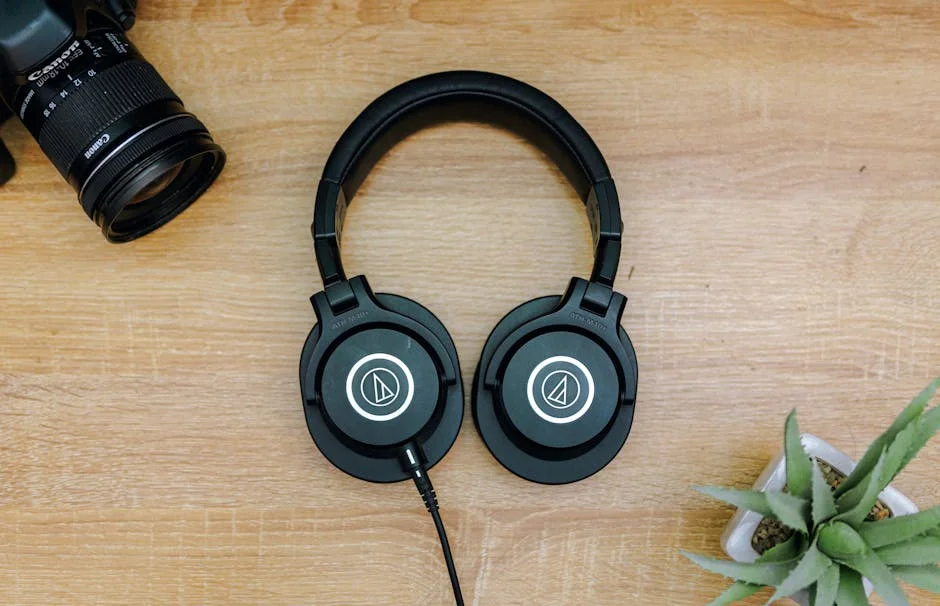
The M50x is, by most measures, a competent budget closed-back. Its detachable cable system (three cables in the box, which remains genuinely unusual at the budget tier) and foldable design give it more practical flexibility than most of its peers. But the frequency response tells a specific story: a mid-bass hump, elevated low end, and a treble lift that reads “exciting” to casual listeners and “colored” to anyone who’s spent time with flatter cans. ASR and Crinacle’s measurements both confirm the signature. It isn’t a monitor in the flat-response sense, despite the “studio monitor” branding on the box.
That coloration is precisely why the mod community exists. The M50x is easy to open, well-documented in teardown guides, has broad third-party pad support, and carries enough community volume that almost every mod has been tried, photographed, and discussed across Head-Fi and Reddit threads going back a decade. The result is one of the most modded consumer headphones at the budget tier.
What M50x Mods Actually Target
Mods generally fall into three buckets: pad swaps (the most common and most impactful), damping and filter modifications (more invasive, higher ceiling), and EQ (not a physical mod, but where most owners land eventually).
Pad swaps affect both comfort and sound. The stock pads are shallow and firm, which contributes to the clamping fatigue that long-session owners consistently flag. Brainwavz, Dekoni, and ZMF Pilot Pad alternatives are the most commonly reported community choices. Verified buyers on Head-Fi note that velour pads reduce bass impact (which, depending on your preferences, is either the point or a problem) while improving breathability significantly. Leather-backed pads retain more bass but tend to be warmer on the ears. The M50x’s pad ring is a standard 70mm mount with a friction-fit mechanism, which makes third-party compatibility high.
Damping mods involve opening the cup and placing acoustic foam, Sorbothane, or felt material against the driver baffle or inner cup walls. Field reports from Head-Fi’s dedicated M50x thread suggest damping reduces the mid-bass resonance noticeably, though the results are highly dependent on material thickness and placement. This is the territory where “your results may vary” applies most honestly. Some owners report meaningful tightening of the low end. Others report minimal change.
EQ is, bluntly, the most reliable and reversible approach for most users. The M50x responds well to software EQ, and Oratory1990’s AutoEQ profile for it (targeting the Harman curve) is widely recommended in measurement-aware communities. On my Topping stack, running EQ through Qobuz via a convolution plugin produces a noticeably more coherent presentation than any pad swap I’ve read about achieving on its own.
The Case for Alternatives Over Mods
Here’s the honest framing: if you’re considering significant mod investment in an M50x you don’t already own, the alternative-headphone math deserves a look first. Several closed-backs in the same budget-to-mid range ship with tuning that addresses the M50x’s weaknesses out of the box.
Mods have real value for owners who already have the M50x and want to improve it without replacing it. For someone starting fresh, the picture is more complicated.
Top Picks
Audio-Technica ATH-M50x Professional Studio Monitor Headphones Black
The Audio-Technica ATH-M50x is the headphone this entire mod conversation exists around. Three cables in the box, a foldable design, and broad driver availability make it one of the most practically flexible options at the budget tier. The tuning is V-shaped with a mid-bass emphasis that ASR’s measurement data clearly shows, and it departs meaningfully from a neutral monitor signature despite the branding.
Owner reports on Head-Fi and r/headphones consistently note that the stock pads cause fatigue in sessions longer than two hours, and that pad swaps are the single highest-impact mod available. Community consensus also lands on EQ as the most reliable tonal correction. For buyers who want “more neutral, better pads, better bass texture,” the Oratory1990 EQ profile plus a Dekoni or Brainwavz pad swap represents the documented ceiling of the platform. Verified buyers who’ve gone through that full process generally land at “good, not great.” The M50x remains an excellent first headphone and a reasonable modding platform, but it isn’t a reference-tier closed-back regardless of how much work you put in.
Check current price on Amazon.
Audio-Technica ATH-M40x Professional Studio Monitor Headphones
The Audio-Technica ATH-M40x is the M50x’s quieter sibling, and the community case for it over the M50x is surprisingly strong. The frequency response is measurably flatter, the bass emphasis is reduced, and the price is lower. For anyone who wants the M50x platform but a more neutral starting point, the M40x ships closer to where M50x owners are trying to EQ their way to.
The tradeoff is community visibility. The M40x has less third-party accessory coverage, fewer documented mod threads, and less name recognition among casual buyers. Verified buyers who are aware of the M40x and buy it deliberately tend to be more satisfied with its tonal balance than M50x owners who expected a neutral studio monitor. If you’re mixing, podcasting, or want accurate monitoring on a budget, the M40x is worth serious consideration over the M50x, before any mods enter the conversation.
Check current price on Amazon.
beyerdynamic DT 770 PRO 80 Ohm Over-Ear Studio Headphones
The beyerdynamic DT 770 PRO 80 Ohm is a studio closed-back with decades of professional use behind it, and it represents a genuinely different design philosophy than the Audio-Technica options. Made in Germany with replaceable earpads and a well-documented service history, the DT 770 is the kind of headphone that gets handed down rather than thrown out.
The 80Ω version drives easily from most sources including laptop outputs and mobile interfaces. The signature is V-shaped with the characteristic beyerdynamic treble peak that shows up clearly in Crinacle’s measurements. Treble-sensitive listeners should take that peak seriously. Field reports from longtime owners consistently praise the build durability and isolation (among the best in the closed-back budget tier), while the non-detachable coiled cable is the most commonly cited practical frustration. The DT 770 isn’t a modding target the way the M50x is, but it’s a strong comparison point for anyone deciding whether to mod what they have or buy something built better from the start.
Check current price on Amazon.
AKG K371 Over-Ear Closed-Back Foldable Studio Headphones
The AKG K371 is the measurement-community’s answer to “what closed-back should I actually buy.” It follows the Harman target curve more closely than almost anything at its price band, and ASR’s data on it is frequently cited as a benchmark. For the m50x modding crowd specifically, this is the headphone that represents “what you’re trying to EQ your M50x toward, built in from the factory.”
The practical design matches up well: foldable, detachable cable, closed-back isolation without the strong V-shaped consumer coloring. Treble-sensitive listeners have noted a slightly dark tonal balance in some Head-Fi discussions, which comes from the K371 landing just under the Harman treble target. Build quality has been flagged by verified buyers as a weak point relative to expectations at the mid price band, particularly around the headband. But for anyone who wants a Harman-tuned closed-back without EQ work, the K371 is the community consensus recommendation and the natural landing point after an M50x.
Check current price on Amazon.
Sony MDR-7506 Professional Large Diaphragm Headphones
The Sony MDR-7506 has been a studio standard since 1991, and its presence in broadcast facilities, recording studios, and journalism workrooms worldwide gives it credibility that most headphones at the budget tier simply don’t have. It folds flat, ships with a screw-on 6.3mm adapter, and offers a bright analytical tuning that catches problems in recordings rather than flattering them.
By modern audiophile measurement standards, the MDR-7506 reads as “older and bright,” which is an accurate characterization. It isn’t a Harman-target headphone, and it doesn’t try to be. Verified buyers who use it for its intended purpose (critical listening, broadcast work, tracking) report high satisfaction. Buyers who compare it directly to modern options like the K371 on pure FR terms tend to flag the older driver design. The earpad wear rate is the most consistent long-term complaint from owners; Sony’s official replacement pads are pricey, and third-party options vary. The MDR-7506 isn’t an m50x mod alternative so much as a parallel tradition of “analytical closed-back” with 30-plus years of working professionals behind it.
Check current price on Amazon.
Beyerdynamic DT 880 PRO Semi-Open Studio Headphones
The Beyerdynamic DT 880 PRO occupies an interesting structural position in the closed-back conversation because it isn’t fully closed. The semi-open design leaks sound in both directions, which limits its use in shared environments or tracking sessions, but it returns something in exchange: a broader, more open staging quality than a sealed cup permits.
The DT 880 Pro is positioned for mixing and mastering work where some ambient awareness is acceptable and where the more analytical tuning benefits detailed listening. The 250Ω version requires real amplification, and that’s worth stating plainly for anyone running off a laptop or mobile source. Community reports from mixing engineers who use the DT 880 regularly describe it as a well-calibrated middle ground between the DT 770’s isolation-focused sealed design and the DT 990’s fully open presentation. For anyone who’s maxed out the M50x mod path and wants a genuinely different design without moving into open-back territory entirely, the DT 880 is worth understanding as a category.
Check current price on Amazon.
Buying Guide: What to Know Before You Mod or Switch
Understanding What Mods Can and Cannot Fix
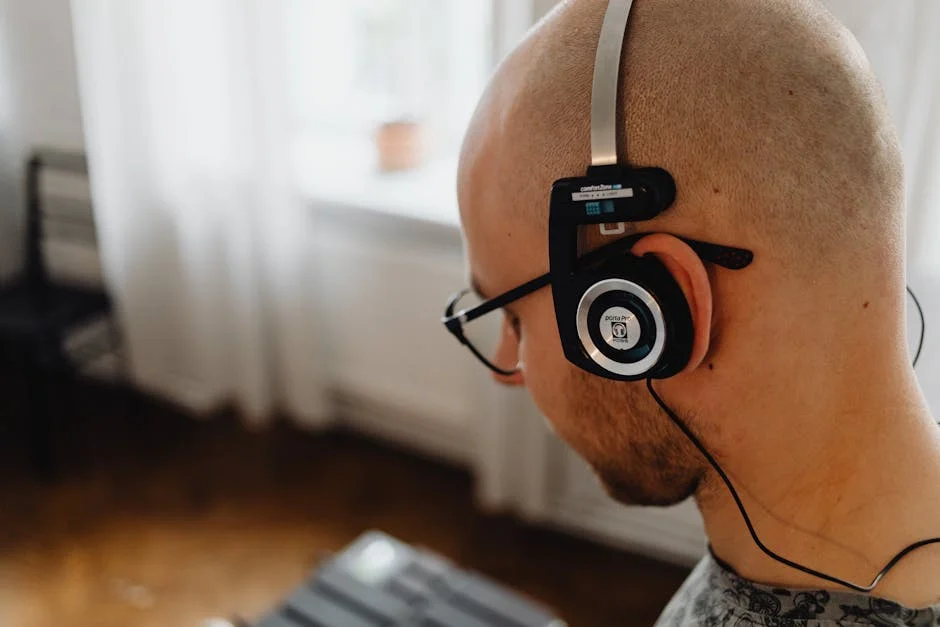
The m50x mod community has documented a real ceiling. Pad swaps improve comfort reliably and shift tonal balance measurably, depending on material choice. Damping modifications can tighten the low end, though results vary enough that no single outcome is guaranteed. EQ is the most consistent tool. But none of these interventions changes the fundamental driver architecture, the clamping geometry, or the underlying transducer character. At my experience level, reading through a decade of Head-Fi mod threads, the honest summary is: mods make the M50x more comfortable and slightly more neutral. They do not make it a different headphone. If the thing you dislike about the M50x is structural rather than tonal, a mod probably isn’t your answer.
For deeper context on how the M50x fits into the broader closed-back landscape, the Headphones hub covers the full category.
Pad Selection: Material Matters More Than Brand
Velour pads increase breathability and reduce bass emphasis. Leather or pleather pads retain bass warmth and improve passive isolation but run warmer over long sessions. Hybrid pads (velour face, leather back) split the difference and are the most commonly recommended starting point in field reports. The M50x’s 70mm pad ring accepts most standard aftermarket options without modification. Verified buyers on Head-Fi consistently report that the pad swap is the highest-return mod per unit of effort, and that the difference between stock and velour is immediately audible on first listen.
EQ as a Mod Strategy
EQ is not a physical mod, but it belongs in any honest m50x mods guide because it consistently outperforms hardware mods in community comparisons. Oratory1990’s parametric EQ profile for the M50x targets the Harman curve and is available on Reddit with full filter settings. Running that profile on the Topping E50 via convolution (or through any parametric EQ plugin in your signal chain) produces a measurably flatter, better-controlled low end. The M50x responds well to EQ correction. Cable skepticism is appropriate here: three years in, I see no evidence that cable changes above a functional quality threshold produce audible differences. Spend the cable budget on EQ software instead.
When Buying New Makes More Sense Than Modding
If you’re outside the budget tier entirely and considering premium pad replacements plus damping materials on an M50x you don’t yet own, the AKG K371 ships with better measurements out of the box for a similar or lower total cost once mods are priced in. The K371’s Harman-curve adherence is documented across ASR, Crinacle, and Resolve Reviews. Community consensus positions it as the measurement-oriented alternative to the M50x for buyers who want accurate monitoring without tuning work.
The Beyerdynamic DT 770 PRO is the alternative for buyers who prioritize build durability and isolation over tonal flatness. The DT 880 Pro addresses buyers who want analytical monitoring with some ambient awareness. Each represents a different reason to skip the mod path entirely and buy something better suited to a specific use case. For a full breakdown of the category, the closed-back section of our headphone guide has more.
Source Chain and the M50x
The M50x is a 38Ω dynamic driver headphone that drives easily from almost any source, including laptop outputs and mobile devices. Unlike planar magnetics (where I’ve seen firsthand that the “scales with source” advice has real content), the M50x doesn’t benefit meaningfully from a dedicated DAC/amp stack in the way a Sundara or HD600 does. On my Topping E50 and L50, the M50x sounds marginally cleaner than off a laptop output, but the gap is small. For M50x owners specifically, the mod budget is almost certainly better spent on pads and EQ software than on source hardware.
Frequently Asked Questions
Are M50x mods worth it if I already own the headphone?
Pad swaps are almost always worth attempting if you find the stock pads uncomfortable during long sessions. Velour alternatives are well-documented and low-risk. EQ is worth implementing before any physical mod, because it costs nothing and produces reliably measurable results. Damping modifications are higher-effort and more variable in outcome, so they’re best approached after you’ve exhausted pad and EQ options.
What is the best pad swap for the ATH-M50x?
Community consensus on Head-Fi and Reddit points to Dekoni and Brainwavz as the most commonly recommended brands, with hybrid pads (velour face, synthetic leather back) as the most neutral starting point. Velour pads reduce bass and improve breathability. Leather pads retain bass warmth. Verified buyers note that the specific choice depends on whether you want more comfort at the cost of some low-end, or more isolation at the cost of running warmer.
Should I mod the M50x or buy the AKG K371 instead?
If you already own the M50x, modding makes sense before replacement. If you don’t own one yet and your goal is neutral monitoring, the AKG K371 ships closer to the Harman target without any modification required. ASR’s measurement data and community consensus across Head-Fi and Resolve Reviews consistently position the K371 as the measurement-oriented alternative at a comparable price band. Total mod costs on an M50x can approach or exceed the K371’s price, and the K371 will likely still measure better afterward.
Does EQ actually fix the M50x bass hump?
Yes, within limits. Oratory1990’s parametric EQ profile for the M50x is widely reported to produce a significantly flatter, more controlled low end. The M50x responds well to EQ correction because its driver is competent and the coloration is largely a tuning choice rather than a driver limitation. Field reports from users who’ve applied the Harman-target profile consistently describe a more coherent midrange and tighter bass.
Is the DT 770 Pro a better buy than a modded M50x?
For build durability and passive isolation, the DT 770 Pro 80Ω is a stronger platform than a modded M50x. Its V-shaped tuning isn’t flat, but the beyerdynamic treble peak is a different character than the M50x mid-bass emphasis. The DT 770’s non-detachable cable is a genuine practical limitation the M50x avoids. If isolation and long-term build reliability matter more than tonal neutrality, the DT 770 is worth prioritizing. If neutral monitoring is the goal, the AKG K371 is the more directly relevant comparison.

<script type="application/ld+json">
{
"@context": "https://schema.org",
"@type": "FAQPage",
"mainEntity": [
{
"@type": "Question",
"name": "Are M50x mods worth it if I already own the headphone?",
"acceptedAnswer": {
"@type": "Answer",
"text": "Pad swaps are almost always worth attempting if you find the stock pads uncomfortable during long sessions. Velour alternatives are well-documented and low-risk. EQ is worth implementing before any physical mod, because it costs nothing and produces reliably measurable results. Damping modifications are higher-effort and more variable in outcome, so they're best approached after you've exhausted pad and EQ options. The mod ceiling is real, but the low-effort mods are genuinely useful."
}
},
{
"@type": "Question",
"name": "What is the best pad swap for the ATH-M50x?",
"acceptedAnswer": {
"@type": "Answer",
"text": "Community consensus on Head-Fi and Reddit points to Dekoni and Brainwavz as the most commonly recommended brands, with hybrid pads (velour face, synthetic leather back) as the most neutral starting point. Velour pads reduce bass and improve breathability. Leather pads retain bass warmth. Verified buyers note that the specific choice depends on whether you want more comfort at the cost of some low-end, or more isolation at the cost of running warmer."
}
},
{
"@type": "Question",
"name": "Should I mod the M50x or buy the AKG K371 instead?",
"acceptedAnswer": {
"@type": "Answer",
"text": "If you already own the M50x, modding makes sense before replacement. If you don't own one yet and your goal is neutral monitoring, the AKG K371 ships closer to the Harman target without any modification required. ASR's measurement data and community consensus across Head-Fi and Resolve Reviews consistently position the K371 as the measurement-oriented alternative at a comparable price band. Total mod costs on an M50x can approach or exceed the K371's price, and the K371 will likely still measure better afterward."
}
},
{
"@type": "Question",
"name": "Does EQ actually fix the M50x bass hump?",
"acceptedAnswer": {
"@type": "Answer",
"text": "Yes, within limits. Oratory1990's parametric EQ profile for the M50x is widely reported to produce a significantly flatter, more controlled low end. The M50x responds well to EQ correction because its driver is competent and the coloration is largely a tuning choice rather than a driver limitation. Field reports from users who've applied the Harman-target profile consistently describe a more coherent midrange and tighter bass. EQ doesn't fix the clamping geometry or pad comfort, which are separate issues."
}
},
{
"@type": "Question",
"name": "Is the DT 770 Pro a better buy than a modded M50x?",
"acceptedAnswer": {
"@type": "Answer",
"text": "For build durability and passive isolation, the DT 770 Pro 80Ω is a stronger platform than a modded M50x. Its V-shaped tuning isn't flat, but the beyerdynamic treble peak is a different character than the M50x mid-bass emphasis. The DT 770's non-detachable cable is a genuine practical limitation the M50x avoids. If isolation and long-term build reliability matter more than tonal neutrality, the DT 770 is worth prioritizing. If neutral monitoring is the goal, the AKG K371 is the more directly relevant comparison."
}
}
]
}
</script>Where to Buy
Audio-Technica ATH-M50X Professional Studio Monitor Headphones BlackSee Audio-Technica ATH-M50X Professional … on Amazon