Moondrop IEM Lineup Buyer's Guide: Find Your Perfect Fit

Affiliate disclosure: Some links on this page are affiliate links. If you buy through them we earn a small commission at no extra cost to you. Recommendations are research-driven; we don't claim personal use of every product reviewed. Product prices and availability are accurate as of the date published and are subject to change. Always check Amazon for current pricing before purchasing. Learn more.
| Product | Price Range | Top Strength | Key Weakness | Buy |
|---|---|---|---|---|
| Moondrop Aria 2 also consider | $ | LCP diaphragm dynamic driver with well-tuned Moondrop signature | Stock cable is functional rather than premium | Buy on Amazon |
| Moondrop CHU II also consider | $ | Exceptional performance-per-dollar at its ultra-budget price | Fixed (non-detachable) cable, cannot be replaced if damaged | Buy on Amazon |
| Moondrop Blessing 3 also consider | $$ | 1DD + 4BA hybrid tuned to Moondrop's VDSF target | Shell size still large, may not suit smaller ears well | Buy on Amazon |
Moondrop has built one of the most coherent IEM lineups in the hobby, a range where the budget entries punch well above expectation and the mid-fi offerings compete with flagships from other brands. If you’re trying to figure out where you fit in that lineup, the decision usually comes down to two things: how much you trust tuning consistency across price points, and how seriously you plan to grow the hobby. Moondrop’s answer to both questions is worth understanding before you spend anything. The full context for evaluating IEMs at every tier lives in the Buyer Guides archive.
What separates a good IEM choice from a frustrating one isn’t driver count or spec sheet bragging, it’s whether the tuning matches your listening habits and whether the ergonomics will hold up over daily use. Moondrop has a house sound. Learning what that means for your ears is the real evaluation task here.
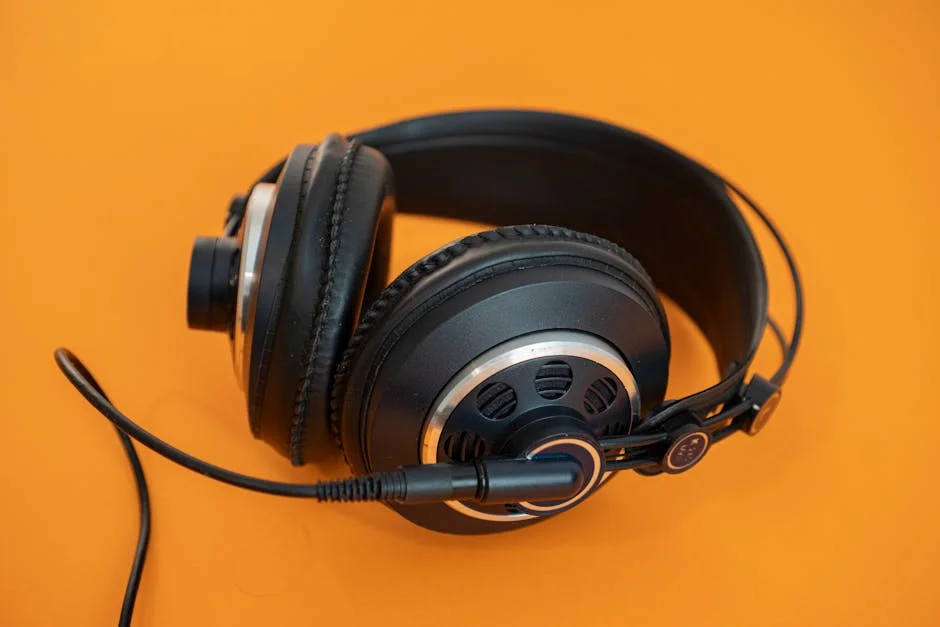
What to Look For in an IEM
Driver Configuration and What It Actually Means
Single dynamic driver IEMs move air the way a traditional speaker does, one driver handles the full frequency range. Hybrid configurations pair one or more dynamic drivers (usually handling bass and lower midrange) with balanced armature drivers (handling midrange detail and treble extension). The Moondrop lineup uses both configurations across price tiers, and neither is categorically better. A well-tuned single DD will outperform a poorly-tuned hybrid in every meaningful listening scenario.
The reason driver count gets attention is that BA drivers excel at micro-detail retrieval and fast transient response, particularly in the upper midrange and treble. But BA bass is a known limitation, it often lacks the physical weight and decay that dynamic drivers do naturally. Hybrid designs try to get the best of both. Whether that trade-off is worth the additional tuning complexity (and price premium) depends on what your music prioritizes.
For most new buyers, a single dynamic driver IEM from a reputable tuner is the right starting point. The complexity budget is better spent on source quality and tips than on chasing driver configurations.
Tuning Targets and the Moondrop House Sound
Moondrop tunes to their own VDSF (Virtual Diffuse Sound Field) target, a response curve derived from acoustic research, similar in philosophy to the Harman target but with different parametric choices, particularly in the upper midrange. In practice, the Moondrop house sound reads as: full bass with decent extension, a slightly recessed lower midrange, a well-controlled pinna gain peak around 3kHz, and relatively smooth treble that avoids harsh peaks.
This tuning is intentionally inoffensive. It works well across genres without demanding tip-rolling or EQ. The trade-off is that buyers who want significant bass emphasis, or the forward vocal presence of a midrange-forward tuning, may find Moondrop’s approach too restrained. Understanding this house sound before purchasing means you’re not chasing something the lineup wasn’t designed to deliver.
Published measurements of several Moondrop models show a consistent tuning philosophy across tiers. The frequency response shapes are recognizably related even between the entry and mid-fi products.
Ergonomics and Fit, the Factor Reviewers Underweight
IEM reviews spend significant time on sound and relatively little on fit, but a poorly-fitting IEM sounds worse, full stop. A bad seal costs you bass extension and isolation simultaneously, and no amount of driver quality compensates. Ear canal geometry varies more than most buyers expect, and the shell shape that works for one person causes discomfort for another after twenty minutes.
The stock tips bundled with most IEMs are a starting point, not a final answer. Foam tips, aftermarket silicone tips with different bore diameters and flange profiles, these changes are often more audible than a cable swap at the same price point. Before concluding that an IEM sounds thin or bass-light, rule out a tip and fit issue first.
Shell size matters independently of tip choice. Some IEMs fit most ears universally; others work best for listeners with larger ear canal openings. This is worth checking before committing to a mid-fi purchase. Exploring the full range of IEM options and buying considerations before settling on a form factor is time well spent.
Cable Quality and When It Actually Matters
Cable upgrades are a question of build, not sound. Functional shielding and correct connectors are what matter at the budget and mid-fi tiers, and published blind tests have not demonstrated reliable audible differences between cables of equivalent quality. Where cable quality matters is durability, ergonomics (microphonics, memory wire stiffness), and connector security.
A detachable cable system, typically 0.78mm 2-pin or MMCX, matters for longevity. If a cable fails on a fixed-cable IEM, you have a repair job or a replacement. Detachable systems let you swap in a functional cable immediately. At the budget tier specifically, stock cables are often functional but not particularly pleasant to handle; the upgrade case is ergonomic, not sonic.
Top Picks
Moondrop Aria 2
The Moondrop Aria 2 is the budget entry point and the model most readers should evaluate first. It uses a single LCP (liquid crystal polymer) diaphragm dynamic driver tuned to Moondrop’s VDSF target. The LCP material is chosen for its combination of rigidity and controlled damping, which is intended to give bass weight without bloating into the lower midrange and a controlled treble.
The Aria 2 succeeds the original Aria, which became one of the most-recommended budget IEMs in the hobby for a reason, it was hard to fault at its price point. The Aria 2 keeps what worked and refines it.
The stock cable is functional. It does its job, handles normally, and nothing about it will harm the sound. Aftermarket cables can reduce microphonics and improve memory wire behavior. This isn’t an urgent upgrade, but if daily carrying comfort matters, it’s worth knowing the option exists. Foam tips aren’t included, and the stock silicone tips are a reasonable starting point; aftermarket tips such as SpinFit or Final Type E can improve fit for some ear shapes.
For anyone entering the hobby with a budget that allows only one IEM purchase, the case for starting here is strong. The tuning is representative of what Moondrop does well. The fit is achievable for most ear shapes. And the detachable cable means longevity isn’t a concern.
Check current price on Amazon.
Moondrop CHU II
The Moondrop CHU II addresses a specific buyer: someone who wants to understand what the IEM hobby actually sounds like before committing to the mid-range of the market. At its ultra-budget price point, the CHU II is a low-risk way to find out.
Its tuning follows the same Moondrop target as the more expensive models. The single dynamic driver handles the full range without the tonal discontinuities that multi-driver designs can introduce at the budget level.
The fixed cable is the main limitation. If the cable fails, through daily wear at the connector, an accidental snag, or oxidation, the IEM isn’t serviceable in the way a detachable-cable design is. For a primary IEM, this is a real consideration. As a first IEM or a designated backup, the constraint matters less.
There’s no microphone version available in the base model, which is a practical note for buyers who want a single-cable solution for both music and calls.
Check current price on Amazon.
Moondrop Blessing 3
The Moondrop Blessing 3 represents the point in Moondrop’s lineup where the driver architecture changes meaningfully, a 1DD + 4BA hybrid configuration tuned to Moondrop’s VDSF target, succeeding the Blessing 2, which was for several years one of the most broadly recommended mid-fi IEMs available.
The 1DD + 4BA architecture gives the Blessing 3 dynamic driver bass with full physical weight, while the four balanced armature drivers handle midrange and treble retrieval with speed and precision that single-DD designs struggle to match.
The ergonomics are notably improved over the Blessing 2. The original shell shape was a consistent complaint in long-form reviews, too large for smaller ear canals, requiring extended tip-rolling to achieve a stable seal. The Blessing 3 shell reduces the fit friction for most users, though buyers with smaller ears should verify fit before purchasing, as the shell remains on the larger side for a universal IEM.
The stock cable is the weak point at this price. It functions correctly but doesn’t represent the build quality implied by the IEM itself. At the mid-fi tier, this is a more notable ergonomic gap than at the budget level, so an aftermarket cable is a reasonable ergonomic upgrade.
Check current price on Amazon.
Buying Guide

Start with the Tier, Not the Spec Sheet
The most common mistake in IEM buying is starting with driver counts and frequency response graphs before deciding which tier actually matches the use case. The CHU II, Aria 2, and Blessing 3 represent three genuinely distinct levels of the hobby, not incremental improvements along a single axis, but different relationships to how seriously the listener intends to pursue audio as a hobby.
If IEMs are primarily for commuting, gym use, or casual listening at the computer, the budget tier covers the need completely. The Aria 2 or CHU II will sound substantially better than any earphone included with a phone or sold at a pharmacy. The additional performance of the Blessing 3 is real, but it’s optimized for attentive, quiet listening, not background audio on a subway platform.
The Detachable Cable Question at Each Tier
At the budget tier, fixed cable vs. Detachable cable is a longevity question more than a sound quality question. The CHU II’s fixed cable is the main reason to choose the Aria 2 for a primary daily-driver, even though the CHU II’s sound quality is impressive for its price. If the cable fails on the CHU II, the IEM is done. On the Aria 2, a replacement cable is an easy purchase.
At the mid-fi tier with the Blessing 3, detachable cables are standard, and the conversation shifts to which aftermarket cable is worth the ergonomic investment. The sonic case for cable upgrades remains skepticism-worthy, the ergonomic case is genuine. A better cable on a mid-fi IEM is a quality-of-life improvement, not a performance uplift.
How Driver Configuration Affects Genre Compatibility
The single dynamic driver design of both the CHU II and Aria 2 has a cohesive quality, there’s one driver handling the full range, and there’s no crossover point where one driver hands off to another. For acoustic music, jazz, singer-songwriter, and classical, this coherence is audible and valued by many listeners.
The Blessing 3’s hybrid architecture trades some of that coherence for the technical performance of BA drivers in the midrange and treble. The result suits complex, layered recordings well, orchestral music, electronic music with dense high-frequency content, progressive rock where instrument separation matters. The tradeoff isn’t a weakness exactly; it’s a different set of priorities. More useful context for making this call is available in the IEM and audio gear guides at /guides/.
Tip Rolling and Its Actual Impact
Tip choice affects IEM performance more than most first-time buyers expect. The bore diameter and flange profile of the tip changes the IEM’s acoustic coupling to the ear canal, which affects both the bass response (seal quality) and the upper frequency presentation (insertion depth and resonance). A shallow-fitting tip on an IEM with a narrow nozzle can rob the low end and make treble appear harsher.
A sensible starting point is to try the included tips in all available sizes before purchasing aftermarket options. If the stock tips don’t achieve a comfortable seal, flexible-stem silicone tips such as SpinFit and the Final Type E are the usual alternatives.
When to Step Up the Tier
Moving from the CHU II to the Aria 2 is justified by daily-use durability and cable replaceability, not by dramatic sound quality improvement, though the Aria 2 is meaningfully refined. Moving from the Aria 2 to the Blessing 3 is justified by a different set of criteria entirely: active interest in the hobby beyond casual listening, a source chain capable of resolving the additional technical performance (a dedicated DAC/amp rather than a phone output), and a use case that involves attentive listening in quiet environments.
The Blessing 3’s additional performance depends on a quality source, and running it from a phone output may leave part of its capability unused. The source investment should accompany the IEM upgrade, not follow it.
Frequently Asked Questions
Is the Moondrop CHU II worth buying if I already own the Aria 2?
As a second IEM, the CHU II doesn't add much that the Aria 2 doesn't already cover, the tuning is similar in philosophy, and the Aria 2 is the more refined product. The CHU II makes most sense as a first IEM, a backup, or a recommendation to someone else entering the hobby.
How large is the ergonomic difference between the Blessing 2 and the Blessing 3?
The Blessing 3 shell is revised for better universal fit, Moondrop specifically addressed the fit complaints that followed the Blessing 2 through much of its lifespan. Buyers with smaller ear canals should still verify fit before purchasing, as the shell remains on the larger end compared to typical universal IEMs.
Do I need a DAC/amp to run these IEMs properly?
The CHU II and Aria 2 are efficient enough to run well from a smartphone output. A phone output works; a proper source chain works better, particularly for the detail retrieval the Blessing 3's BA drivers are tuned to deliver.
Should I buy the Moondrop Aria 2 or save toward the Blessing 3?
The answer depends on what you're optimizing for. The Aria 2 is the stronger choice for daily portable use, gym listening, or situations where IEM durability and fit flexibility matter more than ceiling performance. The Blessing 3 is the stronger choice for attentive, seated listening on a quality source, with a use pattern that prioritizes technical resolution. There's no wrong answer, they serve genuinely different listener profiles.
How important is tip choice for getting the most out of these IEMs?
Tip choice affects both seal quality and tonal presentation, and getting it wrong reads as bass-light or treble-harsh sound rather than a fit problem. Before concluding any of these IEMs sounds off, verify the seal is complete and stable across different tip sizes.
Where to Buy
- Moondrop Aria 2See price on Amazon
- Moondrop CHU IISee price on Amazon
- Moondrop Blessing 3See price on Amazon