NOS DAC Explained: Non-Oversampling Audio Design Guide

Affiliate disclosure: Some links on this page are affiliate links. If you buy through them we earn a small commission at no extra cost to you. Recommendations are research-driven; we don't claim personal use of every product reviewed. Product prices and availability are accurate as of the date published and are subject to change. Always check Amazon for current pricing before purchasing. Learn more.

| Product | Price Range | Top Strength | Key Weakness | Buy |
|---|---|---|---|---|
| Topping E30 II Hi-Res Audio DAC AK4493S DSD512 PCM768kHz also consider | $ | AK4493S chip delivering excellent measurements at budget pricing | No balanced output, RCA only at this price tier | Buy on Amazon |
| TOPPING E70 Velvet High-Performance DAC AK4499EX Bluetooth LDAC DSD512 also consider | $$ | AK4499EX flagship chip delivers reference-class measurements | Premium price, E50 is comparable for most use cases | Buy on Amazon |
| Topping DX3 Pro+ DAC/Headphone Amplifier ES9038Q2M LDAC Bluetooth also consider | $ | All-in-one DAC/amp combo simplifies desktop setup | Combo units compromise on both DAC and amp performance vs. separates | Buy on Amazon |
| Schiit Modi 3+ D/A Converter Delta-Sigma DAC Black also consider | $ | Made in the USA, Schiit's unique domestic manufacturing story | AKM chip shortage has affected some production runs, check current version | — |
| Schiit Modius E Balanced DAC Digital to Analog Converter also consider | $ | Balanced XLR outputs for fully balanced desktop systems | Some chip variants changed due to supply constraints | — |
| Schiit Bifrost 2 True Multibit DAC with Unison USB also consider | $$ | True Multibit architecture delivers distinctive analog character | Measurements not class-leading compared to ES9038PRO alternatives | — |
| JDS Labs Atom DAC+ Desktop DAC also consider | $ | JDS Labs USA manufacturing with excellent customer service | Not available on Amazon, must order from jdslabs.com directly | — |
| Topping E50 II also consider | $$ | Current successor to the original E50, with app control and LDAC Bluetooth | No headphone output, so it needs a separate amplifier | Buy on Amazon |
If you’ve spent any time reading about DACs online, you’ve probably seen the term “NOS DAC” come up, usually with strong opinions attached. It stands for Non-Oversampling, and it describes a specific design philosophy that’s different from the oversampling delta-sigma chips found in most modern DACs. Understanding the distinction matters, especially if you’re building a desktop system and trying to figure out which DAC architecture fits your listening goals.
If you’re sorting through your options, the broader DACs resource is worth bookmarking alongside this piece.
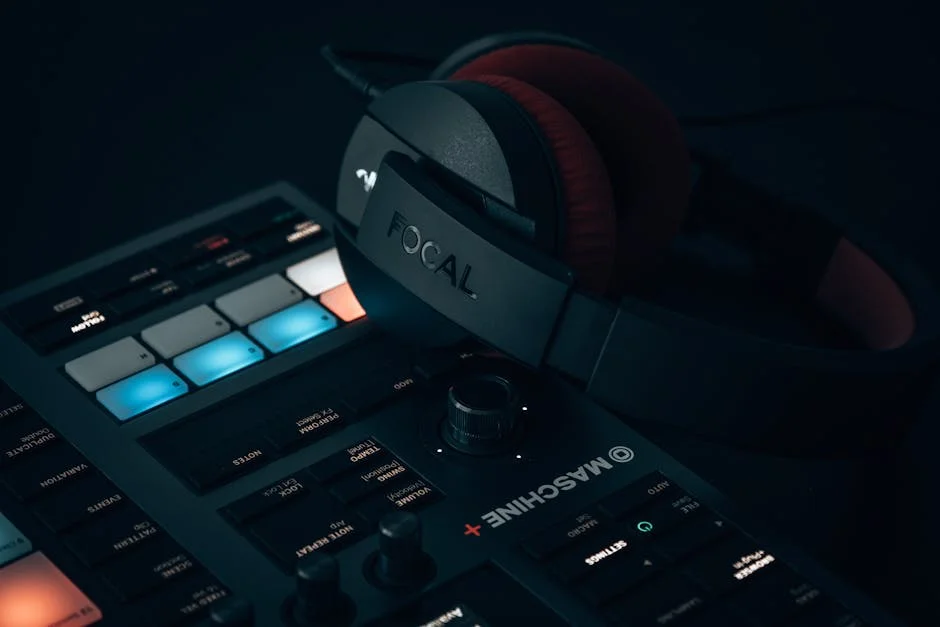
What Is a NOS DAC, and Why Does It Matter?
A standard modern DAC chip, like the ESS Sabre or AKM series found in most mid-tier and premium desktop units, uses a process called oversampling. The digital signal comes in, the chip multiplies the sample rate significantly (often 8x, 64x or higher), applies a digital filter to reconstruct the original analog waveform, then converts to analog. The digital filter’s job is to remove high-frequency artifacts called “images” that appear when you upsample, and to handle the “brick wall” filter at the Nyquist frequency. This is the standard pipeline for delta-sigma conversion, and it measures extremely well on instruments.
A NOS DAC skips the oversampling step entirely. The digital samples are fed directly to the converter without upsampling or digital filtering. There’s no reconstruction filter doing the heavy lifting, and the conversion happens at the native sample rate of the recording, whether that’s 44.1 kHz for CD-quality audio or higher for hi-res files. The trade-off is that ultrasonic images are not filtered out, so NOS DACs typically measure worse than their oversampling counterparts on standard benchmarks. The argument from proponents is that this creates a more natural, less processed sound with better time-domain behavior.
The Measurements Debate
This is where opinion splits. On one side, measurement-focused listeners point out that oversampling delta-sigma DACs measure at vanishingly low distortion and noise levels, well below the threshold of audibility, which makes the theoretical advantages of NOS hard to justify on engineering grounds. On the other side, some listeners, especially those using tube amplifiers or high-sensitivity speakers, describe NOS DACs as producing a warmer, more analog-like presentation.
Both positions have something to them. The measurements argument is strong: if distortion and noise are below audibility, the signal reaching your amplifier should be functionally identical. Published measurements are the right basis for judging objective performance floors, while character preferences remain a real factor for some listeners.
Schiit’s Multibit as a Related Architecture
Schiit Audio’s “True Multibit” architecture, used in DACs like the Bifrost 2, is often discussed in the same conversation as NOS, though it’s not technically the same thing. Schiit’s multibit chips use a ladder DAC design derived from Theta Digital’s work, with moderate oversampling (not NOS) but without the extreme oversampling ratios of modern delta-sigma chips. The result is a DAC that also measures less perfectly than top-tier delta-sigma units but is associated with tube amp systems for its analog character. NOS means zero oversampling; multibit means a different converter topology with its own sonic character, sometimes combined with low oversampling ratios.
Where NOS and Standard DACs Intersect in Practice
For most desktop headphone listeners running dynamic-driver headphones through solid-state amplifiers, the practical difference between a well-measured oversampling DAC and a NOS or multibit DAC is likely small. The stronger case for NOS-style converters tends to come in two scenarios: high-sensitivity speaker systems, where the character of the source chain is amplified by the rest of the signal path, and tube amplifier setups, where the overall system is already tuned toward warmth and the DAC’s character contributes to the final presentation.
A forgiving headphone like the HD600 is less likely to reveal source-chain differences, while more revealing headphones such as the HD800S make them more relevant, though that is a general expectation rather than a tested result.
Buying Guide: Choosing the Right DAC for Your Desk System

Understanding Chip Architecture Before You Buy
The DAC chip inside a unit shapes its measurement floor and, to some extent, its character. ESS Sabre chips (like the ES9068AS in the Topping E50 and the ES9038Q2M in the DX3 Pro+) are known for strong measurement performance and a neutral, detailed presentation. AKM chips (like the AK4493S in the E30 II and the AK4499EX in the E70 Velvet) are also measurement-competitive but are often described as slightly warmer in character. Schiit’s proprietary multibit chips sit outside both camps, prioritizing analog character over raw measurement scores. Knowing which direction you want before spending anything is the first decision worth making.
The full landscape of current desktop DAC options across all chip families is covered in the DAC buying guide, which is worth reading alongside this piece if you’re early in the decision process.
Separates vs. Combo Units
A separate DAC and amp stack gives more headroom and control than a combo unit, particularly for demanding headphones. If you’re running planars or anything above moderate impedance, budget for separates.
Balanced vs. Single-Ended Output
Budget-tier DACs generally offer RCA output only. Stepping into mid-tier units like the Topping E50 or Schiit Modius E unlocks balanced XLR outputs, which pair with balanced amplifiers like the Topping L50 or Schiit Magnius for a fully balanced signal chain. The audible benefit of balanced output over a short desktop signal path is debated, but the engineering advantage (common-mode noise rejection, higher output voltage headroom) is real and measurable. If your amplifier supports balanced input, matching it with a balanced DAC output is worth doing.
Input Flexibility and Source Matching
Desktop DACs in the budget and mid tiers typically offer USB, optical (Toslink) and coaxial digital inputs. USB is generally the most convenient for computer audio, and modern asynchronous USB implementations in units from Topping, Schiit and JDS Labs are clean enough that the source-quality argument for optical is minimal. Bluetooth LDAC support, found in units like the DX3 Pro+ and E70 Velvet, adds wireless source flexibility that’s useful if your setup includes mobile devices.
Matching Your DAC to Your Amplifier
A DAC doesn’t exist in isolation: it feeds an amplifier, and the pairing matters. Mid-tier balanced DACs like the E50 and Modius E pair with the L50 or Magnius for a step up in output capability. Matching output impedance and voltage levels is worth a quick check before finalizing any pairing.
Top Picks
Topping E50 HiFi Balanced DAC
The Topping E50 was a mid-tier balanced DAC built around the ESS ES9068AS chip, with balanced XLR outputs that connect to a balanced amp like the L50. Published measurements show distortion and noise figures well below audibility thresholds. The value is the chip performance and balanced output, not the MQA badge. There’s no headphone output, so a separate amp is required, which is the right architecture for a desktop separates build anyway. The original E50 has since been succeeded by the Topping E50 II.
Topping E30 II
The E30 II holds its own against DACs in higher price brackets on objective measurement grounds. Input flexibility is strong for the price: USB, coaxial and optical are all present, covering most desktop source scenarios. The trade-off is RCA-only output, so there is no balanced connection at this tier. For budget system builders pairing it with a JDS Atom Amp+ or a Schiit Magni, that limitation is manageable.
Check current price on Amazon.
TOPPING E70 Velvet
The TOPPING E70 Velvet occupies the upper end of the mid-tier range, built around the AKM AK4499EX chip, AKM’s flagship silicon. The unit also functions as a preamp, which adds flexibility for anyone running powered monitors alongside headphones. At the time of writing it is not available to buy on Amazon.
Topping DX3 Pro+
The Topping DX3 Pro+ is a combo DAC and headphone amplifier in a single box, using the ES9038Q2M chip with Bluetooth LDAC support and a 6.35mm headphone output. The headphone output has real limits with high-impedance headphones like the HD600 at 300 ohms, and the combo architecture means both the DAC and amp sections are more modest than dedicated separates at a comparable total spend. Compared with the FiiO K7 or K11, the DX3 Pro+ is competitive, with Bluetooth LDAC the differentiator depending on your source setup.
Check current price on Amazon.
Schiit Modi 3+
The Schiit Modi 3+ is Schiit’s budget desktop DAC and one of the foundational units in the classic “Modi/Magni stack”. It’s made in the USA, an unusual manufacturing story in a category dominated by Chinese production. USB, optical and coaxial inputs cover standard desktop sources, and there is no balanced output, as expected at this price point. It is sold through Schiit’s own website rather than Amazon.
Schiit Modius E
The Schiit Modius E is Schiit’s balanced desktop DAC, offering XLR outputs that match with the Magnius amplifier for a fully balanced Schiit stack. Built in the USA like the rest of Schiit’s lineup, it sits at a mid-tier price point. Preamp functionality is more limited than on Topping equivalents at similar pricing, which is relevant if you run powered monitors alongside headphones. It is sold direct from Schiit.
Schiit Bifrost 2
The Schiit Bifrost 2 is the unit in this lineup that most directly connects to the NOS DAC conversation, even though it’s technically a multibit rather than a NOS design. Schiit’s True Multibit architecture, derived from Theta Digital’s ladder DAC work, deliberately prioritizes analog character over measurement benchmarks, and its distortion figures are not competitive with top-tier delta-sigma chips. That isn’t the point of the Bifrost 2. The upgradeable card system is a long-term value consideration. It is sold direct from Schiit.
JDS Labs Atom DAC+
The JDS Labs Atom DAC+ is worth covering separately from its retail situation: it’s sold directly through JDS Labs at jdslabs.com and is not typically available on Amazon, so the buying process differs from the other units here. The absence of a display or remote control is a practical simplification rather than a meaningful limitation in a desktop DAC at this tier.
Wrapping Up
The NOS DAC conversation comes down to what you’re optimizing for. If the goal is the lowest noise and distortion floor, the current generation of oversampling delta-sigma DACs from Topping and JDS Labs are very strong performers at accessible prices. If character and analog presentation matter more than measurement scores, the Schiit Bifrost 2 and the broader multibit and NOS design families offer something different. For most desktop headphone listeners starting out or building a first proper stack, the DAC options in the budget and mid tiers will outperform any source-chain weakness you’re likely to encounter.
Frequently Asked Questions
What does NOS mean in a DAC?
NOS stands for Non-Oversampling. A NOS DAC converts the digital signal to analog at the native sample rate without applying the upsampling and digital filtering stages used in standard oversampling delta-sigma designs. The result is that ultrasonic images are not filtered out, which causes NOS DACs to measure worse on standard benchmarks. Proponents argue the absence of digital filtering produces a more natural time-domain behavior, though this benefit is debated in measurement-focused communities.
Are NOS DACs better than standard oversampling DACs?
'Better' depends entirely on your priorities. Oversampling delta-sigma DACs from brands like Topping and JDS Labs measure at distortion and noise levels well below audibility thresholds, making them technically superior on objective grounds. NOS and multibit DACs like the Schiit Bifrost 2 are preferred by some listeners, particularly tube amp users, for their analog character.
Can a budget DAC like the Topping E30 II or Schiit Modi 3+ drive the Sennheiser HD600?
Neither the E30 II nor the Modi 3+ has a headphone output, so they require a paired amplifier. As DAC sources feeding an amplifier, both are more than capable for the HD600. The amplifier choice matters more for the HD600 than the DAC choice at this tier.
Is balanced XLR output worth the step up from budget to mid-tier DACs?
In a short desktop signal path, the audible benefit of balanced output is debated. The engineering advantages, including common-mode noise rejection and higher output voltage headroom, are real and measurable. Suggest the difference is most relevant when pairing with a balanced amplifier like the Topping L50 or Schiit Magnius and running high-sensitivity or planar magnetic headphones. For a basic HD600 desktop setup, the gap between single-ended and balanced is present but modest.
Should I buy a combo DAC/amp unit or separate components?
For beginners who want one box and plan to run moderate-impedance headphones, a combo unit like the Topping DX3 Pro+ is a practical starting point. Dedicated separates outperform comparably priced combos for high-impedance or planar magnetic headphones. If planars are in your near-term plans, budgeting for separates from the start avoids an early upgrade cycle. The JDS Labs Atom DAC+ and Atom Amp+ or the Topping E50 and L50 pairing are frequently cited separates recommendations in the budget to mid tier.
Where to Buy
- Topping E30 II Hi-Res Audio DAC AK4493S DSD512 PCM768kHzSee price on Amazon
- TOPPING E70 Velvet High-Performance DAC AK4499EX Bluetooth LDAC DSD512See price on Amazon
- Topping DX3 Pro+ DAC/Headphone Amplifier ES9038Q2M LDAC BluetoothSee price on Amazon
- Topping E50 IISee price on Amazon