Sample Rate vs Bit Depth: Understanding Digital Audio Specs

Affiliate disclosure: Some links on this page are affiliate links. If you buy through them we earn a small commission at no extra cost to you. Recommendations are research-driven; we don't claim personal use of every product reviewed. Product prices and availability are accurate as of the date published and are subject to change. Always check Amazon for current pricing before purchasing. Learn more.
Quick Picks
FiiO X5 Mark III Portable High-Resolution Audio Player
Dedicated audio hardware with dual AK4490 DAC chips
FiiO M11 Plus Portable Music Player ESS Version
Android 10 supports current streaming apps , Spotify, Tidal, Qobuz
iFi Audio iFi xDSD Gryphon Portable Bluetooth DAC/Amplifier
Bluetooth aptX Adaptive delivers near-lossless wireless audio
Buy on Amazon| Product | Price Range | Top Strength | Key Weakness | Buy |
|---|---|---|---|---|
| FiiO X5 Mark III Portable High-Resolution Audio Player also consider | $$ | Dedicated audio hardware with dual AK4490 DAC chips | Android version too old for current app support | — |
| FiiO M11 Plus Portable Music Player ESS Version also consider | $$$ | Android 10 supports current streaming apps , Spotify, Tidal, Qobuz | Premium price difficult to justify vs. phone plus good portable DAC | — |
| iFi Audio iFi xDSD Gryphon Portable Bluetooth DAC/Amplifier also consider | $$$ | Bluetooth aptX Adaptive delivers near-lossless wireless audio | Premium price in a portable device that can be lost or damaged | Buy on Amazon |
| Chord Electronics Chord Mojo 2 Portable DAC/Amp also consider | $$$ | Custom FPGA implementation with Chord's proprietary WTA filter | Ball-button interface is unintuitive and confusing for new users | Buy on Amazon |
| EarFun Free Pro 3 ANC True Wireless Earbuds also consider | $ | Qualcomm aptX Adaptive at ~$79 , exceptional codec value | ANC not class-leading , Sony and Bose significantly ahead | Buy on Amazon |
| Sony WF-1000XM5 True Wireless Noise Canceling Earbuds also consider | $$$ | Best-in-class ANC among true wireless earbuds | Premium price; XM4 or XM3 available second-hand at significant discount | Buy on Amazon |
| Apple AirPods Pro 2nd Generation with MagSafe Case also consider | $$$ | Best ANC integration in the Apple ecosystem with system-level compatibility | AAC codec ceiling limits audio quality on non-Apple devices | Buy on Amazon |
| HiBy R3 Pro Saber Portable Music Player also consider | $ | 4.4mm balanced output at ~$129 , exceptional value for balanced portable audio | Screen small and touch interface less responsive than flagship DAPs | Buy on Amazon |
If you’ve spent more than ten minutes reading about digital audio, you’ve seen the specs: “24-bit/192kHz,” “16-bit/44.1kHz,” “hi-res audio.” Those numbers mean something specific, and understanding them matters whether you’re choosing a DAC, evaluating a streaming tier, or deciding whether a premium audio player is worth the investment. Sample rate and bit depth are two separate measurements, and they describe two completely different things about a digital audio file.
Three years into this hobby, I still see these terms conflated in forum threads and product marketing alike. Getting them straight is the foundation for making smarter source-chain decisions. The explainers in Audiophile Basics exist precisely for this kind of foundational question, so let’s work through it carefully.
What Is Bit Depth?
Bit depth describes the number of possible amplitude values available at each moment a digital audio system captures or plays back sound. Think of it as vertical resolution: how precisely can the system represent the loudness of a signal at any given instant?
A 16-bit system has 2^16 possible amplitude steps, which works out to 65,536 distinct levels. A 24-bit system has 2^24 steps, or roughly 16.7 million levels. Each additional bit adds approximately 6 decibels of dynamic range. The practical result is this: 16-bit audio supports roughly 96 dB of dynamic range, and 24-bit audio supports roughly 144 dB.
Why Dynamic Range Matters in Practice
Dynamic range is the gap between the quietest and loudest sounds a system can represent without distortion at the floor or clipping at the ceiling. A 96 dB dynamic range (16-bit) exceeds what most listening environments can actually use. The noise floor of a quiet bedroom is somewhere around 30-40 dB SPL. A loud orchestral passage peaks around 85-90 dB SPL at listening levels. That gap is well under 96 dB. In practice, 16-bit CD audio has more dynamic range than most humans will ever hear in real-world listening conditions.
So why does 24-bit matter at all? Two reasons. First, during recording and mixing, 24-bit gives engineers headroom to avoid clipping when gain staging across multiple tracks. That’s a production workflow benefit, not a playback benefit. Second, when a 24-bit master is dithered down to 16-bit for distribution, the process is mathematically well-understood and nearly lossless for the frequencies humans can hear. The 24-bit files you stream or download are genuine fidelity captures of the master, but the audible difference at playback versus a properly dithered 16-bit version is, frankly, a subject of legitimate scientific debate. Measurement communities like ASR have addressed this repeatedly.
What Is Sample Rate?
Sample rate describes how many times per second a digital audio system takes a snapshot of the analog audio signal. This is horizontal resolution: how finely is the signal measured across time?
The unit is Hertz (Hz) or kilohertz (kHz). CD audio runs at 44,100 samples per second (44.1 kHz). Common hi-res rates include 88.2 kHz, 96 kHz, 176.4 kHz, and 192 kHz.
The Nyquist-Shannon Theorem and the 44.1 kHz Question
The Nyquist-Shannon sampling theorem states that a digital system can accurately capture any frequency up to exactly half its sample rate. At 44.1 kHz, the maximum accurately reproducible frequency is 22,050 Hz. Human hearing tops out at approximately 20,000 Hz in young adults, and significantly lower in adults over 30. This means 44.1 kHz captures the entire audible frequency spectrum with a small margin to spare. This is not a controversial claim. It is well-established signal processing math.
The argument for higher sample rates comes from a few angles. Some engineers argue that anti-aliasing filters at 44.1 kHz introduce phase artifacts near the frequency ceiling that affect perceived sound quality, even if those frequencies are technically above human hearing. Others point to intermodulation distortion: ultrasonic content from high-rate files can interact badly with some DAC reconstruction filters, actually degrading audible performance rather than improving it. The empirical case for high sample rates improving audible quality in blind testing remains weak. Crinacle and the measurement community at ASR have both addressed this at length, and I defer to their data over my own listening impressions here.
DSD: A Different Encoding Approach
Direct Stream Digital (DSD) is an alternative to Pulse-Code Modulation (PCM, the standard format underlying all the rates discussed above). DSD uses a 1-bit sample at extremely high sample rates: DSD64 runs at 2.8224 MHz, DSD128 at 5.6448 MHz. The audible argument for DSD is similar to the PCM hi-res argument, and the empirical evidence is similarly limited. Some DAPs and external DACs support DSD natively; others convert it to PCM internally anyway. Field reports from dedicated DAP owners frequently note that the sonic difference between DSD and high-resolution PCM is, at best, subtle and system-dependent.
Sample Rate vs. Bit Depth: The Key Distinction
Put it plainly: bit depth controls dynamic range (how quiet can the quiet parts get, how loud can the loud parts get, without degradation). Sample rate controls frequency response ceiling (how high a frequency can the system accurately reproduce). They are independent variables. A 16-bit/96 kHz file has excellent frequency response but the same dynamic range as 16-bit/44.1 kHz. A 24-bit/44.1 kHz file has excellent dynamic range but the same frequency ceiling as 16-bit/44.1 kHz.
The format that matters most for most listeners is 24-bit/44.1 kHz or 24-bit/48 kHz. These formats preserve the full dynamic range of modern masters, cover the entire audible frequency spectrum, and avoid the file-size bloat of 192 kHz files. Qobuz at its Studio tier streams primarily in FLAC at 24-bit up to 192 kHz, and I use it as my primary source. Whether I hear a difference between a 24/96 and a 24/192 file of the same album is something I’m genuinely uncertain about. The differences, if present, are at the edge of what I can reliably detect, and I’m skeptical of my own impressions here.
Buying Guide: Applying This to Real Hardware Decisions
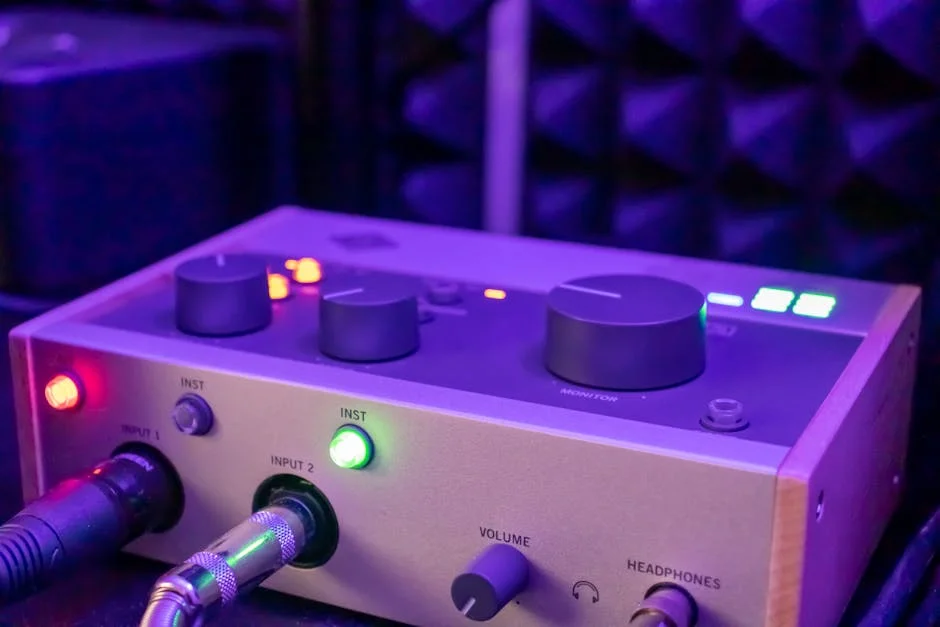
Understanding sample rate and bit depth matters most when you’re actually choosing gear. Here’s how these specs translate to purchase decisions.
Does Your DAC Need to Support High Sample Rates?
Most modern DACs, even budget-tier options, support at least 24-bit/192 kHz PCM. The spec is common enough that it should not be a primary purchase driver. What matters more is how cleanly a DAC performs within its supported range, which is where measurements from ASR are genuinely useful. A DAC with excellent SINAD at 24/96 will outperform a measuring-poorly DAC that technically supports DSD256.
The more useful question is whether your source chain can pass high-resolution files without downsampling them. MacOS, for example, historically resampled audio through its CoreAudio mixer unless you configured exclusive mode or used software that bypassed it. On my Mac mini M1 running Audirvana, I set the output to match the file’s native sample rate per track. Worth verifying in your own setup.
For a deeper look at DAC selection principles, the Audiophile Basics hub has foundational guides on building a source chain from scratch.
Portable Sources and Hi-Res File Support
Portable digital audio players (DAPs) are purpose-built for high-resolution file playback, and most mid-range and premium models support the full range of PCM and DSD formats. This is one genuine advantage of a dedicated DAP over a smartphone: you’re not at the mercy of a phone’s audio output path, software resampling, or power management decisions.
That said, the audible gains from hi-res format support on a portable device depend heavily on your headphones or IEMs and your listening environment. On a commute, 24/96 FLAC and a well-mastered 16/44.1 FLAC are unlikely to be distinguishable. Owner reviews on Head-Fi and dedicated DAP forums consistently note that source cleanliness and output impedance matter more than sample rate ceilings in real portable use.
Streaming Tier and Format Matching
If you stream rather than (or alongside) playing local files, the relevant question is what your streaming service actually delivers and whether your hardware can receive it without a lossy step in the chain. Qobuz and Tidal both offer lossless and hi-res lossless tiers. Apple Music streams Apple Lossless (ALAC) up to 24/192 but the delivery codec to wireless earbuds is constrained by Bluetooth codec support, not the file itself. An LDAC connection caps out around 990 kbps. An AAC connection caps significantly lower. The file quality on the server is irrelevant if the wireless link compresses it.
This is the core reason codec awareness matters for wireless listening. Verified buyer reports and technical teardowns consistently show that codec choice at the Bluetooth layer has more audible impact on wireless audio quality than whether the source file is 16/44 or 24/96.
Bit Depth in Practice: When 24-Bit Actually Helps
The most honest answer: 24-bit files matter primarily for volume control behavior. When you attenuate a 16-bit signal digitally, you lose bits from the bottom of the word, and at low volumes this can introduce quantization artifacts. A 24-bit source has enough headroom that modest digital attenuation still leaves you with effectively 16 bits of useful resolution. This is a real, measurable benefit, especially in DACs and software players that perform volume control in the digital domain.
For listeners who use their DAC’s hardware volume control (analog attenuation after conversion), this matters less. The community consensus across ASR and Head-Fi threads on this topic is consistent: 24-bit is genuinely useful, the practical gains from 44.1 kHz versus 192 kHz are far less clear.
Top Picks: Hardware That Handles Hi-Res Audio Well
FiiO X5 Mark III
The FiiO X5 Mark III is a mid-range digital audio player built around dual AK4490 DAC chips. Spec data shows native support for PCM up to 24-bit/384 kHz and DSD up to DSD128 via its 3.5mm and 2.5mm balanced outputs. For listeners maintaining a local hi-res library, the dedicated hardware path and balanced output are genuine draws. Owner reviews on Head-Fi and dedicated DAP communities note that the dual AK4490 implementation measures cleanly and handles high-resolution PCM files without audible artifacts.
The meaningful downside in 2024 is the Android 5.1 operating system. Verified buyers consistently report that current streaming apps (Qobuz, Tidal, Spotify) either run poorly or won’t install at all. If your source is entirely a local library, this is manageable. If you want to stream alongside local files, the Android version is a real limitation. Field reports suggest the X5 III has aged better as a dedicated file player than as a connected device.
Check current price on Amazon.
FiiO M11 Plus (ESS Version)
The FiiO M11 Plus ESS is a current-generation premium DAP built around an ESS Sabre ES9068AS chip. Spec data shows support for PCM up to 32-bit/384 kHz and DSD up to DSD256, with a 4.4mm balanced output capable of meaningful power output for demanding headphones. The ES9068AS is a well-regarded chip, and measured performance reported across DAP review communities is strong. Android 10 support means current streaming apps including Qobuz, Tidal, and Spotify run without the compatibility issues that affect older DAPs.
Owner impressions across Head-Fi and dedicated FiiO forums note the balanced output as a standout feature, particularly for low-impedance planar magnetic IEMs. The form factor is large, and verified buyers frequently flag that it is less pocketable than competing DAPs in its tier. For a desktop-adjacent portable setup or a dedicated travel source with demanding IEMs, the M11 Plus ESS is a credible choice. The premium price is a genuine barrier, and the “DAP vs. phone plus portable DAC” question is worth honestly weighing before purchasing.
Check current price on Amazon.
iFi xDSD Gryphon
The iFi xDSD Gryphon is a premium portable DAC and amplifier that adds Bluetooth aptX Adaptive to the standard wired DAC use case. AptX Adaptive supports up to 24-bit/96 kHz over Bluetooth at its higher bitrate modes, which is meaningful: for Bluetooth listening, the codec ceiling matters more than the source file format. Field reports from portable audio communities confirm that the Gryphon’s Bluetooth implementation performs better than standard aptX or AAC connections, with reduced audible compression artifacts in controlled comparisons.
The physical volume dial is consistently praised in owner reviews, particularly by IEM users who find app-based volume control imprecise for sensitive earphones. iFi’s XBass and XSpace filters add analog tuning options, though verified buyers note these add a specific sound character that some prefer to leave off entirely. The premium price for a portable device is a real consideration. Buyers who have lost or damaged portable gear previously will want to factor that risk honestly.
Check current price on Amazon.
Chord Mojo 2
The Chord Mojo 2 is technically distinct from every other DAC in this list: it uses a custom FPGA implementation with Chord’s proprietary WTA (Watts Transient Aligned) filter rather than an off-the-shelf DAC chip. Spec data shows support for PCM up to 32-bit/768 kHz and DSD up to DSD256. Chord’s technical rationale for the FPGA approach centers on their filter design philosophy, specifically the tap length and reconstruction filter behavior. Measured performance reported at ASR and by independent reviewers is strong, even if the implementation is unconventional.
Owner reviews are generally positive on sound quality, but the ball-button interface is almost universally cited as unintuitive. New buyers frequently report needing external documentation just to adjust basic settings. The premium price is real, and verified buyers on Head-Fi frequently note that the original Mojo available secondhand represents better value for buyers not specifically interested in the Mojo 2’s additional features. The optional Poly streaming module adds wireless capability but pushes the combined cost substantially higher.
Check current price on Amazon.
EarFun Free Pro 3
The EarFun Free Pro 3 is a budget true wireless earbud that punches above its price tier on codec support. Spec data confirms Qualcomm aptX Adaptive, which means a compatible source can deliver up to 24-bit/48 kHz over Bluetooth at the codec’s higher bandwidth modes. For a budget TWS product, this is genuinely unusual. ASR and dedicated audio review sites have measured the Free Pro 3 favorably for its price band, noting accurate tuning and reasonable frequency response.
Active noise cancellation is functional but not class-leading. Verified buyer reports and community comparisons consistently place the ANC below Sony and Bose flagship offerings. For buyers prioritizing audio quality over noise cancellation depth, this is a reasonable tradeoff at the budget price point. The aptX Adaptive support is the headline specification here, and it means the Free Pro 3 can actually take advantage of hi-res Bluetooth sources in a way that lower-codec TWS earbuds cannot.
Check current price on Amazon.
Sony WF-1000XM5
The Sony WF-1000XM5 is Sony’s flagship true wireless earbud and the reference product for understanding LDAC in a portable context. LDAC at its 990 kbps mode transmits up to 24-bit/96 kHz over Bluetooth, which is the current high-water mark for practical wireless audio resolution. Whether LDAC’s ceiling is audibly distinguishable from standard SBC or AAC in real listening conditions is genuinely debated, but the measured codec performance is substantially better, and owner reports across audiophile communities consistently favor LDAC for critical listening.
The ANC is class-leading among true wireless earbuds in verified comparisons. The Sony Headphones Connect app provides detailed EQ options and DSEE Extreme upscaling, which is a DSP feature that audiophiles can choose to enable or disable based on preference. I own the over-ear WH-1000XM5 and have used LDAC extensively on my own setup, so the platform is familiar to me, though the in-ear model here is a separate product. Buyers between this and the previous-generation XM4 should look at secondhand pricing, which community consensus consistently identifies as offering strong value.
Check current price on Amazon.
Apple AirPods Pro 2nd Generation
The Apple AirPods Pro 2nd Generation occupy a specific and important niche: for Apple ecosystem users, they offer system-level integration that no third-party product can match. Adaptive Transparency mode, Personalized Spatial Audio calibrated to ear shape, and deep iOS/macOS integration are genuine differentiators. Owner reviews consistently rate the ANC among the best available in true wireless form, and Apple’s spatial audio implementation is frequently cited as the best consumer spatial audio experience currently available.
The relevant technical ceiling for audiophile purposes is the AAC codec. AirPods Pro 2 do not support aptX or LDAC. AAC at its best is approximately 256 kbps, which is meaningfully below LDAC’s 990 kbps ceiling. On Apple devices, AAC performance is typically better than on Android due to Apple’s encoder optimization, but the codec ceiling remains a real limitation for buyers specifically prioritizing audio fidelity. On non-Apple devices, performance drops further. For Android users or those who listen critically, this codec gap is worth considering honestly before purchase.
Check current price on Amazon.
HiBy R3 Pro Saber
The HiBy R3 Pro Saber makes a specific argument: dedicated DAP features, including a 4.4mm balanced output and an ESS ES9219C chip, at a budget price point. Spec data shows support for PCM up to 32-bit/384 kHz and DSD up to DSD256. Field reports from compact DAP communities confirm that the balanced output on the R3 Pro Saber can drive sensitive IEMs with low noise floor and adequate headroom, and the ES9219C measures well for the price tier.
The tradeoffs are visible and documented. Owner reviews note that the touchscreen is small and less responsive than premium DAPs, and the Android version limits which streaming apps run reliably. For buyers who primarily play local hi-res files and want a pocketable device with genuine balanced output, the R3 Pro Saber is the most accessible entry point in that feature set. Verified buyers on Head-Fi frequently describe it as an excellent IEM companion for listeners transitioning away from a phone source without committing to a premium DAP investment.
Check current price on Amazon.
Putting It Together
Sample rate and bit depth are distinct specifications that describe different aspects of digital audio. Bit depth determines dynamic range. Sample rate determines frequency ceiling. Both have practical thresholds above which audible returns diminish sharply: 16-bit exceeds the dynamic range needs of most listening environments, and 44.1 kHz captures the full audible frequency spectrum. The genuine benefits of 24-bit are clearest in volume control behavior and recording headroom. The genuine benefits of sample rates above 44.1 kHz are the most contested question in the measurement community.
For hardware decisions, what this means is: prioritize DAC and amplifier measured performance over format support specs. A cleanly-measuring device at 24/96 will outperform a poorly-measuring device at 24/192. The devices covered above span budget portable sources to premium FPGA implementations, and all support format resolutions that exceed what most listeners will practically use. If you’re still building your foundational understanding of source chains, the guides at Audiophile Basics cover DAC selection, output impedance, and portable audio pairing in more depth.
Frequently Asked Questions
Is 24-bit audio actually better than 16-bit for listening?
In most real-world playback scenarios, the audible difference between 24-bit and 16-bit is minimal if the 16-bit file is properly dithered from the same master. The practical benefit of 24-bit at playback is in digital volume control: 24-bit sources tolerate more attenuation before quantization artifacts become an issue. For recording and production, 24-bit provides important headroom. For casual playback at normal listening volumes, 16-bit CD-quality audio is technically sufficient for the full human hearing range.
Does a higher sample rate mean better sound quality?
Not necessarily. The Nyquist theorem establishes that 44.1 kHz captures all frequencies up to 22,050 Hz, which covers the entire human hearing range. Higher sample rates like 96 kHz or 192 kHz extend the frequency ceiling well beyond what humans can hear. Some engineers argue for subtle reconstruction filter benefits at higher rates, but blind test evidence supporting audible improvements is limited.
What sample rate and bit depth should I use for streaming?
For streaming, the relevant question is what your service delivers and whether your hardware chain can pass it without lossy conversion. Qobuz Studio and Tidal HiFi both stream lossless and hi-res lossless tiers in FLAC up to 24/192. Apple Music delivers up to 24/192 ALAC but delivery to wireless devices is constrained by Bluetooth codec support, not file quality. Matching your DAC’s output rate to the source file’s native rate avoids unnecessary resampling and is generally recommended.
Does the Bluetooth codec affect hi-res audio quality more than the file format?
Yes, for wireless listening. The Bluetooth codec is the bottleneck in the chain between a hi-res source file and your ears. LDAC at 990 kbps can carry up to 24-bit/96 kHz. aptX Adaptive at higher bandwidth modes supports up to 24-bit/96 kHz as well. Standard AAC and SBC have lower ceilings and introduce more compression.
Do I need a dedicated DAP to play hi-res files properly?
A dedicated DAP is not required to play hi-res files. Modern smartphones with a capable external DAC dongle or portable DAC/amp can handle 24-bit/192 kHz PCM and often DSD natively. The argument for a dedicated DAP is a consistent audio-optimized output path, physical controls, and battery life separated from your phone. Budget DAPs like the HiBy R3 Pro Saber demonstrate that balanced outputs and dedicated audio chips are accessible without flagship pricing. Whether the DAP advantage is audible over a good phone plus portable DAC depends heavily on the specific devices being compared.
<script type="application/ld+json">
{
"@context": "https://schema.org",
"@type": "FAQPage",
"mainEntity": [
{
"@type": "Question",
"name": "Is 24-bit audio actually better than 16-bit for listening?",
"acceptedAnswer": {
"@type": "Answer",
"text": "In most real-world playback scenarios, the audible difference between 24-bit and 16-bit is minimal if the 16-bit file is properly dithered from the same master. The practical benefit of 24-bit at playback is in digital volume control: 24-bit sources tolerate more attenuation before quantization artifacts become an issue. For recording and production, 24-bit provides important headroom. For casual playback at normal listening volumes, 16-bit CD-quality audio is technically sufficient for the full human hearing range."
}
},
{
"@type": "Question",
"name": "Does a higher sample rate mean better sound quality?",
"acceptedAnswer": {
"@type": "Answer",
"text": "Not necessarily. The Nyquist theorem establishes that 44.1 kHz captures all frequencies up to 22,050 Hz, which covers the entire human hearing range. Higher sample rates like 96 kHz or 192 kHz extend the frequency ceiling well beyond what humans can hear. Some engineers argue for subtle reconstruction filter benefits at higher rates, but blind test evidence supporting audible improvements is limited. The stronger argument for high-sample-rate files is provenance: they are often closer to the original studio master."
}
},
{
"@type": "Question",
"name": "What sample rate and bit depth should I use for streaming?",
"acceptedAnswer": {
"@type": "Answer",
"text": "For streaming, the relevant question is what your service delivers and whether your hardware chain can pass it without lossy conversion. Qobuz Studio and Tidal HiFi both stream lossless and hi-res lossless tiers in FLAC up to 24/192. Apple Music delivers up to 24/192 ALAC but delivery to wireless devices is constrained by Bluetooth codec support, not file quality. Matching your DAC's output rate to the source file's native rate avoids unnecessary resampling and is generally recommended."
}
},
{
"@type": "Question",
"name": "Does the Bluetooth codec affect hi-res audio quality more than the file format?",
"acceptedAnswer": {
"@type": "Answer",
"text": "Yes, for wireless listening. The Bluetooth codec is the bottleneck in the chain between a hi-res source file and your ears. LDAC at 990 kbps can carry up to 24-bit/96 kHz. aptX Adaptive at higher bandwidth modes supports up to 24-bit/96 kHz as well. Standard AAC and SBC have lower ceilings and introduce more compression. A 24-bit/192 kHz file on your phone delivers no benefit over a 16-bit/44.1 kHz file if both are transmitted via standard AAC at the same bitrate."
}
},
{
"@type": "Question",
"name": "Do I need a dedicated DAP to play hi-res files properly?",
"acceptedAnswer": {
"@type": "Answer",
"text": "A dedicated DAP is not required to play hi-res files. Modern smartphones with a capable external DAC dongle or portable DAC/amp can handle 24-bit/192 kHz PCM and often DSD natively. The argument for a dedicated DAP is a consistent audio-optimized output path, physical controls, and battery life separated from your phone. Budget DAPs like the HiBy R3 Pro Saber demonstrate that balanced outputs and dedicated audio chips are accessible without flagship pricing. Whether the DAP advantage is audible over a good phone plus portable DAC depends heavily on the specific devices being compared."
}
}
]
}
</script>