SMSL D-6s Review: Compact DAC with Bluetooth and ES9039Q2M Chip

Affiliate disclosure: Some links on this page are affiliate links. If you buy through them we earn a small commission at no extra cost to you. Recommendations are research-driven; we don't claim personal use of every product reviewed. Product prices and availability are accurate as of the date published and are subject to change. Always check Amazon for current pricing before purchasing. Learn more.
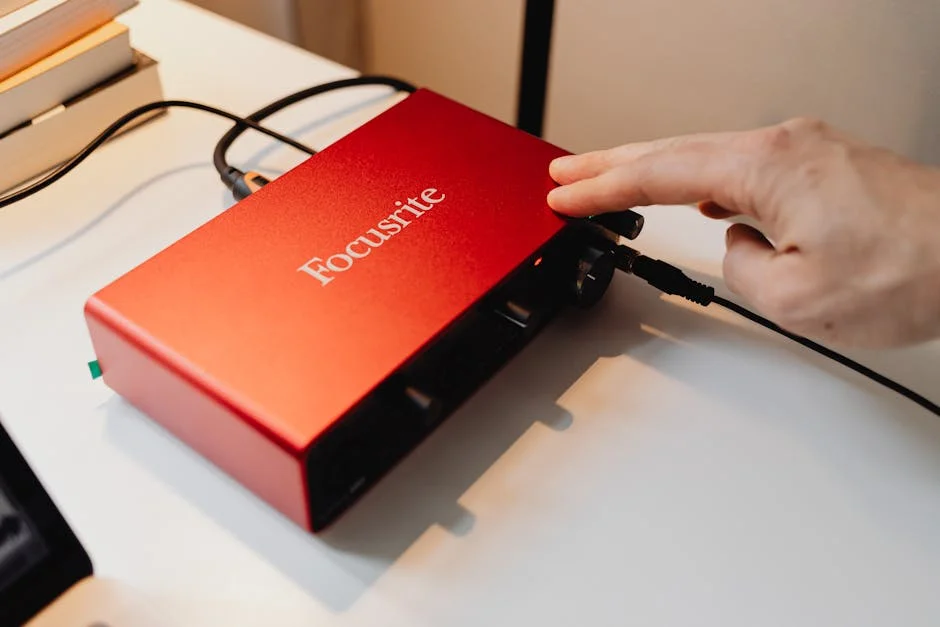
Compact desktop DAC with Bluetooth for source flexibility
See S.M.S.L D-6s MQA ES9039Q2M Bluetooth … on AmazonChoosing a compact desktop DAC that handles Bluetooth without sacrificing measured performance is a narrower brief than most buyers realize. The SMSL D-6s lands squarely in that space, budget-tier pricing, an ES9039Q2M chip, and Bluetooth input in a form factor that won’t dominate a desk. For anyone exploring the DACs landscape at this tier, it’s worth a careful look.
SMSL sits alongside Topping as one of the two main measurement-focused DAC brands at this price band.

What to Look For in a Budget Desktop DAC
Chip Architecture and Measured Performance
The chip inside a DAC matters, but not always in the way first-time buyers expect. ESS Sabre silicon, the ES9039Q2M being a current-generation example, tends to measure extremely well on THD+N and dynamic range. What that means in practice: the noise floor stays low, distortion stays out of the audible range, and the signal reaching your amplifier is clean. Published measurement databases, such as Audio Science Review’s, are the most reliable public resource for verifying these claims. A DAC at the budget tier should still measure competently, and the ES9039Q2M-equipped options in this segment generally do.
What chip choice doesn’t determine is implementation quality. The supporting circuitry, output stage design, and power supply all shape the final measurement result as much as the DAC chip itself. A well-implemented mid-tier chip will outperform a poorly implemented flagship chip. The spec sheet is a starting point, not the conclusion.
Output Topology: Single-Ended vs. Balanced
Most buyers at the budget DAC tier are running single-ended (RCA) connections to their amplifier. That’s fine, the practical noise difference on a clean desktop chain is minimal. But if your amplifier accepts balanced XLR inputs, a DAC with balanced outputs gives you headroom for a cleaner signal path as the rest of the chain improves.
The D-6s offers both RCA and XLR outputs, which is unusual at this price band. For buyers who are planning ahead, who expect to upgrade amplifiers within a year or two, having balanced outputs available now means one fewer forced upgrade later. It’s not a reason to choose a DAC on its own, but it’s a meaningful checkbox if the rest of the feature set already suits you.
Bluetooth as a Practical Input
Bluetooth input on a DAC is genuinely useful for a specific use case: a secondary source that doesn’t require recabling. Laptop audio for late-night listening, a phone source for casual playback, a tablet for streaming during work. The convenience argument is real. The quality ceiling argument is also real, Bluetooth audio is constrained by codec quality, and aptX HD or LDAC implementations vary.
For critical listening with a planarmagnetic headphone that scales with source quality, Bluetooth is not the primary path. Here: wired USB or coaxial is the reference input; Bluetooth is the convenience input. Treat it accordingly. Buyers who want Bluetooth as a primary input belong in a different product category entirely.
Remote and Display Functionality
At the budget tier, display and remote control features are often limited or omitted entirely. That tradeoff is reasonable if the DAC is functioning as a fixed-output source feeding an amplifier with its own volume control. It becomes more limiting if you’re running the DAC directly into powered monitors and expecting convenient input switching.
If your workflow requires frequent input switching across multiple sources, and you want to manage that from the listening position, this constraint matters more than the chip spec. Honest evaluation of your actual use case before purchase will save frustration.
Build Quality and Desk Footprint
Compact desktop DACs in the budget tier span a wide range of build quality. The footprint is small enough to coexist with a standalone amplifier on a modest desk.
If desk space is the constraint, the D-6s is a reasonable fit. If aesthetics matter, matched finish with a specific amplifier, for example, the brushed aluminum form factor is unremarkable but inoffensive. Exploring the full DAC options in this tier before committing to a form factor is worth the time, particularly if visual pairing is part of the decision.
Top Picks
SMSL D-6s
The SMSL D-6s earns its position in the budget-Bluetooth DAC conversation primarily through its output flexibility and chip choice. An ES9039Q2M implementation with both RCA and XLR balanced outputs at this price band is an unusual combination.
The Bluetooth implementation adds genuine convenience without being the headline feature. LDAC support means the wireless path isn’t purely perfunctory, at high bitrate LDAC the gap between wired and wireless narrows meaningfully, though wired USB remains the cleaner reference for critical listening. For a buyer whose workflow includes a mix of sources, wired desktop listening during focused sessions, wireless for casual use, the D-6s handles both without requiring separate hardware.
The main trade-off relative to Topping’s comparable DACs is brand familiarity and the amount of published documentation. For a buyer comfortable with spec research, that gap matters less.
The D-6s is the stronger choice for buyers who specifically want Bluetooth input and balanced output together in a compact form factor at the budget tier. Buyers who don’t need Bluetooth should weigh whether the convenience premium, modest as it is, is justified by their actual workflow.
Check current price on Amazon.
Buying Guide
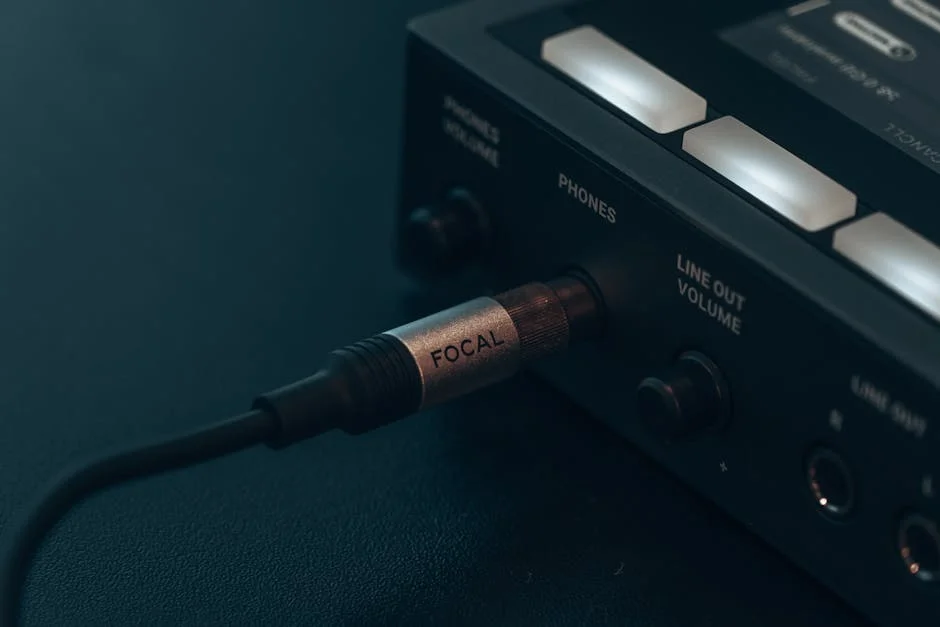
Matching a DAC to Your Amplifier’s Input
The first practical question is what your amplifier actually accepts. Most desktop headphone amplifiers at the budget and mid-range tier have RCA single-ended inputs. Some, including the Topping L50 and several JDS Labs units, also accept balanced XLR. If your current amplifier is single-ended only, the balanced outputs on the D-6s are available for a future upgrade but deliver no immediate benefit.
The inverse error is buying a balanced DAC, then running RCA cables because the amplifier doesn’t accept XLR. The signal path is correct; no damage is done. But the balanced output’s advantage disappears the moment you convert to single-ended downstream.
How Much Does a DAC Matter for Your Headphones?
This question doesn’t have a universal answer. For dynamic driver headphones like the Sennheiser HD600, the gap between a laptop output and a dedicated DAC/amp stack is real but not dramatic. Planar magnetic headphones have lower sensitivity and more demanding impedance curves, so the source and amplifier matter more for them than for the HD600.
If your primary headphone is a budget planar, a clean-measuring DAC at the budget tier is a more important purchase than it might appear. The D-6s’s measurement profile supports this use case.
Bluetooth: Convenience Feature or Compromise?
For buyers who’ve never run Bluetooth audio into a dedicated amp, the honest framing is this: it’s a convenience feature, not a reference input. LDAC at high bitrate is genuinely better than aptX, and the gap from wired narrows, but it doesn’t close. The variable that matters most is whether you’ll actually use it.
A buyer who has one desktop source (a single computer, always wired) gains nothing from Bluetooth. A buyer who switches between a desktop machine, a laptop, and a phone gains meaningful friction reduction. Identify which use case applies before Bluetooth becomes a differentiating factor. Browsing the broader range of desktop DAC options will quickly show how many units in this tier omit Bluetooth entirely, which is the right choice for single-source workflows.
Thinking About the Full Chain
A DAC doesn’t operate in isolation. Its output feeds an amplifier, which drives a headphone. Measurement quality matters at each stage, and a high-quality DAC cannot compensate for a noisy amplifier or a headphone with resonance issues. The practical ceiling at the budget tier is set by the weakest link.
The D-6s occupies the source end of that chain well. Pairing it with an amplifier that matches its output topology, ideally using the balanced XLR connection if the amplifier supports it, gets the most from the combination. Mismatched pairings (balanced DAC into a single-ended amplifier into a high-sensitivity IEM) are functional but don’t utilize the design’s strengths.
When to Step Up
The budget tier has a real ceiling, and it’s worth naming it plainly. The D-6s competes well within its tier. The reasons to step up are specific: if your amplifier has a measurably noisy input stage that requires a better output-driving DAC; if you’re running a demanding headphone that genuinely resolves source quality differences at a fine level; or if you need a more complete remote and display implementation for your workflow.
Upgrading a DAC as a first move, before addressing amplifier or headphone quality, rarely produces the return buyers expect. The source matters, but often less than marketing suggests.

SMSL S.M.S.L D-6s MQA ES9039Q2M Bluetooth Decoder XU316 DAC: Pros & Cons
- Compact desktop DAC with Bluetooth for source flexibility
- ES9039Q2M chip delivers good measurements at price
- SMSL has less published documentation than Topping in this segment
Frequently Asked Questions
How does the SMSL D-6s compare to Topping DACs?
Topping and SMSL DACs in this price band have overlapping feature sets. The D-6s combines Bluetooth input with balanced XLR output, so it is the better fit if both matter; if neither does, compare Topping and SMSL models on price, features and published measurements.
Does Bluetooth audio quality from the D-6s hold up for critical listening?
With LDAC at high bitrate, the wireless path is better than most buyers expect, codec efficiency has improved substantially in recent hardware generations. For critical listening sessions with resolving headphones, wired USB remains the cleaner input. Use it for casual sources; default to wired for focused listening.
Is the ES9039Q2M a meaningful upgrade over older ESS chips?
The ES9039Q2M is a current-generation ESS Sabre chip with strong measured performance, low THD+N and a wide dynamic range in competent implementations. Whether it represents an audible upgrade over earlier ESS silicon in the same tier depends heavily on implementation quality and amplifier pairing. Chip generation alone is rarely the limiting factor at this price band. A well-implemented older chip in a quality output stage will measure comparably to a poorly implemented newer one.
Can the D-6s drive headphones directly without an amplifier?
The D-6s is a DAC, not a DAC/amp combo, it requires a separate amplifier stage between its outputs and your headphones. Connecting headphones directly to the RCA or XLR outputs will not produce usable volume levels and may stress the output stage. Budget a separate headphone amplifier alongside it, or consider a DAC/amp combination unit if desk space or cost is the primary constraint.
Who should consider the SMSL D-6s over competing options?
The D-6s is well-suited for buyers who want Bluetooth input and balanced XLR output together at the budget tier, that specific combination is not common at this price band. Buyers without a Bluetooth use case should compare it against competing units where Bluetooth is absent and competing features may be stronger.
Where to Buy
SMSL S.M.S.L D-6s MQA ES9039Q2M Bluetooth Decoder XU316 DACSee S.M.S.L D-6s MQA ES9039Q2M Bluetooth … on Amazon