SMSL SH-9 Review: THX Amp with Balanced Inputs Tested
Affiliate disclosure: Some links on this page are affiliate links. If you buy through them we earn a small commission at no extra cost to you. Recommendations are research-driven; we don't claim personal use of every product reviewed. Product prices and availability are accurate as of the date published and are subject to change. Always check Amazon for current pricing before purchasing. Learn more.
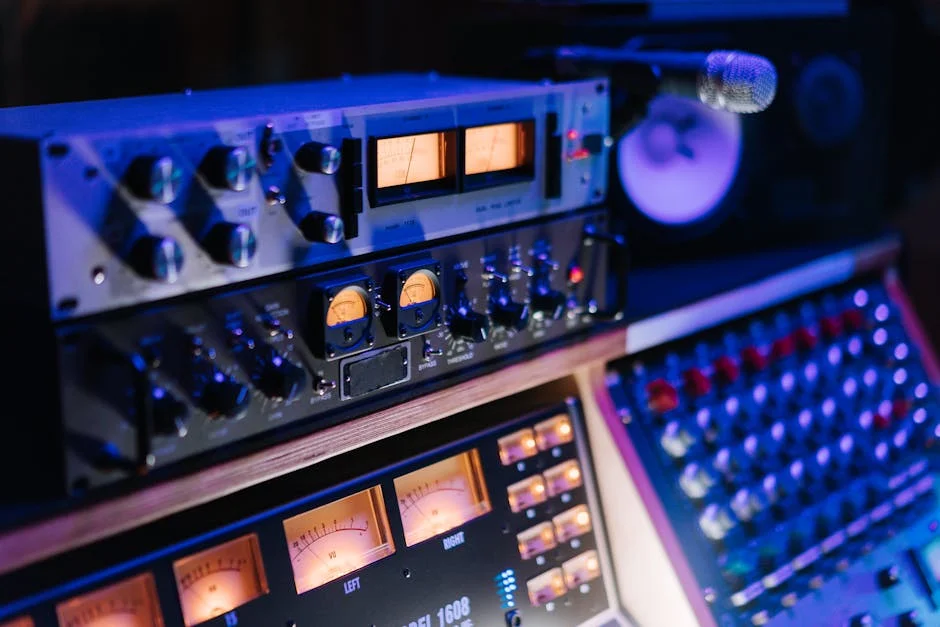
THX AAA technology with high output power
See S.M.S.L SH-9 Headphone Amplifier THX … on AmazonThe SMSL SH-9 sits at a specific point in the amplifier market that gets discussed constantly on Head-Fi and less often explained clearly: the step up from entry THX to something with balanced input capability and meaningfully higher output. If you’re researching the SH-9, you’re likely already past the question of whether a dedicated amp matters and into the harder question of which THX implementation is right for your setup. That distinction is worth unpacking carefully.
THX AAA technology has become the default recommendation for neutral-chain builders in headphone amplifiers discussions, and SMSL’s lineup sits at the center of that conversation. The SH-9 represents the brand’s more capable tier , balanced inputs, higher swing, pre-amp output , and whether that translates to a purchase-worthy upgrade depends heavily on what you’re driving and what source you’re feeding it.

What to Look For in a THX Headphone Amplifier
Output Power and Headphone Matching
Output power is the specification that actually determines whether an amplifier is appropriate for your headphones , not topology, not brand, not aesthetics. The THX AAA design is exceptionally low in distortion by measurement, but distortion performance only matters if the amp can deliver adequate voltage swing for your transducers in the first place.
Dynamic drivers like the HD600 are relatively easy to drive. Most competent amps will get them loud with power to spare. The calculation changes substantially with planar magnetics. The Sundara, for instance, benefits from having current headroom available , owner reports consistently note that planars running near an amp’s output ceiling sound different from planars running at moderate load. This isn’t audiophile mythology, it’s a real observable pattern in the community and one worth taking seriously before underbuying on output spec.
For a mixed collection , one dynamic, one or two planars , the practical guidance from the community is to spec for the hardest load and treat the easier headphones as beneficiaries rather than the target.
Balanced vs. Single-Ended Configuration
Balanced operation provides real, measurable benefits: lower noise floor, doubled voltage swing versus single-ended at the same rail voltage, and rejection of common-mode interference in the signal path. Whether those benefits are audible in a quiet home environment with well-designed gear is a genuinely contested question, and honest reviewers acknowledge both sides.
The more practical argument for balanced is flexibility. An amplifier with XLR input accepts output from balanced DACs without a converter step, which matters if your source chain has a balanced output stage. The SH-9’s XLR input is directly relevant here , it’s not balanced for the sake of marketing copy but because balanced DAC outputs are common in this price tier.
That said, if your DAC is single-ended and you have no plan to change it, balanced input capability doesn’t help you. Match the amp’s input configuration to your actual source, not to a theoretical future chain.
Signal Chain Integrity
A THX amplifier is a low-noise, low-distortion device by design. ASR’s measurements consistently show these implementations at or near the noise floor of their test equipment. The practical implication is that the amplifier is unlikely to be the limiting element in your chain , the DAC feeding it becomes proportionally more important.
This isn’t an argument to buy an expensive DAC. It’s an argument to think about the chain as a system. A well-measuring mid-range DAC paired with a THX amp is a rational combination. A poorly-implemented source feeding an excellent amp doesn’t produce an excellent result. The amp’s transparency means it will pass through whatever the source gives it with minimal alteration.
For anyone building or upgrading a desktop stack, the full range of considerations in headphone amplifiers , topology, gain structure, input matching, output impedance , is worth reviewing before making an isolated purchase decision.
Pre-Amp Functionality
Several mid-range headphone amplifiers include pre-amp outputs, and the SH-9 is among them. This matters if your desktop includes powered monitors alongside headphones. A pre-amp output with volume control lets a single unit manage both outputs, which reduces equipment count and simplifies the listening workflow.
The limitation is that pre-amp functionality in headphone amplifiers is typically secondary design consideration rather than primary. Verify output impedance and whether the pre-amp output is relay-switched or always-live before assuming it will serve your speaker setup cleanly.
Top Picks
SMSL SH-9
The S.M.S.L SH-9 Headphone Amplifier is the version of the SMSL THX story for buyers who need balanced input, higher output headroom, or pre-amp integration , and are willing to pay the step-up premium to get it.
THX AAA-888 implementation here measures at the level the specification suggests: vanishingly low THD, excellent channel separation, noise floor that doesn’t factor into the listening equation. ASR’s published measurements confirm what buyers report consistently , the SH-9 is not a colorful amplifier. It does not add warmth, does not soften treble energy, does not impose any character that would mask problems upstream or downstream. For neutral-chain builders, that’s precisely the point.
Balanced XLR input is the feature that most clearly differentiates the SH-9 from the SP200 in practical terms. If your DAC , a Topping E50, a SMSL SU-9, or any other unit with balanced output , has XLR outputs, the SH-9 accepts them directly. The noise floor benefit of running balanced end-to-end is measurable and in quiet recordings it’s audible as a blacker background, though reasonable people disagree about how much that matters in practice.
Owner reports on the SH-9 driving planars are broadly positive, particularly for the Sundara and similar mid-impedance planars that respond well to current headroom. Verified buyers note that the amp doesn’t run out of authority at moderate listening levels, which matters for planars more than it does for efficient dynamics. The HD600 is effortlessly driven , as it would be by most competent amps , and the SH-9 doesn’t change what the HD600 does. The clinical character of THX topology means what goes in is what comes out, which is a feature, not a limitation, if your source chain is already where you want it.
The comparison to the SP200 is worth addressing directly. Both implement THX AAA. The SP200 is single-ended in and out; the SH-9 adds balanced XLR input, higher output power spec, and pre-amp functionality. If you have a balanced DAC and planars, or want to integrate powered monitors, the SH-9 earns its premium. If you have a single-ended source and primarily dynamic headphones, the SP200 may serve you equally well at lower cost. Owner consensus suggests the SH-9’s step-up is justified by features rather than by sonic transformation , the amplification quality is similar, the capabilities are not.
Check current price on Amazon.
Buying Guide

Matching the Amplifier to Your Headphone Load
The first decision in amplifier selection is whether your headphones require anything beyond standard output. Dynamic drivers , HD600, HD650, DT 990, similar , are easy loads that most mid-range amps handle without strain. The SH-9’s output spec is overkill for these headphones in the technical sense, which is fine. Overkill means the amp operates well within its comfortable range at your listening levels.
Planar magnetics change the calculation. Sustained low-impedance loads benefit from amplifiers with genuine headroom, and the SH-9’s balanced output spec provides that. If planars are current or planned in your collection, the extra headroom is the practical argument for this tier.
Balanced Input: When It Actually Matters
A balanced XLR input is useful if and only if your source has balanced XLR output. The SH-9 has it; the SP200 does not. If your DAC is single-ended , RCA outputs only , the balanced input does nothing for your current setup.
The relevant question is whether you plan to upgrade your DAC within a reasonable time horizon. Buying into balanced input now as part of a deliberate stack build is logical. Buying it for a single-ended source you have no plan to replace is paying for a feature that stays dormant.
For buyers actively considering headphone amplifiers in this tier, the balanced input question usually resolves by looking at what DAC is on the desk or in the budget.
Pre-Amp Output and Speaker Integration
The SH-9 includes pre-amp output with volume control passthrough. For a desktop that mixes headphone listening with powered monitors, this is a meaningful quality-of-life feature , one volume knob manages both outputs rather than requiring separate control hardware.
The implementation is functional rather than audiophile-grade in the dedicated pre-amp sense. For near-field monitors in a typical desktop environment, it performs the job cleanly. Buyers with high-resolution speaker setups and strong preferences about pre-amp transparency may want to investigate output specs and whether the relay switching behavior matches their use case.
Gain Structure and Quiet Recordings
THX amplifiers are quiet by design, but gain settings still matter. The SH-9 offers gain switching , high and low , which is relevant for sensitive IEMs and efficient headphones where a high-gain amp introduces audible hiss at the volume floor.
Verified buyers report the low gain setting is clean with sensitive IEMs, which isn’t universal among high-powered amps. If your collection spans both IEMs and planars, the gain flexibility is useful. If you’re running only efficient dynamics, low gain is set-and-forget.
The SP200 Comparison as a Buying Decision
The SP200 and SH-9 implement the same THX AAA topology and measure at similar levels. The delta between them is feature-set, not amplifier quality in a strict sense. Owner consensus across Head-Fi and ASR threads is consistent: the SH-9 is the right buy if you need balanced input, more output power, or pre-amp functionality. It is not the right buy if you are expecting an audible sonic improvement over the SP200 for the same headphone and source.
This is an important frame. The premium between these two units is a features premium, not a performance premium in the way an audiophile might expect the word “performance” to work. Being clear-eyed about that distinction leads to better purchasing decisions at this tier.

Frequently Asked Questions
Is the SMSL SH-9 noticeably better sounding than the SP200?
Based on measurements and owner consensus, the two amplifiers perform at a comparable level in pure amplification quality , both implement THX AAA topology and both measure at low THD and noise figures. The SH-9’s advantages are features: balanced XLR input, higher output headroom, and pre-amp output. Buyers expecting a clearly audible sonic upgrade over the SP200 for the same source and headphones generally report that expectation isn’t met , the case for the SH-9 is capability, not coloration.
Does the SH-9 drive planar magnetic headphones like the HiFiMan Sundara well?
Owner reports are consistently positive for mid-impedance planars like the Sundara. The SH-9’s output spec provides headroom that planars benefit from, and verified buyers note the amp doesn’t strain at moderate-to-high listening levels with these headphones. The broader pattern holds here too: planars are more source-dependent than dynamic drivers, so the full chain matters , pairing the SH-9 with a well-measuring DAC is the relevant consideration.
Do I need a balanced DAC to use the SH-9?
No , the SH-9 accepts both RCA single-ended and XLR balanced inputs and includes a 6.35mm single-ended headphone output alongside the balanced 4.4mm. You can run a single-ended source chain through it without any penalty beyond not using the balanced input stage. The balanced XLR input becomes relevant when your source has XLR outputs, and the S.M.S.L SH-9 is designed to work cleanly in either configuration.
What is the pre-amp output on the SH-9 useful for?
The pre-amp output passes the SH-9’s volume-controlled signal to powered monitors or an external amplifier, which lets a single unit manage both headphone and speaker output from the same volume knob. For a desktop setup with near-field monitors, this reduces hardware complexity meaningfully. It is functional rather than a dedicated high-performance pre-amp stage, so buyers with critical speaker systems should verify the output specifications match their requirements.
How does the SH-9 handle sensitive IEMs and efficient headphones?
The SH-9 includes switchable gain , low and high , and owner reports suggest the low gain setting is clean with sensitive IEMs without audible hiss at the volume floor. This is not a given for high-powered amplifiers, and it’s a useful feature if your collection spans both IEMs and planars. The volume tracking at low settings is also reported as satisfactory, with no channel imbalance complaints at the low end of the range.

SMSL S.M.S.L SH-9 Headphone Amplifier THX AAA Technology RCA/XLR Balanced: Pros & Cons
- THX AAA technology with high output power
- Balanced XLR and RCA inputs for source flexibility
- Premium over SP200 with limited additional benefit
Where to Buy
SMSL S.M.S.L SH-9 Headphone Amplifier THX AAA Technology RCA/XLR BalancedSee S.M.S.L SH-9 Headphone Amplifier THX … on Amazon