THD vs SNR in Audio: What These Specs Actually Mean

Affiliate disclosure: Some links on this page are affiliate links. If you buy through them we earn a small commission at no extra cost to you. Recommendations are research-driven; we don't claim personal use of every product reviewed. Product prices and availability are accurate as of the date published and are subject to change. Always check Amazon for current pricing before purchasing. Learn more.
| Product | Price Range | Top Strength | Key Weakness | Buy |
|---|---|---|---|---|
| iFi Audio iFi xDSD Gryphon Portable Bluetooth DAC/Amplifier also consider | $$$ | Bluetooth aptX Adaptive delivers near-lossless wireless audio | Premium price in a portable device that can be lost or damaged | Buy on Amazon |
| Chord Electronics Chord Mojo 2 Portable DAC/Amp also consider | $$$ | Custom FPGA implementation with Chord's proprietary WTA filter | Ball-button interface is unintuitive and confusing for new users | Buy on Amazon |
| Sony WF-1000XM5 True Wireless Noise Canceling Earbuds also consider | $$$ | Best-in-class ANC among true wireless earbuds | Premium price; XM4 or XM3 available second-hand at significant discount | Buy on Amazon |
| Apple AirPods Pro 2nd Generation with MagSafe Case also consider | $$$ | Best ANC integration in the Apple ecosystem with system-level compatibility | AAC codec ceiling limits audio quality on non-Apple devices | Buy on Amazon |
| HiBy R3 Pro Saber Portable Music Player also consider | $ | 4.4mm balanced output at ~$129, exceptional value for balanced portable audio | Screen small and touch interface less responsive than flagship DAPs | Buy on Amazon |
If you’ve ever looked at a DAC/amp spec sheet and wondered what THD and SNR actually mean in practical terms, you’re not alone. These two specs show up everywhere in audio gear marketing, often presented as proof of superiority without any explanation of what they’re actually measuring.
This article breaks down THD vs SNR from first principles, explains why both specs matter for source chain decisions, and connects those numbers to real gear choices across budget, mid, and premium tiers. For broader context on how specs fit into building your first listening rig, the Audiophile Basics hub is a solid starting point before or after reading this.

What Is THD and Why Does It Matter
THD stands for Total Harmonic Distortion. When an audio device processes a signal, it ideally passes that signal through unchanged. In practice, every amplifier and DAC introduces some small amount of distortion, adding harmonic frequencies that were not present in the original recording. THD is the measurement of how much of that unwanted harmonic content appears in the output, expressed as a percentage of the original signal level.
A pure 1kHz sine wave fed into a DAC should produce only 1kHz at the output. Distortion generates additional tones at 2kHz, 3kHz, 4kHz, and so on. These are the harmonics. THD sums all of those harmonic artifacts together and expresses the total as a ratio. So a THD of 0.001% means the harmonic content is one one-thousandth of one percent of the total output signal.
THD+N: The More Complete Picture
You will often see specs listed as THD+N rather than THD alone. The “N” stands for noise. THD+N combines harmonic distortion with the residual broadband noise floor into a single figure, giving you a more realistic picture of how clean the output actually is under real operating conditions.
Most serious measurement sites, including ASR (Audio Science Review), report THD+N as the primary distortion metric because it captures more of what actually affects perceived audio quality. When Amir at ASR measures a DAC, the THD+N figure at a given output level and frequency tells you more than THD alone.
The practical threshold for audibility is a subject of genuine debate. A widely held rule of thumb is that THD+N figures below roughly 0.01% are unlikely to be audible to most listeners under normal conditions. That doesn’t mean all distortion profiles are equivalent at levels above that threshold. Even-order harmonics (second, fourth) tend to be described by listeners as “warm” or “euphonic” when audible, while odd-order harmonics (third, fifth) tend to register as harsh or grating. The measurement tells you the total amount; the harmonic structure tells you more about the character.
What Is SNR and Why Does It Matter
SNR stands for Signal-to-Noise Ratio. Where THD measures distortion added to the signal, SNR measures how loud the signal is relative to the background noise floor of the device. It is expressed in decibels (dB), and higher numbers are better.
An SNR of 100 dB means the audio signal is 100 dB louder than the noise floor. An SNR of 120 dB means an even quieter noise floor relative to the signal. In practical terms, a low SNR manifests as hiss, hum, or a faint broadband noise you can hear during quiet passages or between tracks, especially at higher volume settings or with sensitive IEMs.
Why SNR Matters More With Sensitive Gear
The sensitivity of your headphones or IEMs determines how audible the noise floor actually is in your listening setup. A pair of full-size dynamic headphones with moderate sensitivity, like the Sennheiser HD600, will mask a mediocre noise floor more effectively than a pair of highly sensitive IEMs that can be driven to comfortable listening levels at very low output power.
A faint hiss with a sensitive IEM like the Moondrop Aria 2 at very low volumes can be completely inaudible with a headphone like the HD600 or Sundara at any normal listening level. That difference is directly related to sensitivity and the interaction between the amp’s noise floor and the IEM’s efficiency.
Modern quality DACs routinely measure above 115 dB. An SNR of 120 dB is effectively inaudible as noise in any realistic listening scenario. At that point, other factors dominate the listening experience.
THD vs SNR: How They Interact
THD and SNR are not independent figures. They both describe the cleanliness of an audio signal from different angles, and they interact in ways that spec sheet marketing rarely makes clear.
A device can have very low distortion but a mediocre noise floor. An early tube amplifier running a single-ended triode might measure relatively low THD at its rated power while having a comparatively high noise floor (lower SNR) because of the inherent design. Conversely, a solid-state portable DAC might measure an excellent SNR but reveal elevated distortion at high output levels.
THD+N, as discussed earlier, partially collapses this distinction by combining both into a single figure. But it is still worth reading the two metrics separately because they tell you different things. THD tells you about the character and quantity of signal corruption under drive conditions. SNR tells you about the quality of silence, which matters most during dynamic passages and with sensitive transducers.
Dynamic Range and Its Relationship to SNR
Dynamic range is a related figure you will encounter frequently. In audio measurement, dynamic range describes the span between the quietest signal a device can reproduce above its noise floor and the loudest signal before clipping or significant distortion. For practical purposes, dynamic range and SNR are very closely related, and the terms are often used interchangeably in consumer gear discussion.
The key distinction: dynamic range emphasizes the useful signal range of the device across all levels, while SNR is typically measured at a specific output level against a defined noise floor. Both figures matter more for recording and production contexts than for pure playback, but understanding them helps explain why a DAC with 120 dB SNR and 110 dB dynamic range is not a contradiction, just two measurements taken under slightly different conditions.
Reading Measurements in Practice
Useful measurement sources include ASR for DAC and amp bench measurements, Crinacle for IEM frequency response and distortion comparisons, and Resolve Reviews for contextual listening perspective alongside the data. ASR’s figures are a common reference because its test procedures are documented.
A DAC that combines low THD+N and high SNR measures well, even though the numbers can’t say whether you’d prefer it over a Chord Mojo 2 in a purely subjective sense. The numbers define a floor of performance. Above that floor, other factors, including output impedance, frequency response deviations, and filter implementation, become more relevant to sound character.
A practical rule for any source chain: if a device measures cleanly (THD+N below 0.01%, SNR above 100 dB at headphone sensitivity levels), then subjective differences become the relevant discussion. If it doesn’t clear those thresholds, the numbers matter first.
Buying Guide: Applying THD and SNR to Real Gear Choices
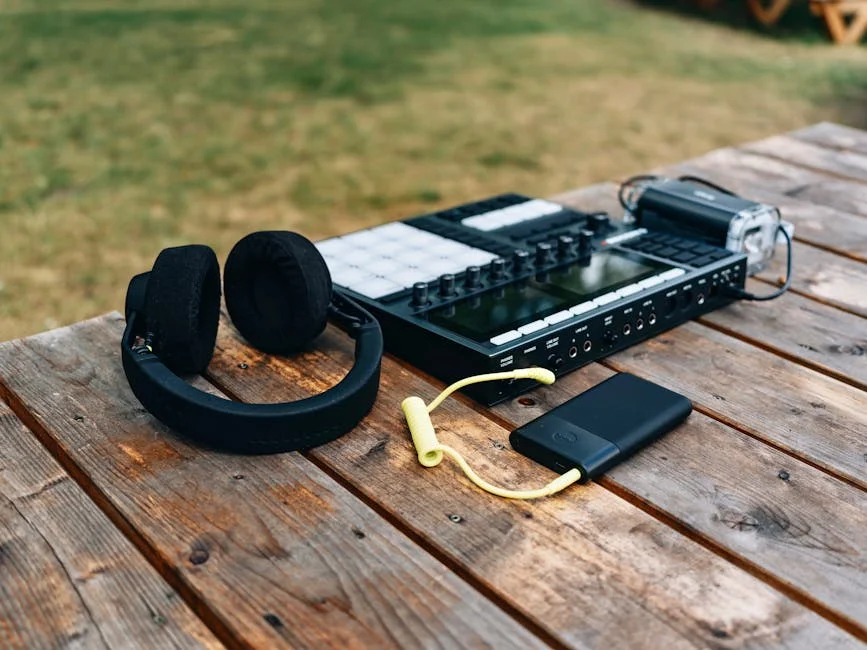
Understanding THD vs SNR abstractly is one thing. Applying those metrics to actual purchase decisions is where the rubber meets the road. Whether you’re considering a portable DAC/amp, a standalone digital audio player, or true wireless earbuds, these specs appear (or conspicuously don’t appear) across the full range of the market. More foundations for building a source chain are covered throughout the Audiophile Basics resource hub.
What the Specs Mean for Portable DAC/Amps
Portable DAC/amps live in a unique space where measured performance, physical convenience, and power efficiency all compete. A device that measures brilliantly on a bench at 1W into 32 ohms may perform differently when battery voltage sags or the chip throttles to preserve heat. When evaluating portable DAC/amp specs, look for THD+N figures measured at realistic output levels, not just peak or best-case numbers.
SNR figures above 115 dB in portable form factors used to be unusual and are increasingly common in premium-tier designs. That matters practically because sensitive IEMs amplify noise floor issues more than full-size headphones do, and portables are almost exclusively paired with IEMs and sensitive earbuds.
What the Specs Mean for Digital Audio Players
DAPs (digital audio players) are source-optimized devices, and their marketing almost always leads with audio specs. THD and SNR figures appear prominently in DAP spec sheets, sometimes alongside SINAD (Signal-to-Noise and Distortion), which is essentially the inverse of THD+N expressed in dB. Higher SINAD and SNR, lower THD, better measured performance.
In practice, flagship DAP chip implementations, particularly ESS Sabre variants, generally measure very well. Budget-tier DAPs can measure adequately without matching flagship performance. At the budget end of the market, the more common limitation is output impedance (which affects IEM frequency response at the ear) rather than THD or SNR.
What the Specs Mean for True Wireless Earbuds
TWS earbuds add a layer of complexity because the Bluetooth codec introduces its own artifacts before the onboard DAC ever processes the signal. THD and SNR specs for TWS devices describe the onboard hardware, but codec-induced compression artifacts may dominate the audible difference between a premium and budget pair.
SBC and AAC, has a more audible impact than small differences in the onboard DAC’s THD figures for most listeners. At budget-to-mid price points, a device with a strong codec implementation and adequate (not exceptional) THD+N may sound better in practice than a device with exceptional measured hardware specs but a weak codec.
Power and the Relationship to Distortion at Volume
One underappreciated interaction between THD and SNR is that both figures change with output level. THD typically rises as output power increases, especially approaching clipping. SNR typically improves at higher output levels because the signal rises above the fixed noise floor. This is why reading specs at a single output level can be misleading.
For headphone amplifiers specifically, the practical implication is that an amp running near its power limits with a demanding headphone will show elevated THD even if its rated distortion figure is excellent. Matching amp output to headphone sensitivity and impedance correctly keeps the amp operating in its clean range, which is where the low-THD and high-SNR specs actually apply.
Top Picks: Gear Worth Knowing in This Context
FiiO X5 Mark III
The FiiO X5 Mark III is a mid-tier DAP built around dual AK4490 DAC chips. Spec data for the AK4490 implementation shows competitive THD and SNR figures for its era, and the dual-chip design (separate chips for left and right channels) is intended to improve channel separation and reduce crosstalk. The 2.5mm balanced output option reduces common-mode noise by rejecting ground-referenced interference, which has a direct relationship to SNR in balanced configurations.
The significant caveat for current buyers is that the underlying Android 5.1 operating system is no longer supported by most current streaming applications. For buyers who understand that limitation and want a dedicated audio hardware investment at mid pricing, the DAC chip performance specs hold up. For buyers expecting full streaming app compatibility, the platform age is a hard constraint that no amount of good THD figures overcomes.
FiiO M11 Plus (ESS Version)
The FiiO M11 Plus Portable Music Player ESS Version uses an ESS Sabre ES9068AS chip, which has been measured as one of the better-performing DAC implementations available. The ESS9068AS’s rated THD+N and dynamic range figures place it in the upper tier of portable DAC performance by current benchmarks. Android 10 support means current streaming applications including Qobuz and Tidal run as intended, which is a meaningful functional improvement over older DAP platforms.
The 4.4mm balanced output delivers meaningfully more output power than the single-ended output, which matters for headphones that benefit from additional drive. The M11 Plus ESS pairs well with demanding IEMs where noise floor performance matters.
iFi xDSD Gryphon
The iFi xDSD Gryphon is a premium portable DAC/amp with aptX Adaptive Bluetooth capability and a physical analog volume dial. Buyers who prefer uncolored output can leave those filters off. For THD and SNR discussions, this is relevant because DSP filters of that type can affect the distortion profile at the output stage.
The aptX Adaptive implementation is relevant to the SNR discussion in a specific way: reducing Bluetooth transmission artifacts means the onboard DAC’s clean measured performance is more likely to reach the listener intact. A physical volume dial is also useful for fine adjustments with sensitive IEMs, where small volume steps have an outsized impact on listening level precision.
Check current price on Amazon.
Chord Mojo 2
The Chord Mojo 2 takes a technically distinct approach to DAC implementation. Rather than using an off-the-shelf DAC chip, Chord’s engineering team implemented the conversion in a custom FPGA (Field-Programmable Gate Array) running Chord’s proprietary WTA (Watts Transient Aligned) digital filter. From a THD and SNR standpoint, published measurements of the Mojo 2 show strong performance that competes with chip-based designs.
The FPGA implementation means Chord’s filter design has more computational depth (more taps) than most chip-based implementations allow. Whether that translates to an audible difference is a genuine debate among audiophiles. What the measurements confirm is that the unconventional design path doesn’t compromise basic cleanliness metrics. The ball-button control interface is unconventional, which has nothing to do with THD or SNR but can surprise first-time users.
Check current price on Amazon.
EarFun Free Pro 3
The EarFun Free Pro 3 ANC True Wireless Earbuds are a budget-tier TWS IEM with Qualcomm aptX Adaptive codec support. It is generally described as having reasonable tuning for the price tier. For a THD and SNR educational discussion, this product is useful because it illustrates where the codec sits in the signal chain: before the onboard DAC processes the signal. At budget pricing, the presence of aptX Adaptive means the codec-level performance exceeds what the underlying hardware cost might suggest.
The ANC implementation is functional but not competitive with Sony or Bose at the top of the market. That’s a separate subsystem from the audio chain’s THD/SNR performance, but it’s part of the total product experience. For buyers whose primary interest is clean audio transmission at a manageable price, the aptX Adaptive codec implementation is the standout specification here.
Sony WF-1000XM5
The Sony WF-1000XM5 True Wireless Noise Canceling Earbuds represent Sony’s current flagship TWS position. The LDAC codec support is directly relevant to this discussion because LDAC allows Bluetooth transmission at bitrates substantially higher than SBC or AAC, reducing compression artifacts that can introduce distortion-adjacent degradation into the signal before it reaches the ear. Sony’s Headphones Connect app adds parametric EQ options, which introduces its own DSP processing into the chain.
For purely audio-quality-focused buyers, the LDAC implementation and the underlying DAC performance in the earpiece represent premium-tier TWS audio. The AAC ceiling is worth noting for Android users on devices that don’t support LDAC, where the codec-level performance steps down significantly regardless of the hardware specs inside the earpiece.
Check current price on Amazon.
Apple AirPods Pro 2nd Generation
The Apple AirPods Pro 2nd Generation with MagSafe Case occupy an interesting position in a THD/SNR discussion because Apple doesn’t publish detailed audio hardware specs in the way DAC manufacturers do. Bluetooth codec support is the main constraint: the AAC codec ceiling limits transmission quality, especially on non-Apple sources. The hardware is designed for everyday listening rather than measurement-led comparison.
For audiophile-minded readers coming from the Apple ecosystem, the AirPods Pro 2 represent a legitimate daily-use option where the ANC and Adaptive Transparency features provide strong practical value. For readers without an Apple device, the AAC codec limitation is a real constraint relative to aptX Adaptive or LDAC alternatives at similar pricing.
Check current price on Amazon.
HiBy R3 Pro Saber
The HiBy R3 Pro Saber Portable Music Player is a compact budget DAP with an ESS ES9219C chip, a 4.4mm balanced output, and Android-based streaming support. The ES9219C is a well-characterized chip; spec data indicates solid THD and SNR performance for the price tier. The 4.4mm balanced output, at this price point, is a notable specification because balanced output configurations reduce common-mode noise and can improve the effective SNR at the output, particularly with sensitive IEMs.
From a pure audio hardware standpoint, the combination of an ESS Sabre chip and balanced output at budget pricing means the measured performance floor is competitive with more expensive alternatives.
Check current price on Amazon.
Frequently Asked Questions
Is lower THD always better for audio quality?
Lower THD indicates less harmonic distortion added to the signal, and for most practical purposes, lower is better. The important nuance is that distortion below audibility thresholds (roughly 0.01% THD+N for typical listening conditions) is not meaningfully different from a listening standpoint. At that point, other factors like output impedance, frequency response, and noise floor behavior matter more than further reduction in distortion figures.
What SNR should I look for in a DAC or amp?
SNR above 100 dB is adequate for most full-size headphones, while sensitive IEMs benefit from SNR figures above 110 dB or higher. Modern quality DACs routinely exceed 115 dB SNR, making this spec a floor requirement rather than a differentiating feature at premium price tiers. The relevant variable is matching SNR to the sensitivity of your specific headphones or IEMs.
Does Bluetooth codec choice affect THD and SNR?
Bluetooth codecs operate before the DAC in the TWS signal chain. Codec compression introduces artifacts that are separate from THD and SNR as measured at hardware output, but they affect perceived audio quality in a similar way. Higher-bitrate codecs like aptX Adaptive and LDAC preserve more of the original signal before the onboard DAC processes it, meaning the hardware's clean THD and SNR figures are more likely to reach the listener intact. A weak codec can effectively negate excellent onboard hardware performance.
What is SINAD and how does it relate to THD and SNR?
SINAD stands for Signal-to-Noise and Distortion. It is essentially the inverse of THD+N, expressed in decibels. A THD+N of 0.001% corresponds to approximately 100 dB SINAD. ASR uses SINAD as its primary single-figure measurement for DAC and amp performance because it combines distortion and noise into one comparable number with a higher-is-better orientation that is intuitive to read across products.
Should I worry about THD and SNR specs for budget gear?
At budget price tiers, the more practical concern is often output impedance (which affects IEM frequency response) and codec quality (for wireless devices) rather than THD and SNR alone. Budget DAPs and DAC/amps often measure adequately on distortion and noise metrics while having other design constraints. The most useful approach is to check whether a budget device has been independently measured, for example by ASR, and to treat THD and SNR as one part of a broader performance picture rather than the sole criteria.
Where to Buy
- iFi Audio iFi xDSD Gryphon Portable Bluetooth DAC/AmplifierSee price on Amazon
- Chord Electronics Chord Mojo 2 Portable DAC/AmpSee price on Amazon
- Sony WF-1000XM5 True Wireless Noise Canceling EarbudsSee price on Amazon
- Apple AirPods Pro 2nd Generation with MagSafe CaseSee price on Amazon
- HiBy R3 Pro Saber Portable Music PlayerSee price on Amazon