Closed Back vs IEM Isolation: What Actually Matters

Affiliate disclosure: Some links on this page are affiliate links. If you buy through them we earn a small commission at no extra cost to you. Recommendations are research-driven; we don't claim personal use of every product reviewed. Product prices and availability are accurate as of the date published and are subject to change. Always check Amazon for current pricing before purchasing. Learn more.
| Product | Price Range | Top Strength | Key Weakness | Buy |
|---|---|---|---|---|
| Sennheiser HD 600 Open-Back Audiophile Headphones also consider | $$ | Legendary neutral-warm tuning that rewards critical listening | Requires a decent amp to perform at its best | Buy on Amazon |
| Sennheiser Consumer Audio HD 650 Audiophile Hi-Res Open Back Headphone also consider | $$ | Warm, musical tuning ideal for long listening sessions | 300Ω impedance requires a capable headphone amplifier | Buy on Amazon |
| Sennheiser HD 660S2 Audiophile Open-Back Over Ear Headphones also consider | $$ | Extended bass response compared to HD 600/650 family | Diverges from classic Sennheiser neutral tuning, polarizing for purists | Buy on Amazon |
| Sennheiser HD 800 S Over-the-Ear Audiophile Reference Headphones also consider | $$$ | Extraordinary soundstage width and imaging precision | Very bright treble can cause fatigue, source-dependent | Buy on Amazon |
| HIFIMAN SUNDARA Hi-Fi Headphone Planar Magnetic 2020 Version also consider | $$ | Outstanding planar magnetic imaging and detail at its price | Needs proper amplification, underpowered sources sound thin | Buy on Amazon |
If you’ve ever tried to take a serious listening session into a coffee shop, an open office, or a flight, you already know the problem: your open-back headphones are basically a speaker for everyone around you. That tension between sound quality and real-world usability is exactly where the closed back vs iem isolation question gets interesting, and it deserves a clearer answer than most buying guides give it.
It shapes which headphone is actually useful to you, and understanding the physical differences between closed-back and IEM designs will save you from expensive mistakes.
What “Isolation” Actually Means (and Why It Matters)
Isolation, in headphone terms, refers to how much ambient sound a headphone attenuates before it reaches your ears. It is a passive physical property, separate from active noise cancellation, and it varies significantly by design type.
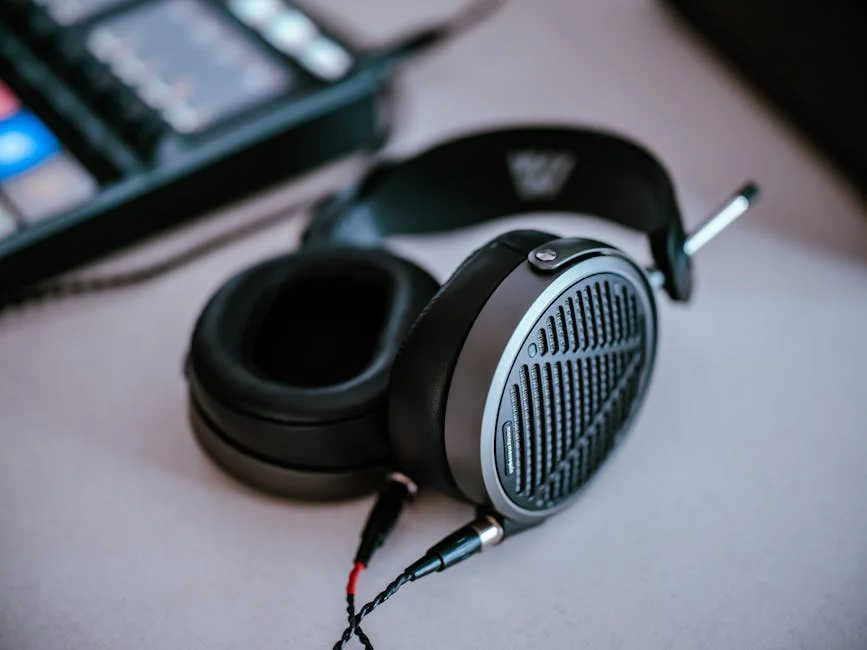
Open-back headphones, like the Sennheiser HD 600, have grilles or perforations on the earcup backs. Sound passes in both directions freely. This is intentional: the design removes the “cupped” resonance that plagues closed-back headphones and produces the natural, spacious presentation open-backs are famous for. But it also means you hear the room, and the room hears you.
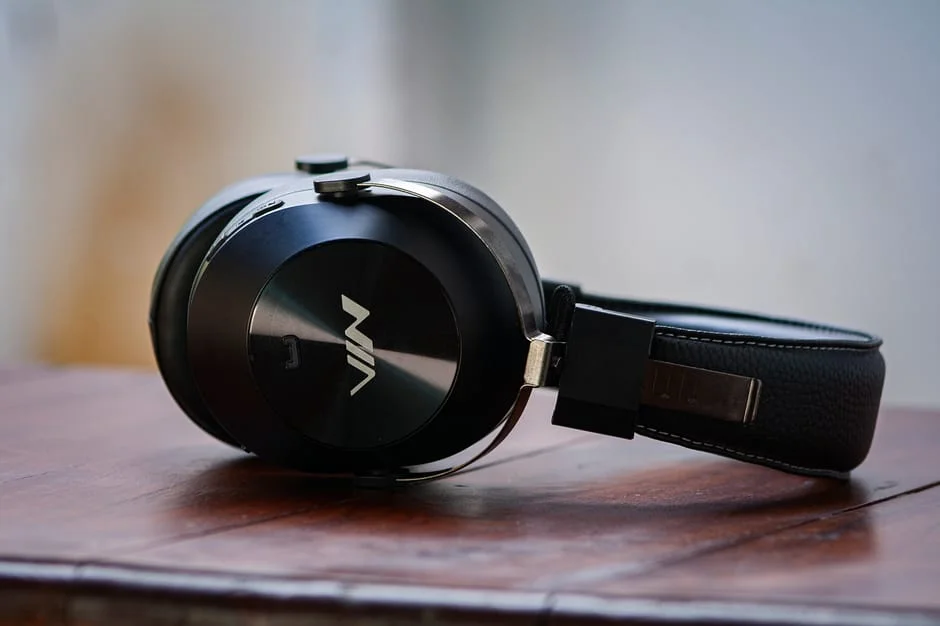
Closed-back headphones seal the rear of the driver chamber. That seal attenuates incoming ambient sound, typically by somewhere in the range of 10 to 20 dB depending on fit and construction quality. You still hear some environment, but significantly less.
In-ear monitors go further. Because IEMs sit inside the ear canal itself, a properly fitted silicone or foam tip creates a near-complete acoustic seal. Passive attenuation from a well-fitted IEM can reach 25 to 35 dB or more, depending on tip material and canal fit. Foam tips generally outperform silicone for sheer attenuation.
Understanding this spectrum matters practically. If you browse the full Headphones catalog, you will notice that use case recommendations almost always hinge on isolation level before they address sound signature.
Closed-Back Headphones: What You Gain and What You Give Up
Closed-back headphones occupy a middle ground. They are practical for shared environments, but they introduce acoustic compromises that measurement data makes visible.
The sealed rear chamber creates internal reflections. Frequency response measurements of closed-back headphones almost universally show more variation in the bass and lower mids compared to open-back equivalents. Some listeners find this additional bass body pleasing. Measurement enthusiasts tend to find it coloration. The answer depends partly on whether you weigh listening preference or frequency response graphs more heavily.
Comfort over extended wear is the other closed-back tradeoff. Closed earcups trap heat. A two-hour session with a quality open-back is rarely fatiguing in the thermal sense. The same session in a warm room with closed backs can become noticeably less comfortable, which matters if critical listening is your use case.
IEM Isolation: The Physics Advantage
IEMs win the isolation argument on physics alone. There is no earcup to leak around. The driver sits millimeters from your eardrum, inside the canal, and the tip material determines seal quality directly.
In a loud environment, a properly sealed foam tip reduces ambient noise to a level where even moderately loud music is not competing with the environment. Closed-back headphones do not typically match that level of isolation.
The tradeoff is fit dependency. IEM isolation is only as good as your tip seal. A tip that fits one person perfectly may not seal for another. Finding the right tip size and material is a real part of IEM ownership, and it is worth more attention than most first-time buyers give it.
Soundstage is the other cost. Because IEMs position their drivers so close to the eardrum, most IEMs present sound inside the head rather than around it. Closed-back headphones, even with their acoustic compromises, generally produce wider perceived staging than IEMs.
Top Picks
The following headphones span both sides of this isolation question, from classic open-backs to IEMs and closed-back designs.
Sennheiser HD 600
This is a fully open-back design, so isolation is essentially zero. It leaks sound freely and picks up room noise freely. That matters enormously for the closed back vs iem isolation question: the HD 600 is explicitly not a practical choice for shared spaces, commuting, or recording environments where microphone bleed is a concern.
What it offers instead is a neutral-warm tuning built around midrange clarity, aimed at vocals, acoustic instruments and spoken word. Driven from a proper amplifier rather than a phone output, it can reach the level it was designed for.
The 300-ohm impedance means proper amplification is not optional. A Schiit Magni or JDS Atom will get you where you need to be without spending into premium territory.
Check current price on Amazon.
Sennheiser HD 650
The Sennheiser HD 650 sits beside the HD 600 in Sennheiser’s lineup as the warmer, more musically forgiving option. Like the HD 600, it is fully open-back, which means isolation is not part of its value proposition at all. If your question is which open-back to choose for long listening sessions in a quiet environment, this is where the HD 650 earns its reputation.
The bass weight is fuller, the treble is slightly rolled off at the top, and the overall presentation leans into fatigue-free long-form listening.
The 300-ohm impedance is identical to the HD 600, so the same amplification advice applies. Do not expect a phone headphone jack to do this justice.
Check current price on Amazon.
Sennheiser HD 560S
The Sennheiser HD 560S is Sennheiser’s budget entry into the open-back audiophile tier and a compelling starting point for first-time open-back buyers. It remains fully open-back, so the isolation situation is identical to the HD 600 and HD 650: this is a quiet-room headphone.
Where the HD 560S differentiates itself is impedance. At 120 ohms versus the 300 ohms of the HD 600 and HD 650, the HD 560S is genuinely more versatile with portable sources and laptops. Published measurements show a flat, neutral response with slight bass roll-off, which bass-focused listeners may find lean.
The plastic construction is less premium than the more expensive Sennheisers, which is a fair trade-off at this price band. It is currently unavailable on Amazon.
Sennheiser HD 660S2
The Sennheiser HD 660S2 represents a departure from Sennheiser’s traditional house sound, with more bass extension than the HD 600 and HD 650.
This is still an open-back design, so isolation is zero. It ships with both a 4.4mm balanced cable and a 6.35mm standard cable, which is a practical inclusion for listeners with balanced-capable amplifiers.
The tuning changes are a matter of preference: some listeners welcome the extra bass, while others prefer the traditional HD 600 and HD 650 balance.
Check current price on Amazon.
Sennheiser HD 800 S
The Sennheiser HD 800 S is covered here from published specifications and measurements rather than direct testing.
The HD 800S is generally described as having one of the widest soundstages among dynamic driver headphones. It is an open-back reference headphone, so isolation is not part of its design at all.
The HD 800S pairs best with warm amplification, including quality tube amps, to take the edge off the upper frequencies. Bright solid-state sources can cause fatigue.
Check current price on Amazon.
Drop + Sennheiser HD 58X Jubilee
The Drop + Sennheiser HD 58X Jubilee occupies an interesting position: it uses the same physical shell as the HD 600 and HD 650, making it accessory-compatible with both, while bringing a different tuning based on the vintage HD 580.
At 150 ohms, it is easier to drive than either the HD 600 or HD 650, which gives it more practical flexibility with portable sources. It is positioned as a first step into Sennheiser open-backs for buyers who are not ready for the mid-tier pricing of the HD 600.
The availability caveat is real: as a Drop exclusive, stock is intermittent, and it is currently unavailable on Amazon.
Drop + Sennheiser HD 8XX
The Drop + Sennheiser HD 8XX is a collaboration based on the HD 800S platform, modified to reduce the treble brightness that some listeners find fatiguing in the original. Like all HD 800-series headphones, it is fully open-back.
Listeners are divided on the tuning changes: some welcome the softer treble, while others who sought the HD 800S for its extended, airy treble feel the modifications soften what made the original distinctive.
The Drop-exclusive availability adds the same purchasing friction as the HD 58X: stock varies, and it is currently unavailable on Amazon.
HiFiMan Sundara (2020 Revision)
The HiFiMan Sundara is a planar magnetic headphone, a design that is generally less efficient than a dynamic driver.
Like every open-back in this list, the Sundara offers essentially no isolation. It is a quiet-room headphone. What it offers instead is planar magnetic detail and imaging at a mid-tier price point.
The amplification requirement is genuine. Underpowered sources make the Sundara sound thin and dynamically flat. A properly powered amplifier lets it perform as designed. It is sensible to check channel balance when the unit arrives.
Check current price on Amazon.
Buying Guide: Choosing Based on Your Actual Situation
Start With Your Environment, Not Your Budget
A common mistake in entry-level buying is leading with sound signature preference before resolving the isolation question. If you work in an open-plan office, share a bedroom, commute on public transit, or need to take calls in noisy environments, an open-back headphone is not a practical primary option regardless of how good it sounds.
Closed-back headphones provide modest isolation that works for incidental shared spaces. IEMs with proper tip fit provide the highest passive isolation of any portable form factor. Open-backs are quiet-room tools. Getting this hierarchy right before budget allocation saves real money.
For broader context on how isolation fits into the larger headphone decision framework, the Headphones hub covers use-case filtering across the full catalog.
Closed-Back vs. IEM: The Comfort and Seal Trade
Closed-back headphones provide consistent isolation without requiring fit calibration. You put them on, the earcup seals around your ear, and you get a predictable attenuation level. The tradeoff is heat, acoustic coloration from the sealed chamber, and bulk.
IEMs require tip-fitting work upfront, but reward that effort with substantially higher passive attenuation and genuine portability. Foam tips outperform silicone for maximum isolation. Silicone tips tend to be more comfortable for longer sessions once fit is dialed in. The inside-the-head imaging of most IEMs is a real psychoacoustic limitation that closed-backs partially avoid.
Amplification and the Isolation Question
Open-back headphones at the mid and premium tier almost universally require dedicated amplification. The HD 600, HD 650, HD 660S2, and HD 800S all have impedances that most laptops and phones cannot drive properly. If your use case requires a portable form factor, that amplification requirement is a practical problem, not just a sound quality one.
IEMs are generally efficient enough to drive from a phone. Closed-back headphones vary. Lower-impedance models like the HD 560S (at 120 ohms) are more source-flexible than the 300-ohm HD 600 and HD 650. If portability and isolation are both priorities, IEMs resolve both without the amplification dependency. For dedicated home listening on a stack, the open-back penalty disappears and the sound quality case for open-backs strengthens considerably.
When Open-Back Is the Right Answer Anyway
Open-back headphones consistently measure better, image more naturally, and produce less acoustic fatigue in controlled listening environments. If you have a dedicated listening space, a quiet home office, or a private room for serious sessions, the practical disadvantages of open-back designs are minimized or eliminated.
The isolation limitation is real, but in the right environment, it is simply not relevant. Buying an IEM or closed-back headphone for home critical listening because of an isolation concern that does not apply to your actual environment is a trade you might regret.
Practical Isolation Estimates by Type
Closed-back designs typically land in the 10 to 20 dB range depending on earcup seal quality and pad material. Well-fitted IEMs with foam tips can reach 25 to 35 dB or higher.
These are approximate ranges, not manufacturer specifications. Fit variation for IEMs and earcup seal variation for closed-backs mean individual results differ. The hierarchy, however, is consistent: IEMs isolate most, open-backs isolate least, closed-backs fall in between.
Closing Thoughts
The closed back vs iem isolation question does not have a single right answer. It has a right answer for your specific environment, use pattern, and listening priorities. Open-back headphones like the HD 600 remain the best-sounding option for quiet-room critical listening. IEMs win on isolation physics and portability. Closed-backs serve the middle ground.
If you are still working out where your needs fall across these categories, the full headphone guide is a useful next stop for filtering by use case, price band, and form factor before committing to a specific direction.

Frequently Asked Questions
How much better is IEM isolation compared to closed-back headphones?
A well-fitted IEM with foam tips typically provides 25 to 35 dB or more of passive attenuation, while most closed-back headphones land in the 10 to 20 dB range. The difference is meaningful in loud environments: IEMs can reduce ambient noise to a level where moderate listening volumes compete comfortably with the environment, while closed-backs reduce but do not eliminate external sound. Fit quality is the biggest variable for IEMs, because a poor seal eliminates most of the isolation advantage.
Can I use open-back headphones in a shared office or apartment?
Open-back headphones are not practical for shared environments. Sound leaks freely in both directions, meaning your music is audible to people nearby and you will hear everything in the room. For shared spaces, a closed-back headphone or IEM is the appropriate choice. Open-backs are designed for quiet, private listening environments where the acoustic advantages of an open rear chamber can be appreciated without creating a disturbance.
Do I need an amplifier for the Sennheiser HD 600 or HD 650?
Yes, proper amplification is genuinely recommended for both. The 300-ohm impedance of the HD 600 and HD 650 means most phones, laptops, and low-powered sources cannot drive them to their potential. A budget-to-mid amplifier like a Schiit Magni or JDS Atom resolves this without spending into premium territory. The gap between a typical laptop output and a proper amplifier is the main reason amplification is recommended for these headphones.
What is the main acoustic tradeoff of closed-back headphones compared to open-back?
Closed-back headphones seal the rear driver chamber, which creates internal reflections that affect frequency response. Measurement data consistently shows more bass and lower-mid variation in closed-backs compared to open-back equivalents. The result is often described as a cupped or boxed-in quality to the sound, and soundstage width is narrower on average. Closed-backs also trap heat, which becomes relevant during long listening sessions. The tradeoff is the isolation benefit, which is meaningful in practical environments.
Are IEMs good for critical listening at home, or should I use headphones?
IEMs can absolutely be used for critical listening, but most produce an inside-the-head imaging presentation that differs from the more spacious staging of a good open-back headphone. For home listening in a quiet environment, an open-back headphone typically produces a more natural, less fatiguing spatial presentation. IEMs make more sense when portability or isolation is required. If your primary listening environment is controlled and quiet, an open-back headphone is the stronger critical listening tool.
Where to Buy
- Sennheiser HD 600 Open-Back Audiophile HeadphonesSee price on Amazon
- Sennheiser Consumer Audio HD 650 Audiophile Hi-Res Open Back HeadphoneSee price on Amazon
- Sennheiser HD 660S2 Audiophile Open-Back Over Ear HeadphonesSee price on Amazon
- Sennheiser HD 800 S Over-the-Ear Audiophile Reference HeadphonesSee price on Amazon
- HIFIMAN SUNDARA Hi-Fi Headphone Planar Magnetic 2020 VersionSee price on Amazon