Open Back vs Closed Back Headphones: Key Differences

Affiliate disclosure: Some links on this page are affiliate links. If you buy through them we earn a small commission at no extra cost to you. Recommendations are research-driven; we don't claim personal use of every product reviewed. Product prices and availability are accurate as of the date published and are subject to change. Always check Amazon for current pricing before purchasing. Learn more.
Quick Picks
Sennheiser HD 600 Open-Back Audiophile Headphones
Legendary neutral-warm tuning that rewards critical listening
Buy on Amazonbeyerdynamic DT 770 PRO 80 Ohm Over-Ear Studio Headphones
Proven studio closed-back with decades of professional use
Buy on Amazon| Product | Price Range | Top Strength | Key Weakness | Buy |
|---|---|---|---|---|
| Sennheiser HD 600 Open-Back Audiophile Headphones also consider | $$ | Legendary neutral-warm tuning that rewards critical listening | Requires a decent amp to perform at its best | Buy on Amazon |
| beyerdynamic DT 770 PRO 80 Ohm Over-Ear Studio Headphones also consider | $ | Proven studio closed-back with decades of professional use | V-shaped tuning with prominent treble , not for treble-sensitive listeners | Buy on Amazon |
If you spend more than ten minutes on any headphone forum, you will hit the open back vs closed back headphones question almost immediately. It is one of the most practical decisions in the hobby, and it cuts across every budget tier from entry-level to luxury.
Three years in, having started with the Sennheiser HD600 and worked through several closed-back designs since, I have a firm point of view here. The choice is less about which design is “better” and more about matching the design to your actual listening environment and goals. The Audiophile Basics hub at /learn/ covers a lot of the foundational decisions in this hobby, and this one sits near the top of that list.
What Does Open Back vs Closed Back Actually Mean
Before getting into the tradeoffs, it helps to understand what the terms describe physically. The distinction is about the housing behind the driver, not about the driver type or the tuning target.
The Acoustic Basics
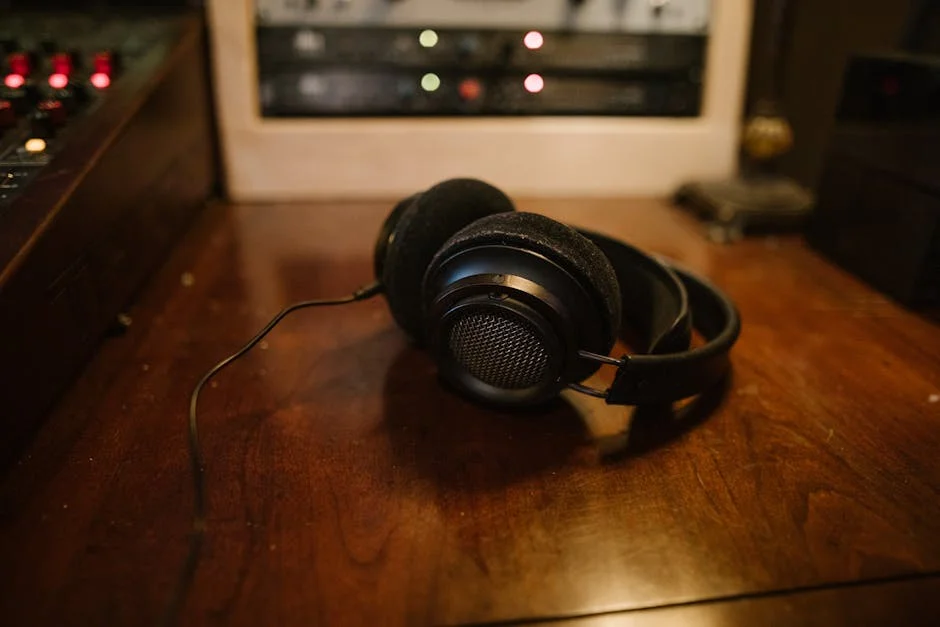
An open-back headphone has a perforated or grille-covered rear cup. Air, and sound, moves freely through that housing. A closed-back headphone seals the rear of the driver inside a solid enclosure. That seal traps air behind the driver and creates an isolated acoustic chamber.
Both designs use the same fundamental transducer technology. Dynamic drivers, planar magnetics, and electrostatics all exist in both form factors. The housing geometry is a separate variable from the driver itself.
What the Enclosure Changes
The rear enclosure shapes how the driver’s back wave is handled. In an open-back design, that back wave dissipates into the room. In a closed-back design, it bounces inside the cup, which creates internal reflections that engineers work to minimize or control.
This difference affects several audible characteristics. Soundstage and imaging behave differently across the two designs. Bass extension and character shift. The way instruments decay in the mix changes. None of this is strictly better or worse in absolute terms. It is context-dependent.
Open Back Headphones: Strengths and Limitations
Open-back designs have a strong reputation in critical listening and audiophile communities, and that reputation is earned, but it comes with real practical tradeoffs.
Soundstage and Imaging
The most cited advantage of open-back headphones is soundstage. Because the back wave dissipates rather than reflecting inside the cup, the sound tends to feel less “in-head” and more like a presentation in front of or around you. This is not universal across all open-back designs, but it is a consistent trend.
Field reports from Head-Fi and Resolve Reviews consistently describe well-regarded open-back designs as having a more natural sense of instrument placement. The HD600 is often cited as a reference example of this. Crinacle’s measurements and commentary align with that characterization, noting the HD600’s presentation as intimate but spatially coherent rather than artificially wide.
Frequency Response and Tuning
Open-back designs are not inherently more neutral than closed-back designs. Tuning is an engineering and marketing decision that exists independently of the housing. That said, many of the most measurement-celebrated neutral headphones happen to be open-back, partly because the lack of cup resonance makes hitting a clean target curve easier to execute.
ASR’s measurements of the HD600 show a frequency response that tracks closely to the Harman target in the midrange, with a mild warmth in the low end that most listeners describe as pleasant rather than colored. That result is achievable partly because the open design removes a category of low-frequency cup-bounce artifact.
The Leakage Problem
Open-back headphones leak sound in both directions. People near you hear what you are listening to. You hear what is happening in the room. In a quiet home office with no one else present, that is a non-issue. In a shared workspace, apartment with a partner, or anywhere with ambient noise, it becomes a real problem.
I hear this constantly at Texas Audio Society meetups. Someone demos an HD600 or HD800S in a quiet corner of the room, and it sounds wonderful. Someone tries the same headphone in a noisy environment, and the experience collapses. The design assumes a controlled, quiet environment. That is not a flaw. It is a constraint that should inform your purchase.
Closed Back Headphones: Strengths and Limitations
Closed-back designs trade some of the acoustic openness of their counterparts for isolation and versatility. That trade is frequently the right one depending on use case.
Isolation and Practical Usability
A well-sealed closed-back headphone reduces ambient noise passively. This is not active noise cancellation. It is acoustic physics. A solid cup blocks a meaningful portion of environmental sound from reaching the driver and your ear.
This matters in a lot of real-world scenarios. Tracking musicians use closed-backs to prevent bleed into a live microphone. Remote workers in shared homes use them to stay focused. Commuters and travelers use them when noise cancellation is overkill and portability matters. Verified buyers of the DT 770 Pro consistently cite isolation as the reason they chose it over open-back alternatives.
Closed-Back Tuning Tendencies
Closed-back designs have a harder acoustic engineering problem to solve. The sealed cup creates standing waves and low-frequency buildup that the designer has to address. Many production closed-backs use a V-shaped or bass-emphasized tuning partly because some low-end reinforcement is pleasant, and partly because the cup physics trend in that direction anyway.
The DT 770 Pro is a classic example of this. Its characteristic V-shaped signature, with the famous “beyer treble” peak and elevated bass, is partly a tuning choice and partly a response to the acoustic properties of the closed enclosure. That signature has been the foundation of its studio popularity for decades.
Soundstage Tradeoffs
Closed-back headphones tend to present a more intimate or in-head image compared to open-back designs at the same quality level. This is a consistent field report across communities, not an absolute rule. Some closed-back designs manage surprising spatial presentation. But if a wide, room-like soundstage is your primary goal, you are working against the physics of the enclosure.
Buying Guide: Choosing Between Open and Closed Back
The practical decision framework here is more about your environment and use case than about which design is acoustically superior. The resources in Audiophile Basics at /learn/ cover source chain decisions, budget tiers, and driver types, but the open vs. closed choice comes first because it gates everything else.
Who Should Buy Open Back
If you listen alone, in a quiet room, primarily for critical listening or music enjoyment rather than work or gaming with others present, open-back designs are the natural starting point for a dedicated headphone setup.
Verified community consensus across ASR, Head-Fi, and Resolve Reviews consistently places open-back headphones at the top of recommendation lists for home listening. The reasoning is consistent: better soundstage, typically cleaner midrange, and a more natural presentation at equivalent quality tiers. Budget, mid, premium, and luxury open-back options all follow this pattern.
Who Should Buy Closed Back
If you share a living space, work in an office, record audio, or need a headphone that functions across multiple environments, closed-back is the practical answer. Leakage is not a minor inconvenience in shared spaces. It is a real problem for everyone around you.
Gaming and streaming setups also favor closed-back designs because positional audio cues benefit from isolation, and most users in those scenarios are in rooms with ambient noise from fans, HVAC, or other people. The DT 770 Pro’s decades of studio use exist precisely because tracking and monitoring sessions require that isolation.
Source Chain Considerations
Open-back headphones at the mid and premium tier often benefit more visibly from a dedicated DAC and amp than closed-back designs in the same tier. The HD600 is a partial exception. The gap between a laptop headphone output and a proper stack like the Topping E50 and L50 is real on the HD600, but smaller than owner reports typically lead new buyers to expect. For planar magnetic open-backs, the “scales with source” advice turns out to have more substance.
Closed-back designs, especially lower-impedance versions like the DT 770 Pro in 80 ohm configuration, are generally easier to drive from portable sources and interfaces. That portability advantage is a real benefit in the use cases they serve.
Impedance and Sensitivity
Impedance affects whether a headphone needs a dedicated amplifier. The DT 770 Pro 80 ohm version is specifically the variant designed to drive well from interfaces, portable players, and less powerful sources. The 250 ohm version of the same headphone is optimized for amp-paired setups.
Open-back headphones like the HD600 sit at 300 ohms and benefit from amplification, though the sensitivity is high enough that most decent desktop amps handle them without strain. Budget-tier open-back designs often have lower impedance and higher sensitivity to compensate for the expectation of less powerful sources.
Durability and Long-Term Ownership
Closed-back headphones built for studio or professional use tend to be constructed with durability as a primary design brief. The DT 770 Pro, made in Germany, has a reputation for lasting through years of heavy professional use based on extensive owner reports and community documentation.
Open-back designs vary widely. The HD600 benefits from a fully replaceable cable and earpads, which extend its lifespan significantly. Owner reports on Head-Fi document units running for a decade or more with periodic pad and cable replacements. When evaluating any headphone in either category, checking parts availability is worth doing upfront.
Top Picks
Sennheiser HD 600
The Sennheiser HD600 is the reference point this site returns to most consistently, and three years into this hobby, it is the headphone I still reach for most sessions. That is not nostalgia. It is a function of what the HD600 does well and how well it does it at a mid-tier price band.
ASR’s measurements show a frequency response that tracks closely to the Harman curve in the critical midrange region, with a mild low-end warmth that reads as pleasant rather than colored in almost every listening context. On a well-matched dedicated stack, the HD600’s midrange presentation is as good as anything at this tier. Vocals sit forward and clear. Acoustic instruments have texture without fatigue.
The open-back design delivers a soundstage that Crinacle and Resolve Reviews both characterize as intimate but spatially honest, meaning instruments are placed accurately rather than artificially widened. For critical listening in a quiet home environment, that presentation is close to ideal.
The HD600 does require amplification to perform at its best. Owner consensus across Head-Fi and ASR forums consistently recommends pairing it with a dedicated amp, something in the range of a Schiit Magni or JDS Atom at minimum. The gap between a laptop output and a proper amp is real. It is smaller than audiophile mythology sometimes suggests, but it is audible and worth addressing.
The replaceable cable and earpads are not a minor detail. They are a practical argument for long-term ownership. Verified buyers report running the same HD600 unit for many years with periodic maintenance, which is a meaningful cost-per-hour argument at a mid-tier price band.
The open-back design does leak sound substantially in both directions. This is not a product flaw. It is a physical consequence of the design that determines the use case. If you have a quiet room to yourself, this is the most straightforward recommendation for anyone entering serious headphone listening.
Check current price on Amazon.
beyerdynamic DT 770 PRO 80 Ohm
The beyerdynamic DT 770 PRO 80 Ohm occupies a different position in this comparison. It is the closed-back workhorse recommendation in the budget tier, with decades of professional studio use behind it and a build quality that owner reports consistently describe as exceptional for the price band.
The tuning is V-shaped with the characteristic beyerdynamic treble peak. This is the most important thing to know before purchasing. Verified buyers who are treble-sensitive frequently note fatigue over long sessions. Buyers who are comfortable with a more energetic top end, or who are using the headphone primarily for gaming, tracking, or casual listening rather than critical reference work, report very high satisfaction. Community consensus across Head-Fi and dedicated studio forums categorizes the DT 770 Pro as a V-shaped signature rather than a neutral or warm one.
The 80 ohm configuration is the version most buyers should consider unless they have a dedicated amplifier already in their chain. Spec data confirms it drives cleanly from USB audio interfaces, portable players, and most laptop headphone outputs without requiring additional amplification. The 250 ohm version exists for amp-paired setups and is worth considering if you have that infrastructure already in place.
Build quality is frequently cited as a standout characteristic. The Made in Germany construction, with solid hinges, replaceable earpads, and a rugged headband assembly, supports the unit’s reputation for lasting through years of demanding professional use. Field reports from tracking engineers and podcast producers consistently mention the DT 770 Pro as a long-term reliable tool rather than a disposable budget item.
The non-detachable coiled cable is a genuine limitation for portable use. It is a practical design choice for studio applications where a coiled cable has real advantages, but it makes the headphone awkward in commuting or travel contexts. Buyers looking for a closed-back headphone for portable use should factor that in.
Check current price on Amazon.
Wrapping Up
The open back vs closed back headphones question does not have a universal answer, and anyone telling you one design is simply better is working from a use case assumption, not an acoustic law. Open-back headphones deliver a more natural soundstage and often a cleaner frequency response at equivalent quality tiers, but they require a quiet, private listening environment to work as intended. Closed-back headphones sacrifice some of that acoustic openness in exchange for isolation and practical versatility across environments.
For home listening in a dedicated space, the HD600 remains the most straightforward recommendation at the mid tier. For studio work, shared spaces, gaming, or any context where isolation matters, the DT 770 Pro 80 ohm is the budget-tier standard for a reason. Both headphones have earned their community reputations through consistent verified owner feedback and measurements that support their use cases.
If you are still working through the broader decisions around source chains, driver types, and budget tiers, the Audiophile Basics resource hub at /learn/ covers those topics in detail. Start there if the gear decisions are still feeling overwhelming, then come back to this choice once you know your environment and use case clearly.

Frequently Asked Questions
Does open back mean better sound quality?
Open-back headphones do not inherently sound better than closed-back designs. Tuning, driver quality, and build execution determine sound quality independent of the housing type. Many highly regarded neutral headphones happen to be open-back because the enclosure simplifies some acoustic engineering challenges, but closed-back headphones at the same tier can match or exceed them depending on the specific design. The housing choice is a use-case decision first, a sound quality decision second.
Can you use open back headphones in an office?
Open-back headphones in a shared office are impractical for most people. Sound leaks substantially in both directions, meaning colleagues will hear your audio and you will hear their ambient noise. In a private, quiet home office this is rarely a problem, but in open-plan workspaces or shared rooms it is a genuine disruption. Closed-back headphones are the standard recommendation for office environments for this reason.
Is the DT 770 Pro good for gaming?
Verified buyer reports and community consensus consistently rate the DT 770 Pro as a strong gaming headphone, particularly at the budget tier. The V-shaped tuning with elevated bass and treble suits many gaming genres, and the closed-back isolation helps in noisy environments. The 80 ohm version drives from most gaming PCs and consoles without additional hardware. Treble-sensitive listeners should note the characteristic beyerdynamic treble peak, which some find fatiguing over very long sessions.
Do I need an amp for open back headphones?
It depends on the specific headphone’s impedance and sensitivity. The HD600 at 300 ohms benefits clearly from a dedicated amplifier. Owner reports and ASR forum consensus recommend pairing it with at least an entry-level dedicated amp for best results. Lower-impedance open-back designs intended for portable or consumer use are often easier to drive from standard sources.
What is the best closed back headphone for studio recording?
Community consensus across Head-Fi, recording forums, and professional studio communities consistently points to the DT 770 Pro as the budget-tier standard for tracking and monitoring work. Its isolation, durability, and reliable frequency response across decades of use have made it a studio default. At mid and premium tiers, other closed-back options enter the conversation, but the DT 770 Pro 80 ohm remains the baseline recommendation for most home studio and entry-level professional applications.

<script type="application/ld+json">
{
"@context": "https://schema.org",
"@type": "FAQPage",
"mainEntity": [
{
"@type": "Question",
"name": "Does open back mean better sound quality?",
"acceptedAnswer": {
"@type": "Answer",
"text": "Open-back headphones do not inherently sound better than closed-back designs. Tuning, driver quality, and build execution determine sound quality independent of the housing type. Many highly regarded neutral headphones happen to be open-back because the enclosure simplifies some acoustic engineering challenges, but closed-back headphones at the same tier can match or exceed them depending on the specific design. The housing choice is a use-case decision first, a sound quality decision second."
}
},
{
"@type": "Question",
"name": "Can you use open back headphones in an office?",
"acceptedAnswer": {
"@type": "Answer",
"text": "Open-back headphones in a shared office are impractical for most people. Sound leaks substantially in both directions, meaning colleagues will hear your audio and you will hear their ambient noise. In a private, quiet home office this is rarely a problem, but in open-plan workspaces or shared rooms it is a genuine disruption. Closed-back headphones are the standard recommendation for office environments for this reason."
}
},
{
"@type": "Question",
"name": "Is the DT 770 Pro good for gaming?",
"acceptedAnswer": {
"@type": "Answer",
"text": "Verified buyer reports and community consensus consistently rate the DT 770 Pro as a strong gaming headphone, particularly at the budget tier. The V-shaped tuning with elevated bass and treble suits many gaming genres, and the closed-back isolation helps in noisy environments. The 80 ohm version drives from most gaming PCs and consoles without additional hardware. Treble-sensitive listeners should note the characteristic beyerdynamic treble peak, which some find fatiguing over very long sessions."
}
},
{
"@type": "Question",
"name": "Do I need an amp for open back headphones?",
"acceptedAnswer": {
"@type": "Answer",
"text": "It depends on the specific headphone's impedance and sensitivity. The HD600 at 300 ohms benefits clearly from a dedicated amplifier. Owner reports and ASR forum consensus recommend pairing it with at least an entry-level dedicated amp for best results. Lower-impedance open-back designs intended for portable or consumer use are often easier to drive from standard sources. Checking the impedance and sensitivity specs of any open-back headphone you are considering will tell you what your source chain needs to deliver."
}
},
{
"@type": "Question",
"name": "What is the best closed back headphone for studio recording?",
"acceptedAnswer": {
"@type": "Answer",
"text": "Community consensus across Head-Fi, recording forums, and professional studio communities consistently points to the DT 770 Pro as the budget-tier standard for tracking and monitoring work. Its isolation, durability, and reliable frequency response across decades of use have made it a studio default. At mid and premium tiers, other closed-back options enter the conversation, but the DT 770 Pro 80 ohm remains the baseline recommendation for most home studio and entry-level professional applications."
}
}
]
}
</script>Where to Buy
Sennheiser HD 600 Open-Back Audiophile HeadphonesSee Sennheiser HD 600 Open-Back Audiophil… on Amazon