DAC Amp Stack vs Integrated: Which Setup Wins

Affiliate disclosure: Some links on this page are affiliate links. If you buy through them we earn a small commission at no extra cost to you. Recommendations are research-driven; we don't claim personal use of every product reviewed. Product prices and availability are accurate as of the date published and are subject to change. Always check Amazon for current pricing before purchasing. Learn more.

Quick Picks
Beyerdynamic DT 990 PRO Open Studio Headphones
Wide, airy soundstage from open-back design
Buy on AmazonSennheiser HD 559 Open Back Headphones
Budget-friendly entry to Sennheiser's acclaimed 5xx lineage
Koss KSC75 Portable Stereophone On-Ear Headphones
Remarkable frequency response for the price , ASR community favorite
Buy on Amazon| Product | Price Range | Top Strength | Key Weakness | Buy |
|---|---|---|---|---|
| Beyerdynamic DT 990 PRO Open Studio Headphones also consider | $$ | Wide, airy soundstage from open-back design | Elevated treble causes fatigue for extended listening sessions | Buy on Amazon |
| Sennheiser HD 559 Open Back Headphones also consider | $ | Budget-friendly entry to Sennheiser's acclaimed 5xx lineage | Less resolving than the HD 560S/HD 600 step-ups | — |
| Koss KSC75 Portable Stereophone On-Ear Headphones also consider | $ | Remarkable frequency response for the price , ASR community favorite | Clip-on design less secure than traditional headband headphones | Buy on Amazon |
| Koss Porta Pro On-Ear Headphones with Case also consider | $ | Iconic 40-year-old design that still measures well by modern standards | Temporal pad comfort varies , Yaxi pad upgrade commonly recommended | Buy on Amazon |
| Grado SR60x Prestige Series Wired Open-Back Headphones also consider | $ | Forward, energetic presentation that brings guitars and vocals to the front | Bowl pads become uncomfortable for sessions beyond an hour or two | Buy on Amazon |
| Beyerdynamic DT 770 PRO 32 Ohm Closed-Back Headphones also consider | $$ | Low impedance drives well from gaming headsets, phone jacks, and interfaces | Treble emphasis causes fatigue over long sessions for some listeners | Buy on Amazon |
| Sony MDR-7506 Professional Large Diaphragm Headphones also consider | $ | Studio standard since 1991 , used in broadcast and recording worldwide | Older driver design sounds somewhat bright by modern audiophile standards | Buy on Amazon |
| Shure SRH440A Professional Studio Headphones also consider | $ | Flat studio monitoring tuning suitable for tracking and mixing | Treble can be harsh on certain recordings | Buy on Amazon |
If you’ve spent any time reading through Buyer Guides on audio forums or Reddit threads, you’ve probably seen the debate: do you buy a dedicated DAC and amp as separate units, or grab an integrated unit that handles both? It’s one of the most common questions hobbyists ask in their first year, and the answer depends more on your specific headphones and listening setup than on any universal rule.
Three years in, having started with a Sennheiser HD600 and eventually landed on a Topping E50 DAC paired with a Topping L50 amp, I can tell you the stack-versus-integrated question matters more for some headphones than others. This guide breaks down both approaches honestly, covers the headphones where the choice actually makes a meaningful difference, and gives you a practical framework for deciding.

What “DAC/Amp Stack vs. Integrated” Actually Means
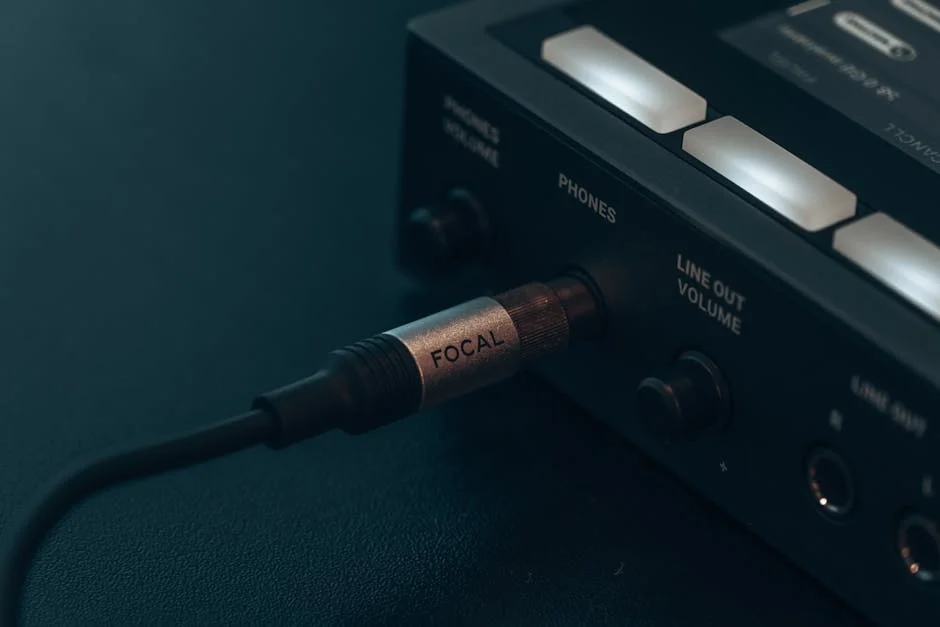
Before comparing specific setups, it helps to define terms clearly. A DAC (digital-to-analog converter) takes the digital audio signal from your computer or phone and converts it to an analog signal. An amp takes that analog signal and amplifies it to a level your headphones can use efficiently. A stack means buying these as two separate boxes. An integrated unit (sometimes called a DAC/amp combo or all-in-one) does both jobs inside a single chassis.
Neither approach is inherently superior. The real question is whether separating the two functions gives you meaningful gains for your specific headphones, your source chain, and your budget. For most budget and mid-range headphones, an integrated unit is entirely sufficient. For harder-to-drive planars and high-impedance dynamics at the premium tier, separates start to make more sense, both for power headroom and for flexibility if you want to upgrade one component independently later.
Why the Source Chain Question Matters for Headphone Choice
The reason this debate comes up so often in headphone communities is that headphones vary enormously in how much amplification they need. Impedance and sensitivity interact in ways that aren’t always obvious from spec sheets alone. A 32-ohm headphone can run comfortably from a laptop headphone jack. A 250-ohm headphone may sound flat and dynamically compressed from that same output. A planar magnetic headphone might show adequate voltage sensitivity but still benefit from higher current delivery that typical integrated units don’t always provide.
From a practical standpoint, if you’re buying budget or lower-mid headphones, an integrated unit is almost always the right starting point. The audiophile Buyer Guides community broadly agrees here: spending more on source gear than on headphones is a poor allocation below a certain headphone tier. Resolve, Crinacle, and the ASR community all reflect that consensus. The upgrade path that makes sense is headphones first, then source gear when your headphones have outgrown what an integrated unit can comfortably drive.
Buying Guide: How to Choose Between a Stack and an Integrated

Know Your Headphone’s Drive Requirements First
The single most important variable is whether your headphones actually need dedicated amplification. Budget headphones, most 32-ohm closed-backs, and efficient open-backs like Sennheiser’s lower 5xx models are designed to work from phones and laptops without any additional hardware. If you buy a dedicated stack for a headphone in that category, you’re spending money that would be better directed at the headphone upgrade itself.
On the other hand, the 250-ohm version of the Beyerdynamic DT 990 PRO or DT 770 PRO changes the picture. Higher impedance variants genuinely benefit from a proper amp, and the 80-ohm versions are more tolerant of modest sources. Field reports from Head-Fi and ASR consistently confirm that impedance variant selection matters as much as the headphone model itself for source pairing decisions.
Integrated Units: When They Make Practical Sense
An integrated DAC/amp covers most hobbyists comfortably through the budget and mid-range headphone tiers. Products like the FiiO K5 Pro, Schiit Fulla, and similar budget-tier combos measure well on ASR and provide enough clean output for anything under roughly 150 ohms with moderate sensitivity. Owner reviews broadly confirm that integrated units at the mid-price tier are not a meaningful bottleneck for headphones in the same price band.
The practical advantage of an integrated unit is desk simplicity. One power cable, one USB or optical input, one output. If you’re a content creator, podcaster, or home studio producer running closed-back monitoring headphones, an integrated unit is often the correct answer. Studios have been running the Sony MDR-7506 on basic integrated outputs since 1991 without complaint.
Separate DAC and Amp: When the Complexity Is Worth It
Separates start earning their keep when you’re running high-impedance dynamic headphones above 200 ohms or planar magnetics that benefit from higher current delivery. Three years in and running the Topping E50 plus L50, I’ll say honestly: for the HD600, the gap between a solid integrated and a proper stack was real but smaller than I expected going in. For someone adding a planar magnetic like the HiFiMan Sundara later, the stack made a more audible difference in dynamic control and low-frequency authority.
The other argument for separates is upgrade modularity. If your DAC is already performing well, you can swap just the amp when you move to harder-to-drive headphones. Verified buyers on Head-Fi and ASR frequently mention this as the real long-term value of separates. The Buyer Guides hub at /guides/ is a good resource for tracking which DAC and amp pairings the community recommends as you scale up.
Output Impedance: The Spec Most Buyers Overlook
Output impedance is worth mentioning because it affects headphones with varying impedance curves, which includes many of the options covered here. A high output impedance source (above roughly 10 ohms) can interact with a headphone’s impedance curve and alter the frequency response you actually hear, not just reduce volume. The 32-ohm DT 770 PRO, for example, is more sensitive to this than a flat-impedance headphone.
ASR’s measurements database is the most reliable public resource for checking output impedance figures on integrated units and separates alike. When in doubt, spec data and ASR’s published measurements should be your first stop before buying any source component.
Budget Allocation: A Practical Framework
The community consensus across Head-Fi, Resolve Reviews, and ASR threads points toward a consistent rule: allocate the majority of your audio budget to the transducer (the headphone or IEM) and the minimum necessary to the source chain to drive it properly. For budget headphones, that minimum is often zero additional hardware. For 250-ohm dynamics, it’s a modest integrated or budget stack. For planar magnetics, budget for a proper dedicated amp.
If you’re saving toward something premium, as I am with the Focal Clear MG currently, the question becomes whether your current source chain will be a bottleneck. At the premium headphone tier, verified owner reports and the broader ASR community strongly suggest that source quality and power delivery do start to matter more meaningfully than they do at lower tiers.
Top Picks
Sennheiser HD 559
The Sennheiser HD 559 is the entry point to Sennheiser’s respected 5xx open-back lineage. Budget-friendly and specifically designed to run directly from phones and laptops without any additional amplification, it’s the clearest argument for not worrying about stacks or integrated units at all until you’re ready to step up. Verified buyers consistently note that it’s less resolving than the HD 560S or HD600 above it, and bass extension is modest compared to closed-back alternatives at a similar price. But for a first-time open-back experience, the comfort and the Sennheiser house sound are genuine entry-level highlights.
The HD 559 fits neatly into the upgrade path that gives the 5xx series its editorial appeal. Start here, hear what an open-back staging presentation sounds like, then decide if you want more resolution at the next tier up. You don’t need to think about DAC/amp stacks at all for this headphone.
Check current price on Amazon.
Koss KSC75
The Koss KSC75 is a clip-on open-back that the ASR community has held up as a benchmark value recommendation for years, and the frequency response data supports that reputation. At a budget price that puts it well below anything else on this list, it delivers an open acoustic presentation that owner reviews and ASR community members consistently describe as punching far above its tier.
Source chain requirements are effectively zero here. The KSC75 runs from anything with a headphone jack, and the ultra-low impedance means you’ll never need a stack or even an integrated unit on its behalf. The clip-on design is less secure than a traditional headband, and there’s no isolation whatsoever, so ambient noise is a practical consideration. The Koss lifetime warranty with purchase registration adds meaningful long-term value for something at this price band. Owner communities on Head-Fi and Reddit also document several popular modifications including Yaxi pad swaps and the Porta Pro headband transplant for those interested in DIY customization.
Check current price on Amazon.
Koss Porta Pro
The Koss Porta Pro is a 1984 design still in active production, and the fact that it remains a genuine audiophile budget recommendation four decades later is a real editorial story. Its folding frame and included carry case make it the more portable-practical option compared to the KSC75, and the measurements hold up well by modern standards according to ASR community data.
Like the KSC75, this headphone needs nothing beyond whatever device you’re already listening from. The open-back on-ear design means no isolation, and the lightweight plastic build feels less substantial than mid-tier options. Verified buyers and the broader enthusiast community almost universally recommend the Yaxi pad upgrade as a first modification, as the stock temporal pads draw consistent comfort complaints for extended sessions. The Koss lifetime warranty applies here as well, making the long-term value proposition strong for a budget-tier product.
Check current price on Amazon.
Grado SR60x
The Grado SR60x is handmade in Brooklyn and carries a presentation that’s distinctly forward-facing compared to the Sennheiser and Koss options above. Guitars and vocals sit prominently forward in the mix, which owner reviews and the broader Grado fan community describe as “on-stage” rather than “in the audience.” For rock and jazz listeners who want that energy, it’s a compelling entry point into a brand with genuine audiophile heritage.
Source requirements are modest. The SR60x is efficient enough to run from standard laptop outputs without an amp, though a clean integrated unit will give it a slightly better foundation. The on-ear bowl pad design is the main comfort friction point, with field reports from Head-Fi consistently noting that sessions beyond an hour or two become uncomfortable for many listeners. The open design provides minimal isolation, which is expected for this form factor.
Check current price on Amazon.
Sony MDR-7506
The Sony MDR-7506 has been a broadcast and recording studio standard since 1991, and its folding design with a screw-on 6.3mm adapter signals its professional lineage clearly. The tuning is bright and analytical, designed to surface problems in mixes rather than flatter the listener. Spec data puts the impedance at a modest level that runs comfortably from interfaces, mixers, and basic integrated units without requiring a dedicated stack.
Verified buyers and studio professionals note that the earpads wear quickly, and official Sony replacements are not inexpensive. The driver design is older by audiophile standards, and the brightness that makes it useful for monitoring can become fatiguing for extended casual listening. For content creators, podcasters, and home studio producers, though, the MDR-7506 has decades of field validation behind it. The MDR-7506 versus ATH-M50x comparison is a perennial search query, and the two headphones represent meaningfully different tuning philosophies worth understanding before choosing.
Check current price on Amazon.
Shure SRH440A
The Shure SRH440A is the updated “A” revision of Shure’s workhorse studio monitoring headphone, and the primary upgrade from the original is the detachable cable, which is a practical quality-of-life improvement for studio use. The tuning is flatter than most consumer headphones, making it better suited to tracking and mixing tasks than to casual listening. Shure’s professional brand credibility carries weight in musician-facing contexts.
Owner reviews note that the earpads compress and flatten relatively quickly, and early replacement is a common recommendation from long-term verified buyers. Treble can be harsh on certain recordings, which is a consistent finding across owner impressions and aligns with the monitoring-focused tuning intent. For home studio producers at the budget tier who want a flat-ish reference without moving into mid-tier price bands, the SRH440A competes directly with the MDR-7506 and the ATH-M50x, each offering a slightly different monitoring character.
Check current price on Amazon.
Beyerdynamic DT 770 PRO 32 Ohm
The Beyerdynamic DT 770 PRO 32 Ohm is the variant specifically designed for portable sources, audio interfaces, and gaming setups where output impedance and drive capability are limited. At 32 ohms, it runs cleanly from headphone jacks and gaming headset connections that would underperform with the 80-ohm or 250-ohm variants. Field reports from Head-Fi and gaming communities confirm that this is the correct DT 770 variant to pick if your source chain isn’t a dedicated desktop stack.
The V-shaped tuning, with elevated bass and elevated treble, is well-suited to gaming and electronic music but divides opinion for critical listening and mixing. Replaceable cable and earpads mean long-term maintenance is practical, which is a genuine advantage over many mid-tier closed-backs. The coiled cable is desk-friendly but less suited to portable use. Treble fatigue over long sessions is the most consistent negative finding across owner reviews, which is worth weighing against the energetic presentation if you’re planning extended listening sessions.
Check current price on Amazon.
Beyerdynamic DT 990 PRO
The Beyerdynamic DT 990 PRO is one of the most-searched open-back headphones online, and its V-shaped tuning sits at the center of a genuine debate in audiophile communities. The wide, airy soundstage from its open-back design is its signature strength. Gamers and listeners who enjoy spatial imaging consistently highlight it as a standout characteristic. The flip side is that the elevated treble emphasis causes listening fatigue for extended sessions, a finding that appears consistently across ASR community threads, Head-Fi owner impressions, and Crinacle’s measurement notes.
For this headphone specifically, the 250-ohm version is the most common variant and genuinely benefits from a proper amp. On a weak source, it sounds dynamically flat and loses the impact that makes the tuning work at its best. An integrated unit at the budget-to-mid price band handles it well. The massive community of EQ profiles available for the DT 990 PRO makes it a strong candidate for EQ-corrected listening if the stock treble emphasis is too much. The coiled cable is well-matched to a desk setup.
Check current price on Amazon.
Frequently Asked Questions
Do I need a DAC/amp stack for budget headphones?
In most cases, no. Budget-tier open-back headphones like the Sennheiser HD 559, Koss KSC75, and Koss Porta Pro are designed to run directly from phones, laptops, and tablets without additional hardware. The community consensus across ASR and Head-Fi is consistent: allocate your budget to the headphone itself first. A dedicated source chain becomes relevant once you’re running higher-impedance dynamics or planar magnetics at the mid-to-premium tier.
Check current price on Amazon.
What is the difference between the DT 770 PRO 32 ohm and the 250 ohm version?
The 32-ohm variant is optimized for direct connection to portable sources, interfaces, and devices with modest amplification capability. The 250-ohm variant requires a proper amp to reach its full dynamic potential and will sound compressed or thin from a weak source. Spec data and field reports from Head-Fi confirm that impedance variant selection matters as much as headphone model selection for the DT 770 family. Choose based on your actual source chain, not on a general preference.
Is the Sony MDR-7506 good for casual listening or only for studio use?
The MDR-7506 was designed for monitoring and broadcast use, and its bright analytical tuning reflects that purpose. Verified buyers who use it for casual listening note that the treble forwardness becomes fatiguing over long sessions with certain recordings. It is not a poor casual headphone, but it is tuned to surface detail rather than flatter the listener. If your primary use case is music enjoyment rather than critical monitoring, a headphone with a more relaxed tuning profile will likely serve you better long-term.
How much does amplifier quality matter for the Beyerdynamic DT 990 PRO?
At 250 ohms, the DT 990 PRO benefits meaningfully from a dedicated amp compared to a direct laptop output. The difference is most audible in dynamic range and bass authority, where underpowered sources compress the presentation. Field reports from Head-Fi and ASR community threads consistently confirm that even a budget integrated unit is a significant improvement over a generic laptop headphone jack for this headphone. You do not need a premium stack, but some dedicated amplification is genuinely worthwhile here.
Is the Grado SR60x comfortable enough for long listening sessions?
Comfort is the most consistent friction point in owner reviews of the SR60x. The on-ear bowl pad design receives frequent negative notes for sessions extending beyond one to two hours. This appears consistently across Head-Fi owner impressions and is worth taking seriously if you plan multi-hour listening. Aftermarket pad options exist and are documented in the Grado community, but the stock experience is polarizing. If long-session comfort is a priority, a headphone with circumaural (over-ear) earcups will serve you better.

<script type="application/ld+json">
{
"@context": "https://schema.org",
"@type": "FAQPage",
"mainEntity": [
{
"@type": "Question",
"name": "Do I need a DAC/amp stack for budget headphones?",
"acceptedAnswer": {
"@type": "Answer",
"text": "In most cases, no. Budget-tier open-back headphones like the Sennheiser HD 559, Koss KSC75, and Koss Porta Pro are designed to run directly from phones, laptops, and tablets without additional hardware. The community consensus across ASR and Head-Fi is consistent: allocate your budget to the headphone itself first. A dedicated source chain becomes relevant once you're running higher-impedance dynamics or planar magnetics at the mid-to-premium tier."
}
},
{
"@type": "Question",
"name": "What is the difference between the DT 770 PRO 32 ohm and the 250 ohm version?",
"acceptedAnswer": {
"@type": "Answer",
"text": "The 32-ohm variant is optimized for direct connection to portable sources, interfaces, and devices with modest amplification capability. The 250-ohm variant requires a proper amp to reach its full dynamic potential and will sound compressed or thin from a weak source. Spec data and field reports from Head-Fi confirm that impedance variant selection matters as much as headphone model selection for the DT 770 family. Choose based on your actual source chain, not on a general preference."
}
},
{
"@type": "Question",
"name": "Is the Sony MDR-7506 good for casual listening or only for studio use?",
"acceptedAnswer": {
"@type": "Answer",
"text": "The MDR-7506 was designed for monitoring and broadcast use, and its bright analytical tuning reflects that purpose. Verified buyers who use it for casual listening note that the treble forwardness becomes fatiguing over long sessions with certain recordings. It is not a poor casual headphone, but it is tuned to surface detail rather than flatter the listener. If your primary use case is music enjoyment rather than critical monitoring, a headphone with a more relaxed tuning profile will likely serve you better long-term."
}
},
{
"@type": "Question",
"name": "How much does amplifier quality matter for the Beyerdynamic DT 990 PRO?",
"acceptedAnswer": {
"@type": "Answer",
"text": "At 250 ohms, the DT 990 PRO benefits meaningfully from a dedicated amp compared to a direct laptop output. The difference is most audible in dynamic range and bass authority, where underpowered sources compress the presentation. Field reports from Head-Fi and ASR community threads consistently confirm that even a budget integrated unit is a significant improvement over a generic laptop headphone jack for this headphone. You do not need a premium stack, but some dedicated amplification is genuinely worthwhile here."
}
},
{
"@type": "Question",
"name": "Is the Grado SR60x comfortable enough for long listening sessions?",
"acceptedAnswer": {
"@type": "Answer",
"text": "Comfort is the most consistent friction point in owner reviews of the SR60x. The on-ear bowl pad design receives frequent negative notes for sessions extending beyond one to two hours. This appears consistently across Head-Fi owner impressions and is worth taking seriously if you plan multi-hour listening. Aftermarket pad options exist and are documented in the Grado community, but the stock experience is polarizing. If long-session comfort is a priority, a headphone with circumaural (over-ear) earcups will serve you better."
}
}
]
}
</script>Where to Buy
Beyerdynamic DT 990 PRO Open Studio HeadphonesSee Beyerdynamic DT 990 PRO Open Studio H… on Amazon