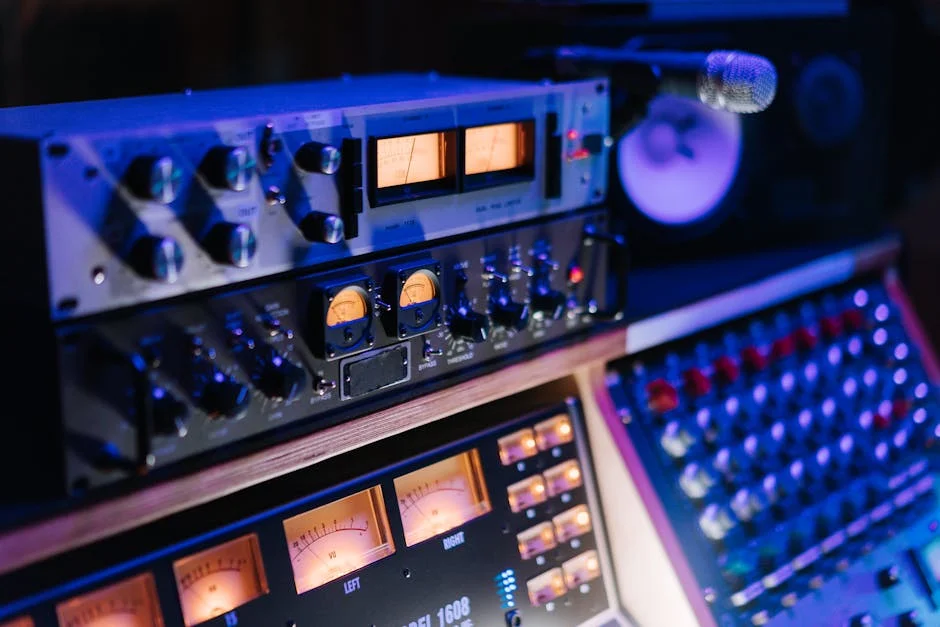
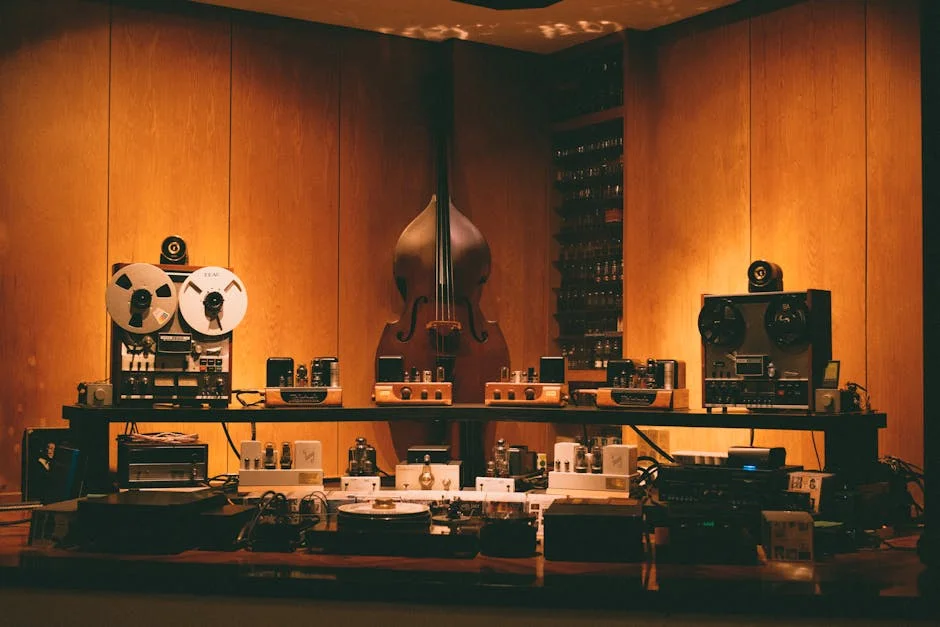
Tube Rolling Headphone Amp: A Practical Guide
Affiliate disclosure: Some links on this page are affiliate links. If you buy through them we earn a small commission at no extra cost to you. Recommendations are research-driven; we don't claim personal use of every product reviewed. Product prices and availability are accurate as of the date published and are subject to change. Always check Amazon for current pricing before purchasing. Learn more.
Quick Picks
TOPPING L50 NFCA Balanced Headphone Amplifier 3500mWx3500mW
NFCA technology delivers near-perfect ASR measurements
Buy on AmazonTOPPING L30II NFCA Linear Headphone Amp 6.35mm Jack RCA Input Output
NFCA technology in a budget-priced amplifier
Buy on AmazonTOPPING L70 Full Balanced NFCA Headphone Amplifier 7500mWx2
7500mW balanced output drives the most demanding planar headphones
Buy on Amazon| Product | Price Range | Top Strength | Key Weakness | Buy |
|---|---|---|---|---|
| TOPPING L50 NFCA Balanced Headphone Amplifier 3500mWx3500mW also consider | $$ | NFCA technology delivers near-perfect ASR measurements | No tube warmth , purely solid-state clinical performance | Buy on Amazon |
| TOPPING L30II NFCA Linear Headphone Amp 6.35mm Jack RCA Input Output also consider | $ | NFCA technology in a budget-priced amplifier | No balanced output , 6.35mm only at this price tier | Buy on Amazon |
| TOPPING L70 Full Balanced NFCA Headphone Amplifier 7500mWx2 also consider | $$ | 7500mW balanced output drives the most demanding planar headphones | Premium price over L50 for more power most users won't need | Buy on Amazon |
| Topping A50s Balanced Headphone Amplifier NFCA 3500mW 4.4mm also consider | $ | Balanced 4.4mm headphone output at budget-mid pricing | L50 offers only modest additional cost for more power | Buy on Amazon |
| Schiit Magni Heresy Headphone Amplifier and Preamp also consider | $ | Made in the USA at budget pricing | No balanced output at this price tier | — |
| Schiit Magnius Balanced Headphone Amp and Preamp also consider | $ | 5000mW balanced headphone output at accessible pricing | Measurements not class-leading compared to Topping at similar price | — |
| Schiit Valhalla 2 OTL Pure Triode Tube Headphone Amp and Preamp also consider | $$ | OTL pure triode design , classic tube warmth for high-impedance headphones | OTL design not suited for low-impedance or planar headphones | — |
| Schiit Lyr 3 Tube Hybrid Headphone Amplifier also consider | $$ | Hybrid tube/solid-state design offers tube character with solid-state power | Tube rolling affects performance significantly , requires research | — |
Tube rolling a headphone amp is one of those topics that gets discussed constantly on Head-Fi and ASR, yet rarely gets a clear, practical explanation for people who are still building their first proper desktop stack. The short version: swapping tubes in a compatible amplifier can meaningfully shift tonal character, and for the right headphone pairings, that shift is worth understanding before you buy.
Three years in, I’ve learned that the solid-state versus tube question is not really about which is “better.” It is about what you are pairing, what you are listening to, and how much you want to tinker. This piece covers the core concepts and walks through eight amplifiers, from budget solid-state references to genuine tube rolling candidates, so you can make an informed choice.

What Is Tube Rolling in a Headphone Amp?
Tube rolling refers to the practice of replacing the stock vacuum tubes in a compatible amplifier with alternative tubes, either of the same type or compatible substitute types. The goal is usually to shift the amp’s sonic character: reducing grain, softening transients, adding midrange density, or changing how the amp interacts with a specific headphone’s impedance curve.
Not every headphone amp supports tube rolling. Solid-state amps, which make up the majority of the Headphone Amplifiers category at the budget and mid tiers, use transistors and op-amps rather than vacuum tubes. You cannot roll tubes in a Topping L50 or a Schiit Magni Heresy. Rolling is exclusive to tube amps and tube hybrid amps where the tube stage is accessible and where the designer has allowed for compatible tube variants.
Why People Roll Tubes
The most common reason buyers roll tubes is tonal preference. A 1960s Mullard or Telefunken new-old-stock (NOS) tube will behave differently from a modern Chinese production tube, even when both are electrically compatible. Verified buyers of tube-capable amps consistently report that NOS tubes from specific production eras can reduce grain and add midrange bloom compared to stock tubes.
The second reason is impedance matching. Output transformer-less (OTL) tube amps are especially sensitive to headphone impedance. Rolling in a tube with different internal plate resistance can subtly shift how an OTL amp drives a 150 or 300 ohm headphone. This is not magic: it is basic circuit interaction, and it is why OTL amps and high-impedance Sennheiser headphones are so frequently discussed together.
The third reason is straightforward experimentation. Part of the hobby is tinkering. Tube rolling gives you a meaningful variable to change without buying an entirely new amplifier.
What Tube Rolling Cannot Do
Tube rolling cannot fix a fundamental mismatch between amp topology and headphone load. An OTL amp that is poorly suited for a 32 ohm planar headphone will not become a good pairing just because you install a NOS Mullard. Rolling also cannot dramatically alter frequency response in the way that EQ can. The shifts are real but subtle: think of them as seasoning, not a recipe change.
I am also skeptical of the more extreme claims you will see on some Head-Fi threads. Rolling tubes will not produce night-and-day differences audible across the room. At my experience level, I think the honest framing is: tube rolling is a fine-tuning tool, not a cure-all.
Buying Guide: Choosing Between Solid-State and Tube Rolling Amps

Understanding Your Headphone’s Impedance Requirements
The single most important variable in this decision is headphone impedance. High-impedance dynamic headphones, especially anything in the Sennheiser HD 600/650/800 family, are well-documented pairings for OTL tube amps. Field reports from Head-Fi and owner discussions at meetups consistently back this up. Low-impedance headphones below 50 ohms and planar magnetics generally perform better with high-current solid-state amplification.
If you are running planar magnetic headphones specifically, I have come around on the “scales with source” advice I once dismissed. It turned out to have real content for planars specifically, in a way that surprised me. For those headphones, the measurement-reference solid-state options in this list are worth considering first.
You can find more context on impedance matching and topology in the broader headphone amplifier coverage on this site.
Solid-State Measurements Versus Tube Character
Measurement-reference solid-state amps from Topping score exceptionally well on ASR’s benchmarks: low noise floor, negligible THD, flat frequency response. For those who trust measurements as a primary filter, these amps are a logical starting point. The ASR data is public and I defer to it rather than my own bench work, which I do not do.
Tube amps, by contrast, introduce measurable harmonic distortion, primarily even-order harmonics that some listeners find pleasant. Whether that distortion is a feature or a flaw is a genuinely subjective question. The honest answer from community consensus across Head-Fi, Resolve Reviews, and Crinacle’s commentary is that tube character is audible and real, but whether you prefer it depends on your headphones and your library.
Budget Allocation and Ongoing Costs
Solid-state amps have a fixed purchase cost and essentially zero ongoing cost. Tube amps add tube replacement and rolling costs over time. NOS tubes from reputable sellers can range from modest to significant in price depending on rarity. Budget accordingly when you calculate total cost of ownership.
The Schiit Valhalla 2 and Lyr 3 both support tube rolling, and owner reports suggest the stock tubes are competent starting points. But if you want to explore NOS alternatives, that is a real additional budget line. Factor it in before committing.
Stack Synergy and DAC Pairing
Topping amps pair naturally with the E30 II or E50 DAC for a clean measurement-reference stack. Schiit amps pair naturally with the Modi or Modius, depending on whether you want single-ended or balanced source output.
The Lyr 3 adds a modular DAC card option that lets you run a one-box solution if you prefer. That is a legitimate convenience feature for smaller desktops.
Matching Topology to Your Goals
If your goal is measurement-reference performance with maximum output power for demanding planars, solid-state NFCA options from Topping are the community consensus recommendation. If your goal is tube character and you own high-impedance dynamic headphones, the Valhalla 2 is the most-cited pairing across forum threads I have read. If you want tube character with the flexibility to drive a wider headphone range, the Lyr 3’s hybrid topology is the more versatile choice.
No single amp is the right answer for every headphone. That is the central point of this entire category.
Top Picks
Topping L50 NFCA Balanced Headphone Amplifier
The Topping L50 NFCA Balanced Headphone Amplifier is the amp half of my personal desktop stack, paired with the E50 DAC. On my Topping stack, into the L50 at 9 o’clock, the HD600 is controlled and resolving without any grain I can identify. NFCA topology is Topping’s proprietary negative feedback current amplifier design, and ASR’s measurements place it at or near the top of its class for noise floor and distortion performance.
The balanced 4-pin XLR and 6.35mm headphone outputs give you flexibility depending on your cable termination. The 3500mW balanced output handles my HiFiMan Sundara without complaint. Listening through Qobuz with Nick Drake’s Pink Moon and Radiohead’s Kid A, the L50 presents those recordings cleanly without adding coloration.
This amp is not a tube rolling candidate. There are no tubes here. If you want warmth or harmonic bloom, you will need to introduce EQ or choose a different amp. But if your priority is a clean, high-measured reference with real output power, this is the stack I would recommend at its price band.
Check current price on Amazon.
Topping L30 II NFCA Linear Headphone Amp
The Topping L30 II brings NFCA technology into the budget tier, making Topping’s measurement credentials accessible to first-stack builders who do not need balanced output. ASR’s data on the L30 II confirms competitive performance at its price band, with low noise and distortion figures that punch above what you might expect.
The 6.35mm-only output is the main limitation here. No balanced headphone output means you are locked to single-ended connections, which is a real constraint if you later acquire a headphone with aftermarket balanced cables. The RCA input and output do allow flexible stack configuration with a budget DAC like the E30 II.
Owner reviews consistently describe the L30 II as a clean, transparent amplifier that does not add character of its own. That is the point. For budget stack builders who want measurement-reference sound and can live without balanced output, this is the logical entry into Topping’s amp lineup.
Check current price on Amazon.
Topping L70 Full Balanced NFCA Headphone Amplifier
The Topping L70 sits at the top of Topping’s amplifier stack, delivering 7500mW of balanced output with a fully balanced NFCA topology. ASR’s measurements place it among the top-performing headphone amps measured to date, with vanishingly low noise and distortion numbers.
The honest question for most buyers is whether they actually need 7500mW. The community consensus from Head-Fi and ASR forum discussions is that most headphones, including demanding planars like the HiFiMan Sundara, are well-served by the L50’s output. The L70 is most relevant if you are running particularly inefficient planars or want the most measured-capable amp available regardless of whether the extra power headroom is audible in practice.
The 12V trigger for system integration is a practical feature that distinguishes the L70 from its siblings, useful for larger desktop systems. This is not a tube rolling candidate, and it produces no warmth or coloration by design.
Check current price on Amazon.
Topping A50s Balanced Headphone Amplifier
The Topping A50s occupies the mid-point of Topping’s lineup, positioned between the L30 II and the L50. Its defining feature at its price band is the 4.4mm Pentaconn balanced headphone output, which has become a common termination on aftermarket IEM and headphone cables. If your source chain or cables favor 4.4mm over 4-pin XLR, the A50s covers that without additional adapters.
ASR measurements confirm competitive performance in line with Topping’s other NFCA designs. The combination of RCA and XLR inputs gives source flexibility that the L30 II lacks. Owner feedback generally positions the A50s as a clean, transparent performer that follows Topping’s house sound: neutral, low-distortion, no added character.
The main consideration is whether the modest pricing gap to the L50 makes the A50s the better choice for your specific output needs. For buyers whose primary use case involves 4.4mm-terminated cables, the A50s solves that problem cleanly.
Check current price on Amazon.
Schiit Magni Heresy Headphone Amplifier and Preamp
The Schiit Magni Heresy earns its name from the fact that Schiit, a company associated with tube designs, built a clean solid-state amp that measures competitively on ASR. Made in the USA, the Magni Heresy pairs naturally with the Modi 3+ for the classic entry-level Schiit stack and has been a community recommendation for budget buyers since its release.
The gain switch is a practical feature for pairing with sensitive IEMs without introducing noise floor issues. The pre-amp output adds speaker integration flexibility that the Topping L30 II does not offer. ASR’s data shows solid performance at its price band, though Topping’s NFCA designs post slightly better raw numbers.
There are no tubes here and no rolling capability. This is a clean solid-state amp made domestically at a budget price, and the Schiit ecosystem integration is a genuine convenience for buyers who plan to expand within that brand.
Check current price on Amazon.
Schiit Magnius Balanced Headphone Amp and Preamp
The Schiit Magnius scales up from the Magni Heresy with 5000mW of balanced output and full XLR connectivity, also made in the USA. Paired with the Modius DAC, it forms Schiit’s balanced entry stack. Owner feedback on Head-Fi describes it as a clean, neutral solid-state performer with enough power for most planar magnetic headphones.
Measurement-wise, the Magnius is competent but community consensus from ASR discussions acknowledges that Topping’s NFCA designs post better raw figures at comparable price bands. Whether that measurement gap translates to audible differences in practice is a question most owners answer as “not really,” though preferences vary.
The pre-amp output and balanced XLR connectivity make the Magnius a flexible stack component for buyers who want to integrate powered speakers alongside their headphone listening. This is not a tube rolling candidate.
Check current price on Amazon.
Schiit Valhalla 2 OTL Pure Triode Tube Headphone Amp and Preamp
The Schiit Valhalla 2 is the most-cited tube amp recommendation for high-impedance dynamic headphone owners, particularly the Sennheiser HD 600, HD 650, and HD 800 family. The OTL (output transformer-less) pure triode design is a real tube amp with a real tube sound, and the consensus across Head-Fi and Resolve Reviews is that its pairing with those Sennheiser headphones specifically is well-matched at its price band.
Tube rolling is central to the Valhalla 2 conversation. Stock tubes are functional, but owner reports consistently indicate that NOS tubes from Mullard or Telefunken production eras can meaningfully shift the amp’s character toward warmer midrange and reduced grain. This is the type of verified buyer feedback I defer to rather than presenting as personal discovery. The tube rolling possibilities are part of what justifies the Valhalla 2’s price premium over solid-state budget options.
Important caveats: The OTL design is not suited for low-impedance headphones or planars. If you run a HiFiMan Sundara or a 32 ohm dynamic, this is not the right amp. I want to be careful about my framing here. Tube sound is subjective, measurements are not optimal, and the Valhalla 2 is a deliberate tonal choice rather than a neutral tool. If that is what you are looking for with the right headphone pairing, field reports from the community back it strongly.
Check current price on Amazon.
Schiit Lyr 3 Tube Hybrid Headphone Amplifier
The Schiit Lyr 3 uses a hybrid topology: a single tube input stage followed by a solid-state output stage. The result is an amp that offers some tube character and tube rolling capability while maintaining enough output power to drive low-impedance and planar headphones that an OTL design like the Valhalla 2 cannot handle well. At 6W into 32 ohms, the Lyr 3 posts some of the highest output figures in its class.
Tube rolling on the Lyr 3 centers on its single tube position, which accepts a range of compatible types including 6SN7 and adapter-compatible variants. Owner discussions on Head-Fi indicate that rolling does produce audible shifts in midrange density and top-end smoothness, consistent with what a tube input stage would contribute. The changes are more subtle than a full OTL design, which is expected given that the output stage remains solid-state.
The optional modular DAC card is a practical convenience for buyers who want to simplify their desktop setup. At its price band, the Lyr 3 sits above the Valhalla 2 and is the community recommendation for tube-curious buyers who need versatility across headphone types rather than the narrower OTL pairing sweet spot.
Check current price on Amazon.
Closing Thoughts
The tube rolling headphone amp conversation is genuinely interesting once you get past the mythology. Solid-state amps from Topping offer measurement-reference performance with no ongoing costs and no load-matching constraints. Tube amps and hybrids from Schiit offer tonal character and the ability to fine-tune through rolling, at the cost of added complexity and a narrower headphone compatibility window.
For more context on how these amplifiers fit into broader desktop stack planning, the headphone amplifier section of this site covers additional options across all price bands. Start with your headphone’s impedance, decide how much you want to tinker, and match the topology to the task.

Frequently Asked Questions
Can you tube roll any headphone amplifier?
No. Tube rolling is only possible in amplifiers that use vacuum tubes as part of their circuit design. Solid-state amplifiers, including all four Topping amps covered here and the Schiit Magni Heresy and Magnius, use transistors and have no tubes to replace. Only the Schiit Valhalla 2 and Lyr 3 in this lineup support tube rolling, and even those require research into compatible tube types before purchasing replacements.
Is the Schiit Valhalla 2 a good match for planar magnetic headphones?
No. The Valhalla 2’s OTL topology is optimized for high-impedance dynamic headphones, particularly the Sennheiser HD 600, HD 650, and HD 800 family. Planar magnetic headphones typically present low impedance and need high current output, which an OTL design does not deliver efficiently. For planars, a high-current solid-state amp like the Topping L50 or L70 is the community consensus recommendation based on owner reports.
Do tube amps measure worse than solid-state amps?
Generally yes, by conventional metrics. Tube amps introduce harmonic distortion, primarily even-order, that solid-state NFCA designs like Topping’s lineup essentially eliminate. ASR’s measurements confirm this clearly. Whether measurable even-order distortion is audibly pleasant or audibly problematic is a subjective question that the community debates actively.
What is the difference between the Topping L50 and the Topping L70?
Both use Topping’s NFCA topology and post exceptional ASR measurements. The primary difference is output power: the L50 delivers 3500mW balanced while the L70 delivers 7500mW balanced. The L70 also adds a 12V trigger for system integration. For most headphones, including demanding planars like the HiFiMan Sundara, owner reports suggest the L50’s output is fully sufficient.
Does tube rolling make a noticeable difference in sound?
Based on verified buyer reports across Head-Fi and community discussions, tube rolling produces real but subtle shifts in tonal character rather than dramatic overhauls. NOS tubes from Mullard or Telefunken production eras are frequently cited as adding midrange warmth and reducing grain compared to modern stock tubes. The effect is more pronounced in full tube designs like the Valhalla 2 than in hybrids like the Lyr 3. Treat rolling as fine-tuning, not a fundamental redesign of the amp’s sound.

<script type="application/ld+json">
{
"@context": "https://schema.org",
"@type": "FAQPage",
"mainEntity": [
{
"@type": "Question",
"name": "Can you tube roll any headphone amplifier?",
"acceptedAnswer": {
"@type": "Answer",
"text": "No. Tube rolling is only possible in amplifiers that use vacuum tubes as part of their circuit design. Solid-state amplifiers, including all four Topping amps covered here and the Schiit Magni Heresy and Magnius, use transistors and have no tubes to replace. Only the Schiit Valhalla 2 and Lyr 3 in this lineup support tube rolling, and even those require research into compatible tube types before purchasing replacements."
}
},
{
"@type": "Question",
"name": "Is the Schiit Valhalla 2 a good match for planar magnetic headphones?",
"acceptedAnswer": {
"@type": "Answer",
"text": "No. The Valhalla 2's OTL topology is optimized for high-impedance dynamic headphones, particularly the Sennheiser HD 600, HD 650, and HD 800 family. Planar magnetic headphones typically present low impedance and need high current output, which an OTL design does not deliver efficiently. For planars, a high-current solid-state amp like the Topping L50 or L70 is the community consensus recommendation based on owner reports."
}
},
{
"@type": "Question",
"name": "Do tube amps measure worse than solid-state amps?",
"acceptedAnswer": {
"@type": "Answer",
"text": "Generally yes, by conventional metrics. Tube amps introduce harmonic distortion, primarily even-order, that solid-state NFCA designs like Topping's lineup essentially eliminate. ASR's measurements confirm this clearly. Whether measurable even-order distortion is audibly pleasant or audibly problematic is a subjective question that the community debates actively. Measurements are a useful starting filter, but they do not fully capture the listening experience for every user."
}
},
{
"@type": "Question",
"name": "What is the difference between the Topping L50 and the Topping L70?",
"acceptedAnswer": {
"@type": "Answer",
"text": "Both use Topping's NFCA topology and post exceptional ASR measurements. The primary difference is output power: the L50 delivers 3500mW balanced while the L70 delivers 7500mW balanced. The L70 also adds a 12V trigger for system integration. For most headphones, including demanding planars like the HiFiMan Sundara, owner reports suggest the L50's output is fully sufficient. The L70 is most relevant for extremely inefficient loads or buyers who want maximum headroom."
}
},
{
"@type": "Question",
"name": "Does tube rolling make a noticeable difference in sound?",
"acceptedAnswer": {
"@type": "Answer",
"text": "Based on verified buyer reports across Head-Fi and community discussions, tube rolling produces real but subtle shifts in tonal character rather than dramatic overhauls. NOS tubes from Mullard or Telefunken production eras are frequently cited as adding midrange warmth and reducing grain compared to modern stock tubes. The effect is more pronounced in full tube designs like the Valhalla 2 than in hybrids like the Lyr 3. Treat rolling as fine-tuning, not a fundamental redesign of the amp's sound."
}
}
]
}
</script>Where to Buy
TOPPING L50 NFCA Balanced Headphone Amplifier 3500mWx3500mWSee TOPPING L50 NFCA Balanced Headphone A… on Amazon