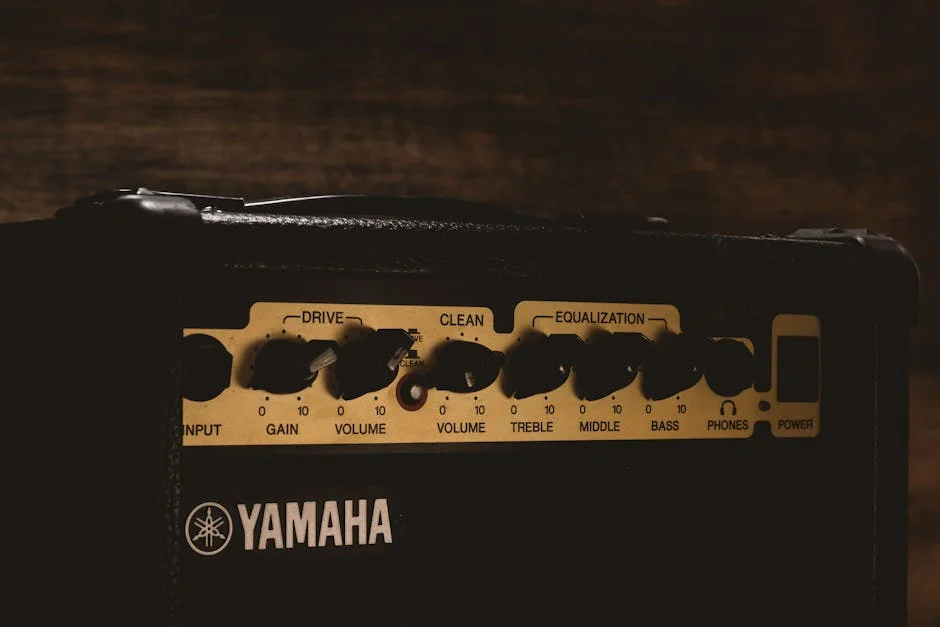
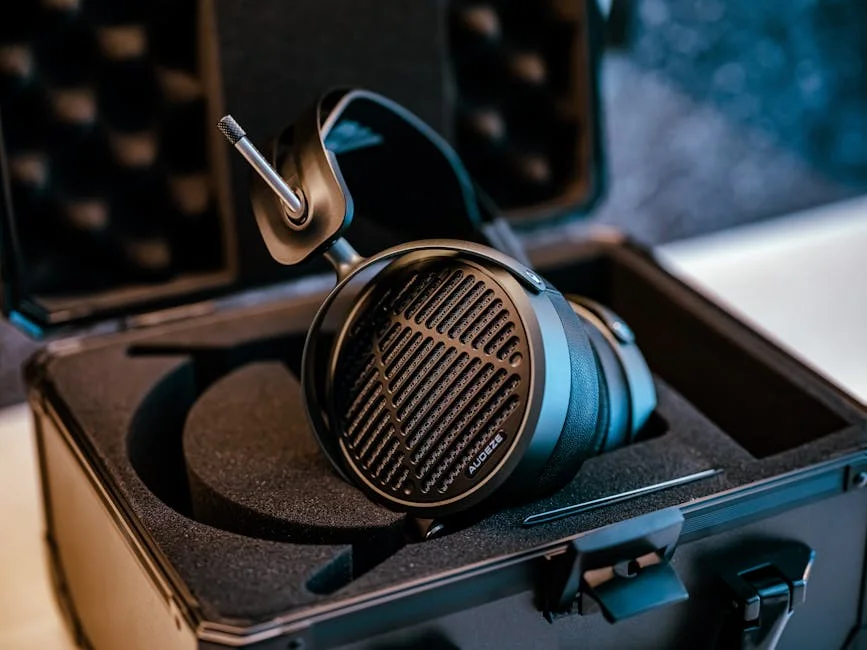
Tube vs Solid State Amp: Technical Differences Explained
Affiliate disclosure: Some links on this page are affiliate links. If you buy through them we earn a small commission at no extra cost to you. Recommendations are research-driven; we don't claim personal use of every product reviewed. Product prices and availability are accurate as of the date published and are subject to change. Always check Amazon for current pricing before purchasing. Learn more.
Quick Picks
TOPPING L50 NFCA Balanced Headphone Amplifier 3500mWx3500mW
NFCA technology delivers near-perfect ASR measurements
Buy on AmazonTOPPING L30II NFCA Linear Headphone Amp 6.35mm Jack RCA Input Output
NFCA technology in a budget-priced amplifier
Buy on AmazonTOPPING L70 Full Balanced NFCA Headphone Amplifier 7500mWx2
7500mW balanced output drives the most demanding planar headphones
Buy on Amazon| Product | Price Range | Top Strength | Key Weakness | Buy |
|---|---|---|---|---|
| TOPPING L50 NFCA Balanced Headphone Amplifier 3500mWx3500mW also consider | $$ | NFCA technology delivers near-perfect ASR measurements | No tube warmth , purely solid-state clinical performance | Buy on Amazon |
| TOPPING L30II NFCA Linear Headphone Amp 6.35mm Jack RCA Input Output also consider | $ | NFCA technology in a budget-priced amplifier | No balanced output , 6.35mm only at this price tier | Buy on Amazon |
| TOPPING L70 Full Balanced NFCA Headphone Amplifier 7500mWx2 also consider | $$ | 7500mW balanced output drives the most demanding planar headphones | Premium price over L50 for more power most users won't need | Buy on Amazon |
| Topping A50s Balanced Headphone Amplifier NFCA 3500mW 4.4mm also consider | $ | Balanced 4.4mm headphone output at budget-mid pricing | L50 offers only modest additional cost for more power | Buy on Amazon |
| Schiit Magni Heresy Headphone Amplifier and Preamp also consider | $ | Made in the USA at budget pricing | No balanced output at this price tier | — |
| Schiit Magnius Balanced Headphone Amp and Preamp also consider | $ | 5000mW balanced headphone output at accessible pricing | Measurements not class-leading compared to Topping at similar price | — |
| Schiit Valhalla 2 OTL Pure Triode Tube Headphone Amp and Preamp also consider | $$ | OTL pure triode design , classic tube warmth for high-impedance headphones | OTL design not suited for low-impedance or planar headphones | — |
| Schiit Lyr 3 Tube Hybrid Headphone Amplifier also consider | $$ | Hybrid tube/solid-state design offers tube character with solid-state power | Tube rolling affects performance significantly , requires research | — |
Three years into this hobby, the single question I see repeated most often in headphone communities isn’t about drivers or DACs. It’s this: tube or solid state? It’s an honest question that deserves a straightforward answer, and the truth is that neither topology wins universally. The right choice depends on what headphones you’re driving, what sonic character you want, and how much you value measurement performance versus subjective warmth.
This educational piece covers the core technical differences between tube and solid state amplification, then walks through eight specific amplifiers across both camps. For a broader look at the full landscape, the Headphone Amplifiers hub is the right starting point.

Tube vs. Solid State: The Core Technical Difference
Before getting into specific products, it helps to understand what separates these two amplifier topologies at a fundamental level. The difference isn’t mystical. It’s electrical.
Solid state amplifiers use transistors (MOSFETs or BJTs) as their active gain elements. Transistors switch and amplify extremely quickly, produce very low distortion when designed well, and generate output impedance numbers close to zero. That near-zero output impedance matters because it means the amplifier has tight control over the headphone driver across the entire frequency range.
Tube amplifiers use vacuum tubes as their gain elements. Tubes amplify via thermionic emission, a process that is inherently slower and introduces more distortion than a well-designed transistor circuit. But here is where the topology gets interesting: the distortion profile of tubes is dominated by even-order harmonics, particularly the second harmonic, which many listeners find pleasant rather than irritating. Solid state distortion, when it occurs, tends toward odd-order harmonics, which are generally considered harsher-sounding to human ears. This difference in distortion character is a large part of why people describe tube sound as “warm” or “musical.”
There is also a practical concern with tubes: output impedance. Most tube amplifiers have higher output impedance than solid state designs. The Schiit Valhalla 2, for example, is an OTL (output transformer-less) design with relatively high output impedance. The interaction between a tube amp’s output impedance and a headphone’s impedance curve shapes the frequency response you actually hear. For high-impedance headphones like the Sennheiser HD 600 (300 ohms), this interaction is relatively benign because the headphone’s impedance stays high and fairly flat. For low-impedance headphones or planar magnetics with near-flat 20-50 ohm loads, that same interaction can cause audible frequency response changes. That is not an opinion. It is measurable behavior, and it is why tube amp pairing matters so much.
Hybrid Tube Amps: A Middle Path
Some amplifiers use a single tube in the input or driver stage while relying on solid state transistors for the output stage. This “hybrid” topology attempts to capture the tonal character of tubes while maintaining the power delivery and low output impedance of solid state. The Schiit Lyr 3 is the clearest example in this product list. Hybrid designs are worth understanding separately because they do not behave identically to either pure tube or pure solid state amps.
Measurements and the ASR Framework
I am measurement-aware without being a measurement absolutist. For objective data, I trust ASR. Their bench testing of amplifiers covers SINAD, noise floor, output impedance, crosstalk, and frequency response. Topping’s NFCA-topology amps consistently sit at or near the top of ASR’s charts. Schiit’s solid state amps measure competitively but generally not at Topping’s level. Schiit’s tube amps do not compete on SINAD at all, and that is fine, because SINAD is not the only axis that matters.
The useful framing here is this: if measurements were everything, everyone would buy Topping and the conversation would end. Measurements are necessary context, not the full picture. Some listeners genuinely prefer the sound character of a tube amp with a headphone they love, and that preference is valid even if it does not show up favorably on an ASR graph.
Buying Guide: Choosing Between Tube and Solid State

Know Your Headphone’s Impedance and Sensitivity
The single most important factor in this decision is the load your headphone presents. High-impedance dynamic headphones in the 150-600 ohm range, the Sennheiser HD 600, HD 650, and HD 800 family being the canonical examples, pair well with tube amplifiers because the impedance mismatch effects are minimal at those loads. Low-impedance dynamic headphones and planar magnetics sit in different territory entirely. Planars tend toward flat 20-50 ohm loads, and even a modest output impedance in the tube amp can shift the frequency response measurably. If you’re running planars, solid state is the technically correct starting point.
Sensitivity matters too. Highly sensitive IEMs and some dynamic drivers can expose the noise floor of tube amplifiers in ways that solid state amps, especially NFCA-topology amps like Topping’s lineup, simply do not. For Headphone Amplifiers pairings with sensitive gear, the lower noise floor of solid state is a meaningful practical advantage.
The Case for Solid State First
Three years in, I’ve settled on a clear recommendation for new buyers: start with solid state. The reasons are practical. Solid state amps have no tubes to roll or replace, no warmup time, lower noise floors, and tend to be easier to measure and compare. Budget and mid-range solid state options like the Topping L30 II and Magni Heresy give you accurate amplification with known, trusted measurements for a modest outlay. You learn what your headphones actually sound like before adding the variable of tube coloration.
The “scales with source” phenomenon is real for some headphones. I dismissed it as audiophile mythology for a long time and was wrong about that, specifically with planar magnetics. But the lesson I took from that experience is: know your baseline first. A well-measured solid state amp gives you a clean reference. Once you know that baseline, you can make an informed choice about whether tube coloration adds something you want.
When Tube Amplification Makes Sense
If you already own or are planning to buy the Sennheiser HD 600, HD 650, HD 6XX, or HD 800S, a tube amp is worth serious consideration. The community consensus across Head-Fi, Resolve Reviews, and long-running forum threads is consistent: the OTL pairing of the Valhalla 2 with the HD 600 family produces something that clean solid state amps do not. It is not more accurate. It is more pleasing to many ears on certain music.
The same applies to listeners who have heard both topologies with their specific headphones, ideally at a meetup or a dealer, and have a clear preference for tube character. That preference is legitimate. Chasing it is not irrational.
Budget Realities Across Both Camps
At budget pricing, solid state has a clear practical advantage. The Magni Heresy and L30 II give you competent, measured amplification for an entry-level outlay. No tube amp at a similar price point offers comparable measurement performance, and budget tube amps often have significant quality control variability. Mid-range pricing is where tube options become genuinely compelling, because amps like the Valhalla 2 and Lyr 3 are built to a quality level that justifies the topology’s tradeoffs. If your budget puts you in the tube tier and your headphones are a good match, the case for tube amplification gets much stronger.
Tube Rolling and Long-Term Ownership Costs
Tube amps involve ongoing tube-related decisions that solid state amps do not. Tubes have finite lifespans, typically measured in thousands of hours, and tube rolling (swapping in different tubes to change the sound character) is a hobby within the hobby for some owners. Field reports from Head-Fi indicate that Valhalla 2 and Lyr 3 owners frequently spend as much exploring tube options as they spent on the amplifier itself. This is either a feature or a drawback depending on your temperament. If you enjoy the tinkering, tube rolling is genuinely engaging. If you want to set it and forget it, solid state is simpler.
Top Picks
Topping L50 NFCA Balanced Headphone Amplifier
The Topping L50 is the amp half of my personal desktop stack, paired with the E50 DAC. On my Topping stack, every headphone I own gets authoritative power delivery with a dead-black noise floor. Into the L50 at 9 o’clock on the dial, the HD 600 opens up with notable control across the bass region. The HiFiMan Sundara, which is notoriously source-dependent in my experience, responds well to the L50’s balanced output with genuine grip in the lower frequencies that laptop outputs simply do not provide.
NFCA (Nested Feedback Composite Amplifier) is Topping’s proprietary topology, and it measures at or near the top of ASR’s amplifier charts. For measurements, I defer to ASR’s data. What I can say from my own listening: the L50 does not editorialize. It passes whatever the DAC gives it. Balanced 4-pin XLR and 6.35mm headphone outputs cover all standard headphone terminations at this tier. The L50 is the reference I recommend when someone asks me what clean solid state amplification sounds like at mid-range pricing.
Check current price on Amazon.
Topping L30 II NFCA Linear Headphone Amp
The Topping L30 II brings Topping’s NFCA topology to budget-tier pricing, which is a meaningful achievement. Verified buyers consistently report noise floor performance that competes with more expensive amplifiers, and ASR’s measurements confirm that the L30 II punches well above its price band on objective metrics. The tradeoff is output power and the absence of balanced headphone output, which limits compatibility with very demanding planars at higher volumes.
For the Sennheiser HD 600, the ATH-M50x, and most standard-impedance dynamic headphones, owner reports indicate the L30 II delivers more than sufficient drive. The RCA input and output also allow flexible integration into a stack configuration, which makes it a practical pairing with the E30 II DAC for a budget desktop stack with Topping’s measurement credentials. If your headphones are not power-hungry and you are budget-constrained, this is where the Topping line starts.
Check current price on Amazon.
Topping L70 Full Balanced NFCA Headphone Amplifier
The Topping L70 is Topping’s fully balanced flagship amp, with 7500mW of balanced output that exceeds what the L50 offers. ASR’s measurements place it at the top tier of the amp charts. The practical question for most buyers is honest: do you need 7500mW? For HiFiMan Arya, Audeze LCD-X, and other demanding planars that genuinely benefit from headroom, spec data and field reports from planar-focused communities suggest the L70’s additional power is audibly meaningful at high listening levels. For the HD 600 or Sundara-class headphones, the L50 is sufficient.
The 12V trigger for system integration is a practical feature that desk-system builders appreciate, and the fully balanced topology from input to output is technically cleaner than single-ended-to-balanced conversion. The L70 is the right choice for builders who own or are planning to own multiple demanding planars and want a solid state reference amp they will not outgrow.
Check current price on Amazon.
Topping A50s Balanced Headphone Amplifier
The Topping A50s sits between the L30 II and L50 in Topping’s lineup, and its defining feature at this price band is the balanced 4.4mm headphone output. The Pentaconn 4.4mm connector is increasingly common on mid-range headphone cables, and having native balanced output without stepping up to the L50’s price point is a genuine differentiator. ASR measurements confirm strong performance, though the L50 does edge it out on raw power figures.
Owner reports and forum discussions on Head-Fi suggest the A50s is a compelling choice for buyers who have already recabled their headphones to 4.4mm balanced and want to avoid the larger outlay of the L50. The RCA and XLR inputs offer source flexibility. For buyers who are undecided between the A50s and L50, the consensus tends toward the L50 for the meaningful power increase, but the A50s holds its own as a measured, balanced option in a price band that does not always offer balanced connectivity.
Check current price on Amazon.
Schiit Magni Heresy Headphone Amplifier and Preamp
The Schiit Magni Heresy earned its name honestly. Schiit, a company historically associated with tube amplification, built the Heresy as a deliberately clean, measured solid state amp, and then named it accordingly. ASR’s bench data shows competitive performance at budget pricing, and the inclusion of a gain switch and pre-amp output makes it more flexible than its price band might suggest. Made in the USA, which matters to some buyers as a brand-value consideration.
Field reports from Schiit forum communities and Head-Fi threads consistently describe the Heresy as the entry point into the Schiit stack ecosystem for buyers who want clean solid state performance. It pairs naturally with the Modi 3+ for the classic budget Schiit combination. If you have a slight brand preference for Schiit’s American manufacturing and customer service reputation, or if you are invested in the Schiit stack aesthetic, the Heresy delivers comparable budget-tier performance to Topping’s L30 II with its own set of practical tradeoffs.
Check current price on Amazon.
Schiit Magnius Balanced Headphone Amp and Preamp
The Schiit Magnius is Schiit’s balanced solid state amplifier, offering 5000mW of balanced output and balanced XLR connectivity at a price that competes directly with Topping’s mid-range stack options. Made in the USA, pre-amp output with balanced XLR, and the Schiit design ethos are the arguments for this amp. The honest counterpoint is that Topping’s NFCA topology amps, at similar price points, show cleaner measurements on ASR’s charts, and measurement-first buyers will notice that gap in the data.
That said, community consensus is not entirely one-sided here. Verified buyers who are invested in the Schiit ecosystem, pairing the Magnius with a Modius DAC for a fully balanced Schiit stack, report satisfaction that aligns with the amp’s performance level. The Magnius is not trying to win on SINAD. It is a well-built, balanced solid state amp with good power figures, domestic manufacturing, and a coherent stack partner. Whether that proposition is compelling at its price band depends on how you weigh those factors.
Check current price on Amazon.
Schiit Valhalla 2 OTL Pure Triode Tube Headphone Amp and Preamp
The Schiit Valhalla 2 is the tube amp recommendation I would give to any HD 600 or HD 650 owner who has the budget and is curious about the tube experience. OTL (output transformer-less) pure triode design means there is no output transformer coloring the sound, which is a design decision that prioritizes transparency within the tube topology. The community consensus across Head-Fi, Resolve Reviews, and Schiit’s own forums is remarkably consistent: the Valhalla 2 and the HD 6XX family share a synergy that is audibly distinct from what a solid state amp produces with the same headphones.
I want to be careful about framing here, because I do not own the Valhalla 2. Based on owner reviews and the extensive Head-Fi documentation, the character is described as a midrange presence and a top-end smoothness that many listeners find compelling for acoustic music, vocals, and jazz. Tube warmth is subjective, and it is not measurement-optimal. The Valhalla 2 is also explicitly not suited for low-impedance headphones or planars. If you are running a Sundara or LCD-X through this amp, field reports indicate the impedance interaction causes audible frequency response shifts. This is an HD 6XX amp. As that, it is broadly regarded as excellent.
Check current price on Amazon.
Schiit Lyr 3 Tube Hybrid Headphone Amplifier
The Schiit Lyr 3 takes a different approach from the Valhalla 2 by combining a single tube input stage with a solid state output stage. This hybrid topology produces more output power than the Valhalla 2 (6W into 32 ohms, per spec data), which means it can drive low-impedance headphones and some planars that the Valhalla 2 cannot. The tube character carries through the solid state output stage in a way that owners consistently describe as more subtle than a pure tube amp but distinctly present.
The Lyr 3’s modular design, which accepts an optional DAC card, is a practical consideration for desk space-limited setups. The significant caveat from community field reports is that tube rolling the Lyr 3 makes a meaningful difference to the sound, and buyers who purchase the amp with the stock tube are often describing a different experience than buyers who have spent time experimenting with NOS (new old stock) tubes. If you want tube character with planar power delivery, and you are willing to invest time in tube research, the Lyr 3 is the option in this list that most directly addresses that combination.
Check current price on Amazon.
Putting It Together
Tube vs. solid state is a real distinction, not an audiophile affectation, but it is also a choice that depends entirely on context. For solid state measurement-reference performance at multiple price points, Topping’s NFCA lineup covers budget through mid-range with class-leading ASR scores. For budget solid state with American manufacturing and good ecosystem integration, Schiit’s Magni Heresy and Magnius fill that role. For tube amplification paired with the right headphones, the Valhalla 2 and Lyr 3 each represent a distinct approach to the same underlying goal: making your headphones sound the way you want them to sound.
If you are still working through the decision on amplifier topology and want to explore the full range of options beyond this list, the headphone amp category page has broader coverage of what is available across all price bands and design philosophies.

Frequently Asked Questions
Does tube or solid state sound better for the Sennheiser HD 600?
Both work, but many experienced listeners lean toward tube amplification for the HD 600 specifically. The high impedance load of the HD 600 pairs well with OTL tube designs like the Valhalla 2, and owner reports frequently describe a midrange presence with tube amps that solid state amps do not replicate. Solid state amps like the L50 offer cleaner measurements and a more neutral character. The honest answer is that both are genuinely good options, and the preference is a matter of taste.
Can a tube amp drive planar magnetic headphones?
Pure OTL tube amps like the Valhalla 2 are generally not suited for planar headphones. The relatively high output impedance of OTL designs interacts with the flat, low impedance load of most planars to cause measurable frequency response shifts. Hybrid tube amps like the Lyr 3 have lower effective output impedance and higher power output, which makes planar pairing more practical. For demanding planars, field reports from community members broadly favor solid state amplification for both accuracy and sufficient drive.
Are tube amps harder to maintain than solid state amps?
Yes, with some nuance. Tubes have a finite lifespan and need eventual replacement, typically after several thousand hours of use. Tube rolling, the practice of swapping in different tube types to change the sound character, adds a research and cost component that solid state ownership does not involve. Owner reports from Valhalla 2 and Lyr 3 communities indicate this is a meaningful ongoing investment for engaged owners.
What does NFCA topology mean for solid state amps?
NFCA stands for Nested Feedback Composite Amplifier, a circuit topology developed by Topping that uses multiple feedback loops to achieve very low distortion and noise. ASR’s bench testing consistently places NFCA-based amps at or near the top of amplifier measurement rankings. In practical terms, NFCA topology means the amplifier adds almost nothing of its own character to the signal. For buyers who prioritize measured accuracy and want the amplifier to be transparent, NFCA is the current benchmark at budget through mid-range pricing.
Should a beginner start with tube or solid state?
Three years in, my honest recommendation is to start with solid state. A clean, well-measured solid state amp gives you an accurate baseline for what your headphones actually sound like. Tube amps add a layer of coloration, impedance interaction, and maintenance complexity that is more meaningful once you have a reference point to compare against. Budget solid state options like the Magni Heresy or L30 II are low-risk entry points. Once you know your baseline, you can make a more informed decision about whether tube character adds something you specifically want.

<script type="application/ld+json">
{
"@context": "https://schema.org",
"@type": "FAQPage",
"mainEntity": [
{
"@type": "Question",
"name": "Does tube or solid state sound better for the Sennheiser HD 600?",
"acceptedAnswer": {
"@type": "Answer",
"text": "Both work, but many experienced listeners lean toward tube amplification for the HD 600 specifically. The high impedance load of the HD 600 pairs well with OTL tube designs like the Valhalla 2, and owner reports frequently describe a midrange presence with tube amps that solid state amps do not replicate. Solid state amps like the L50 offer cleaner measurements and a more neutral character. The honest answer is that both are genuinely good options, and the preference is a matter of taste."
}
},
{
"@type": "Question",
"name": "Can a tube amp drive planar magnetic headphones?",
"acceptedAnswer": {
"@type": "Answer",
"text": "Pure OTL tube amps like the Valhalla 2 are generally not suited for planar headphones. The relatively high output impedance of OTL designs interacts with the flat, low impedance load of most planars to cause measurable frequency response shifts. Hybrid tube amps like the Lyr 3 have lower effective output impedance and higher power output, which makes planar pairing more practical. For demanding planars, field reports from community members broadly favor solid state amplification for both accuracy and sufficient drive."
}
},
{
"@type": "Question",
"name": "Are tube amps harder to maintain than solid state amps?",
"acceptedAnswer": {
"@type": "Answer",
"text": "Yes, with some nuance. Tubes have a finite lifespan and need eventual replacement, typically after several thousand hours of use. Tube rolling, the practice of swapping in different tube types to change the sound character, adds a research and cost component that solid state ownership does not involve. Owner reports from Valhalla 2 and Lyr 3 communities indicate this is a meaningful ongoing investment for engaged owners. If simplicity and set-it-and-forget-it ownership appeal to you, solid state is the lower-maintenance choice."
}
},
{
"@type": "Question",
"name": "What does NFCA topology mean for solid state amps?",
"acceptedAnswer": {
"@type": "Answer",
"text": "NFCA stands for Nested Feedback Composite Amplifier, a circuit topology developed by Topping that uses multiple feedback loops to achieve very low distortion and noise. ASR's bench testing consistently places NFCA-based amps at or near the top of amplifier measurement rankings. In practical terms, NFCA topology means the amplifier adds almost nothing of its own character to the signal. For buyers who prioritize measured accuracy and want the amplifier to be transparent, NFCA is the current benchmark at budget through mid-range pricing."
}
},
{
"@type": "Question",
"name": "Should a beginner start with tube or solid state?",
"acceptedAnswer": {
"@type": "Answer",
"text": "Three years in, my honest recommendation is to start with solid state. A clean, well-measured solid state amp gives you an accurate baseline for what your headphones actually sound like. Tube amps add a layer of coloration, impedance interaction, and maintenance complexity that is more meaningful once you have a reference point to compare against. Budget solid state options like the Magni Heresy or L30 II are low-risk entry points. Once you know your baseline, you can make a more informed decision about whether tube character adds something you specifically want."
}
}
]
}
</script>Where to Buy
TOPPING L50 NFCA Balanced Headphone Amplifier 3500mWx3500mWSee TOPPING L50 NFCA Balanced Headphone A… on Amazon