M50x Upgrade Guide: Best Headphones Beyond Audio-Technica

Affiliate disclosure: Some links on this page are affiliate links. If you buy through them we earn a small commission at no extra cost to you. Recommendations are research-driven; we don't claim personal use of every product reviewed. Product prices and availability are accurate as of the date published and are subject to change. Always check Amazon for current pricing before purchasing. Learn more.

| Product | Price Range | Top Strength | Key Weakness | Buy |
|---|---|---|---|---|
| Audio-Technica ATH-M50X Professional Studio Monitor Headphones Black also consider | $ | Common beginner closed-back with replaceable pads and detachable cables | Mid-bass hump, not as neutral as AKG K371 alternatives | Buy on Amazon |
| Sennheiser HD 600 Open-Back Audiophile Headphones also consider | $$ | Legendary neutral-warm tuning that rewards critical listening | Requires a decent amp to perform at its best | Buy on Amazon |
| HIFIMAN SUNDARA Hi-Fi Headphone Planar Magnetic 2020 Version also consider | $$ | Outstanding planar magnetic imaging and detail at its price | Needs proper amplification, underpowered sources sound thin | Buy on Amazon |
The Audio-Technica ATH-M50x is a common first step into the hobby. It’s a capable closed-back that earns its reputation as a starter headphone. The question isn’t whether to upgrade; it’s which direction makes sense for your listening habits.
This guide covers three headphones worth considering as your next step: the M50x itself as a reference point, the Sennheiser HD 600, and the HiFiMan Sundara. All three earn a place in the Buyer Guides section because the decision between them is genuinely non-obvious.
What to Look For in an M50x Upgrade
Tuning: Neutral vs. Colored
The M50x has a recognizable sound, elevated bass, a mid-bass hump, and a treble peak around 9 kHz. For many buyers, that tuning is fun and forgiving. But it also means you’re not hearing recordings as they were mixed. If your goal is critical listening, evaluating mixes, catching sibilance, identifying mastering decisions, a flatter response is more useful than an exciting one.
The two standard upgrade benchmarks are a neutral-warm tuning (HD 600’s territory) and a flat-extended planar response (Sundara’s territory). Neither is more correct in the abstract; the right answer depends on what you want to do with the headphone.
Open-Back vs. Closed-Back
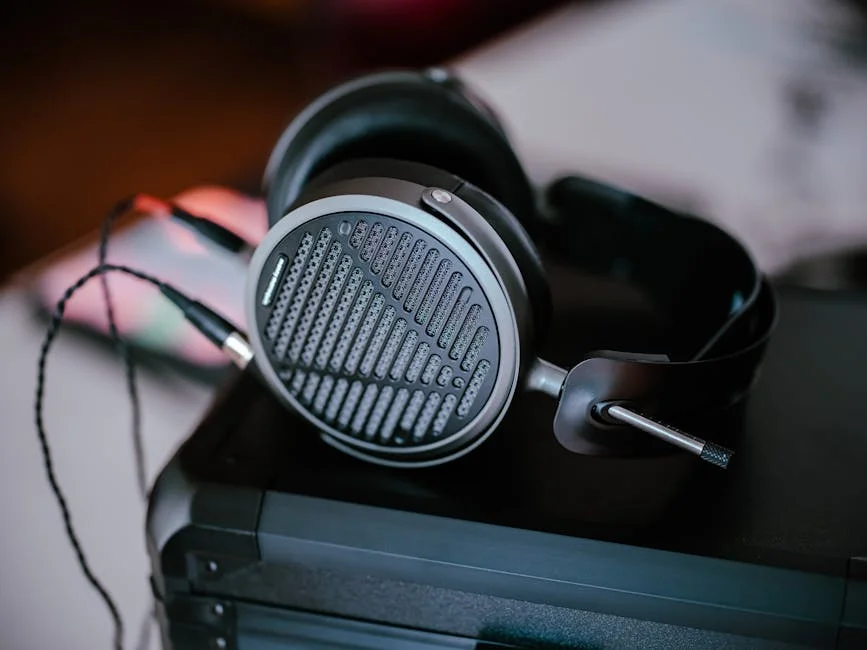
The M50x is closed-back. That matters for portability, shared spaces, and late-night listening without disturbing others. Both upgrade options covered here are open-back, which means sound leaks in both directions. Open-back headphones generally produce a more natural, spacious soundstage because the driver isn’t working against a sealed chamber. The trade-off is real isolation for none.
Before committing to an open-back, think honestly about where you listen. A dedicated listening space, a home office, a bedroom with the door closed, is the right environment for either the HD 600 or the Sundara. If you need a closed-back for commuting or shared offices, neither of these is the right upgrade, and exploring Buyer Guides for closed-back alternatives is worth the time before you spend.
Amplification Requirements
The M50x runs comfortably off a phone or laptop. Most open-back planar magnetics and many open-back dynamics do not. The HD 600 has an 300-ohm impedance and benefits from a proper amp, though the gap between a decent DAC/amp stack and a laptop headphone out is real, but not transformative in the way planar amplification tends to be.
The Sundara is a planar magnetic. Underpowering it doesn’t just reduce volume; it affects dynamics and bass extension. A mediocre source makes the Sundara sound thin. If you don’t already have a DAC/amp or aren’t willing to invest in one, the HD 600 is the more forgiving upgrade path. The Sundara rewards the stack investment clearly and measurably.
Build, Comfort, and Long-Term Ownership
Comfort differs between the three. The M50x’s clamping force can tire some listeners in longer sessions, while the HD 600 and the Sundara are open-back designs with replaceable earpads. Both support long-term ownership: the HD 600’s cable and earpads are fully replaceable. The Sundara’s 2020 revision addressed the original’s earpad and headband comfort shortcomings specifically.
Build quality isn’t just about durability, it’s about whether a headphone stays in rotation five years from now or ends up replaced. The HD 600 has been in production for decades and its parts are replaceable. For gear at this tier, repairability is a meaningful purchase criterion.
Top Picks
Audio-Technica ATH-M50x
The M50x folds flat and includes three detachable cables in the box. For a first closed-back, that utility still holds.
Where they fall short is on the measurement data that matters most for critical listening. The mid-bass hump, prominent around 200 Hz in published measurements, adds warmth that reads as “bassy” rather than accurate. The 9 kHz treble peak creates a brightness that some listeners find fatiguing over long sessions. These aren’t catastrophic flaws; they’re the expected compromises of a consumer-friendly closed-back designed before the current generation of neutral reference standards. Buyers expecting flat studio-monitor performance should look elsewhere.
The case for keeping the M50x alongside an upgrade is real, closed-back utility doesn’t disappear just because you own something better. But if the question is “what should I buy next,” the answer is almost never another M50x.
Check current price on Amazon.
Sennheiser HD 600
The Sennheiser HD 600 is a neutral-warm open-back with a midrange-focused tuning, a natural soundstage and a build designed for long service.
Published measurements show a response that tracks closely to the Harman target in the midrange, with a gentle bass shelf. The 300-ohm impedance means it needs amplification; an entry-level amp such as a Schiit Magni Heresy or JDS Atom can drive it without a major investment.
The open-back design is a genuine constraint. Sound leaks in both directions, meaningfully. For anyone in a shared space or needing isolation, this isn’t the right answer. But for a dedicated listening setup, the HD 600 is the clearest step up from the M50x that exists at the mid-tier, not because it’s dramatically better at everything, but because it’s genuinely more accurate at the things that matter for long-term critical listening development.
Check current price on Amazon.
HiFiMan Sundara
Planar magnetic drivers do something dynamic drivers don’t, and the HiFiMan Sundara is where most buyers first hear it. Planar drivers use a thin, light diaphragm, which is why they are associated with fast transient response and precise imaging, a different character from the HD 600’s dynamic driver.
The 2020 revision addressed the original’s most consistent criticism: earpad and headband comfort. The updated earpads are larger and softer. The headband distributes weight more evenly. For longer sessions, it’s a meaningful improvement. Aftermarket pads such as the ZMF Universe are available for further comfort.
HiFiMan’s quality control has been inconsistent enough that it warrants mention. The 2020 revision improved this, but checking both channels on arrival is a practical step rather than paranoia. The amplification requirement is not optional, running the Sundara off an underpowered source compresses dynamics and flattens the bass in ways that undermine its core strengths. On a proper stack, the Sundara’s flat, well-extended response and planar imaging make a compelling case for being the better technical upgrade from the M50x, even if the HD 600 is the more immediately accessible one.
Check current price on Amazon.
Buying Guide
Choosing Based on What You Want to Hear
The most useful frame for this decision is not price tier but listening goal. The HD 600 is tuned for music enjoyment, its neutral-warm character makes long sessions natural and non-fatiguing, and its midrange rendering rewards vocal and acoustic material. The Sundara is tuned for detail and accuracy, its flat extension and planar speed make it more revealing of recording quality, both in good ways and bad ones. If your library skews toward pop, electronic, or heavily produced music, the HD 600’s more forgiving presentation is the better daily driver. If you listen to jazz, classical, or acoustic genres where imaging and micro-detail are directly musical, the Sundara’s planar character pays dividends.
The Stack Question
Neither the HD 600 nor the Sundara is the right answer if you’re not willing to add a DAC/amp. The HD 600 can function off a decent integrated amp or a modest stack; the gap between that and a laptop is real but not transformative. Dedicated DAC/amp separates are worth the complexity specifically for planar magnetic headphones, and the Topping or JDS ecosystem provides solid entry-level options without significant outlay. If a stack isn’t currently in the budget, the HD 600 is the more practical upgrade choice until it is. Browsing the full headphone buying guides for stack recommendations before committing to the Sundara is a reasonable step.
Open-Back Is a Lifestyle Constraint
Open-back headphones are not simply “better” than closed-back, they’re suited to a specific use context. Both the HD 600 and Sundara require a private listening environment to function as intended. In a shared apartment, an open office, or a commute, open-back isolation is effectively zero, and sound leakage is significant enough to bother others nearby. A sealed alternative, the AKG K371 is a neutral-tuned closed-back at this tier, is the better fit.
HiFiMan QC and Long-Term Ownership Risk
The HD 600 has been in production for decades. Replacement cables, earpads, and grilles are available directly from Sennheiser and through aftermarket suppliers. The Sundara is a newer design with a shorter track record. HiFiMan’s QC variability is a real factor, not a reason to avoid the headphone, but a reason to purchase from a retailer with a clear return window, check both channels immediately on arrival, and consider it a slightly higher-risk purchase than the HD 600. The performance ceiling justifies the risk for buyers who are prepared for it.
Upgrade Path Thinking
The M50x upgrade decision has a longer arc than just the next headphone. The HD 600 works as a long-term reference purchase because it combines solid performance with genre versatility. The Sundara shows what planar magnetics do, which may lead to interest in higher-tier planars. Neither path is wrong, but they are different trajectories. If the goal is to find a headphone and stop thinking about gear, the HD 600’s long production run makes it a safe place to start.

Frequently Asked Questions
Should I upgrade from the M50x to the HD 600 or the Sundara first?
For most buyers, the Sennheiser HD 600 is the more practical first upgrade. It's less demanding of amplification, more forgiving of source quality, and covers a wider range of genres without obvious weaknesses. The HiFiMan Sundara is the stronger technical choice for detail-focused listeners who already have or plan to buy a proper DAC/amp stack, but it rewards the infrastructure investment more than the HD 600 does.
Do I need a DAC/amp to use the HD 600 or Sundara?
The HD 600 benefits from amplification but can function adequately off a decent integrated source. For the Sundara specifically, a dedicated stack is not optional if you want to hear what the headphone actually does.
Is the M50x worth keeping after upgrading?
Owning the M50x alongside an open-back upgrade makes practical sense. The M50x provides isolation the HD 600 and Sundara don't offer, for commuting, shared spaces, or late-night listening where open-back leakage is a problem.
How does the Sundara's planar sound differ from the HD 600's dynamic driver?
The main design difference is driver type. Planar drivers like the Sundara's use a thin, light diaphragm, which is associated with fast transient response and precise imaging, while the HD 600's dynamic driver has a neutral-warm, midrange-focused tuning. Neither is strictly superior; they represent different approaches, and preference depends on the listener.
Does the HD 600 really need an amplifier?
It benefits from one, but the requirement is often overstated. Its 300-ohm impedance means a laptop headphone output may lack headroom and control, though it will play. An entry-level amp such as a Schiit Magni or JDS Atom drives it properly. The "requires a dedicated high-power amp" framing is an overstatement; the "benefits meaningfully from any decent amp" framing is accurate.
Where to Buy
- Audio-Technica ATH-M50X Professional Studio Monitor Headphones BlackSee price on Amazon
- Sennheiser HD 600 Open-Back Audiophile HeadphonesSee price on Amazon
- HIFIMAN SUNDARA Hi-Fi Headphone Planar Magnetic 2020 VersionSee price on Amazon