SHP9500 Upgrade Guide: Next Steps Beyond Budget Open-Back

Affiliate disclosure: Some links on this page are affiliate links. If you buy through them we earn a small commission at no extra cost to you. Recommendations are research-driven; we don't claim personal use of every product reviewed. Product prices and availability are accurate as of the date published and are subject to change. Always check Amazon for current pricing before purchasing. Learn more.
Quick Picks
Philips Audio SHP9500 HiFi Precision Stereo Over-Ear Headphones
Exceptional value , frequently found on sale under $50
Buy on AmazonDrop + Sennheiser HD 58X Jubilee Open-Back Headphones
Lower impedance than HD 600/650 , more versatile with portable sources
Buy on AmazonHiFiMAN HE400SE Planar Magnetic Headphones
Planar magnetic technology at ~$109 , previously impossible price point
Buy on Amazon| Product | Price Range | Top Strength | Key Weakness | Buy |
|---|---|---|---|---|
| Philips Audio SHP9500 HiFi Precision Stereo Over-Ear Headphones also consider | $ | Exceptional value , frequently found on sale under $50 | Non-detachable cable limits repairability | Buy on Amazon |
| Drop + Sennheiser HD 58X Jubilee Open-Back Headphones also consider | $ | Lower impedance than HD 600/650 , more versatile with portable sources | Drop-exclusive , intermittent availability | Buy on Amazon |
| HiFiMAN HE400SE Planar Magnetic Headphones also consider | $ | Planar magnetic technology at ~$109 , previously impossible price point | Low sensitivity requires more amplifier power than typical dynamics | Buy on Amazon |
Choosing the right path forward from the Philips SHP9500 depends on what’s actually missing , not on chasing specs. Most SHP9500 owners land there for the breathable open design and the budget-friendly entry point into open-back listening, and the headphone genuinely delivers on both. The real question is whether the next step is a lateral move, a driver technology jump, or simply more refinement in the same direction. These buyer guides exist to make that distinction clear before money changes hands.
The SHP9500 establishes a baseline: comfortable, open-sounding, acceptably measured, and beloved in the r/headphones budget community for good reason. What it doesn’t offer is a benchmark for imaging precision, staging depth, or the kind of tonal balance that invites critical listening at higher volumes. The three options below cover the most logical upgrade paths , a refined dynamic, a tuning-forward Sennheiser collaboration, and a planar magnetic first step , so the decision can be made on criteria that actually matter.
What to Look For in Open-Back Headphones
Driver Technology and What It Changes
Open-back headphones come in two dominant driver configurations at this price tier: dynamic (moving-coil) and planar magnetic. Dynamic drivers are the default , a diaphragm suspended at its edge, driven by a voice coil in a magnetic field. They’re efficient, forgiving of modest amplification, and the vast majority of headphones use them. Planar magnetic drivers spread the driving force across the entire diaphragm surface, which in theory reduces distortion and improves transient speed. The practical difference at budget price points is real but nuanced.
Planar magnetics tend toward a flatter, more extended bass and a faster, less rounded presentation of percussion and guitar attack. Dynamic drivers at their best produce a more natural tonal density , a quality the Sennheiser HD line has made its reputation on for decades. Neither is objectively superior. The question is which character matches how you listen and what music you prioritize.
Sensitivity, Impedance, and What Drives Them
These two specs interact constantly and are misread constantly. High impedance (150Ω, 300Ω) means the headphone needs more voltage to reach listening volume; low sensitivity (below 94 dB/mW) means it needs more current. Both can mean a source struggles to drive the headphone cleanly. The SHP9500 is an easy load at 32Ω and 101 dB/mW. Moving to any of the options here means paying attention to source matching.
The Drop HD 58X sits at 150Ω , higher than the SHP9500 but lower than the HD 600/650, which makes it more portable-friendly than the rest of the Sennheiser open-back line. The HE400SE is a different case entirely: its low sensitivity means raw power matters more than impedance matching, and a dedicated amplifier is close to mandatory for satisfying results. Laptop outputs and phone jacks will not do it justice.
Soundstage and Imaging: What Open-Back Actually Means
“Open-back” describes a mechanical property , the earcup rear is vented to allow air and sound to pass through freely, which prevents the pressure buildup that gives closed-backs their sometimes claustrophobic presentation. The result is a wider sense of space and more natural diffuse-field imaging. But “open-back” doesn’t guarantee good imaging. Driver quality, tuning, and baffle geometry all affect how precisely an instrument can be located in a mix.
The SHP9500’s double-layered acoustic mesh is effective at ventilation and comfort. The staging is pleasant. What it lacks is the imaging precision that rewards critical listening on dense orchestral or well-produced jazz recordings. Upgrades in this category should offer a tighter, more layered soundstage , not just a larger one. Exploring the full range of open-back and closed-back options before settling on a direction can prevent a choice that solves the wrong problem.
Build Quality and Long-Term Ownership
Budget headphones compromise somewhere, and the honest answer is it’s almost always materials. Plastic headbands, thin earcup adjustment sliders, earpads that compress and degrade within a year , these are the real costs of sub-budget pricing that specs never reveal. The SHP9500’s cable is non-detachable, which is a real repairability concern. The HE400SE’s headband adjusters are fragile by common owner report. The HD 58X inherits the HD 600/650 shell , a chassis that’s been in production long enough to have extensive aftermarket pad and accessory support.
Long-term ownership viability matters at this tier because the upgrade path is incremental. A headphone with replaceable pads and a detachable cable has a longer functional life. Factoring in the cost of eventual pad replacement is reasonable when two options are otherwise close on sound quality.
Top Picks
Philips Audio SHP9500
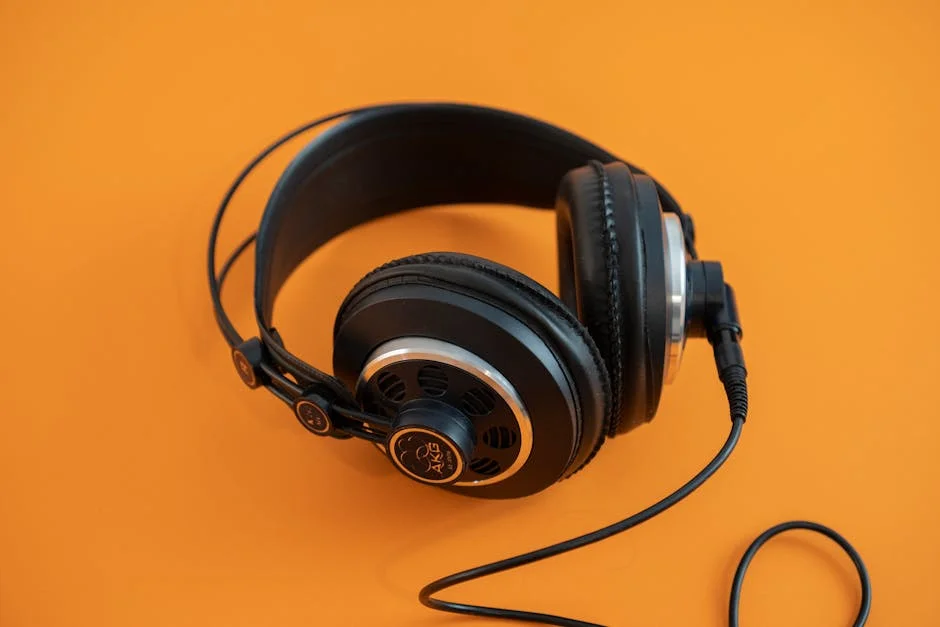
The Philips SHP9500 earns its reputation as the starting point, and that context matters here , it’s included not as a step backward but because knowing its strengths and limits precisely is what makes any upgrade decision rational. Owner consensus and ASR measurements both confirm it performs well above its price class for a first open-back experience. The double-layered acoustic mesh keeps the fit genuinely breathable for long sessions, which is a real differentiator at any price.
The weaknesses are specific and worth naming. The non-detachable cable is a long-term liability , not an immediate problem, but one that increases ownership risk over years. Soundstage is pleasant and wider than most closed-backs, but imaging precision is modest. On dense or demanding recordings, instrument placement can feel approximate rather than sharp. For casual listening and gaming, this rarely surfaces as a real complaint. For critical listening, it’s the primary ceiling.
The r/headphones budget community’s consistent enthusiasm for this headphone reflects a real quality-to-price ratio that few competitors at this tier match. For anyone just building their first open-back impression , or anyone who wants a reference point before deciding whether an upgrade is worth it , this remains the sensible foundation.
Check current price on Amazon.
Drop + Sennheiser HD 58X Jubilee
The Drop + Sennheiser HD 58X Jubilee is the most direct path forward for SHP9500 owners who want more tonal refinement without jumping to the full HD 600 impedance load. It revisits the vintage HD 580 tuning , a warmer, slightly fuller presentation than the HD 600’s more analytical character , at a price point that sits comfortably in the budget tier. The 150Ω impedance is meaningfully easier to drive than its siblings, which makes it a reasonable companion to modest desktop setups or better portable sources.
The HD 600/650 shell compatibility is worth noting for practical reasons. Pad and cable aftermarket support is extensive and well-documented, which addresses the repairability concern the SHP9500 carries. A detachable cable and broad third-party pad availability extend ownership life in a way that matters for incremental upgraders on a budget.
The tuning sits between the SHP9500’s casual, slightly warm openness and the HD 600’s more exacting precision. Verified buyers and community consensus consistently describe the imaging as a clear step up from budget dynamics , more layered, more stable on complex passages. The case for the HD 58X as the first Sennheiser open-back is strong, particularly for listeners who find the HD 600’s reputation intimidating or whose source chain isn’t ready for it yet.
One genuine caveat: Drop exclusivity means availability is intermittent. When it’s in stock, the value proposition is excellent. When it’s not, the HD 600 becomes the obvious alternative , at a cost increase that requires a harder source-matching conversation.
Check current price on Amazon.
HiFiMAN HE400SE
The HiFiMAN HE400SE represents something that wasn’t possible at this price tier a few years ago: genuine planar magnetic technology with stealth magnets, at a budget price point. Owner reports and community consensus describe the treble response as cleaner than expected , the stealth magnet design reduces diffraction artifacts that affect earlier planar designs at higher prices. That’s a meaningful engineering achievement at this tier, not a marketing point.
The trade-off is power. The HE400SE’s sensitivity is low enough that a dedicated amplifier moves from “nice to have” to practically mandatory. A laptop headphone output will technically produce sound, but the dynamics will compress and the presentation will flatten. The full character of a planar driver , the speed on transients, the even bass extension, the sense of controlled openness , only appears with adequate current. For someone already running a desktop stack, or planning to acquire one, this concern largely disappears. For someone driving directly from a phone or laptop, this is the wrong choice at this time.
Build quality is the other honest concern. The HE400SE’s headband adjustment mechanism draws consistent criticism from owners for feeling fragile relative to the audio performance. It works. It just doesn’t inspire confidence. For a primary listening headphone on a desk, this is manageable. For travel or frequent adjustment, it’s a source of friction.
The planar character itself is worth the consideration for buyers curious about driver technology. The bass control and transient precision differ from dynamic drivers in ways that become apparent quickly on well-recorded music. For that introduction to planar sound at a budget entry point, the HE400SE is currently the most accessible path available.
Check current price on Amazon.
Buying Guide
What “Upgrade” Actually Means for SHP9500 Owners
The word “upgrade” can mean different things depending on what the SHP9500 is failing to do. If the issue is imaging precision on complex recordings, the HD 58X is the most direct solution , it shares an open-back character but resolves instrument placement more confidently. If the issue is curiosity about a fundamentally different driver technology, the HE400SE answers a different question. If the issue is simply wanting more of what the SHP9500 already does well, the SHP9500 itself remains worth keeping.
Upgrading without naming the specific shortcoming first is how buyers end up with three headphones rather than one better one. The Buyer Guides on this site are structured around that problem deliberately.
Source Matching: Where the Upgrade Pays Off or Doesn’t
The SHP9500 is one of the easiest headphones available to drive , it doesn’t ask much from a source. Moving to any of the three options here raises that bar, with the HE400SE raising it significantly. The HD 58X at 150Ω will perform well from a decent dongle DAC or a modest desktop stack. The HE400SE needs real current, and underpowering it means the upgrade is theoretical rather than audible.
For anyone whose current source is a laptop headphone output or a basic phone, the practical question is whether a DAC/amp purchase is also part of this plan. The HD600 remains the reference recommendation at the mid-budget tier , the opinion here hasn’t changed after three years of comparison , but a dedicated stack was a smaller gap than expected on that headphone specifically. On planar magnetics, the gap is not small.
Availability and the Drop Ecosystem
The HD 58X’s availability is the most common friction point in this decision. Drop operates on batch production cycles, meaning the headphone is intermittently out of stock for weeks or months at a time. For buyers who research the HD 58X and find it unavailable, the HD 600 becomes the natural redirect , at a higher price and with a steeper source-matching requirement.
Checking availability before committing to a path matters. If the HD 58X is in stock, the value case is strong and worth acting on. If it’s not, the HE400SE and the SHP9500 are reliably available, and the decision tree changes accordingly.
Build Quality and Long-Term Ownership Costs
At the budget tier, build quality compromises are expected , but they’re not uniform across these options. The HD 58X’s inherited HD 600/650 chassis is the most durable and best-supported platform here. Third-party earpads are widely available, cables are detachable and replaceable, and the physical design has been in production long enough to have a mature aftermarket. Ownership costs over two or three years are predictable.
The HE400SE’s fragile headband adjusters are a documented concern in owner communities. They function, but they are the most likely point of failure. The SHP9500’s non-detachable cable is the equivalent concern , manageable until the cable degrades, and then a replacement question with no clean answer. Factoring this into a budget decision is reasonable, particularly for buyers who hold headphones for several years.
Pad Rolling and Aftermarket Compatibility
Earpads affect both comfort and tuning more than most buyers expect. The SHP9500’s pads are comfortable but eventually compress; replacement options exist but are less standardized. The HD 58X accepts HD 600/650 pads directly , a well-documented and broadly available ecosystem that includes both stock Sennheiser replacements and third-party options at various price points and materials.
The HE400SE has a standard HiFiMAN pad attachment, which supports a range of aftermarket options. Pad rolling on planar magnetics is a deeper rabbit hole than on dynamics , changes to pad depth and material have more audible consequence on planar designs. For someone new to planar headphones, starting with stock pads and evaluating before experimenting is the sensible sequence.
Frequently Asked Questions
Is the HD 58X a genuine upgrade over the SHP9500 or just a lateral move?
The HD 58X is a step forward in imaging precision and tonal refinement, not merely a sideways move. Owner consensus consistently places it above budget dynamics on complex recordings , more stable instrument placement, better layering on dense mixes. Whether that improvement justifies the price difference depends on how often those qualities surface in your actual listening. For casual gaming and podcasts, the SHP9500’s ceiling is rarely reached.
Does the HE400SE actually need an amp, or is that community exaggeration?
The power requirement is real and worth taking seriously. The HE400SE’s low sensitivity means underpowered sources flatten the dynamics and compress the headroom, which undercuts the primary reason to buy a planar magnetic driver. A basic desktop stack , even a modest single-unit DAC/amp , addresses this adequately. Running the HE400SE from a laptop headphone output is not false, but it is not representative of what the headphone can do.
How does the HD 58X compare to the HD 600 for someone starting the Sennheiser line?
The HD 58X offers a warmer tuning and lower impedance than the HD 600, which makes it more forgiving of modest sources and more immediately likable out of the box. The HD 600’s presentation is more analytical and widely considered the more accurate reference at its price point , three years in, it remains the benchmark recommendation for anyone entering the hobby with a proper source chain. The HD 58X is the better first step if source flexibility matters.
Can the SHP9500 be modded or upgraded without replacing it?
The most practical modification is pad replacement, which subtly affects both comfort and tonal character. The non-detachable cable limits repairability but doesn’t prevent pad swaps. Community documentation on SHP9500 modifications is extensive , r/headphones has covered it thoroughly. That said, pad rolling rarely transforms a budget headphone into a mid-tier one.
Which of these three headphones is best for gaming specifically?
The SHP9500 remains the strongest gaming recommendation at its price point , the wide, breathable soundstage and comfort over long sessions are well-suited to that use case, and imaging at the gaming level doesn’t demand the precision that critical music listening requires. The HD 58X is also well-regarded for gaming among the r/headphones community. The HE400SE’s power requirements and the absence of a clear gaming-specific advantage make it the least intuitive choice unless music listening is the primary use.
Where to Buy
Philips Audio SHP9500 HiFi Precision Stereo Over-Ear HeadphonesSee Philips Audio SHP9500 HiFi Precision … on Amazon