What Is a DAP? Digital Audio Player Explained

Affiliate disclosure: Some links on this page are affiliate links. If you buy through them we earn a small commission at no extra cost to you. Recommendations are research-driven; we don't claim personal use of every product reviewed. Product prices and availability are accurate as of the date published and are subject to change. Always check Amazon for current pricing before purchasing. Learn more.
| Product | Price Range | Top Strength | Key Weakness | Buy |
|---|---|---|---|---|
| iFi Audio iFi xDSD Gryphon Portable Bluetooth DAC/Amplifier also consider | $$$ | Bluetooth aptX Adaptive delivers near-lossless wireless audio | Premium price in a portable device that can be lost or damaged | Buy on Amazon |
| Chord Electronics Chord Mojo 2 Portable DAC/Amp also consider | $$$ | Custom FPGA implementation with Chord's proprietary WTA filter | Ball-button interface is unintuitive and confusing for new users | Buy on Amazon |
| Sony WF-1000XM5 True Wireless Noise Canceling Earbuds also consider | $$$ | Best-in-class ANC among true wireless earbuds | Premium price; XM4 or XM3 available second-hand at significant discount | Buy on Amazon |
| Apple AirPods Pro 2nd Generation with MagSafe Case also consider | $$$ | Best ANC integration in the Apple ecosystem with system-level compatibility | AAC codec ceiling limits audio quality on non-Apple devices | Buy on Amazon |
| HiBy R3 Pro Saber Portable Music Player also consider | $ | 4.4mm balanced output at ~$129, exceptional value for balanced portable audio | Screen small and touch interface less responsive than flagship DAPs | Buy on Amazon |
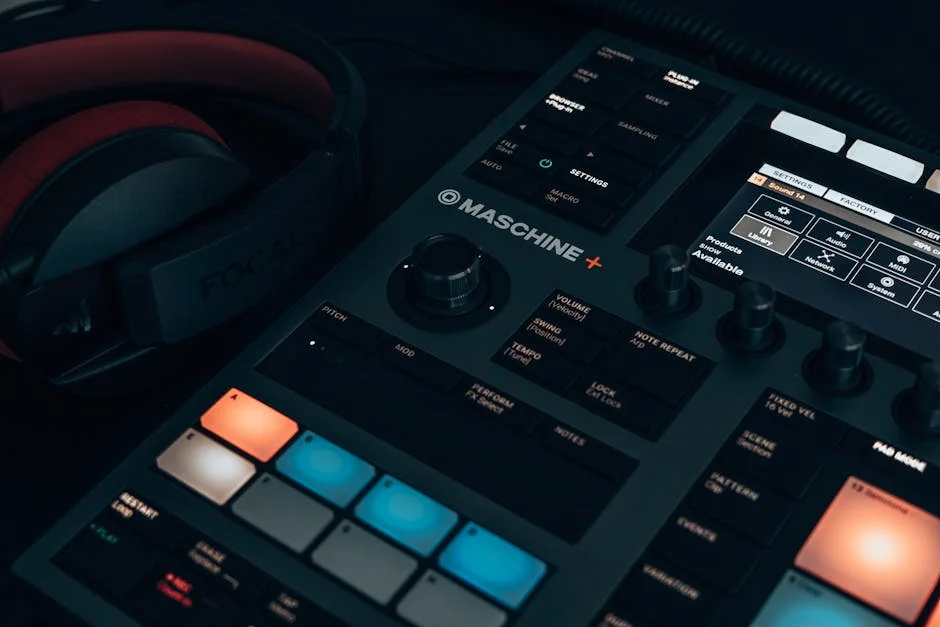
A DAP, or digital audio player, is a standalone device built specifically to play audio files. No calls, no apps competing for RAM, no notification interruptions. Just dedicated hardware tuned for one job: getting sound from a file to your ears with as little digital noise and compromise as possible.
Phones have gotten better. So have DAPs. So have portable DAC dongles. Whether a DAP makes sense for you depends on how you actually listen, and the Audiophile Basics hub is a good place to sort that out.
What Is a DAP, Exactly?
A digital audio player is, at its core, a device that performs two functions: digital-to-analog conversion (DAC) and amplification (amp). Every audio device that plays sound does this, including your phone. The difference with a DAP is that the hardware is purpose-built around audio performance rather than balanced against competing priorities such as battery life for cellular radios, camera systems and multitasking.
Internally, a DAP typically contains a dedicated DAC chip (common choices include ESS Sabre, AKM and Cirrus Logic silicon) and a discrete amplifier stage. Higher-end DAPs may run Android to support streaming apps alongside local file playback. Budget DAPs often run a stripped-down proprietary OS focused on local files.
Why People Use DAPs
The original argument for DAPs was straightforward: phones had noisy internal circuitry that degraded audio output. Ground loops, interference from cellular and WiFi radios, and cheap integrated DAC chips all contributed to noise floors that mattered with sensitive IEMs or demanding headphones.
That argument has weakened in recent years. Modern flagship phones, especially iPhones and high-end Android devices, have much better audio output stages. A mid-range phone paired with a quality DAC dongle can now match or exceed many DAPs on measured performance, so the value proposition of a standalone DAP is more nuanced than it used to be.
DAPs still offer real advantages in specific use cases: they free your phone for calls and navigation while you listen, they typically offer better battery life for audio-only tasks, many support balanced output connectors (4.4mm and 2.5mm) that most phones do not, and they avoid the software latency and audio-policy compromises built into mobile operating systems.
DAP vs. Phone Plus Portable DAC: The Real Trade-Off
This is the question most people building a first portable chain ask. For most listeners, a phone paired with a quality portable DAC/amp will match or outperform most entry and mid-tier DAPs at equivalent price points, and keep full smartphone functionality.
The counter-argument for DAPs centers on a few specific scenarios. If you carry a large local library in lossless formats, a DAP with expandable storage (typically via microSD) is more convenient. If you want a dedicated device that lives in a bag without draining your main phone or interrupting playback, a DAP makes practical sense. And if you want balanced output, some DAPs offer 4.4mm balanced at price points where no comparable portable DAC dongle exists.
The Balanced Output Question
Balanced output comes up constantly in DAP discussions and is worth addressing directly. A balanced connection uses separate signal paths for the left and right channels, which theoretically reduces crosstalk and allows higher output power. On paper, balanced is better. In practice the gains depend heavily on implementation quality, and it is reasonable to be skeptical that balanced portable output matters as much as the marketing suggests for most listening scenarios, such as compressed audio in a noisy environment.
Who Actually Needs a DAP?
Fewer people than the audiophile community implies. A dedicated DAP is most justified for specific listener profiles.
If you are an IEM enthusiast with a substantial local library of high-resolution files, a DAP is a legitimate and convenient source solution. If you want a dedicated audio device without a phone tethered to it, a DAP delivers that cleanly. If you care about features like balanced output or gapless playback with less common file formats, DAPs are purpose-built for those needs.
If you mainly stream Spotify or Tidal and listen casually, a phone plus a decent DAC dongle is almost certainly the better value. The dongle will measure comparably, cost less, and live on your keychain.
Top Picks
The products below cover a budget DAP, premium portable DAC/amps, and a few Bluetooth alternatives for listeners who want wireless flexibility.
HiBy R3 Pro Saber
The HiBy R3 Pro Saber is the budget entry point in this roundup. Its specifications list an ES9219C chip, a 4.4mm balanced output, and Android-based streaming app support in a body roughly comparable in size to a small phone.
Most budget audio devices do not offer balanced output at all. Streaming app support depends on the Android version the player ships with, so expect some apps to behave inconsistently and do not assume full functionality from the latest versions of every streaming platform.
The trade-off is the touch interface and screen. The screen is small, and the touch response is likely to feel slower than a flagship DAP or a modern smartphone. For anyone who sets up playback and leaves the device alone, that is a minor point. For anyone who frequently navigates playlists or adjusts EQ, it matters more. As a demonstration that features like balanced output and dedicated audio chips are available at budget pricing, the R3 Pro Saber is notable.
Check current price on Amazon.
iFi xDSD Gryphon
The iFi xDSD Gryphon is not a DAP in the traditional sense. It is a portable DAC/amp with Bluetooth aptX Adaptive support, so it can receive a high-quality wireless signal from a compatible phone or source and output to wired IEMs or headphones. That makes it an alternative source chain rather than a replacement for your phone.
The aptX Adaptive implementation is the headline feature, and the physical volume dial is a practical advantage: tactile analog volume control on a portable device is a quality-of-life feature that is easy to underrate.
iFi’s proprietary XBass and XSpace filters add tonal coloration. The main objection is the premium price for a portable device that can be lost, dropped or damaged. It is most justified for listeners who want high-quality Bluetooth reception to wired IEMs and prefer a physical control interface to app-based volume management.
Check current price on Amazon.
Chord Mojo 2
The Chord Mojo 2 occupies unusual technical territory in portable audio. Where most DAC/amps use off-the-shelf silicon (ESS, AKM, Cirrus Logic chips), the Mojo 2 uses a custom FPGA implementation running Chord’s proprietary WTA (Watts Transient Aligned) filter. This is a real technical distinction rather than marketing language: the FPGA approach lets Chord implement filter behavior in firmware that no chip manufacturer offers as a standard product.
The optional Poly streaming module allows wireless playback without a connected phone, which effectively turns the Mojo 2 into a wireless-capable DAP stack. For technically curious buyers interested in how FPGA approaches differ from chip-based DACs, the Mojo 2 is a distinctive design.
The color-coded ball buttons that control volume and settings are unconventional, and the learning curve is steeper than for a conventional interface. The original Mojo is also available second-hand at a lower cost, which some buyers weigh against the newer model.
Check current price on Amazon.
Sony WF-1000XM5
The Sony WF-1000XM5 True Wireless Noise Canceling Earbuds are a reference product for true wireless ANC at the premium tier.
LDAC at its highest bit-rate setting (990kbps) carries significantly more data than SBC or AAC. For Qobuz or Tidal streaming on an Android source, that means the codec is less likely to be the bottleneck. The Sony Headphones Connect app offers detailed EQ controls and sound personalization options that go beyond what most TWS apps provide.
The previous-generation XM4 and XM3 earbuds are available second-hand at lower prices, which some buyers prefer. The XM5 earpiece is larger than some competing TWS options, and fit varies by ear shape. For commuters and travelers who want strong noise cancellation in a TWS package with LDAC support, the XM5 is the current Sony flagship.
Check current price on Amazon.
Apple AirPods Pro (2nd Generation)
The Apple AirPods Pro 2nd Generation with MagSafe Case are relevant to any discussion of portable audio sources because they are the mainstream entry point for premium TWS earbuds, and it is worth being clear about why they perform well and where their limits are.
Within the Apple ecosystem, the AirPods Pro 2 offer tight integration: system-level ANC that adjusts automatically, an Adaptive Transparency mode for situational awareness, and Personalized Spatial Audio for media mixed with spatial audio.
The codec ceiling is the audiophile-relevant limitation. AirPods Pro 2 use AAC as their highest-quality Bluetooth codec. AAC is well implemented on Apple devices, where the pipeline is optimized end to end, but implementation varies on Android and can result in worse audio than LDAC or aptX Adaptive alternatives. For non-Apple users that is a significant drawback. For Apple users who stream Apple Music with Lossless or Dolby Atmos content, system-level optimization partly compensates for the codec ceiling, though the underlying wireless link is still AAC.
Check current price on Amazon.
Buying Guide: How to Choose a Portable Audio Source
The gear above spans DAPs, portable DAC/amps and true wireless earbuds. These are related but distinct product categories, and the right choice depends on how you actually use portable audio. The Audiophile Basics hub will help frame these decisions, especially if you are newer to the hobby.
Start With Your Listening Context
How you listen portably matters more than specs. Commuting in loud environments, gym sessions, casual walking and focused desk listening with IEMs are different use cases with different optimal gear. A premium DAP with a wired IEM is awkward on a crowded subway because of cable handling. A TWS earbud with strong ANC is a poor fit for critical listening with demanding headphones.
Honest self-assessment here prevents expensive mistakes. If most of your portable listening is commuting with background noise, ANC and wireless convenience matter more than DAC chip measurements.
DAP vs. Phone Plus Dongle
The dongle approach wins on convenience, cost and future-proofing (your phone gets upgraded; your DAP does not).
The DAP case is strongest when you want local file playback without phone dependency, want a physical device dedicated to audio, or specifically need 4.4mm balanced output at a price where no dongle equivalent exists. The HiBy R3 Pro Saber at budget pricing is the clearest argument for DAPs at entry level: balanced output and dedicated audio hardware at a price where dongles typically offer neither.
The source chain basics section of Audiophile Basics goes into more detail on DAC/amp pairing logic if you are building your first chain.
Codec and Wireless Quality
If wireless listening is part of your plan, codec selection matters. LDAC (Sony’s codec, used in the Sony WF-1000XM5) and aptX Adaptive (Qualcomm’s codec, used in the iFi xDSD Gryphon) both deliver higher data rates than standard SBC or AAC. In a controlled listening environment that difference can be audible, though on a noisy commute it is largely academic.
AAC, used by Apple AirPods, performs well on Apple hardware but is constrained on Android. If you are in the Apple ecosystem, AirPods Pro 2 are well integrated. If you are on Android and care about wireless audio quality, prioritize LDAC or aptX Adaptive devices.
Balanced Output: Real or Marketing?
Balanced output (4.4mm or 2.5mm connectors) is a real technical feature with measurable benefits in controlled conditions: lower crosstalk and higher theoretical output power from the same hardware. Whether it matters portably, with IEMs, in a noisy environment, is a fair question.
For IEM listeners with sensitive, easy-to-drive earphones, the gains from balanced output are likely small. For listeners using harder-to-drive portable headphones, balanced output can provide useful headroom. Do not let balanced output be the main reason to choose a DAP over a dongle, but do count it as a real feature if it comes at no meaningful cost premium within your budget.
Frequently Asked Questions
What is a DAP and how is it different from a phone?
A digital audio player is a standalone device built exclusively to play audio files, combining a dedicated DAC and amplifier in purpose-built hardware. Unlike a phone, a DAP has no cellular radio, camera, or multitasking operating system competing for resources. The practical benefit is a cleaner, lower-noise audio signal path. The trade-off is that you carry an additional device. Modern flagship phones have closed much of the audio hardware gap, making the case for DAPs more nuanced than it was several years ago.
Do I need a DAP if I already have a good phone and a DAC dongle?
For most listeners, a quality DAC dongle paired with a modern phone covers the practical audio quality needs of portable listening. A DAP becomes more justified if you want local file playback independent of your phone, need a dedicated device for long listening sessions without battery drain concerns, or specifically require balanced output at a price point where no dongle equivalent exists. If streaming is your primary use case, the dongle approach is almost always the more practical and cost-effective answer.
What is the difference between LDAC and aptX Adaptive for wireless audio?
Both are high-resolution Bluetooth codecs that significantly outperform standard SBC and AAC in data throughput. LDAC is Sony's proprietary codec, used in Sony products and licensed to Android partners. aptX Adaptive is Qualcomm's codec, available across a wider range of device manufacturers. At peak bit rates, both deliver near-lossless audio performance that, in controlled listening tests, approaches wired audio quality. The practical difference between them for casual listening is minimal. Codec support depends on both your source device and your earphones, so verify compatibility before purchase.
Is the Chord Mojo 2 worth the premium over cheaper portable DACs?
The Mojo 2 uses a custom FPGA implementation rather than an off-the-shelf DAC chip, which is a genuinely distinctive technical approach. Whether the sonic difference over well-measuring chip-based alternatives is audible in portable use is debated. The ball-button interface is unconventional and has a learning curve. For technically curious listeners interested in FPGA audio, it is a legitimate and interesting device. For listeners primarily focused on measured performance per dollar, the Mojo 1 second-hand offers strong competing value.
Can budget true wireless earbuds deliver audiophile-quality sound?
The honest answer is that budget TWS earbuds have inherent limitations relative to wired IEMs at comparable or lower prices. Wireless audio chains introduce compression, latency, and codec constraints that wired connections avoid entirely. That said, the gap has narrowed considerably. With aptX Adaptive at high bit rates, the codec is genuinely not the primary limitation. Driver quality, tuning, and ear fit matter more at this point. Budget TWS options are excellent for commuting and casual listening. For critical or reference listening, wired IEMs remain the technically superior choice.
Where to Buy
- iFi Audio iFi xDSD Gryphon Portable Bluetooth DAC/AmplifierSee price on Amazon
- Chord Electronics Chord Mojo 2 Portable DAC/AmpSee price on Amazon
- Sony WF-1000XM5 True Wireless Noise Canceling EarbudsSee price on Amazon
- Apple AirPods Pro 2nd Generation with MagSafe CaseSee price on Amazon
- HiBy R3 Pro Saber Portable Music PlayerSee price on Amazon