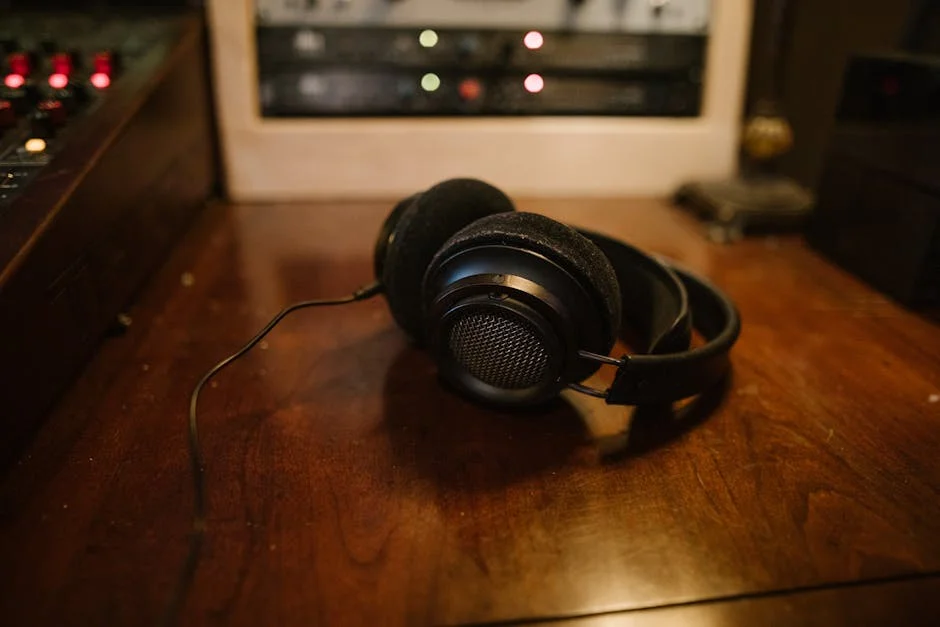
What Is a Headphone Amplifier and Why You Need One

Affiliate disclosure: Some links on this page are affiliate links. If you buy through them we earn a small commission at no extra cost to you. Recommendations are research-driven; we don't claim personal use of every product reviewed. Product prices and availability are accurate as of the date published and are subject to change. Always check Amazon for current pricing before purchasing. Learn more.

Quick Picks
TOPPING L50 NFCA Balanced Headphone Amplifier 3500mWx3500mW
NFCA technology delivers near-perfect ASR measurements
Buy on AmazonSchiit Magni Unity Fully Discrete Headphone Amp and Preamp Silver
Fully discrete circuit replaces the Heresy op-amp design
| Product | Price Range | Top Strength | Key Weakness | Buy |
|---|---|---|---|---|
| TOPPING L50 NFCA Balanced Headphone Amplifier 3500mWx3500mW also consider | $$ | NFCA technology delivers near-perfect ASR measurements | No tube warmth , purely solid-state clinical performance | Buy on Amazon |
| Schiit Magni Unity Fully Discrete Headphone Amp and Preamp Silver also consider | $ | Fully discrete circuit replaces the Heresy op-amp design | New design with less long-term community data than Heresy | — |
If you’ve ever plugged a nice pair of headphones into your laptop and felt like something was missing, you’re probably asking the right question. A headphone amplifier takes the low-level audio signal from your source, boosts it to a level that can properly drive headphone drivers, and does so with enough control and current delivery to let those drivers perform the way they were designed to.
Three years in, I’ll be honest: the amplifier question was one I resisted longer than I should have. My Topping L50 sits on my desk right now, and the gap between that and my old laptop output is real. Whether it matters for your specific headphones is where it gets interesting.
What Is a Headphone Amplifier, Actually?
At its core, a headphone amplifier is an analog gain stage. Your source device (a phone, laptop, DAC) outputs a signal at line level or headphone level. A dedicated headphone amplifier takes that signal and applies controlled voltage and current gain so that your headphones receive enough power to move their drivers accurately and at adequate listening volume.
The important word there is “control.” It’s not just about getting louder. Poorly designed amplifier output stages can introduce distortion, fail to provide adequate current for low-impedance headphones, or struggle to maintain voltage swing for high-impedance cans. A well-measured amplifier does none of those things.
For anyone new to the hobby, I’d point you toward the Audiophile Basics hub as a starting point. The amplifier question intersects with DACs, impedance, sensitivity, and headphone types in ways that take a few reads to fully sort out.
Dynamic Drivers vs. Planars: Why the Amplifier Question Isn’t Universal
Not every headphone needs a dedicated amplifier equally. High-sensitivity dynamic driver headphones (the kind built to work with phones and dongles) will often run fine from a modestly powered source. High-impedance dynamic drivers like the Sennheiser HD600 sit in a middle ground. And planar magnetic headphones are, in my experience, the category where amplifier quality matters most clearly.
Owner reports from the Sundara community on Head-Fi and ASR consistently note that planars respond to current delivery in ways that high-impedance dynamics don’t. I’d dismissed the “scales with source” framing as audiophile mythology for a while. For planar magnetics, it turned out to have real content.
How a Headphone Amplifier Works
The Signal Chain
A standard desktop setup looks like this: digital source (computer, streaming device) feeds a DAC, the DAC outputs an analog signal, and the amplifier takes that analog signal and drives the headphones. The amplifier does not do digital-to-analog conversion; that’s the DAC’s job. An amplifier is a purely analog device in this context.
Some products combine both functions (DAC/amp combos). These are convenient and often sensible for budget setups. Separates give you more flexibility and, generally, better performance per dollar at the mid range and above, because each device can focus on one job.
Impedance and Sensitivity
Two headphone specs shape how much amplifier you need: impedance (measured in ohms) and sensitivity (measured in dB/mW or dB/Vrms). High-impedance headphones (250 ohm, 300 ohm) need voltage swing. Low-impedance planars need current. Very sensitive headphones (like some IEMs) are so easy to drive that a powerful desktop amp can introduce hiss at the noise floor.
Matching your amplifier to your headphones isn’t complicated, but it’s worth understanding before spending money. Crinacle’s database and ASR’s measurement library both have sensitivity and impedance data for most common headphones, and both are worth checking before making amplifier decisions.
Balanced vs. Single-Ended
Most desktop headphone amplifiers offer at least a 6.35mm (quarter-inch) single-ended output. Many mid-range and above amps add a balanced output, typically 4-pin XLR or 4.4mm pentaconn. Balanced output provides a theoretical 6dB gain in voltage swing and, in practice, often lower noise floor.
Whether balanced output audibly matters depends on the headphone, the specific amp design, and your noise environment. On my Topping L50, the balanced XLR output drives my HiFiMan Sundara with noticeably more control than the single-ended output at comparable volume. Field reports from Sundara owners on ASR and Head-Fi corroborate that pattern.
Buying Guide: Choosing Your First Headphone Amplifier

Know Your Headphones Before You Shop
The single most useful thing you can do before buying an amplifier is look up your headphones’ impedance and sensitivity. A 300-ohm dynamic driver and a 20-ohm planar magnetic have completely different amplification needs. The Audiophile Basics guides at /learn/ cover this in detail, and it’s worth reading before committing to any hardware.
Budget amplifiers handle most consumer headphones adequately. Where underpowered sources tend to fail is on planar magnetics and very high-impedance cans at higher listening volumes. If your current headphones or planned purchases fall into those categories, prioritize output power and current delivery in your amp search.
Desktop Stacks vs. Portable Amps vs. Combo Units
Desktop amplifiers sit on your desk, plug into the wall, and typically offer the best performance per dollar for home listening. Portable battery-powered amps trade output power for mobility. DAC/amp combos simplify cabling and reduce desktop footprint at a typically moderate efficiency trade-off vs. separates.
For a first desktop setup, community consensus across Head-Fi, ASR, and Resolve Reviews consistently points to the DAC/amp separate stack as the most flexible foundation. You can upgrade one component without replacing both. The budget to mid range is well-served by this model.
Measurements and What They Tell You
Modern budget and mid-range solid-state amplifiers from brands like Topping, Schiit, and JDS Labs measure extremely well. ASR’s amplifier rankings show distortion floors that would have been considered impressive in high-end gear not long ago, now achievable in budget products.
Measurements confirm an amplifier is not adding audible distortion or noise. They don’t capture output impedance’s interaction with your specific headphones, gain structure, or how well the amp handles very dynamic transients at high volumes. Use measurements as a baseline filter (eliminating audibly flawed designs) and owner reports as context for real-world behavior.
Gain Settings and Volume Pot Quality
Many amplifiers include switchable gain (low and high settings). Low gain is appropriate for sensitive headphones and IEMs. High gain gives you more volume range for difficult-to-drive headphones but compresses the usable range of the volume knob for easy-to-drive headphones.
A decent volume potentiometer matters more than most buyers expect. Channel imbalance at very low volume settings is a known issue on some budget amps. Verified buyers of most current-generation budget amps note that channel tracking has improved significantly over older designs, but it’s worth checking owner reviews for your specific model.
Solid-State vs. Tube Amplifiers
Solid-state amplifiers use transistors or op-amps to achieve amplification. They typically measure very cleanly, run cool, and require no maintenance. Tube (valve) amplifiers use vacuum tubes in the gain stage and introduce even-order harmonic distortion that some listeners find pleasing with certain headphones.
The tube vs. solid-state question is genuinely preference-dependent and headphone-dependent. For planar magnetics, community consensus generally favors solid-state (planars tend to respond better to high-current solid-state designs). For high-impedance dynamics with a warmer tonal presentation, some owners report enjoying the combination of a tube stage. Neither is objectively correct; it is a taste and use-case question.
Top Picks
Topping L50 NFCA Balanced Headphone Amplifier
The Topping L50 NFCA Balanced Headphone Amplifier is the amp half of my primary desktop stack, paired with the Topping E50 DAC. It uses Topping’s NFCA (Nested Feedback Composite Amplifier) topology, and ASR’s measurements of this unit are near-perfect by any practical standard. SINAD figures land it at the top of its price band on ASR’s rankings, which I check regularly.
Output options include a 6.35mm single-ended jack and a 4-pin balanced XLR output. The balanced side puts out 3500mW per channel, which on my HiFiMan Sundara (2020 revision) delivers noticeably more grip and control than the single-ended output at similar listening levels. Field reports from Sundara and LCD-X owners across Head-Fi and ASR forums consistently note that the balanced output handles demanding planars without signs of compression or distortion under dynamic peaks.
Into the L50 at 9 o’clock on low gain, my HD600 is quiet, controlled, and channel-balanced all the way down. At 12 o’clock on high gain with the Sundara balanced, I haven’t found a ceiling that causes the amp to misbehave. The trade-off is simple: this is a purely solid-state, purely measurement-optimized design. There is no tube warmth here, and if you are specifically looking for that quality, this is not the product for you.
One thing worth noting for first-time stack builders: the L50 is an amplifier only. You will need a separate DAC. The E50/L50 pairing is the logical match and what this amp was clearly designed around, but any line-level DAC output will work as a source.
Check current price on Amazon.
Schiit Magni Unity Fully Discrete Headphone Amp and Preamp
The Schiit Magni Unity is the current generation of Schiit’s entry-level desktop amplifier, and it represents a meaningful design change from its predecessor, the Magni Heresy. Where the Heresy used an op-amp-based circuit, the Unity is fully discrete. Schiit manufactures it in the USA, which remains a distinguishing point in the budget amplifier category.
Verified buyers on Amazon and community discussion threads on Head-Fi note that the Unity performs competitively at its price band for most dynamic driver headphones. The fully discrete circuit represents a design philosophy shift for Schiit at this tier, though long-term community data is still building compared to the Heresy, which had years of owner reports behind it. New buyers should treat this as the current-generation recommendation, understanding that it has less historical community data than the outgoing model.
One feature worth noting is the preamp output, which lets you run the Unity into powered speakers or a power amplifier. This makes it a more flexible component for a desktop setup that might include both headphones and near-field monitors. The output configuration is single-ended only; there is no balanced headphone output at this price band, which is standard for the budget category.
Community consensus across Head-Fi and ASR forum threads suggests the Unity is the right recommendation for new Schiit stack builders over the older Heresy units that may still appear on the used market. If you are building a budget Schiit stack and the Magni Unity is currently available, the community points to this as the current-generation answer.
Check current price on Amazon.
Closing Thoughts
Three years in, the amplifier question feels like one of the hobby’s most honest ones. A good amplifier does a boring job very well: it takes a signal and makes it bigger without adding garbage. At the budget and mid range, solid-state options from Topping and Schiit do this cleanly enough that the measurement differences between them are largely academic for most headphones.
For anyone still building out their first stack, the broader context around DACs, headphone pairing, and source chains is covered in the Audiophile Basics section at /learn/. The amplifier is one piece of a system, and understanding how it fits alongside your DAC and headphones will save you from buying more than you need, or less.
Frequently Asked Questions
Do I really need a headphone amplifier?
It depends entirely on your headphones. Most consumer headphones with high sensitivity and moderate impedance run adequately from phone or laptop outputs. High-impedance dynamic drivers (250 ohm and above) and planar magnetics generally benefit more clearly from a dedicated amplifier. If your headphones are hard to drive to comfortable volume or sound thin from a built-in output, a dedicated amp is worth considering.
What is the difference between a DAC and a headphone amplifier?
A DAC (digital-to-analog converter) converts digital audio data into an analog signal. A headphone amplifier takes that analog signal and boosts it to a level that can drive headphone drivers. They are separate functions, sometimes housed in separate boxes (a stack) and sometimes combined into a single unit (a DAC/amp combo). For most entry-level setups, a combo unit is fine; separates offer more upgrade flexibility.
Does an amplifier make headphones sound better?
A well-designed amplifier should be transparent, meaning it adds no audible coloration of its own. What a better amplifier can do is remove audible problems: channel imbalance, noise floor hiss, distortion under dynamic peaks, or insufficient volume for difficult-to-drive headphones. The improvement you hear is usually the amplifier getting out of the way rather than actively adding something pleasing.
Is a balanced headphone output worth it?
Balanced output provides additional voltage swing and theoretically lower noise floor compared to single-ended. For demanding planar magnetic headphones, owner reports and field data suggest balanced output can provide more control and dynamic headroom at high listening volumes. For easy-to-drive dynamic driver headphones, the practical difference is smaller. Whether it justifies the price difference depends on your specific headphones.
Can I use a headphone amplifier with IEMs?
Yes, but with caveats. Very sensitive IEMs can expose the noise floor of more powerful desktop amplifiers, producing audible hiss at low volume settings. If you primarily use IEMs, look for an amplifier with a low-gain setting and a low output impedance (ideally 1 ohm or less). Many desktop amps designed for over-ear headphones are not ideal IEM pairings without low-gain and low-noise-floor specifications.

<script type="application/ld+json">
{
"@context": "https://schema.org",
"@type": "FAQPage",
"mainEntity": [
{
"@type": "Question",
"name": "Do I really need a headphone amplifier?",
"acceptedAnswer": {
"@type": "Answer",
"text": "It depends entirely on your headphones. Most consumer headphones with high sensitivity and moderate impedance run adequately from phone or laptop outputs. High-impedance dynamic drivers (250 ohm and above) and planar magnetics generally benefit more clearly from a dedicated amplifier. If your headphones are hard to drive to comfortable volume or sound thin from a built-in output, a dedicated amp is worth considering."
}
},
{
"@type": "Question",
"name": "What is the difference between a DAC and a headphone amplifier?",
"acceptedAnswer": {
"@type": "Answer",
"text": "A DAC (digital-to-analog converter) converts digital audio data into an analog signal. A headphone amplifier takes that analog signal and boosts it to a level that can drive headphone drivers. They are separate functions, sometimes housed in separate boxes (a stack) and sometimes combined into a single unit (a DAC/amp combo). For most entry-level setups, a combo unit is fine; separates offer more upgrade flexibility."
}
},
{
"@type": "Question",
"name": "Does an amplifier make headphones sound better?",
"acceptedAnswer": {
"@type": "Answer",
"text": "A well-designed amplifier should be transparent, meaning it adds no audible coloration of its own. What a better amplifier can do is remove audible problems: channel imbalance, noise floor hiss, distortion under dynamic peaks, or insufficient volume for difficult-to-drive headphones. The improvement you hear is usually the amplifier getting out of the way rather than actively adding something pleasing."
}
},
{
"@type": "Question",
"name": "Is a balanced headphone output worth it?",
"acceptedAnswer": {
"@type": "Answer",
"text": "Balanced output provides additional voltage swing and theoretically lower noise floor compared to single-ended. For demanding planar magnetic headphones, owner reports and field data suggest balanced output can provide more control and dynamic headroom at high listening volumes. For easy-to-drive dynamic driver headphones, the practical difference is smaller. Whether it justifies the price difference depends on your specific headphones."
}
},
{
"@type": "Question",
"name": "Can I use a headphone amplifier with IEMs?",
"acceptedAnswer": {
"@type": "Answer",
"text": "Yes, but with caveats. Very sensitive IEMs can expose the noise floor of more powerful desktop amplifiers, producing audible hiss at low volume settings. If you primarily use IEMs, look for an amplifier with a low-gain setting and a low output impedance (ideally 1 ohm or less). Many desktop amps designed for over-ear headphones are not ideal IEM pairings without low-gain and low-noise-floor specifications."
}
}
]
}
</script>Where to Buy
TOPPING L50 NFCA Balanced Headphone Amplifier 3500mWx3500mWSee TOPPING L50 NFCA Balanced Headphone A… on Amazon