What Is Impedance in Headphones: A Practical Guide

Affiliate disclosure: Some links on this page are affiliate links. If you buy through them we earn a small commission at no extra cost to you. Recommendations are research-driven; we don't claim personal use of every product reviewed. Product prices and availability are accurate as of the date published and are subject to change. Always check Amazon for current pricing before purchasing. Learn more.
Quick Picks
FiiO X5 Mark III Portable High-Resolution Audio Player
Dedicated audio hardware with dual AK4490 DAC chips
FiiO M11 Plus Portable Music Player ESS Version
Android 10 supports current streaming apps , Spotify, Tidal, Qobuz
iFi Audio iFi xDSD Gryphon Portable Bluetooth DAC/Amplifier
Bluetooth aptX Adaptive delivers near-lossless wireless audio
Buy on Amazon| Product | Price Range | Top Strength | Key Weakness | Buy |
|---|---|---|---|---|
| FiiO X5 Mark III Portable High-Resolution Audio Player also consider | $$ | Dedicated audio hardware with dual AK4490 DAC chips | Android version too old for current app support | — |
| FiiO M11 Plus Portable Music Player ESS Version also consider | $$$ | Android 10 supports current streaming apps , Spotify, Tidal, Qobuz | Premium price difficult to justify vs. phone plus good portable DAC | — |
| iFi Audio iFi xDSD Gryphon Portable Bluetooth DAC/Amplifier also consider | $$$ | Bluetooth aptX Adaptive delivers near-lossless wireless audio | Premium price in a portable device that can be lost or damaged | Buy on Amazon |
| Chord Electronics Chord Mojo 2 Portable DAC/Amp also consider | $$$ | Custom FPGA implementation with Chord's proprietary WTA filter | Ball-button interface is unintuitive and confusing for new users | Buy on Amazon |
| EarFun Free Pro 3 ANC True Wireless Earbuds also consider | $ | Qualcomm aptX Adaptive at ~$79 , exceptional codec value | ANC not class-leading , Sony and Bose significantly ahead | Buy on Amazon |
| Sony WF-1000XM5 True Wireless Noise Canceling Earbuds also consider | $$$ | Best-in-class ANC among true wireless earbuds | Premium price; XM4 or XM3 available second-hand at significant discount | Buy on Amazon |
| Apple AirPods Pro 2nd Generation with MagSafe Case also consider | $$$ | Best ANC integration in the Apple ecosystem with system-level compatibility | AAC codec ceiling limits audio quality on non-Apple devices | Buy on Amazon |
| HiBy R3 Pro Saber Portable Music Player also consider | $ | 4.4mm balanced output at ~$129 , exceptional value for balanced portable audio | Screen small and touch interface less responsive than flagship DAPs | Buy on Amazon |
Impedance is one of those spec-sheet numbers that shows up everywhere in headphone listings but rarely gets explained in plain terms. If you’ve ever wondered why some headphones need a dedicated amplifier while others work fine from a phone, impedance is a big part of that answer. Three years into this hobby, starting with a Sennheiser HD600 on a Drop deal, I’ve had to learn this the practical way.
This article pulls together what the community has established about headphone impedance, how it shapes your source choices, and what it means for real buying decisions. Whether you’re brand new or working through the Audiophile Basics hub trying to fill knowledge gaps, the goal here is clarity over jargon.

What Impedance Actually Means
In electrical terms, impedance is the opposition a device presents to alternating current. The unit is ohms, abbreviated with the Greek letter omega. For headphones, the driver coil inside each ear cup has a specific impedance value, and that value directly affects how much voltage your source device needs to drive the headphone to a useful listening volume.
The important word there is “voltage.” Most people assume amplifier power is purely about loudness, but headphone amplification is more accurately about voltage swing. High-impedance headphones require a higher voltage swing to move their drivers to the same output level as a low-impedance design driven by the same source. A phone’s output stage is optimized for low-impedance loads, typically somewhere in the range of 16 to 32 ohms, which covers most consumer earbuds and many modern IEMs.
Impedance Is Not the Whole Story
Sensitivity (usually measured in dB/mW or dB/Vrms) works alongside impedance to determine how easy a headphone is to drive. A low-impedance headphone with low sensitivity can be just as demanding as a high-impedance one. The HD600, sitting at 300 ohms, is a classic example of a high-impedance headphone that is not particularly difficult to drive to adequate volume because its sensitivity is reasonable. The HiFiMan Sundara (at around 37 ohms) can actually be harder to drive to its best performance on some sources despite the lower impedance value, because planar magnetic drivers have their own current demands.
This is where the “scales with source” advice that I’d previously half-dismissed turned out to have real content. On my Topping E50 plus L50 stack, the Sundara opened up in ways that a laptop headphone jack simply could not deliver. The difference was not subtle. The HD600 on the same stack also improved versus laptop output, but the gap was smaller than I expected, and that matches what the community generally reports.
Why Source Output Impedance Matters
Output impedance is a different measurement, and it belongs to your source or amplifier rather than your headphones. It describes the impedance the amplifier itself presents to the headphone load. The general guideline widely cited across Head-Fi, ASR, and Crinacle’s resources is the “1/8th rule”: the amplifier’s output impedance should be no more than one-eighth of the headphone’s rated impedance to avoid meaningful frequency response interactions.
For a 300-ohm headphone like the HD600, an output impedance of up to around 37 ohms is technically within that guideline, though lower is always better. For a 16-ohm IEM, you want the amplifier’s output impedance to be 2 ohms or less. Many phone headphone jacks have output impedances in the 1-2 ohm range, which is actually fine for low-impedance IEMs. Some older or cheaper devices measure considerably higher, which can audibly alter the frequency response of sensitive IEMs.
Damping Factor and Bass Control
Closely related to output impedance is damping factor, which describes how well the amplifier can control driver movement after a transient signal. High damping factor (achieved with low output impedance relative to headphone impedance) keeps the driver from over-excurisng, which in practice contributes to tighter bass. This is one reason purpose-built headphone amplifiers often outperform phone outputs for dynamic and planar headphones on bass-heavy material. For measurements on specific amplifiers, ASR’s database is the place to start.
How Impedance Affects Your Source Chain Decisions
If you primarily use IEMs in the 16-32 ohm range, a dedicated amplifier may not provide audible benefits over a modern phone with a reasonable output stage. The phone is already in the right operating range. However, if you use higher-impedance dynamic headphones or planar magnetics, the argument for a dedicated DAC and amplifier gets stronger quickly.
Field reports from Head-Fi threads and measurements posted to ASR consistently show that many DAC dongles (the compact USB-C units) perform admirably with low-to-mid impedance loads but sometimes struggle with current delivery for planar magnetics in particular. This doesn’t mean every dongle fails, but it’s worth checking measured output power and output impedance for your specific combination.
Portable Sources and Impedance Compatibility
Portable source devices, including digital audio players and portable DAC/amp units, vary widely in their output impedance and power delivery. A well-designed portable DAC/amp with a low output impedance can drive a wide range of headphone impedances cleanly. A less carefully engineered device may introduce coloration or volume limitations at the extremes. Verified buyer reports and community measurements are your best guide here, since manufacturer specs are not always consistent in how they report output impedance.
Buying Guide: Matching Your Source to Your Headphone’s Impedance
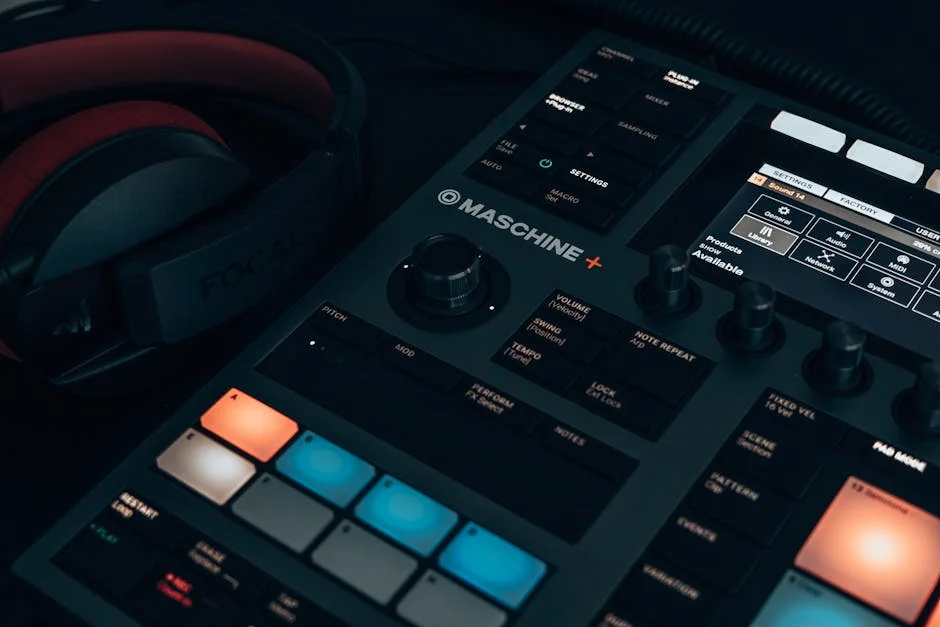
Understanding impedance changes how you build a source chain. The following section covers the practical decisions that flow from impedance matching, with specific product examples to ground the concepts.
Identifying Your Headphone’s Impedance Requirements
The starting point is your headphone’s rated impedance and sensitivity. Spec sheets for most headphones list both values, and Crinacle’s database covers IEMs with measurement data that puts those numbers in context. For over-ear headphones, the Audiophile Basics hub has additional context on how to read specs before you buy.
High-impedance dynamic headphones above 150 ohms generally benefit from a dedicated amplifier with a proper voltage swing. Low-impedance IEMs below 32 ohms are far more sensitive to output impedance interactions. Balanced output configurations, available on several portable devices discussed below, can double the voltage swing available and are particularly relevant for demanding planar magnetics.
Owner reports across the community consistently note that matching matters more at the extremes. A 32-ohm dynamic headphone with typical sensitivity is likely to be happy from most modern sources. A 600-ohm Beyerdynamic or a power-hungry planar is a different situation entirely.
Portable DAPs and Impedance Considerations
Digital audio players occupy a specific place in the source chain conversation. They offer dedicated audio hardware, consistent output impedance specs, and often balanced output options, all without the interference concerns that come from a phone running background processes. For learning more about the audiophile source chain, understanding DAPs is a useful step.
The relevant question is whether a dedicated DAP solves an impedance or power problem you actually have. For most IEM users with low-impedance loads, a high-quality DAC dongle attached to a phone likely delivers similar electrical performance. For users of higher-impedance headphones who also want a portable solution, a purpose-built DAP with documented output power and impedance specs is worth evaluating. Community consensus on Head-Fi and Resolve Reviews suggests the value case for DAPs strengthens as headphone impedance and power demands increase.
Balanced Output and Its Relationship to Impedance
Balanced output, available on many mid-range and premium DAPs and portable DAC/amp units, provides doubled voltage swing compared to single-ended output. This is not about impedance directly, but it is directly relevant to driving difficult loads. A 4.4mm balanced output delivering more voltage into a high-impedance headphone achieves the same effect as a more powerful amplifier.
Spec data shows that balanced outputs on portable devices can measurably improve headroom for demanding headphones. For planar magnetics especially, field reports from communities like Head-Fi indicate that switching to balanced cables with a properly equipped source produces audible improvement in dynamics and control. Whether that difference justifies a source upgrade depends entirely on the headphones you’re pairing it with.
Top Picks: Portable Sources Across Impedance Ranges
The products below are selected to illustrate how different source devices handle the impedance matching challenge across various use cases.
FiiO X5 Mark III
The FiiO X5 Mark III is a mid-range standalone digital audio player built around dual AK4490 DAC chips, and it represents an earlier generation of dedicated audio hardware. Its inclusion here is primarily illustrative: it shows what the DAP category offered before current-generation Android audio players became the norm. Owner reviews and spec data confirm its balanced 2.5mm output provides meaningful voltage swing for mid-impedance headphones.
The practical limitation noted across verified buyer discussions is the Android 5.1 base, which prevents current streaming apps from functioning properly. For local file playback with high-resolution audio, field reports remain positive. For anyone prioritizing source impedance and power specs over ecosystem convenience, the X5 III demonstrates the DAP value proposition but does so with an outdated software platform that limits its real-world appeal today.
Check current price on Amazon.
FiiO M11 Plus (ESS Version)
The FiiO M11 Plus ESS Version runs Android 10 and uses an ESS Sabre ES9068AS chip, which ASR’s measurement data shows performing at a high level. Its 4.4mm balanced output delivers meaningful power for demanding headphones, making it one of the more relevant portable DAP options for users pairing a DAP with higher-impedance or planar magnetic headphones.
Verified buyer notes from Head-Fi threads consistently cite the balanced output as a real advantage over single-ended portable sources for power-hungry loads. The premium price band places it in territory where the DAP-versus-phone-plus-dongle debate sharpens: for low-impedance IEM users, a premium DAP is harder to justify on objective grounds. For Sundara or similar planar users wanting a self-contained portable solution, the power delivery and measured DAC performance make a stronger case. The form factor is larger than competing DAPs, which is a frequent complaint in field reports.
Check current price on Amazon.
iFi xDSD Gryphon
The iFi xDSD Gryphon is a premium portable DAC/amp that occupies a different position from a standalone DAP: it pairs with a phone or computer as an outboard DAC and amplifier, while also supporting Bluetooth aptX Adaptive for wireless use. Its physical analog volume dial is cited by owners as a practical advantage over app-based controls, and iFi’s documented output impedance and power specs make it a capable partner for a range of headphone impedances.
The XBass and XSpace processing filters add coloration that some users appreciate and others prefer to disable. Field reports from Head-Fi and portable audio communities note the Gryphon’s output as genuinely capable with mid-impedance headphones and efficient IEMs, though for very high-impedance dynamics it may not deliver the same voltage headroom as a desktop stack. The premium price for a portable device that can be lost or damaged is the consistent objection in buyer discussions.
Check current price on Amazon.
Chord Mojo 2
The Chord Mojo 2 uses a custom FPGA implementation rather than an off-the-shelf DAC chip, which makes it genuinely interesting as a technical subject. Chord’s proprietary WTA filter processing happens in the FPGA, and measured performance published across audio review sites confirms the output quality is excellent regardless of the unusual approach. Its measured output impedance is low enough to work cleanly with most IEM loads as well as higher-impedance headphones.
The ball-button interface is universally cited as a usability problem in owner reviews, particularly for new users. For technically curious audiophiles interested in FPGA audio approaches, the Mojo 2 is a legitimate reference point. For buyers who want the best measured portable DAC performance at premium pricing, it competes credibly, though the Mojo 1 on the used market is frequently cited across Head-Fi as offering better value for listeners who don’t need the Mojo 2’s specific feature additions.
Check current price on Amazon.
EarFun Free Pro 3
The EarFun Free Pro 3 sits at the budget end of true wireless earbuds but manages to include Qualcomm aptX Adaptive codec support, which is relevant in the impedance context because TWS earbuds present a fundamentally different impedance picture: their driver impedance is managed internally, and what the listener controls is codec quality and ANC performance rather than impedance matching.
ASR and other audio review sites confirm the Free Pro 3 measures well at its price band, with accurate tuning and functional active noise cancellation. Owner reports note connection reliability as occasionally inconsistent, which is the main practical concern in field discussions. For audiophile readers comparing budget wireless options against the upper tier, the Free Pro 3 demonstrates how much codec quality is now accessible at budget pricing. ANC does not approach what Sony or Bose deliver at higher price bands, but the codec performance is genuinely competitive.
Check current price on Amazon.
Sony WF-1000XM5
The Sony WF-1000XM5 are Sony’s flagship true wireless earbuds, and they’re relevant to an impedance article primarily because LDAC codec support represents the closest Bluetooth audio quality gets to wired performance in a TWS package. Like the EarFun above, the impedance of the driver is internally managed, but the signal path quality over Bluetooth directly affects what the driver receives.
ANC performance is widely considered best-in-class among TWS earbuds according to community consensus across Head-Fi and mainstream audio publications. The Sony Headphones Connect app provides EQ controls that allow some tuning flexibility for audiophile listeners. Verified buyers with larger ears note fit inconsistency, and the earpiece size is larger than some competing designs. For commuters and travelers who want to understand wireless audio quality in practical terms, the WF-1000XM5 is the reference point the community consistently uses.
Check current price on Amazon.
Apple AirPods Pro 2nd Generation with MagSafe Case
The Apple AirPods Pro 2nd Generation are included here because they represent the mainstream entry point for ANC TWS audio and the codec ceiling issue is directly relevant: AAC is the codec ceiling for AirPods Pro on both Apple and non-Apple devices, and while Apple’s AAC implementation is better-optimized than some, it remains below what aptX Adaptive or LDAC delivers in measured audio quality terms.
For Apple ecosystem users, the system-level integration is the primary advantage that owner reviews and community discussions consistently highlight. Adaptive Transparency mode receives genuinely positive feedback for situational awareness use cases. Personalized Spatial Audio is a feature specific to Apple devices that has no direct equivalent elsewhere. For audiophile-crossover readers on iOS who want to understand where their AirPods Pro sit relative to higher-fidelity wireless options, the AAC codec ceiling is the honest answer to the quality question.
Check current price on Amazon.
HiBy R3 Pro Saber
The HiBy R3 Pro Saber is a compact budget DAP with an ES9219C chip and a 4.4mm balanced output, which is a notable combination at its price band. Spec data and owner reports from Head-Fi confirm the balanced output provides real headroom improvement over single-ended portable sources for mid-impedance headphones, making it one of the more accessible entry points into balanced portable audio.
The small screen and touch interface draw consistent criticism in verified buyer reviews, and the Android version limitations restrict app availability. For IEM users wanting to step away from smartphone sources without committing to premium DAP pricing, the R3 Pro Saber demonstrates that dedicated audio hardware and balanced output are accessible at budget pricing. Field reports suggest pairing with efficient, low-impedance IEMs is where this device performs most comfortably, rather than with power-hungry planar or high-impedance dynamics.
Check current price on Amazon.
Frequently Asked Questions
Does higher impedance always mean better headphone quality?
No. Impedance is an electrical characteristic of the driver design, not a quality indicator. High-impedance headphones like the HD600 at 300 ohms were historically designed for professional equipment with high-voltage outputs. Low-impedance IEMs are designed for portable sources.
Can I damage my headphones by using an amplifier that’s too powerful?
Yes, with enough volume applied. The risk is not from rated wattage sitting on a shelf but from driving the headphone too loud for too long. At reasonable listening levels, a powerful amplifier used conservatively is not a problem. The practical concern with powerful amplifiers and sensitive, low-impedance IEMs is more about noise floor (audible hiss at low gain settings) than driver damage.
What output impedance should I look for in a headphone amplifier?
The community guideline, cited consistently across ASR, Head-Fi, and Crinacle’s resources, is to keep amplifier output impedance below one-eighth of the headphone’s rated impedance. For IEMs at 16-32 ohms, that means seeking output impedance of 2 ohms or lower. For 300-ohm headphones, the tolerance is wider, but lower is always preferred. Manufacturer specs list this as output impedance, and ASR measures it independently for many devices.
Does balanced output change impedance matching?
Balanced output does not change the headphone’s impedance, but it doubles the voltage swing available from the source. This directly benefits demanding headphones that need higher voltage rather than lower resistance. For low-impedance IEMs, balanced output is rarely necessary. For high-impedance dynamics or current-hungry planar magnetics, the added voltage headroom of a 4.4mm or XLR balanced output can produce audible improvement in dynamics and control.
Do wireless earbuds have impedance matching concerns?
True wireless earbuds manage their own amplification internally, so the listener does not interact with driver impedance directly. The relevant signal path variables for TWS audio are Bluetooth codec quality, ANC implementation, and internal DAC and amplifier quality within the earpiece. Impedance matching is handled inside the device. The practical quality questions for TWS earbuds are codec selection (aptX Adaptive, LDAC, AAC) and how well the internal electronics are engineered.