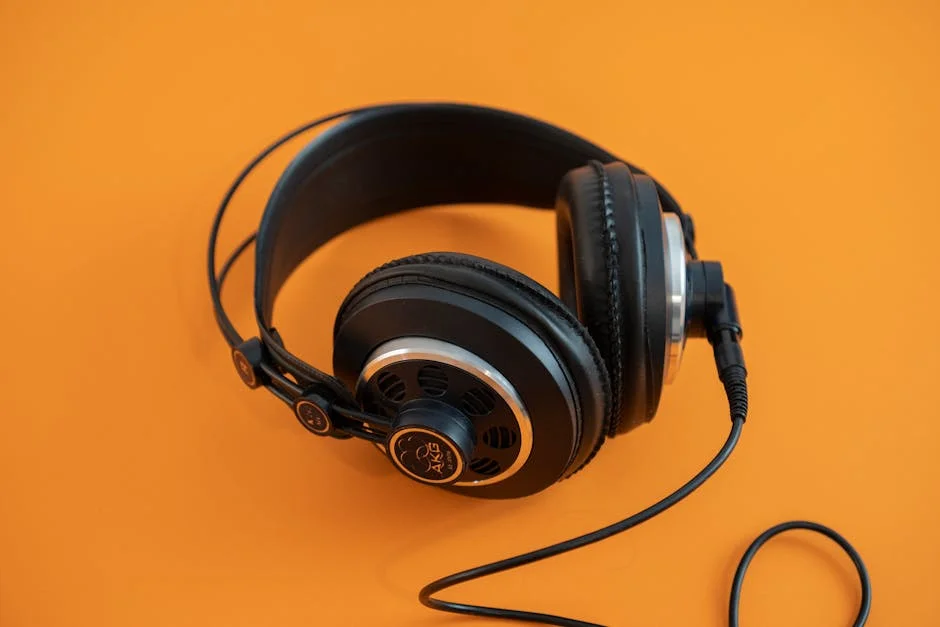
Audiophile Setup $500: Headphones Buyer's Guide

Affiliate disclosure: Some links on this page are affiliate links. If you buy through them we earn a small commission at no extra cost to you. Recommendations are research-driven; we don't claim personal use of every product reviewed. Product prices and availability are accurate as of the date published and are subject to change. Always check Amazon for current pricing before purchasing. Learn more.
Quick Picks
Sennheiser HD 600 Open-Back Audiophile Headphones
Legendary neutral-warm tuning that rewards critical listening
Buy on AmazonTopping E30 II Hi-Res Audio DAC AK4493S DSD512 PCM768kHz
AK4493S chip delivering excellent measurements at budget pricing
Buy on AmazonTOPPING L30II NFCA Linear Headphone Amp 6.35mm Jack RCA Input Output
NFCA technology in a budget-priced amplifier
Buy on Amazon| Product | Price Range | Top Strength | Key Weakness | Buy |
|---|---|---|---|---|
| Sennheiser HD 600 Open-Back Audiophile Headphones also consider | $$ | Legendary neutral-warm tuning that rewards critical listening | Requires a decent amp to perform at its best | Buy on Amazon |
| Topping E30 II Hi-Res Audio DAC AK4493S DSD512 PCM768kHz also consider | $ | AK4493S chip delivering excellent measurements at budget pricing | No balanced output , RCA only at this price tier | Buy on Amazon |
| TOPPING L30II NFCA Linear Headphone Amp 6.35mm Jack RCA Input Output also consider | $ | NFCA technology in a budget-priced amplifier | No balanced output , 6.35mm only at this price tier | Buy on Amazon |
Getting into headphones seriously , not just grabbing the first pair at a consumer electronics store , means navigating a market full of competing specs, measurement graphs, and community opinions that can feel overwhelming. The Buyer Guides on this site exist to cut through that noise. A well-matched setup in the budget-to-mid range delivers returns that far exceed the investment, and the gap between a thoughtful entry-level stack and an expensive one is smaller than most beginners expect.
The criteria that matter most at this tier are measurable, documented, and debated at length across ASR, Head-Fi, and r/headphones. This article applies that community knowledge to three specific pieces of gear that form a coherent starting point.
What to Look For in an Audiophile Setup Under a Budget
Headphone Tuning and Its Trade-Offs
Tuning is the single most consequential variable in any headphone purchase. A frequency response curve describes how a headphone emphasizes or attenuates different frequencies , bass, midrange, treble , relative to a target, and it determines whether a headphone sounds neutral, warm, bright, or V-shaped before any other variable enters the picture.
For critical listening and long-term use, a neutral-to-warm tuning with an accurate midrange is the most defensible starting point. The midrange is where vocals, guitars, and most acoustic instruments live. A headphone that gets the midrange right tends to be forgiving across genres; one that over-emphasizes bass or adds upper-treble crunch reveals its character quickly and can become fatiguing.
The tradeoff between neutral and engaging is real, and it matters more than most spec sheets acknowledge. Owner reports consistently suggest that listeners who start with a neutral reference headphone develop a more calibrated ear for evaluating other gear , not because neutral is objectively correct, but because it provides a stable anchor for comparison.
Open-Back vs. Closed-Back
The physical design of a headphone determines its soundstage character and its practical use context. Open-back headphones allow air to pass through the ear cups, which produces a more natural, spacious presentation , sound appears to come from a wider, less confined space around the head. Closed-back headphones isolate better and contain sound, making them appropriate for shared spaces or commuting.
For a primary desktop listening setup in a private space, open-back headphones offer a listening experience closer to speakers than to monitors. The trade-off is that they leak sound in both directions , the person next to you can hear what you’re playing, and ambient room noise enters the cups. If the listening space is shared, this matters practically.
Amplification and Why It Changes Things
Most modern headphones are designed to be driven by a dedicated amplifier rather than a laptop headphone jack or phone output. The difference is not always dramatic, but it is consistent enough across owner reports to be treated as a baseline consideration rather than an audiophile preference.
The functional reason is output impedance and power delivery. A laptop headphone output typically has a higher output impedance than a dedicated amp, which can interact unfavorably with headphone impedance curves and alter frequency response slightly. Dedicated amplifiers are designed with low output impedance and clean voltage gain, delivering the signal the headphone was tuned for.
The real-world gap varies by headphone. High-impedance dynamic drivers, like many of the well-regarded open-back headphones in this tier, show a more measurable benefit from amplification than efficient, low-impedance headphones. The improvement is real; whether it’s transformative depends on what you’re comparing it to.
DAC Quality and the Law of Diminishing Returns
A DAC , digital-to-analog converter , translates the digital audio signal from a computer or phone into the analog signal a headphone amplifier can use. At the budget-to-mid tier, a well-designed DAC contributes almost nothing audible beyond providing a clean, low-noise signal. The measurable differences between competently designed DACs in this price band are routinely below the threshold of audibility under controlled conditions.
ASR’s measurement database is the clearest evidence for this: many budget DACs from reputable manufacturers measure within fractions of a decibel of each other on the metrics that audibility research shows matter , SINAD, THD+N, noise floor. The practical implication is that buying the most expensive DAC available does not meaningfully improve perceived sound quality at this tier. A well-measured budget DAC is not a compromise; it’s the correct choice.
Exploring the complete range of audiophile gear guides before settling on a DAC pairing is worth doing , the decision interacts with amp choice and headphone sensitivity in ways that aren’t always obvious from a single spec sheet.
Source Chain Logic and Pairing
A source chain is the signal path from your playback software to your headphones: software player → DAC → amp → headphone. Each component should be selected to pair well with the next. Mismatching a high-output-impedance amp with a low-impedance headphone, or running a high-sensitivity headphone on an amp with an elevated noise floor, introduces problems that a better headphone or DAC alone won’t fix.
The budget-setup tier has converged on a few well-documented combinations , usually a Chinese-manufactured desktop DAC with favorable ASR measurements paired with a budget-tier solid-state amp. These combinations are documented exhaustively in community forums, which makes it unusually easy to verify pairing decisions with real owner data before buying anything.
Top Picks
Sennheiser HD 600
The Sennheiser HD 600 is the reference starting point for this site’s sound philosophy, and three years into active ownership, it remains the most-reached-for headphone in the collection. Owner consensus across Head-Fi, r/headphones, and ASR’s forum places it consistently at the top of the neutral-warm recommendation tier, a position it has held for roughly two decades without meaningful challenge at its street price.
ASR’s measurements of the HD 600 document a frequency response that aligns closely with the Harman target through the midrange with a slight warmth in the upper bass , a curve that translates perceptually to a smooth, natural presentation with outstanding vocal reproduction. The midrange specifically is what owners return to repeatedly: clean, uncolored, and forgiving across recording quality. A good recording sounds excellent; a compressed or harshly-mixed recording doesn’t become unlistenable.
The open-back design produces the soundstage character that makes critical listening at a desktop feel different from monitoring headphones. Instrument separation is natural rather than exaggerated, and the presentation doesn’t fatigue over long sessions the way that brighter-tuned headphones can. The practical trade-offs are real: open-back design leaks sound, so a private listening space is a genuine requirement, not a preference. The cable is replaceable and the earpads are user-serviceable , a detail that matters for gear intended as a long-term reference piece. Amplification helps; the gap between a laptop output and a proper amp stack is audible, though owner reports across ASR and Head-Fi suggest it is real rather than transformative. The Schiit Magni or the JDS Atom are the documented community recommendations for pairing at this tier.
Check current price on Amazon.
Topping E30 II
The Topping E30 II is the budget desktop DAC recommendation for this setup, built around the AK4493S chip and measuring favorably on ASR’s test bench at a price point that removes cost as a meaningful objection. ASR’s measurements show a SINAD and THD+N performance that exceeds what audibility research suggests is necessary for a transparent listening experience , which is the correct benchmark for evaluating a DAC at this tier.
Practical flexibility is a secondary strength. USB, coaxial, and optical inputs mean the E30 II connects cleanly to a desktop computer, a CD transport, or a streaming device without requiring adapters or compromises in signal path. The compact form factor sits neatly under a larger amp without cluttering a desktop. RCA outputs only at this price tier , no balanced output , but balanced output on a DAC provides no measurable benefit in a short signal path to a headphone amp unless the amp itself uses a balanced topology end-to-end, which most budget amps do not. The trade-off is not a real one for this use case.
Check current price on Amazon.
Topping L30 II
Budget amplification has a history of measurement problems that early Topping products illustrated clearly. The Topping L30 II addresses that history: it uses Topping’s NFCA (Nested Feedback Composite Amplifier) topology, which produces very low distortion and noise floor figures that ASR’s measurements confirm. At its price point, it measures significantly better than many amplifiers that cost several times more.
The RCA input and output configuration allows the L30 II to sit cleanly in a stack with the E30 II , signal in from the DAC, and a secondary RCA output pass-through for connecting powered monitors if the listening setup includes them. The 6.35mm single-ended output serves the HD 600 and most other headphones in this tier without issue. The limitation worth noting is output power for demanding planars: while the L30 II handles high-impedance dynamic drivers like the HD 600 competently, listeners planning to run very inefficient planar magnetic headphones will want to verify output power against headphone sensitivity before committing. For the HD 600 specifically, the pairing is clean and well-documented across owner reports.
Check current price on Amazon.
Buying Guide
Headphone First, Stack Second
The headphone is the component that most directly determines how your system sounds, and it’s the right starting point for any setup decision. A great headphone on a modest source chain will outperform a modest headphone on an expensive one, consistently, across every listener profile documented in community comparisons.
The practical implication: decide on headphone tuning preference before evaluating DAC or amp options. If the preference is neutral-to-warm with a strong midrange emphasis, that narrows the field quickly and makes stack selection straightforward. If the preference is for a more elevated bass or a brighter top end, the component choices that complement that tuning shift accordingly.
Matching Amplifier Output to Headphone Impedance
Not all amplifiers drive all headphones equally well, and output impedance is the variable most commonly overlooked in budget stack selection. The general rule is that an amplifier’s output impedance should be no more than one-eighth of the headphone’s nominal impedance to avoid frequency response interactions.
For a 300-ohm headphone like the HD 600, this is generous , almost any dedicated headphone amplifier meets the threshold. For lower-impedance planars or IEMs, the constraint becomes meaningful. Matching the L30 II with the HD 600 is straightforward and well-documented; extending the same amp to a demanding 32-ohm planar requires checking output power figures before assuming the pairing works.
DAC/Amp Stack vs. Combined Units
The budget tier offers both separate DAC and amp components and combined DAC/amp units that perform both functions in a single chassis. Each approach has genuine merit depending on the use case. Separates allow independent upgrades , if the amplifier becomes the limiting factor, it can be swapped without replacing the DAC. Combined units reduce desktop footprint and cable management complexity.
The Topping E30 II and L30 II stack occupies a small footprint and provides clean upgrade pathways in either direction. For listeners who expect to stay at this tier for several years before reassessing, the separate stack is the more practical choice. For listeners who want to minimize complexity and desk space, a well-measured combined unit is a defensible alternative. The Buyer Guides at this hub cover both approaches with specific component recommendations.
Streaming Source and File Format
Source quality matters less than the audiophile community’s historical discourse suggested. Controlled listening tests have not consistently demonstrated audible differences between lossless formats and high-quality lossy compression at reasonable bitrates, and differences between standard lossless and high-resolution files are even harder to establish under blind conditions.
The practical recommendation is to use a streaming service that provides lossless-tier quality , Qobuz, Apple Music lossless, or Tidal’s standard lossless tier , and not to spend time or money chasing high-resolution formats specifically. A DAC capable of handling standard PCM cleanly, like the E30 II, is sufficient. DSD support is a spec worth having if the DAC includes it without a price premium; it is not worth paying a premium to obtain.
Long-Term Upgrade Paths
A well-chosen entry setup is not a throwaway. The HD 600 is a headphone that remains relevant as the reference point even after moving into higher-tier gear, because its neutral-warm tuning provides a stable comparison anchor. Owner reports from long-term hobbyists consistently describe returning to it after higher-priced purchases to recalibrate their sense of what accurate midrange reproduction sounds like.
The natural upgrade paths from this stack are documented and incremental: the amp can be upgraded to a balanced output design if a balanced headphone becomes relevant; the DAC can be upgraded to a unit with more inputs or a built-in remote; the headphone can be supplemented with a planar or a different voicing for variety rather than replacement. None of these upgrades are urgent from this baseline , the returns from getting the first setup right are higher than the returns from a rapid upgrade cycle.

Frequently Asked Questions
Do I need a dedicated DAC and amp to enjoy the HD 600, or will a laptop output work?
A laptop output will drive the HD 600, and the audio will be recognizably good. The measurable and perceptually documented benefit of a dedicated stack , lower output impedance, cleaner gain stage, lower noise floor , is real but not transformative on a high-impedance dynamic driver. Owner consensus on Head-Fi and ASR consistently rates the improvement as meaningful rather than dramatic. Starting with the headphone alone and adding the stack later is a reasonable approach if budget is a constraint.
Is the Topping E30 II a significant upgrade over the DAC built into most computers?
For most modern computers with a clean internal audio implementation, the audible difference is modest. The practical advantages of the E30 II are measurable noise floor improvement, freedom from ground loops that affect USB-powered computers, and input flexibility for non-computer sources. ASR’s measurements confirm it performs beyond what audibility thresholds require , the case for it rests more on reliability and flexibility than on dramatic sound quality gains.
Which is the better pairing for the HD 600: the Topping L30 II or the Schiit Magni?
Both are well-documented at this tier and both drive the Sennheiser HD 600 cleanly. The L30 II measures more cleanly on ASR’s bench in raw distortion figures; the Magni is made domestically and has a longer community track record with this specific headphone. Owner reports don’t identify a consistent sonic preference between them. The deciding factor for most buyers will be whether they’re building a Topping stack for component consistency and upgrade path continuity, or prefer the Schiit ecosystem.
Does the HD 600 require break-in before it sounds its best?
The evidence for audible headphone break-in is weak under controlled conditions. Physical settling of new driver surrounds can occur in the first twenty to fifty hours of use, but the dramatic transformations sometimes described in community forums , significant tonal shifts after two hundred or more hours , are not consistently reproducible. The HD 600 owner consensus across ASR and Head-Fi suggests it sounds characteristic from the first listen. Treat any claimed break-in effect beyond minor physical settling with appropriate skepticism.
Should I start with this setup or wait and save more for a higher-tier option?
The diminishing returns curve in this hobby is steeper than most first-time buyers expect. The gap between this setup and one costing twice as much is smaller in perceptual terms than the gap between this setup and consumer-grade alternatives. Starting with a well-chosen, well-measured entry stack and living with it long enough to develop listening preferences is more likely to produce a satisfying upgrade path than waiting indefinitely for more budget. Community consensus across Head-Fi and r/headphones consistently supports this entry point as a stable foundation.

Where to Buy
Sennheiser HD 600 Open-Back Audiophile HeadphonesSee Sennheiser HD 600 Open-Back Audiophil… on Amazon