Best Amps for HE400SE Headphones: Reviewed

Affiliate disclosure: Some links on this page are affiliate links. If you buy through them we earn a small commission at no extra cost to you. Recommendations are research-driven; we don't claim personal use of every product reviewed. Product prices and availability are accurate as of the date published and are subject to change. Always check Amazon for current pricing before purchasing. Learn more.
| Product | Price Range | Top Strength | Key Weakness | Buy |
|---|---|---|---|---|
| HiFiMAN HE400SE Planar Magnetic Headphones also consider | $ | Planar magnetic technology at ~$109, previously impossible price point | Low sensitivity requires more amplifier power than typical dynamics | Buy on Amazon |
| TOPPING L30II NFCA Linear Headphone Amp 6.35mm Jack RCA Input Output also consider | $ | NFCA technology in a budget-priced amplifier | No balanced output, 6.35mm only at this price tier | Buy on Amazon |
| Schiit Magni Unity Fully Discrete Headphone Amp and Preamp Silver also consider | $ | Fully discrete circuit replaces the Heresy op-amp design | Newer design with a shorter track record than the Heresy | — |
Planar magnetic headphones used to require a serious amplifier investment alongside them, the HE400SE changed that assumption, but only halfway. The headphone itself sits in the Buyer Guides category for good reason: choosing the right amp for it is genuinely consequential. Low sensitivity means laptop outputs and phone jacks leave real performance on the table, and the wrong amp choice either underpowers the drivers or introduces noise that erases the planar advantage.
The HE400SE rewards a capable source chain more than most headphones at its price.

What to Look For in a Headphone Amplifier for the HE400SE
Output Power and Current Delivery
Planar magnetic drivers operate differently from dynamic drivers. Where dynamics are voltage-sensitive, planars often need sustained current delivery across the full driver surface. The HE400SE measures around 25 ohms impedance with roughly 91 dB sensitivity, numbers that look approachable until you try to drive them from a device output not designed for the task. The result is audible compression at moderate volumes and a flattening of the low-end texture that planar drivers are specifically valued for.
The minimum threshold worth considering is around 1W into 32 ohms, enough to reach clean listening levels with meaningful headroom. Amps that clip early or compress dynamics before the volume knob reaches a comfortable position aren’t doing the HE400SE any favors.
Noise Floor and Measurement Quality
One of the practical arguments for choosing the HE400SE over a comparable dynamic driver is the planar’s ability to resolve low-level detail, texture in sustained notes, decay in reverberant spaces. That advantage disappears if the amplifier introduces audible noise or distortion. Budget amps vary enormously here. Some measure cleanly and outperform their price tier; others introduce a noise floor that’s clearly audible during quiet passages on an open-back headphone.
Published measurements are a useful reference. An amplifier with a low noise floor and high dynamic range isn’t necessarily the best-sounding amp, but one that measures poorly will usually sound worse with a resolving headphone than with a forgiving one.
Circuit Architecture and Gain Structure
Budget amplifiers often ship with a single gain setting that works acceptably across a range of headphones. For the HE400SE specifically, gain matters. Too little, and the volume knob sits at its upper range with no headroom. Too much, and channel imbalance becomes audible at the lower end of the potentiometer’s travel, a problem that affects left/right balance at quiet listening levels.
Amps with switchable gain, or those voiced specifically for low-to-medium impedance planars, manage this more gracefully. The circuit architecture, whether discrete transistors, op-amp based, or a hybrid, affects both the measured performance and the practical gain structure. A fully discrete design can be tuned more precisely for a specific output target than a single-chip solution, though budget implementations of either can measure well.
Stack Compatibility and Signal Path
Most buyers pairing an amp with the HE400SE will also want a DAC, the amp alone can’t improve the signal quality coming out of a noisy computer output. RCA connectivity between the DAC and amp is standard at this price tier, but preamp output functionality varies. An amp with preamp output adds flexibility: it can feed powered monitors or a budget speaker system from the same source chain without requiring additional hardware.
Exploring the full range of headphone amp and DAC pairing guides before committing to a stack configuration is worth the time, particularly if powered monitors are a future consideration.
Top Picks
HiFiMAN HE400SE
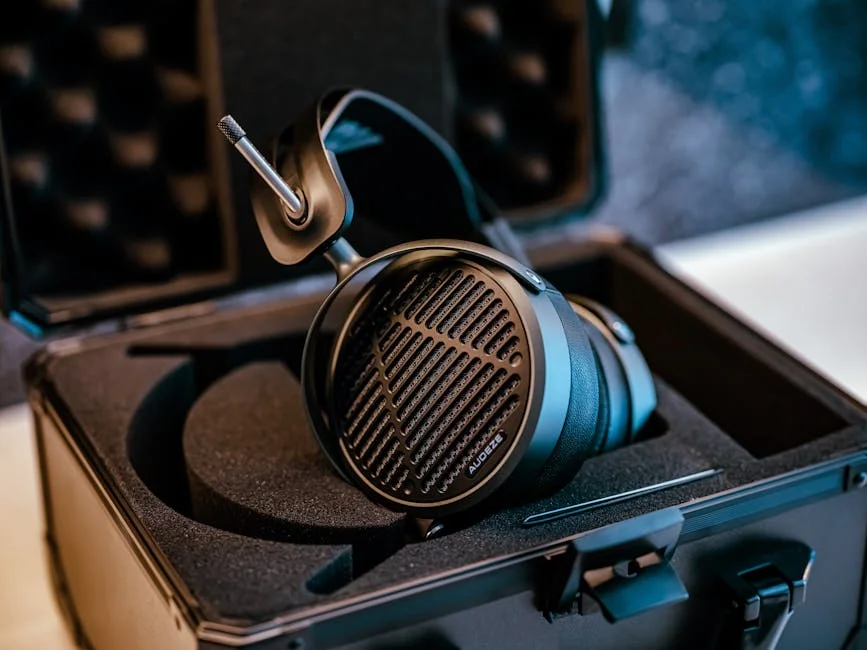
The HiFiMAN HE400SE is the headphone this entire guide exists to serve, so it warrants its own section to establish what the amplifier is actually working with. Stealth magnet technology at this price tier is a meaningful specification, not marketing language. The magnet array geometry reduces diffraction artifacts that cause uneven treble response, which is audible on open-back planars and genuinely harder to achieve on a budget.
The HE400SE scales with the source chain more than its price suggests. Run from a laptop headphone output, the presentation is flat and compressed. Run from a clean budget stack, the soundstage opens, the bass gains texture, and the treble detail the Stealth magnet design was supposed to deliver actually shows up. The headphone is doing its job, the amp is either getting out of the way or it isn’t.
Build quality is the limitation here. The headband adjustment mechanism feels imprecise and the stock cable is a functional placeholder rather than a long-term solution. Neither affects sonic performance, but buyers coming from premium headphone builds will notice the plastics. The sound-per-dollar ratio at this tier remains unusual.
Check current price on Amazon.
TOPPING L30 II
The TOPPING L30 II is where most budget stack builders start when they want Topping’s measurement performance at the lowest entry point. The NFCA circuit architecture gives a low noise floor and controlled distortion, and the output characteristics suit the HE400SE’s impedance and sensitivity.
At typical listening volumes, the L30 II has the output to drive the HE400SE without compressing dynamics, and its low noise floor suits open-back headphones in quiet passages. The RCA input and output allow clean integration with Topping’s own E30 II DAC, a common budget stack configuration, and the preamp output supports speaker integration without additional switching hardware.
The limitation is output power. For the HE400SE the L30 II is adequate, but it has less headroom than the amps above it in the line. Buyers who anticipate moving to harder-to-drive planars will find themselves at or near the ceiling with the L30 II sooner than they’d like. As a purpose-built pairing for the HE400SE specifically, though, the measured performance-to-cost ratio is genuinely strong.
Check current price on Amazon.
Schiit Magni Unity
The Schiit Magni Unity is the current generation of Schiit’s entry-level amp line, fully discrete, manufactured in the US, and a meaningful upgrade from the Heresy op-amp design it replaced. Buyers who followed Schiit’s product evolution may have purchased the Heresy or Modi Multibit stack; the Unity represents where that line stands now, with a circuit architecture that allows more precise tuning for specific output targets than a single-chip solution.
For the HE400SE, the fully discrete design matters in practical terms: the gain structure is better managed for low-impedance planars, channel tracking at the lower end of the volume pot is cleaner, and the output power gives more headroom than the L30 II. Those are the design advantages over op-amp alternatives at similar prices.
Being a newer design, the Unity has a shorter track record than the Heresy. The Heresy has been on the market for years, while the Unity is early in that process, so buyers who weight long-term reliability data heavily should note that the Heresy’s history doesn’t automatically transfer to the Unity’s circuit. For new buyers entering the Schiit ecosystem the Unity is the correct recommendation, because the Heresy is a previous-generation product.
Check current price on Amazon.
Buying Guide

Matching Output Power to What the HE400SE Actually Needs
The HE400SE isn’t the hardest planar to drive, it doesn’t approach the demands of HiFiMAN’s higher-tier models, but it does require more from an amplifier than a 300-ohm dynamic driver like the HD600. The HD600 is voltage-sensitive and rewards a clean, low-impedance output; the HE400SE needs current delivery across the driver surface. An amp that measures well for dynamics may still underperform with a planar if the power supply can’t sustain current at moderate listening volumes.
Practically, this means avoiding USB-powered amps and dongle DAC/amp combinations unless they’re specifically rated for the HE400SE’s load. Wall-powered amplifiers with dedicated power supplies handle the planar load more consistently. Both the L30 II and the Magni Unity are wall-powered and appropriate for the HE400SE’s actual demands.
The Stack Question: Do You Need a Separate DAC?
An amplifier improves the signal it receives, it doesn’t improve source quality. A budget amp fed from a noisy computer audio output will amplify the noise alongside the music. For the HE400SE specifically, where the Stealth magnet design genuinely resolves low-level detail, the source quality matters more than it would on a less revealing headphone.
Budget DAC options that pair cleanly with the L30 II and Magni Unity include Topping’s E30 II and Schiit’s Modi line. Neither is a large additional investment relative to the amp cost, and the combined stack, DAC and amp together, is the unit of evaluation, not either component alone. The argument for dedicated DAC/amp separates is real for the HE400SE in a way it arguably isn’t for every headphone at this price.
Balanced Output: Worth Prioritizing Now?
Neither the L30 II nor the Magni Unity offers balanced output. At the budget tier, that’s the norm rather than the exception. Balanced topology, true differential circuitry feeding a 4.4mm or XLR output, offers theoretical noise rejection benefits and, in some implementations, additional power headroom. For the HE400SE in a home listening environment, the practical difference between single-ended and balanced is modest.
The more useful framing is future planning. If the amp under consideration is intended as a long-term purchase that will serve the HE400SE now and harder-to-drive planars later, balanced output becomes more relevant for the later use case. For the HE400SE alone, single-ended is appropriate. The full buying guide library at /guides/ covers balanced vs. Single-ended topology in more depth for buyers considering that upgrade path.
New vs. Previous-Generation Amp Designs
Schiit’s product history is relevant context here. The Magni line has gone through multiple iterations: the Heresy replaced earlier designs, and the Unity replaces the Heresy with a fully discrete circuit. The Unity is better by specification, but it is the newer design with the shorter track record.
For buyers deciding between a previous-generation amp at a discount and the current-generation unit at full price: the Unity is the correct choice for new purchases. Buying a Heresy now means buying a discontinued product without ongoing support. The Unity’s discrete circuit is the direction Schiit has moved intentionally, and the design rationale holds up.
Preamp Output: More Useful Than It Appears
Both the L30 II and the Magni Unity include preamp output, a feature that looks secondary in a headphone amplifier context but becomes genuinely useful if powered monitors join the setup later. Running a single source chain through a headphone amp to both headphones and speakers, using the volume knob as a unified level control, is a practical convenience that removes the need for a separate passive preamp or volume control device.
For buyers setting up a desk audio environment with both headphones and monitors, this feature effectively increases the long-term value of the amp purchase. It’s worth noting in the purchase decision even if monitors aren’t in the immediate plan.

Frequently Asked Questions
Will the HE400SE sound noticeably better with a dedicated amp versus a laptop output?
Laptop headphone outputs typically lack the current delivery planar drivers need, producing compressed dynamics and flattened bass texture. A budget stack, the L30 II or Magni Unity paired with a matching DAC, addresses both issues. The improvement is more pronounced with the HE400SE than with a typical low-impedance dynamic driver.
Between the Topping L30 II and the Schiit Magni Unity, which is the better pairing for the HE400SE?
Both are appropriate for the HE400SE, but the Magni Unity's fully discrete design provides better gain structure and more output headroom for planars. The L30 II measures excellently for its price tier and pairs cleanly with the E30 II DAC in a budget stack. For a buyer who expects to stay with the HE400SE long-term and won't upgrade to harder-to-drive headphones, the L30 II is a rational choice. For buyers who anticipate moving up the planar tier, the Magni Unity leaves more room.
Does the HE400SE need a balanced amplifier output?
Not at this stage. Balanced output offers theoretical noise rejection and, in some implementations, additional power headroom, but the HE400SE's sensitivity and impedance profile are manageable on single-ended outputs from the L30 II and Magni Unity without compromise. In a home listening environment with a clean source chain, the practical audible difference between single-ended and balanced is modest. Balanced becomes more relevant if the buyer moves to harder-to-drive planars where the additional headroom matters in practice.
Can a dongle DAC/amp like the Apple USB-C adapter or a dedicated dongle drive the HE400SE adequately?
Dedicated dongle DAC/amp units, devices like the iBasso DC03 or Hidizs S9, can reach adequate volume levels with the HE400SE, but USB-powered output stages often limit dynamics at moderate listening levels and lack the current delivery that brings out the planar driver's texture. The Apple USB-C adapter in particular has insufficient output for the HE400SE. A wall-powered dedicated amp improves on this meaningfully, which is the practical case for the budget stack approach over portable solutions.
If I buy the HE400SE now, will I need to replace the amplifier if I upgrade headphones later?
It depends on what the upgrade is. If the next step is another budget planar, a HiFiMAN Sundara or similar, the Magni Unity's output headroom handles it cleanly. The L30 II is closer to its ceiling with harder-to-drive planars and may become the limiting factor sooner. If the planned upgrade target is something more demanding, investing in the Magni Unity now rather than the L30 II preserves the amp as a long-term part of the chain rather than a component to replace in the same upgrade cycle.
Where to Buy
- HiFiMAN HE400SE Planar Magnetic HeadphonesSee price on Amazon
- TOPPING L30II NFCA Linear Headphone Amp 6.35mm Jack RCA Input OutputSee price on Amazon